
Reviewed · NATURAL HISTORY MUSEUM
Smithsonian Natural History Museum Semi-Private Guided Tour
The most useful feature here is the six-person maximum. The Smithsonian National Museum of Natural History is packed with famous objects, but its size can leave you wandering past important displays. A small guided group gives you a better chance to ask questions and keep the visit moving.
I like the mix of headline sights and working science. You see the Hope Diamond and Henry the Elephant, then get close to fossil preparation areas and the Last American Dinosaurs exhibit. I also like that guides such as Shane have handled very small groups with care, even continuing when a booking became a private visit for one parent and one adult child.
The main consideration is time. Two hours is enough for a focused introduction, not a full museum day. At $129 per person, this makes the most sense if you value direction and context more than a slow, self-guided visit.
In This Review
- Key points at a glance
- Why a small group matters inside this museum
- Starting at the Unscripted Welcome Center
- Henry the Elephant and the museum’s big first impressions
- The Hope Diamond and a strong minerals section
- The T-Rex and the Last American Dinosaurs
- Archaeology, bones, and the human story
- What $129 buys you
- Timing, walking, and practical comfort
- Who will get the most from this visit
- Should you book this Smithsonian museum tour?
- FAQ
- How long does the Smithsonian Natural History Museum tour last?
- Where does the tour begin?
- Where does the tour end?
- How many people can join the tour?
- What can you see during the museum visit?
- Is bottled water included?
- Is the tour near public transportation?
- Are service animals allowed?
- Is a mobile ticket available?
- Can you cancel for a full refund?
Key points at a glance
- Six people or fewer: A small group makes it easier to hear your guide and ask questions.
- Henry the Elephant: Meet one of the museum’s best-known large-animal displays.
- The Hope Diamond: See the famous blue diamond along with other notable stones.
- Major dinosaur evidence: View the largest complete T-Rex fossil found in the United States and visit the Last American Dinosaurs exhibit.
- Working fossil areas: Look into spaces where scientists work on real fossils.
- Two-hour format: A brisk museum sampler with a central Washington finish.
Why a small group matters inside this museum
The Natural History Museum can be hard to handle on your own. Its major attractions are spread across broad exhibit halls, and the most famous object is not always the most useful starting point. A guide can help you decide what deserves your limited time.
With a maximum of six people, this is much more personal than a large group walk. You should be able to hear explanations without straining, and questions are less likely to get lost. That matters most in crowded galleries or around displays where the meaning is not obvious from a short label.
The small size can also change the tone of the visit. One recorded booking ended up with only a father and child, yet the tour went ahead rather than being canceled. Their guide, Shane, was singled out for making the visit enjoyable and sharing strong subject knowledge. Shane may not be your guide, but that example gives you a useful sense of what a very small group can offer.
Still, small group does not mean private. The published limit is six, and the experience remains a guided museum visit rather than a custom day designed around one family’s interests.
More Natural History Museum tours:
- Smithsonian Museum of Natural History – Exclusive Guided Tour
★ 5.0 · 446 reviews - Smithsonian Museum of Natural History Small Group Tour: 8ppl Max
★ 5.0 · 177 reviews - Smithsonian National Museum of Natural History Guided Tour
★ 4.1 · 159 reviews
Starting at the Unscripted Welcome Center
You begin at the Unscripted Welcome Center at 400 7th Street NW, suite 102. Allow about 10 minutes here to meet the guide and discuss the visit before heading to the museum.
That short opening is practical. You can confirm the plan, ask about the sights you most want to see, and get your bearings before entering a large institution. If you care most about dinosaurs, minerals, or human history, say so early. Two hours passes quickly.
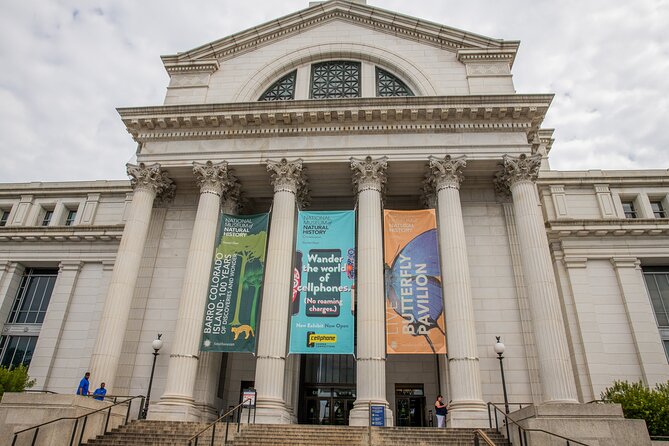
The tour ends at the museum, not back at the welcome center. The final stop is the Smithsonian National Museum of Natural History at 10th Street and Constitution Avenue NW. That makes the experience useful as part of a sightseeing day: once the tour ends, you are already in the National Mall area.
The meeting point is near public transportation, which helps if you are building the tour into a day around downtown Washington. The supplied details do not name a particular rail station or bus route, so check your route before setting out.
Henry the Elephant and the museum’s big first impressions
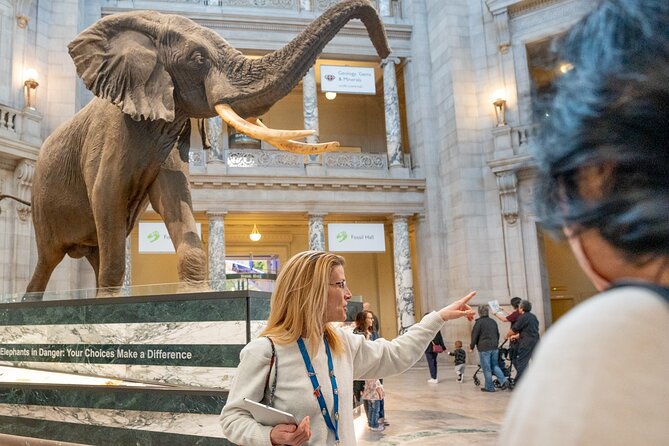
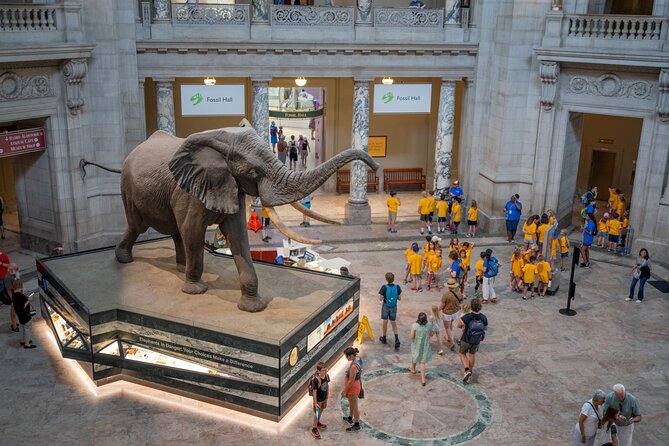
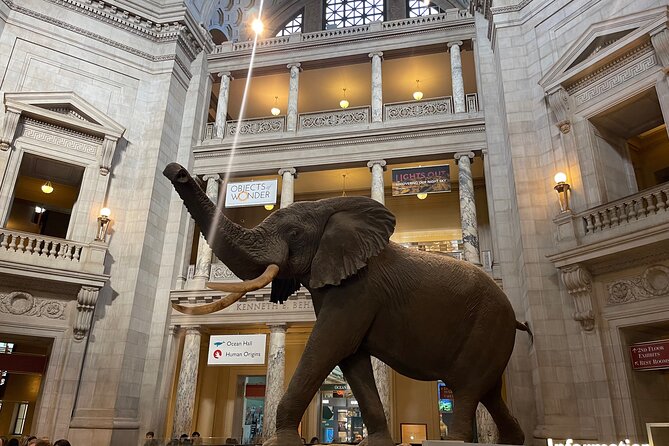
Henry the Elephant is one of the clearest visual anchors on the visit. Large animal displays can be impressive on their own, but a guide adds scale, background, and the details that a quick photograph misses.
This is also a good early stop for families and first-time museum visitors. It gives you an immediate sense of the museum’s broad subject range before the tour shifts to minerals, dinosaurs, archaeology, and human history.
The attraction here is not just size. The best guided museum moments often come when an object becomes a doorway into a larger subject. Your guide can connect what you see to the museum’s scientific work and to the way natural history collections are studied.
Do not expect every gallery to receive equal attention. The plan specifically emphasizes major sights, so this section works as part of a carefully chosen route rather than a complete survey of every animal hall.
The Hope Diamond and a strong minerals section
The Hope Diamond is the tour’s most famous single object. It gives the guide a natural chance to explain gems, crystals, rarity, and the stories that make a museum object memorable.
The minerals and crystals section appears to be a major strength of the experience. If you enjoy color, unusual shapes, and natural materials, allow yourself a moment to look beyond the famous blue diamond. One piece of direct feedback praised the gems and crystals across the museum, not just the headline display.
You will also see original stones from the United States Capitol. That detail adds a Washington connection to what could otherwise feel like a general geology stop. It links the museum’s collections to the city around you.
The practical benefit of a guide is clear here. Mineral displays can blur together when you read labels quickly. A good explanation helps you remember why one stone matters, how a crystal forms, or what makes a famous diamond different from an attractive but less notable specimen.
More Smithsonian museum tours:
- Smithsonian Museums Walking Tour with Reserved Air & Space Entry
★ 5.0 · 297 reviews - Smithsonian Museum of American History Exclusive Guided Tour
★ 5.0 · 245 reviews - The Smithsonian National Air & Space Museum Exclusive Guided Tour
★ 5.0 · 214 reviews - Smithsonian Air & Space Museum Guided Tour Semi-Private 8ppl Max
★ 5.0 · 154 reviews
The T-Rex and the Last American Dinosaurs
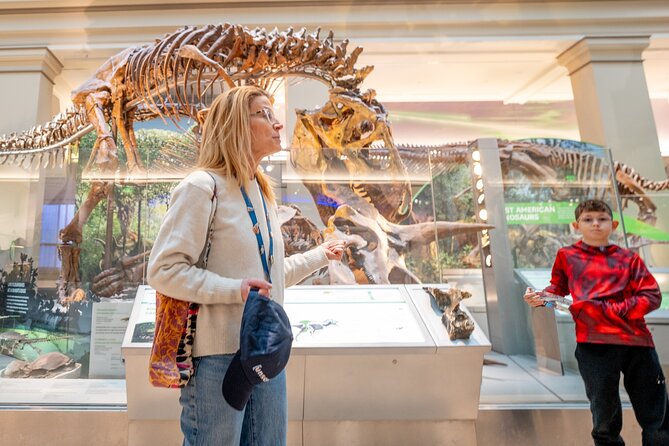
The fossil portion is likely the tour’s strongest draw for many people. You will see the largest complete T-Rex fossil found in the United States, then visit the Last American Dinosaurs exhibit.
A complete or near-complete skeleton gives you a much better sense of the animal than a single tooth or isolated bone. The size is memorable, but the arrangement of the bones also helps you picture how the animal was built and how scientists interpret incomplete evidence.
The Last American Dinosaurs exhibit adds a wider frame. Instead of treating the T-Rex as a lone celebrity, it places dinosaur life in a broader story of animals, environments, and extinction. Your guide can help connect separate displays so the fossils feel like evidence rather than a collection of large objects.
The museum also has a fossil lab where you can see scientists working on real fossils. This is an important difference from a standard highlight walk. You are not only looking at finished cases. You may also see the less polished side of museum science, where material is examined, prepared, and studied.
The exact amount of time at each fossil display depends on the guide and the group. If dinosaurs are your priority, make that clear at the start. The total museum visit lasts about one hour and 50 minutes, so you will need to accept a selective route.
Archaeology, bones, and the human story

The tour also includes archaeological areas and displays showing bones from human and animal history. This gives the visit a useful change of pace after the gems and dinosaurs.
These sections can be especially rewarding if you prefer evidence of past people and animals to famous showpieces. Bones and work areas show how scientists build conclusions from physical remains. They also make the museum feel like a place of study rather than only a display hall.
You may find yourself surprised by how much ground the museum covers. The experience is not limited to jewelry and fossils. It touches on archaeology, animal history, human history, geology, and laboratory work within a short period.
That range is also the source of a possible weakness. A two-hour visit can introduce these subjects, but it cannot give each one a full treatment. If you already know the museum well, you may prefer a slower visit focused on one department.
What $129 buys you
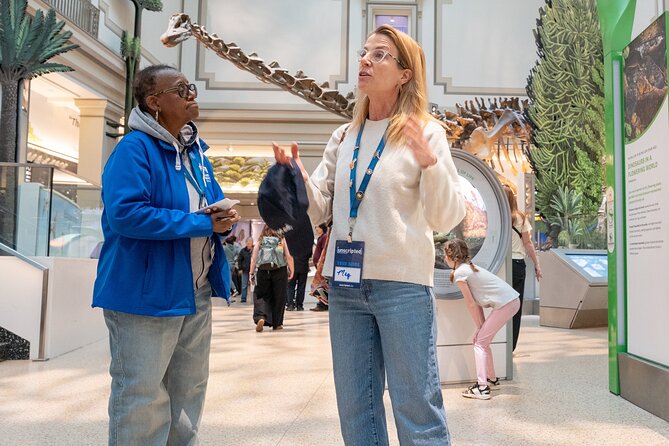
The price is $129 per person. Bottled water is included, and the tour lasts about two hours with a maximum of six participants.
That is a significant price for a museum visit, especially because the stop details show no separate admission ticket charge. You are paying mainly for the guide’s time, route planning, explanations, and the small-group format.
I see the value most clearly for first-time visitors with limited time. A large museum can cost you hours in wrong turns and surface-level label reading. A guide who takes you directly to Henry, the Hope Diamond, the dinosaur halls, the fossil lab, and the archaeological displays can make a short visit more useful.
The value is less clear if you enjoy wandering slowly or plan to spend most of the day in the museum. You could want more time with individual exhibits than a two-hour guided route allows. In that case, consider using the tour as an introduction, then continuing independently if your schedule and museum access allow.
Families may also need to calculate the total cost carefully. The six-person limit keeps the group manageable, but the per-person price adds up. It is best suited to people who place a high value on guidance and efficient sightseeing.
Timing, walking, and practical comfort
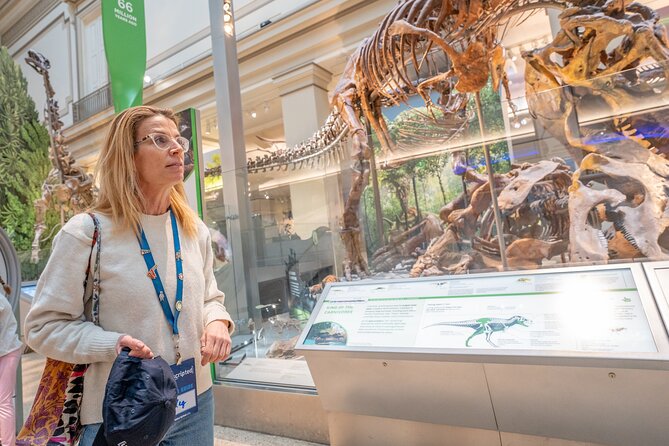
The experience runs for about two hours, including roughly 10 minutes at the welcome center and one hour and 50 minutes inside the museum. You should be ready to keep moving between displays and remain on your feet for much of the visit.
A moderate level of physical fitness is advised. The supplied details do not give a precise walking distance, stair count, or seating plan, so ask the provider if you need a clearer picture before booking.
Service animals are allowed. The tour is near public transportation, and the mobile ticket format reduces the need to carry a printed voucher.
You receive confirmation within 48 hours of booking, subject to availability. For flexibility, free cancellation is available until at least 24 hours before the start time. Cancellations made inside that window are not refunded, and changes inside 24 hours are not accepted.
Who will get the most from this visit
I would choose this tour if you are visiting Washington for a short stay and want a smart introduction to one of the Smithsonian museums. It is also a good fit if you like having a human guide explain why an object matters instead of reading every label alone.
It should suit families who want a manageable route through animals, dinosaurs, crystals, and human history. The small group size is helpful when children have questions or when you want to keep the visit focused.
It may also work well for a parent and adult child, a couple, or a small group of friends. The experience can become especially personal when the group is very small, as shown by the private-feeling visit Shane provided to one father and his child.
I would hesitate if you want a full museum study session, a slow photography visit, or a tour built entirely around one specialist subject. The guide covers many departments, and the schedule is fixed at about two hours.
Should you book this Smithsonian museum tour?
Book it if you want the museum’s greatest hits with useful explanations and do not want to spend your first hour finding them. The Hope Diamond, Henry the Elephant, the major T-Rex, the Last American Dinosaurs exhibit, original Capitol stones, fossil work areas, and archaeological displays make a strong two-hour route.
The decision turns on value. At $129, you should want more than entry and directions. You should want a small group, a clear route, and a guide who can turn a very large museum into a readable story.
Skip it if your priority is low-cost, unhurried exploration. Choose it if your Washington schedule is tight, your interests span several natural history subjects, and you want to leave feeling that you saw the museum’s essential sights rather than simply passing through it.
FAQ
How long does the Smithsonian Natural History Museum tour last?
The experience lasts about two hours. About 10 minutes are spent at the Unscripted Welcome Center, followed by roughly one hour and 50 minutes at the museum.
Where does the tour begin?
It begins at the Unscripted Welcome Center, 400 7th Street NW, suite 102, Washington, DC 20004.
Where does the tour end?
The tour ends at the Smithsonian National Museum of Natural History at 10th Street and Constitution Avenue NW, Washington, DC 20560.
How many people can join the tour?
The group has a maximum of six participants.
What can you see during the museum visit?
The route includes the Hope Diamond, Henry the Elephant, original stones from the United States Capitol, the fossil lab, the Last American Dinosaurs exhibit, archaeological areas, and the largest complete T-Rex fossil found in the United States.
Is bottled water included?
Yes. Bottled water is included.
Is the tour near public transportation?
Yes. The meeting area is near public transportation.
Are service animals allowed?
Yes. Service animals are allowed on the experience.
Is a mobile ticket available?
Yes. The experience provides a mobile ticket.
Can you cancel for a full refund?
Yes, if you cancel at least 24 hours before the experience start time. Cancellations made less than 24 hours in advance are not refunded.
More history tours in Washington DC
- DC Monuments & History Guided E-Cart Tour-Blankets
★ 4.5 · 450 reviews - Historic Georgetown: History, Gossip, & Architecture Walking Tour
★ 5.0 · 321 reviews - DC’s Original Food and History Walking Tour
★ 5.0 · 255 reviews - Tastes of Georgetown Food & History Small Group Walking Tour
★ 4.5 · 203 reviews
More museums in Washington DC
- Guided African American History Tour with Reserved Museum Entry
★ 4.5 · 1,180 reviews - African American History Tour with Museum of African American History Ticket
★ 4.5 · 390 reviews - National Mall Tour with 10 Stops & U.S. Capitol or Museum Entry
★ 4.5 · 331 reviews - Washington, DC: African American History Tour & Museum Entry
★ 4.9 · 312 reviews
Recently added around Washington DC
- America’s Main Street and White House Private Full-Day Tour★ 5.0 · 3 reviews
- Small Group Washington DC Night Tour★ 4.5 · 3 reviews
- Washington DC Neighborhoods Personalized Self-Guided App Tour★ 3.5 · 3 reviews
- Beyond the Closet Walking Tour★ 5.0 · 3 reviews
- Pirate Ship Treasure Hunt Cruise with Face Painting★ 4.5 · 3 reviews
- Sushi Masterclass in Washington D.C. (Includes 4-Course Meal)★ 5.0 · 3 reviews
- Private Washington DC Grand Tour with Changing of the Guard.★ 5.0 · 3 reviews
- 250th: National Archives & American History Museum Guided Tour★ 5.0 · 3 reviews
Natural History Museum, compared.
Smithsonian Museum of Natural History Small Group Tour: 8ppl Max
Read our review →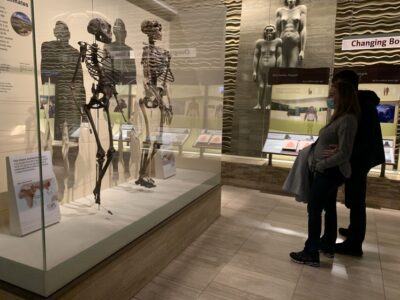
Smithsonian National Museum of Natural History Guided Tour
Read our review →
Smithsonian Natural History + Air and Space Museum Private Tour
Read our review →
Smithsonian Natural History + Air & Space Museum Tour 8ppl Max
Read our review →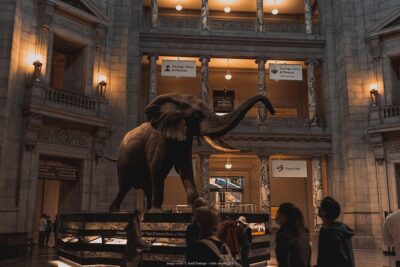
Two Smithsonian Museums Private Tour: American & Natural History
Read our review →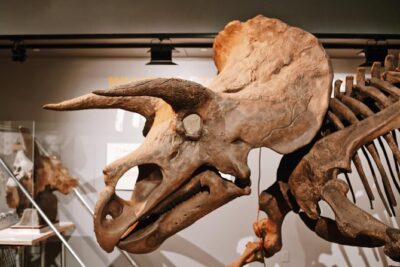
Smithsonian Natural History + Museum of American History 8ppl Max
Read our review →
Smithsonian Museum of Natural History Guided Tour
Read our review →Browse the lists this tour appears in