
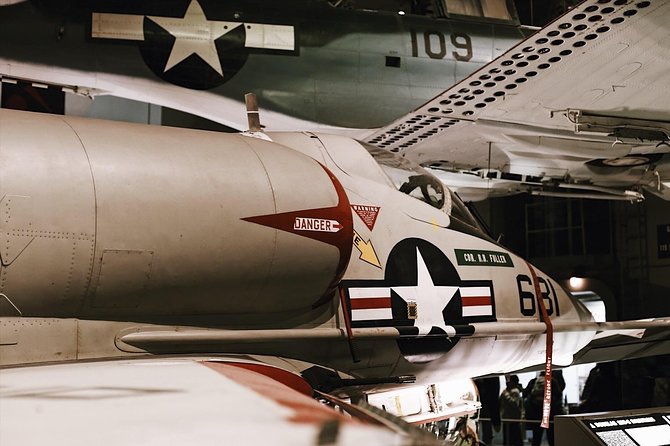
Reviewed · AIR & SPACE MUSEUM
The Smithsonian National Air & Space Museum Exclusive Guided Tour
The most useful part of this Smithsonian Air and Space Museum tour is having a guide shape a huge subject into a clear story. In about two and a half hours, you move from the Wright brothers and early powered flight to the Space Race, Apollo, and life in orbit. Guides such as Rebecca, Tim, Ryan, and Meghan are praised for lively storytelling and for keeping children involved.
I like the efficient route through the major displays and the chance to ask questions instead of simply reading labels. I also like the choice between a private tour and a lower-cost semi-private option. The main caution is important: the museum remains under major renovation, so several famous objects listed in the tour description may not be on view when you arrive.
In This Review
- Key points to know before booking
- Why a guided visit helps at this museum
- Starting at 600 Independence Avenue
- The Wright Flyer and the first steps into the air
- From Mercury to Apollo
- Skylab, Hubble, and the machines behind the missions
- The renovation changes what you will see
- What the guide adds for families and first visits
- Is $89.67 a fair price?
- Timing, walking, and practical limits
- Should you book this Smithsonian Air and Space tour?
- FAQ
- How long does the Smithsonian Air and Space Museum guided tour last?
- What exhibits may be included?
- Will every listed exhibit be on display?
- Is the museum admission included?
- Is the tour private?
- Can I cancel for a full refund?
Key points to know before booking
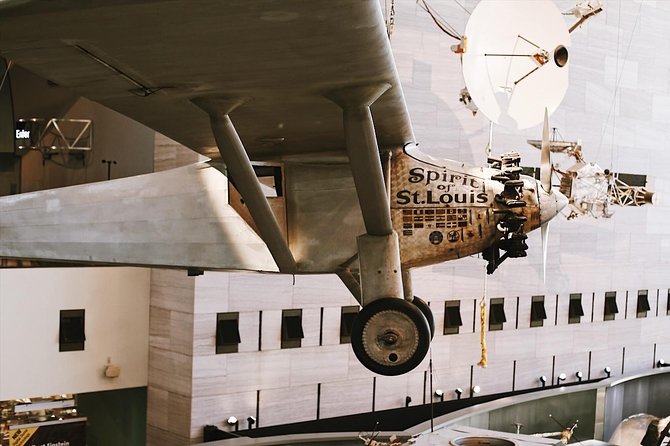
- Apollo and aviation highlights: See available displays connected with Neil Armstrong, Buzz Aldrin, the Wright brothers, John Glenn, Lindbergh, and NASA.
- A guide makes the scale manageable: The route focuses on major objects and adds the human stories behind them.
- Renovation changes the experience: Open galleries and available artifacts can shift, so check the museum’s current exhibition list before paying.
- Private and semi-private choices: Private bookings give your group its own guide, while the SAVE option does not.
- Entry is a practical benefit: Museum admission itself is free, but timed access and a guide can matter when free tickets are unavailable.
- Plan for security: Bring only a handbag or small, thin backpack, and allow time for security checks.
Why a guided visit helps at this museum
The National Air and Space Museum is the kind of place that can swallow an entire day. Aircraft hang overhead, spacecraft sit in cases, and wall panels trace more than a century of invention. Without a plan, you can spend a lot of time wandering and still miss the links between the objects.
A good guide gives the collection a human shape. The story begins with the basic problem of powered flight, then moves through military aviation, commercial air travel, rocketry, and the race to the Moon. You are not simply looking at a plane or capsule. You are hearing why it mattered, what problem it solved, and how one breakthrough led to the next.
The tour lasts about 2 hours and 30 minutes. That is enough time for a strong introduction, but not enough to examine every gallery. I would treat it as a focused first visit, not a complete museum survey. After the tour ends, you can continue sightseeing in Washington DC, and you may also continue exploring the museum if the open areas allow.
More Air and Space Museum tours:
- Smithsonian Museums Walking Tour with Reserved Air & Space Entry
★ 5.0 · 297 reviews - Smithsonian Air & Space Museum Guided Tour Semi-Private 8ppl Max
★ 5.0 · 154 reviews - Smithsonian Air & Space Museum Guided Tour 8ppl Max
★ 4.8 · 89 reviews
Starting at 600 Independence Avenue
The meeting point is the museum at 600 Independence Ave SW. You meet your guide there, rather than being collected from a hotel. For most people, a taxi, rideshare, or public transportation is the practical way to arrive.
Morning and afternoon start times are available. I prefer the morning if the museum is a central part of your day, since you can stay longer afterward. An afternoon booking can work well if you are fitting the museum around the National Mall, nearby memorials, or another appointment.
Give the operator your mobile phone number, including the country code. That detail matters if the meeting point or guide contact needs clarification. Also look for the guide rather than assuming you can simply walk in and begin on your own. One poor experience came from a customer who could not find the guide and ended up touring alone, so confirm the meeting instructions before arrival.
Security can create a short wait even with a timed or guided entry. Large bags and suitcases are not allowed. Bring only a handbag or small, thin backpack, and wear suitable clothing for museum entry.
The Wright Flyer and the first steps into the air
The Wright brothers’ Wright Flyer is one of the tour’s central objects, and it gives the opening part of the visit real force. This is the original aircraft associated with the first successful powered, controlled flight. Its appearance is delicate compared with later planes, which helps you understand how uncertain early aviation really was.
A guide can place the machine in context rather than leaving you with a famous name and a date. The early flight story leads naturally into design, testing, risk, and the rapid growth of aviation. That framework is especially useful for children, who may find a bare aircraft less interesting than the question of how anyone decided it could actually fly.
The collection also includes the Spirit of St. Louis, the original aircraft associated with Charles Lindbergh’s first solo nonstop flight across the Atlantic. Chuck Yeager’s Bell X-1, the aircraft linked with supersonic flight, adds another leap in scale and speed.
Amelia Earhart is part of the broader aviation story as well. Her career opens a discussion about women in aviation and the hazards of long-distance flight during the early years of air travel. A guide can connect those individual stories to the wider changes in aircraft design and public attitudes toward flight.
From Mercury to Apollo
The space galleries shift the mood from fragile fabric-and-wood aircraft to metal capsules, pressure suits, and machines built for an environment hostile to human life. John Glenn’s Mercury capsule is an original artifact and one of the clearest ways to understand the cramped reality of the first American crewed space missions.
The Apollo material brings the story to its most familiar point. Depending on what is open, the tour may include Neil Armstrong’s Apollo 11 spacesuit, Buzz Aldrin’s spacesuit, moon boots, moon rocks, or the Apollo 11 lunar module. These objects are valuable because they are physical and personal. A spacesuit shows the size of the person inside it. Moon boots and lunar samples make the Moon landings feel less like distant television history.
The Apollo 11 lunar module listed for the tour is a backup, not the machine that landed on the Moon. That does not make it unimportant. It shows the form and working space of the vehicle while the guide explains how the lunar landing fit into the larger Apollo program.
The museum’s space story also includes NASA’s development work, lunar missions, and the technology needed to send people beyond Earth. The guide may explain what astronauts do today, though the exact exhibits and route depend on the galleries open during your visit.
More Smithsonian museum tours:
- Smithsonian Museum of Natural History – Exclusive Guided Tour
★ 5.0 · 446 reviews - Smithsonian Museum of American History Exclusive Guided Tour
★ 5.0 · 245 reviews - Smithsonian Museum of Natural History Small Group Tour: 8ppl Max
★ 5.0 · 177 reviews - Smithsonian National Museum of Natural History Guided Tour
★ 4.1 · 159 reviews
Skylab, Hubble, and the machines behind the missions
Some of the most striking objects are not always the ones with the most famous names. A two-story Skylab backup can dominate a gallery simply because of its size. It helps you picture America’s first space station as a place where people lived and worked, not just as a dot moving above Earth.
The Hubble Space Telescope test vehicle offers a similar lesson. The original telescope remains in space, so a ground-based test vehicle is the practical way to see its scale up close. It shows the engineering side of astronomy and the amount of hardware needed to keep a scientific instrument functioning beyond Earth.
The tour description also includes a model of the Space Shuttle’s mid-deck. Since it is a model rather than an original flight vehicle, it should not be confused with the museum’s most authentic artifacts. Its value is visual: it helps you picture how astronauts worked and lived inside the shuttle.
Guides often earn their pay in these sections by connecting technical objects to daily life. A label can tell you what a machine is. A good explanation can tell you how astronauts slept, worked, trained, or dealt with cramped equipment. The best guides named in the feedback, including Rebecca, Tim, Ryan, Paul, Christopher, Leigh, and Meghan, are repeatedly praised for making difficult subjects understandable and keeping the pace moving.
The renovation changes what you will see
This is the tour’s biggest uncertainty, and you should take the warning seriously. The Air and Space Museum is undergoing major construction for multiple years. Galleries open and close in stages, and objects listed in a standard tour description may not be on display on your date.
That means you should not book this experience expecting a guaranteed checklist of the Wright Flyer, Apollo 11 spacesuit, Hubble test vehicle, Skylab, and every other named object. The operator adjusts the route to match the available displays, but it cannot show objects behind closed doors.
Check the museum’s official Now on View page before booking and again shortly before your visit. This gives you a more honest picture of the current galleries. The renovation is not automatically a reason to skip the tour. Several guides have made the open sections work well, and recent accounts describe lively visits despite closed areas. Still, the changing display list makes the tour less predictable than it would be in a fully open museum.
There is also a confusing contrast in the available information: some recent visitors describe newly renovated, interactive exhibition areas, while the tour’s own warning says major portions remain closed. Both conditions can be true at the same time as construction progresses. Plan around the current museum page, not an old list of highlights.
What the guide adds for families and first visits
This tour suits families particularly well when ages and interests vary. Several guides are praised for asking children questions, handling a chatty eight-year-old patiently, and explaining flight and space without turning the visit into a lecture.
A private guide can adjust the pace and respond to your group’s interests. You might spend more time on Apollo, early aircraft, or astronaut life, depending on what catches your attention. The private format also means only your group participates, which can make questions easier and reduce the worry that a child is slowing everyone down.
The semi-private option saves money, but the advertised inclusions say the guide is not exclusive to your group in that choice. Wheelchair-friendly service also does not apply to the SAVE semi-private option, so clarify the exact format before booking if accessibility is important.
For couples and adults with limited time, the tour works as a strong orientation. You get a guided route through major themes without giving up your entire day. Aviation enthusiasts may want more time with individual aircraft than the fixed itinerary provides, so plan to continue on your own afterward if the open galleries permit.
Is $89.67 a fair price?
The listed price is $89.67 per person. That is a substantial charge for a museum whose admission is free, and you should understand what you are paying for. The fee covers the guided experience, the route through available exhibits, and the practical advantage of arranging access at a designated time. It does not cover hotel pickup, drop-off, or gratuities.
The value is strongest when free museum tickets are unavailable during your Washington stay, when you have only a few hours, or when you want a guide to keep children engaged. A timed guided visit can also prevent a large museum from becoming an unfocused walk through displays.
The value is weaker if you enjoy reading every label at your own pace, already know the collection well, or mainly want to see one specific artifact that may be closed during renovation. Since museum admission is free, a self-guided visit is the better bargain when you can secure entry and have plenty of time.
Group discounts may improve the arithmetic for larger parties. Compare the private and semi-private prices carefully, since the cheaper SAVE option does not provide a guide exclusively for your group and does not include the same wheelchair-friendly promise.
Timing, walking, and practical limits
The experience lasts about two hours, though the advertised duration is approximately two and a half hours. Expect steady movement through the museum and a moderate level of physical activity. The tour is wheelchair friendly in the private format, but confirm the conditions of your selected booking.
Some rooms may require very quiet behavior or limit speaking. In those cases, your guide gives the explanation before you enter. That is useful, but it can also mean the live commentary pauses at certain points.
The museum is near public transportation, and you arrange your own way there and back. Gratuities are optional and not included. If you want freeze-dried ice cream, you can buy it in the gift shop at your own expense. It is a small, slightly silly souvenir, but it fits the subject perfectly.
Free cancellation is available up to 24 hours before the start time for a full refund. Changes or cancellations inside that 24-hour window are not accepted for a refund. The activity also requires a minimum number of participants, and if that minimum is not reached, you are offered another date or experience or a full refund.
Should you book this Smithsonian Air and Space tour?
Book it if you want a focused introduction, need help getting into a popular museum when free tickets are gone, or are traveling with children who will respond better to stories than to exhibit labels. The strongest part is the guide’s ability to connect the Wright brothers, commercial aviation, Mercury, Apollo, Hubble, and Skylab into one understandable journey.
I would be more cautious if your main goal is one named artifact. Renovation may remove it from view, even if it appears in the standard description. Check the museum’s current exhibition page first, then choose the private option if you want the most personal attention and wheelchair-friendly arrangement.
At $89.67, this is not a cheap way to enter a free museum. It can be a fair deal for saved time, organized access, and a lively guide. For a first visit to Washington’s Air and Space Museum, especially with a family, that structure may be worth more than the ticket price alone.
FAQ
How long does the Smithsonian Air and Space Museum guided tour last?
The tour lasts approximately 2 hours and 30 minutes. The itinerary also lists a two-hour museum visit, so allow about two and a half hours for the full activity.
What exhibits may be included?
Available exhibits may include the original Wright Flyer, Neil Armstrong’s Apollo 11 spacesuit, a backup lunar module, John Glenn’s Mercury capsule, Charles Lindbergh’s Spirit of St. Louis, Chuck Yeager’s Bell X-1, the Hubble Telescope test vehicle, a Skylab backup, and a Space Shuttle mid-deck model.
Will every listed exhibit be on display?
No. The museum is under major construction, and galleries and objects change as renovation progresses. Check the museum’s official Now on View page before your visit.
Is the museum admission included?
The guided museum tour is included, but the museum itself has free admission. The paid portion covers the guided experience and arranged access rather than a standard admission charge.
Is the tour private?
You can choose a private tour or a SAVE semi-private option. The private option provides a guide exclusively for your group. The exclusive guide feature does not apply to the semi-private choice.
Can I cancel for a full refund?
Yes, if you cancel at least 24 hours before the experience start time. Cancellations or changes made less than 24 hours in advance are not refunded or accepted.
More museums in Washington DC
- Guided African American History Tour with Reserved Museum Entry
★ 4.5 · 1,180 reviews - African American History Tour with Museum of African American History Ticket
★ 4.5 · 390 reviews - National Mall Tour with 10 Stops & U.S. Capitol or Museum Entry
★ 4.5 · 331 reviews - Washington, DC: African American History Tour & Museum Entry
★ 4.9 · 312 reviews
Recently added around Washington DC
- Small Group Washington DC Night Tour★ 4.5 · 3 reviews
- Washington DC Neighborhoods Personalized Self-Guided App Tour★ 3.5 · 3 reviews
- America’s Main Street and White House Private Full-Day Tour★ 5.0 · 3 reviews
- Beyond the Closet Walking Tour★ 5.0 · 3 reviews
- Sushi Masterclass in Washington D.C. (Includes 4-Course Meal)★ 5.0 · 3 reviews
- Pirate Ship Treasure Hunt Cruise with Face Painting★ 4.5 · 3 reviews
- Private Washington DC Grand Tour with Changing of the Guard.★ 5.0 · 3 reviews
- 250th: National Archives & American History Museum Guided Tour★ 5.0 · 3 reviews
Air & Space Museum, compared.

Smithsonian Museums Walking Tour with Reserved Air & Space Entry
Read our review →
Smithsonian Air & Space Museum Guided Tour Semi-Private 8ppl Max
Read our review →
Smithsonian Air & Space Museum Guided Tour 8ppl Max
Read our review →
City Bus Tour, Seasonal Cruise, Optional Air & Space or Monument
Read our review →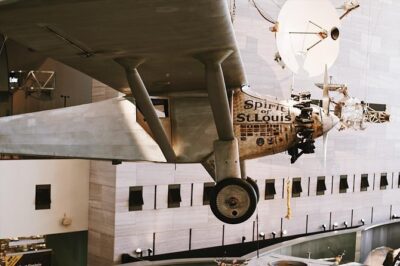
Smithsonian Natural History + Air and Space Museum Private Tour
Read our review →
Smithsonian Natural History + Air & Space Museum Tour 8ppl Max
Read our review →
Smithsonian Highlights Walking Tour with Air and Space
Read our review →
Browse the lists this tour appears in