
Reviewed · NATIONAL ARCHIVES
250th: National Archives & American History Museum Guided Tour
The most memorable part of this Washington tour may be the way it links objects to big American stories. You will see the Star-Spangled Banner, Jefferson’s writing desk, a Revolutionary War gunboat, Julia Child’s kitchen, and an early locomotive before entering the National Archives and heading up the Old Post Office tower.
I like the small group, capped at six, and the careful route from the National Museum of American History to the Archives. I also like the mix of famous national symbols and more personal objects, such as Julia Child’s kitchen. The main drawback is timing: three hours gives you a strong introduction, but not enough time to explore either museum at length.
In This Review
- Key points to know before booking
- Why this three-hour route works
- The National Museum of American History at 2 p.m.
- The Star-Spangled Banner
- Jefferson’s Writing Desk
- Gunboat Philadelphia
- Julia Child’s Kitchen
- The John Bull Locomotive
- From the museum to the Old Post Office tower
- Entering the National Archives with less waiting
- The guide makes the difference
- Is $75 a fair price?
- Timing, meeting point, and group size
- Who should book this Washington tour?
- Should you book it?
- FAQ
- Where does the tour begin?
- Where does the tour end?
- What time does the tour start?
- How long does the experience last?
- How many people can join the tour?
- Is National Archives entry included?
- Can I cancel for a full refund?
Key points to know before booking
- The tour begins with major American icons: See the Star-Spangled Banner and Jefferson’s writing desk at the National Museum of American History.
- The Old Post Office tower is a real highlight: Your guide leads you to the top for a broad view down Pennsylvania Avenue.
- The National Archives entry is handled for you: Skip-the-line access and a guided entrance help reduce waiting.
- Canden is one guide you may meet: Her storytelling kept children engaged and added local Washington detail to the walk.
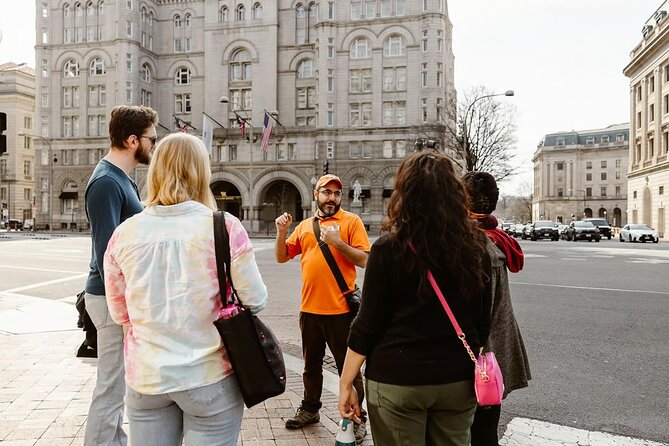
- The group is limited to six people: That makes it easier to hear the guide and ask questions.
- You finish inside the Archives: You can continue looking around after the formal tour ends.
Why this three-hour route works
Washington has no shortage of important buildings and museum displays. The problem is knowing what deserves your time. The National Museum of American History alone can easily swallow an afternoon, while the National Archives has a compact but powerful set of documents that many people rush through.
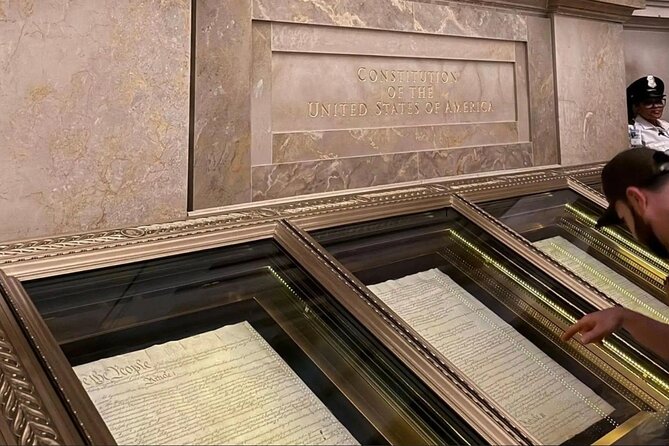
This tour gives you a clear path. You meet at the Smithsonian National Museum of American History at 2 p.m., spend about 90 minutes with selected exhibits, walk through the city with a local guide, and enter the National Archives for about 40 minutes. The tour ends inside the Archives Museum.
I like this format for a first visit because it gives you a story rather than a pile of objects. You are not left to wander from one display to the next, wondering which case matters. The guide explains how political ideals, war, technology, popular culture, and daily life fit together.
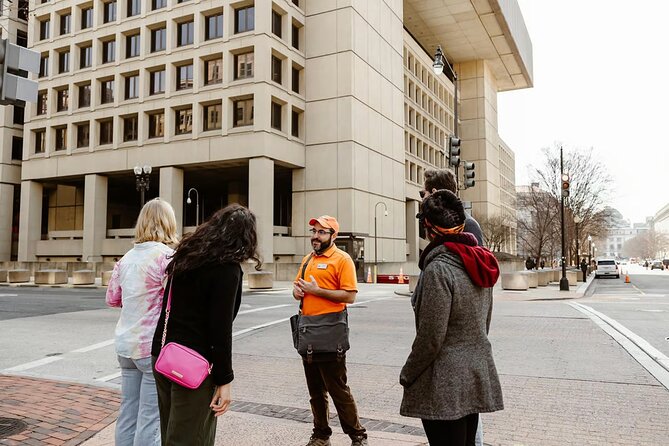
The group size matters here. With no more than six people, the experience should feel far more personal than a large museum walk. You can hear the guide without straining, and questions are easier to ask. The small size also helps the walking portions feel manageable, though you should still expect to be on your feet for much of the three hours.
More American History Museum tours:
- Guided African American History Tour with Reserved Museum Entry
★ 4.5 · 1,180 reviews - African American History Tour with Museum of African American History Ticket
★ 4.5 · 390 reviews - Washington, DC: African American History Tour & Museum Entry
★ 4.9 · 312 reviews
The National Museum of American History at 2 p.m.
The first stop is the National Museum of American History, at 1300 Constitution Avenue Northwest. Admission to the museum is included as part of the experience, and the museum portion lasts about an hour and a half.
You will not see everything. That is a benefit, not a flaw. The museum holds far more than can fit into one visit, so the value here comes from seeing carefully chosen pieces that connect to a larger story.
The Star-Spangled Banner
The original flag that inspired the American national anthem is the obvious centerpiece. It dates to the War of 1812, a conflict that can seem distant in a textbook but becomes more tangible when you are looking at the actual flag tied to the anthem.
Your guide can help turn the display from a national symbol into a human story about war, identity, and memory. This is one of the moments when a short explanation adds real value, since many people know the anthem but have never considered the physical object behind it.
The flag is also a reminder that famous symbols are not abstract. They are made, carried, damaged, preserved, and later given new meaning. That makes this stop useful for adults and children alike.
Jefferson’s Writing Desk
Thomas Jefferson’s small portable writing desk is another powerful object. It is associated with the drafting of the Declaration of Independence, so its size can be surprising. Grand political language came from a practical piece of furniture that could be moved and used by one person.
I like this stop because it brings the Declaration down from the level of marble buildings and official portraits. You see the working tool behind the document. The desk also gives the guide a chance to discuss how ideas become written words, and how written words can shape a nation.
It is a compact display, so your guide’s explanation is especially useful. Without context, you might walk past it quickly.
More National Archives tours:
- VIP Best of DC with US Capitol + National Archives Reserved Entry
★ 4.5 · 2,491 reviews - Skip-the-line National Archives Building Exclusive Guided Tour
★ 5.0 · 381 reviews - National Archives Skip the Line Guided Tour Semi-Private 6ppl Max
★ 5.0 · 196 reviews - VIP National Archives Skip-The-Line Guided Tour 6 ppl Max
★ 5.0 · 126 reviews
Gunboat Philadelphia
The Gunboat Philadelphia offers a very different kind of evidence. Recovered from Lake Champlain, this Revolutionary War vessel shows the physical side of the fight for independence and early American naval warfare.
A ship preserved from that period gives you something that a painting or document cannot. You can think about the materials, construction, and harsh conditions involved in using such a vessel. It also broadens the usual Revolutionary War story beyond famous speeches and battlefields.
This is a good example of why the museum stop is more than a list of patriotic objects. The displays cover military conflict, political writing, technology, work, and culture.
Julia Child’s Kitchen
Julia Child’s kitchen shifts the story into the modern era. It was used for filming The French Chef, and it represents more than television cooking. The display points to postwar cultural change, the spread of food media, and the way Americans adopted new ideas about home life and cooking.
This may be the most approachable stop for people who are less interested in military or political history. The kitchen feels personal and familiar. You can picture the relationship between a public figure and the ordinary tools of daily life.
I also like the contrast between this display and Jefferson’s desk. Both are workspaces, but they belong to very different eras and forms of influence. One helped produce a founding document. The other helped change how many Americans thought about food and home entertaining.
The John Bull Locomotive
The John Bull locomotive gives the museum visit a strong industrial and economic thread. It is one of the oldest surviving steam locomotives in the world and helps explain how railroads changed the country.
Rail travel supported industrial growth, westward expansion, and the movement of goods and people. The locomotive makes those broad changes easier to picture. Instead of thinking only in terms of dates and economic statistics, you see the machine that helped power a new age.
The locomotive is also a useful counterpoint to the Star-Spangled Banner and Jefferson’s desk. The museum is showing not just what Americans believed, but how they built, traveled, worked, cooked, and communicated.
From the museum to the Old Post Office tower
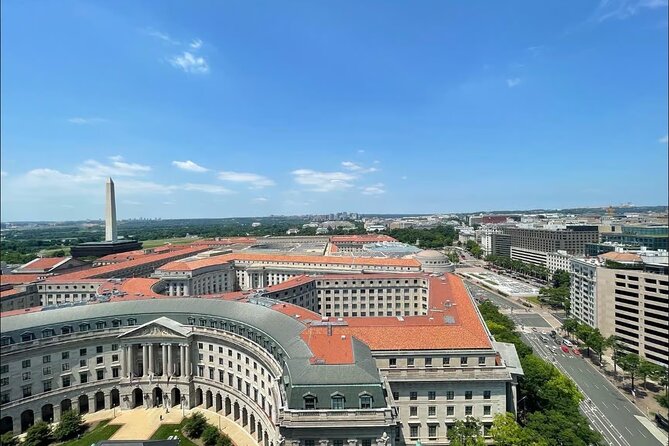
The experience includes a guided entrance to the top of the Old Post Office Pavilion. This is one of the strongest practical reasons to choose this tour over a standard museum visit.
The tower provides a view down Pennsylvania Avenue, and the route gives you a fresh sense of how central Washington’s civic buildings are arranged. From above, the city’s formal design becomes easier to understand. You are not simply looking at a skyline. You are seeing the avenue that connects important parts of the capital.
One review singled out this view as the highlight, along with the guide’s stories about Washington. That makes sense. Museum objects can be impressive, but a high viewpoint helps you place the city itself in context.
The Old Post Office visit also breaks up the indoor museum time. After an hour and a half among exhibits, a change of pace is welcome. You get a city view, a short walking experience, and local stories before reaching the Archives.
The exact amount of time spent at the tower is not specified, so do not book this expecting a long observatory visit. Think of it as an important part of a guided route, not a separate tower tour.
Entering the National Archives with less waiting
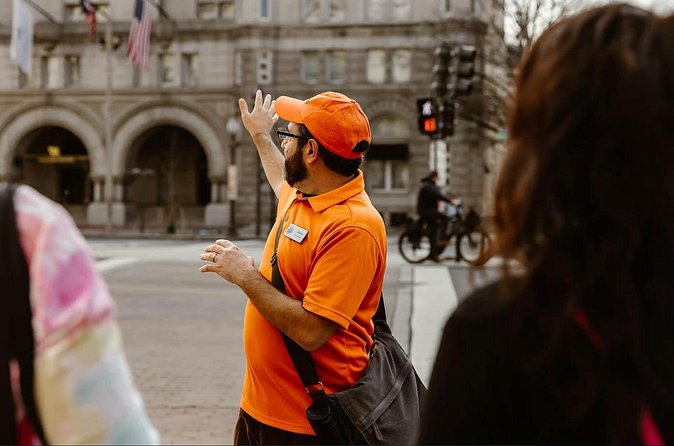
The second major museum stop is the National Archives Museum at 701 Constitution Avenue Northwest. The tour provides skip-the-line access and a guided entrance, with about 40 minutes set aside for this part.
The practical advantage is clear. You do not have to spend your limited Washington afternoon figuring out the entrance process or waiting in the regular line. The guide brings the group in and helps direct your attention to the key material.
Forty minutes is enough for an introduction, but it is not a full Archives visit. You should expect to see the major highlights with guidance rather than inspect every exhibit in detail. The tour ends inside the museum, so you can stay afterward and continue exploring if your schedule allows.
That finish is particularly useful. Some guided experiences hurry you out as soon as the formal portion ends. Here, you can take the introduction, then remain with the exhibits and revisit anything that caught your attention.
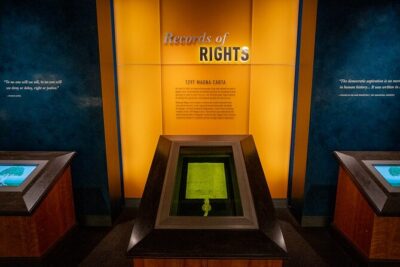
The National Archives is a natural partner to the American History Museum. The first stop shows objects connected to American life and change. The Archives brings you closer to the country’s founding and governing documents. Together, the two stops create a stronger picture than either one alone.
The guide makes the difference
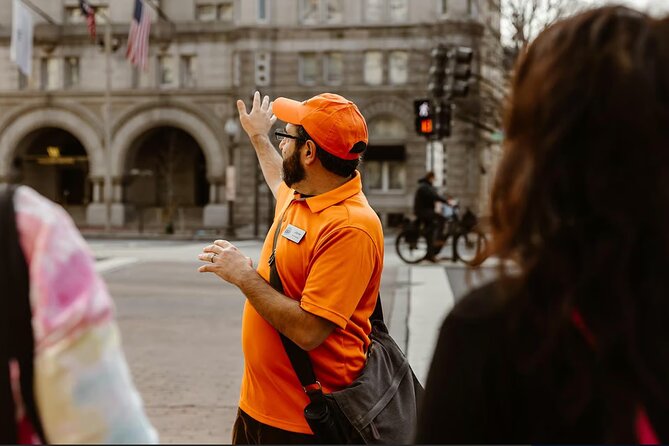
A museum tour succeeds or fails with its guide. The objects are important, but the guide determines whether you simply look at them or understand why they matter.
Canden is specifically associated with this experience, and the feedback about her style is unusually clear. She used stories, kept children interested, and added detail about Washington beyond the museum displays. That is important if you are visiting with a family. Children often lose patience in large museums, but a lively explanation and a short list of strong highlights can change the mood.
The guide is also there to connect the stops. Without that link, the Old Post Office tower might feel like a pleasant extra, and the Archives might feel like a separate museum visit. With a good guide, the route becomes a single story about the country and its capital.
You should still remember that guides vary. Canden may lead your departure, but the provider does not promise a specific guide in the details supplied. The experience is offered in English, and the group limit gives the guide a good setting for questions and conversation.
Is $75 a fair price?
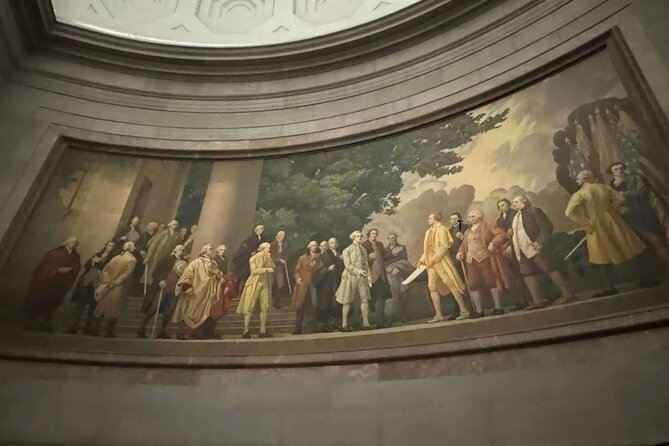
The price is $75 per person. That is more than simply entering a free museum, but admission alone is not what you are paying for.
The cost covers a local guide, the walking route, entry handling at the National Archives, and access to the Old Post Office tower. The National Museum of American History portion is listed with free admission, while National Archives access is included in the tour. The main value comes from saving time and getting a clear explanation of what to see.
I would consider the price fair for a first-time Washington visit, especially if you have only one afternoon for these sights. The small group is another part of the value. A group of six can ask questions and move through the museums more efficiently than a large crowd.
The price may feel less worthwhile if you enjoy reading every label and setting your own pace. You will have limited time at both museums, and the tour will choose the main stops for you. In that case, you might prefer to visit independently and spend several hours at the American History Museum before giving the Archives a separate visit.
For families, the price can make sense because the guide helps keep the visit focused. For repeat visitors, the value depends on whether you want stories and city context or prefer to return to specific exhibits on your own.
Timing, meeting point, and group size
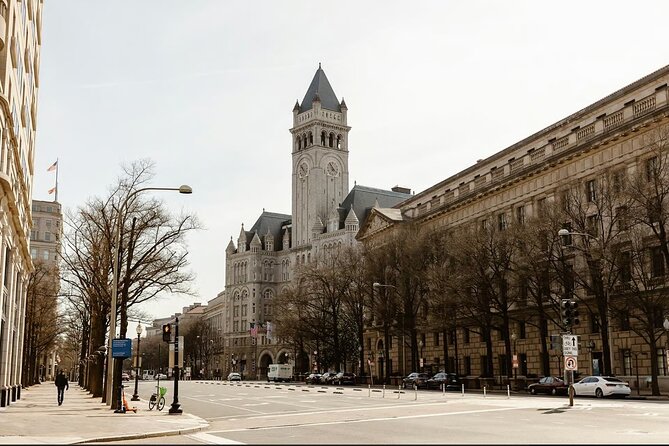
The tour starts at 2 p.m. outside the Smithsonian National Museum of American History, 1300 Constitution Avenue Northwest. It ends inside the National Archives Museum at 701 Constitution Avenue Northwest.
That point-to-point design is handy. You finish near another major Washington sight rather than returning to the starting point. Plan your afternoon around the final museum location, especially if you have dinner or another booking afterward.
The duration is about three hours. The museum schedule includes approximately 90 minutes at the American History Museum and 40 minutes at the Archives, with the remaining time used for walking, the Old Post Office tower, and explanations along the way.
The activity is offered in English and uses a mobile ticket. It is near public transportation, and service animals are allowed. Most people can participate, but you should expect a walking-heavy afternoon and time spent standing in museum spaces.
The group maximum is six people. That is one of the clearest advantages over a large coach or lecture-style tour. It also means availability can be limited, so advance planning matters. This experience is booked, on average, 47 days ahead.
Who should book this Washington tour?
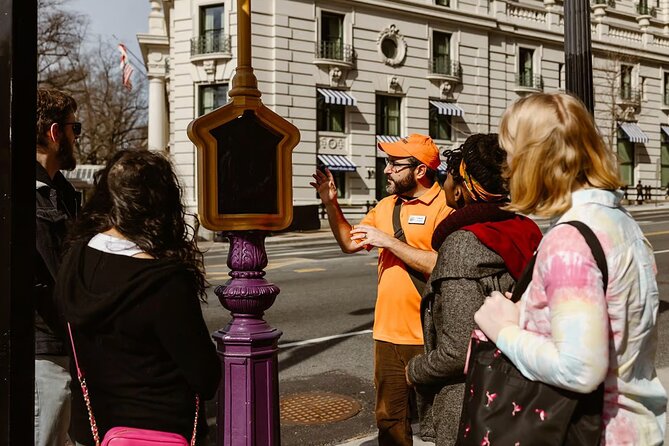
I would choose this tour if you want a focused first look at American history without spending hours deciding where to go inside two major museums. It suits families, couples, and solo visitors who like context, stories, and a guide who can answer questions.
It is especially useful if you want several different kinds of history in one afternoon. The route moves from war and founding documents to television, cooking, transport, architecture, and city views.
I would also recommend it if the National Archives is a priority but you do not want to deal with its entrance line on your own. The guided access makes the afternoon easier to manage.
You may want to skip it if you prefer a slow museum visit. Ninety minutes at the American History Museum is enough for highlights, not for every gallery. The same is true of the 40-minute Archives visit, though you can remain inside after the tour ends.
Cancellation is free when you cancel at least 24 hours before the start time. Cancellations or changes made less than 24 hours before the 2 p.m. start are not refunded or accepted, so keep that deadline in mind.
Should you book it?
Book this experience if you want a small, guided introduction to Washington’s most important national objects, plus a tower view and easier entry to the Archives. The combination is well chosen, and the route gives children and adults several ways into the story.
The best reasons to book are the group size, the guide-led storytelling, and the Old Post Office viewpoint. The main caution is the limited museum time. You will leave with a strong framework and a list of places worth revisiting, not a complete examination of either museum.
For a first Washington visit, I think $75 is a reasonable trade for focus and local guidance. If you already know these museums well, spend the money only if the small group and city stories appeal to you.
FAQ
Where does the tour begin?
It begins at the Smithsonian National Museum of American History, 1300 Constitution Avenue Northwest, Washington, DC 20560.
Where does the tour end?
The tour ends inside the National Archives Museum at 701 Constitution Avenue Northwest. You can continue exploring the exhibits after the formal tour ends.
What time does the tour start?
The start time is 2 p.m.
How long does the experience last?
The tour lasts approximately three hours.
How many people can join the tour?
The group has a maximum of six participants.
Is National Archives entry included?
Yes. Skip-the-line access and a guided entrance to the National Archives are included.
Can I cancel for a full refund?
Yes, if you cancel at least 24 hours before the experience start time. Cancellations or changes made less than 24 hours in advance are not accepted, and the amount paid is not refunded.
More history tours in Washington DC
- DC Monuments & History Guided E-Cart Tour-Blankets
★ 4.5 · 450 reviews - Historic Georgetown: History, Gossip, & Architecture Walking Tour
★ 5.0 · 321 reviews - DC’s Original Food and History Walking Tour
★ 5.0 · 255 reviews - Smithsonian Museum of American History Exclusive Guided Tour
★ 5.0 · 245 reviews
More museums in Washington DC
- Smithsonian Museum of Natural History – Exclusive Guided Tour
★ 5.0 · 446 reviews - National Mall Tour with 10 Stops & U.S. Capitol or Museum Entry
★ 4.5 · 331 reviews - Smithsonian Museums Walking Tour with Reserved Air & Space Entry
★ 5.0 · 297 reviews - Capitol Combo: U.S. Capitol + Library Congress or Capitol Museum
★ 4.5 · 294 reviews
Recently added around Washington DC
- Small Group Washington DC Night Tour★ 4.5 · 3 reviews
- Washington DC Neighborhoods Personalized Self-Guided App Tour★ 3.5 · 3 reviews
- America’s Main Street and White House Private Full-Day Tour★ 5.0 · 3 reviews
- Beyond the Closet Walking Tour★ 5.0 · 3 reviews
- Pirate Ship Treasure Hunt Cruise with Face Painting★ 4.5 · 3 reviews
- Sushi Masterclass in Washington D.C. (Includes 4-Course Meal)★ 5.0 · 3 reviews
- Private Washington DC Grand Tour with Changing of the Guard.★ 5.0 · 3 reviews
- Private Tour In different languages★ 5.0 · 3 reviews
National Archives, compared.

VIP Best of DC with US Capitol + National Archives Reserved Entry
Read our review →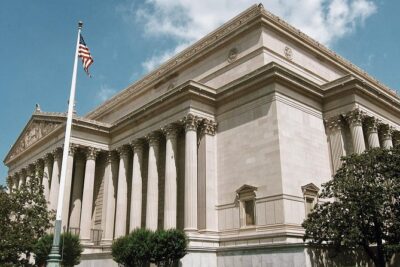
Skip-the-line National Archives Building Exclusive Guided Tour
Read our review →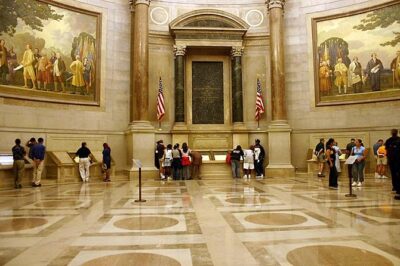
National Archives Skip the Line Guided Tour Semi-Private 6ppl Max
Read our review →
VIP National Archives Skip-The-Line Guided Tour 6 ppl Max
Read our review →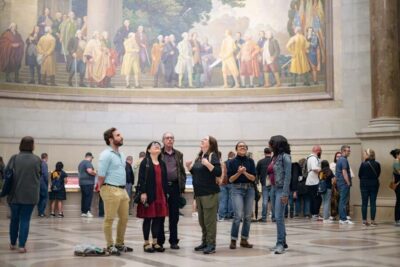
National Archives + American History Museum Tour 8ppl Max
Read our review →
National Archives Skip the Line Tour Semi-Private 6ppl Max
Read our review →Browse the lists this tour appears in