
Reviewed · NATIONAL ARCHIVES
National Archives + American History Museum Tour 8ppl Max
The most powerful part of this Washington tour is the moment you face the original Declaration of Independence and U.S. Constitution in the National Archives Rotunda. Later, you move from founding documents to the objects that shaped daily American life, including the Star-Spangled Banner, Dorothy’s ruby slippers, and the Greensboro lunch counter.
I like the small eight-person limit, which gives your guide room to answer questions, and I like the smart pairing of two museums that tell different parts of the same story. The main concern is coordination at the second museum: one guest reported that no guide appeared for the American History portion, so confirm the afternoon meeting details before you set out.
In This Review
- Key Points at a Glance
- Two Museums, One Big American Story
- Meeting the Guide at the National Archives
- The National Archives Rotunda and the Meaning of Citizenship
- The Lunch Break and Move to American History
- The Star-Spangled Banner and America’s Public Memory
- Civil Rights, First Ladies, and Dorothy’s Ruby Slippers
- What the Eight-Person Limit Adds
- How Much Time Do You Really Need?
- Who Should Book This Washington Tour?
- Should You Book It?
- FAQ
- Where does the tour begin?
- Where does the tour end?
- How long does the tour last?
- How many people can join the tour?
- Is lunch included?
- What does the National Archives visit include?
- What can you see at the American History Museum?
- Is hotel pickup included?
- Can I cancel for a refund?
Key Points at a Glance
- Original founding documents: See the handwritten Declaration of Independence, U.S. Constitution, and Bill of Rights in the National Archives Rotunda.
- A 1297 Magna Carta: The Rubenstein Gallery adds useful context about law, rights, and the changing meaning of citizenship.
- Eight people maximum: The small group makes it easier to ask questions and shape the discussion around your interests.
- America’s famous objects: The second museum includes the Star-Spangled Banner, George Washington’s Revolutionary sword, Lincoln’s top hat, and Dorothy’s ruby slippers.
- A half-day with a lunch break: The five-and-a-half-hour schedule covers both museums without asking you to spend the whole day on one building.
- Strong guide potential: Brenda and Christina received especially warm praise for clear, personal, engaging tours.
Two Museums, One Big American Story
This experience links the ideas behind the United States with the objects that later became part of its shared memory. That makes it more useful than visiting the two museums separately with no plan.
You begin with political foundations at the National Archives. The focus is on how the country was created, what its founding promises meant, and who was included in those promises. After lunch, the Smithsonian National Museum of American History shifts toward war, protest, presidents, popular culture, and national symbols.
That change of tone is part of the appeal. The Archives asks you to think about words written on parchment. The American History Museum asks you to think about the objects people remember. In five and a half hours, you get both the formal story and the personal one.
The tour costs $166.15 per person, which is a serious price for two museums that do not charge large admission fees on their own. You are paying mainly for the guide, planning, small-group format, and help making sense of major displays. I would consider it good value if you want interpretation and have limited time in Washington. It is less attractive if you prefer to wander quietly or already know the museums well.
More American History Museum tours:
- Guided African American History Tour with Reserved Museum Entry
★ 4.5 · 1,180 reviews - African American History Tour with Museum of African American History Ticket
★ 4.5 · 390 reviews - Washington, DC: African American History Tour & Museum Entry
★ 4.9 · 312 reviews
Meeting the Guide at the National Archives
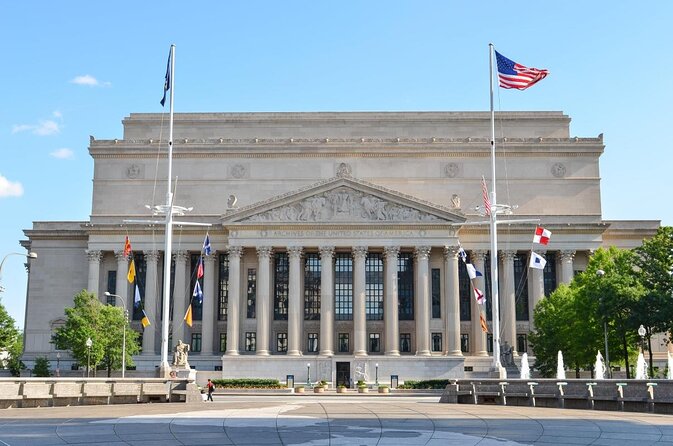
You make your own way to the National Archives Museum at 701 Constitution Avenue NW. The start time is 10 a.m., and the tour does not include hotel pickup or drop-off, so plan on public transportation, a taxi, or Uber.
The location is near other National Mall sights, but give yourself enough time to find the correct entrance and pass security. The tour includes skip-the-line access, though that does not mean you will avoid every delay. Security measures can create lines, and small bags are the safest choice. Large bags and suitcases are not permitted inside, while handbags and small, thin backpacks are allowed through security.
Once inside, your guide takes you to the Rotunda. This is the emotional center of the morning. The founding documents are not copies or modern reproductions. You are looking at the original handwritten Charters of Freedom, displayed under controlled conditions in a grand, quiet setting.
The National Archives Rotunda and the Meaning of Citizenship
The Declaration of Independence is often treated like a familiar schoolroom text. Seeing the actual document changes that. The handwriting, age, and physical presence bring the political crisis of the 1770s closer than a textbook can.
Your guide puts the document into context, along with the U.S. Constitution and Bill of Rights. The value here is not simply knowing what each document is. It is hearing how the documents relate to the creation of a new government and to arguments that continued long after independence.
The discussion of citizenship is particularly useful. The declaration that all men are created equal did not immediately create equal political rights for everyone. A good guide can help you look at the gap between the language of the founding documents and the people excluded from full citizenship.
That is where the Archives visit becomes more than a quick photograph stop. You are encouraged to think about who counted as part of the nation at different points in American history. The subject is complicated, and the tour’s best moments should give you room to consider it rather than reduce it to a simple patriotic story.
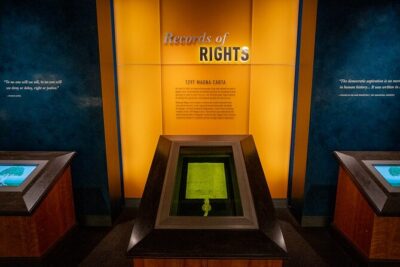
The Rubenstein Gallery adds another layer with a 1297 copy of the Magna Carta. Its presence helps explain that American political ideas did not appear from nowhere. The document offers a look at older arguments about limits on power, law, and the rights of subjects.
Allow roughly two hours for the Archives portion. Some rooms require quiet or limit how much a guide can speak inside. Your guide provides information before entering those spaces, so do not expect a nonstop lecture beside every display.
The Lunch Break and Move to American History
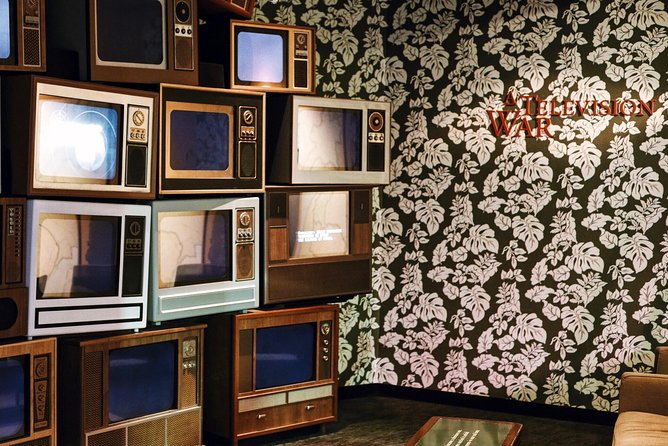
After the Archives, you get a lunch break at your own expense. The schedule includes the break within the total five-and-a-half-hour duration, but the supplied details do not specify a restaurant, meal arrangement, or exact length of the break.
That means you should budget for lunch rather than assume food is included. Keep the break practical. The afternoon museum has a great deal to cover, and a long meal could cut into your time with the exhibits.
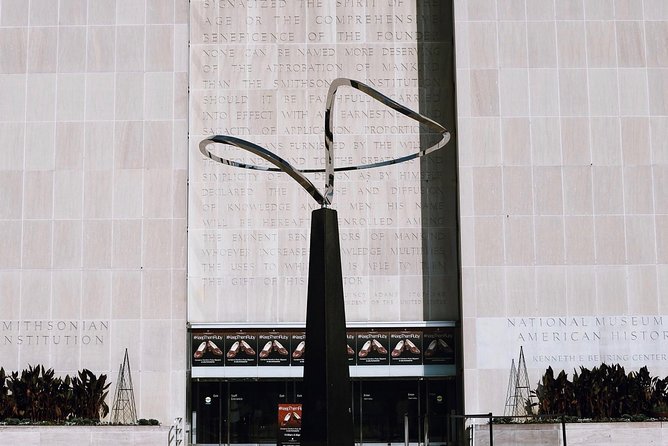
The National Museum of American History is at 1300 Constitution Avenue NW. The tour ends there, close to other National Mall attractions. Since there is no return transportation, you can continue sightseeing from the museum or make your own way elsewhere in the city.
One practical point matters here: confirm the transition plan with your guide. Most of the experience is designed as one connected tour, but one account described arriving for the 1 p.m. American History portion and finding no guide. That appears to be an isolated service failure, not a feature of the tour, but it is a fair reason to keep the provider’s phone number handy and make sure your mobile number, including country code, is correct when booking.
More National Archives tours:
- VIP Best of DC with US Capitol + National Archives Reserved Entry
★ 4.5 · 2,491 reviews - Skip-the-line National Archives Building Exclusive Guided Tour
★ 5.0 · 381 reviews - National Archives Skip the Line Guided Tour Semi-Private 6ppl Max
★ 5.0 · 196 reviews - VIP National Archives Skip-The-Line Guided Tour 6 ppl Max
★ 5.0 · 126 reviews
The Star-Spangled Banner and America’s Public Memory
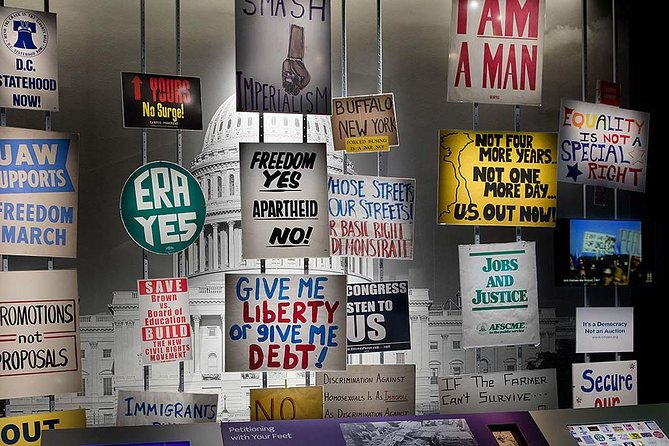
The American History Museum portion lasts about two and a half hours. That is enough time for a guided look at major objects, but not enough to see every gallery in a large Smithsonian museum.
The Star-Spangled Banner is the headline object. The flag flew over Fort McHenry and helped inspire the poem that became the national anthem. Its size, age, and condition give you a physical sense of the war story behind a song most Americans know by heart.
The museum also displays George Washington’s Revolutionary sword. Placed within the larger story of the Revolution, it connects a famous person to the material world of war and leadership. The strength of a guide here is the ability to explain why a particular object survived, became famous, and continues to matter.
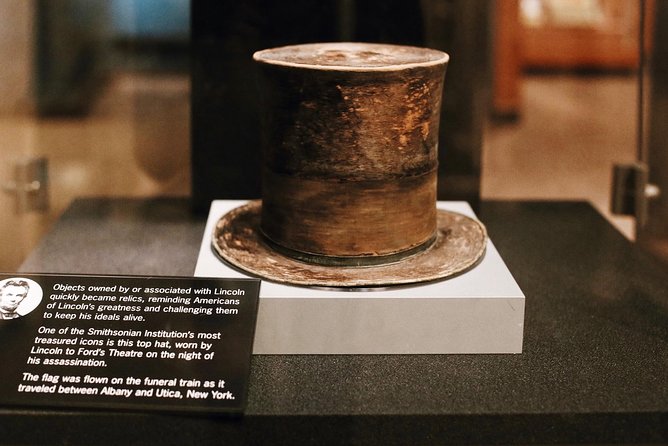
You will also see the top hat Abraham Lincoln wore on the night he went to Ford’s Theatre. It is a small object compared with the national flag, yet it carries a very different kind of weight. The hat points toward memory, mourning, and the way personal belongings can become national symbols.
These objects are not important only because they belonged to famous people. They help you see how Americans use physical things to remember wars, presidents, victories, grief, and national identity.
Civil Rights, First Ladies, and Dorothy’s Ruby Slippers
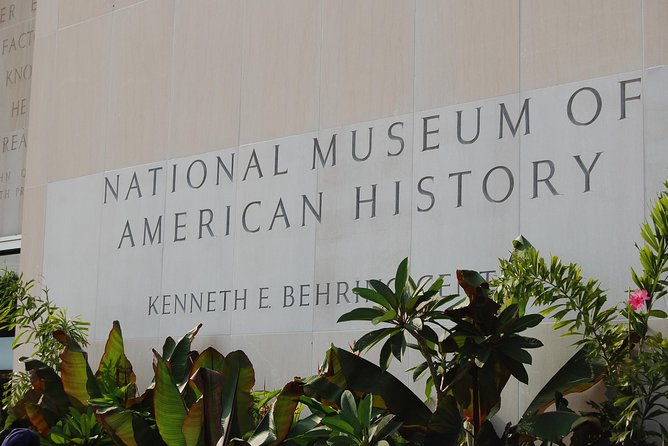
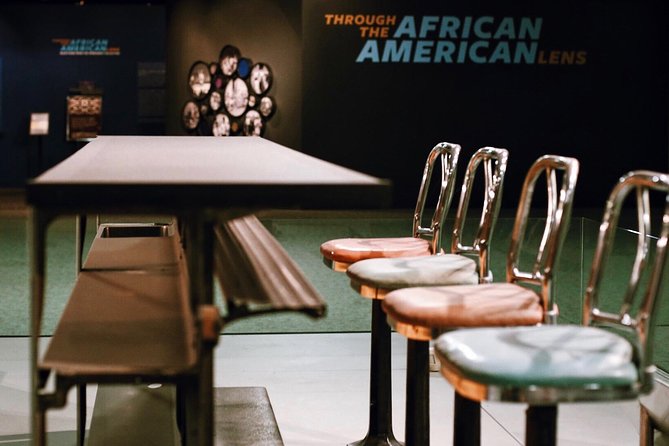
The tour also includes the Greensboro lunch counter associated with the civil rights movement. This display shifts the story away from presidents and founding fathers and toward protest, segregation, and ordinary people forcing public change.
The counter is powerful because it connects a broad national struggle to a familiar public setting. A lunch counter was part of daily life, yet access to it was controlled by race. Seeing the object gives the civil rights story a clear physical anchor.
The First Ladies exhibit adds a different view of the presidency. The gowns are visually memorable, but the gallery can also open questions about public roles, political image, family life, and the expectations placed on women connected to the White House.
Dorothy’s ruby slippers from The Wizard of Oz are another major draw. They may seem far removed from constitutional law or civil rights, but that contrast is exactly why the museum works. Popular culture is part of the country’s shared memory, and the slippers show how a film object can become an emotional touchstone for generations.
The museum’s most effective displays often place private memories beside public events. You may recognize a movie prop, a military object, or a political artifact for different reasons than the person beside you. A guide can connect those reactions to the larger idea of what Americans choose to preserve.
What the Eight-Person Limit Adds
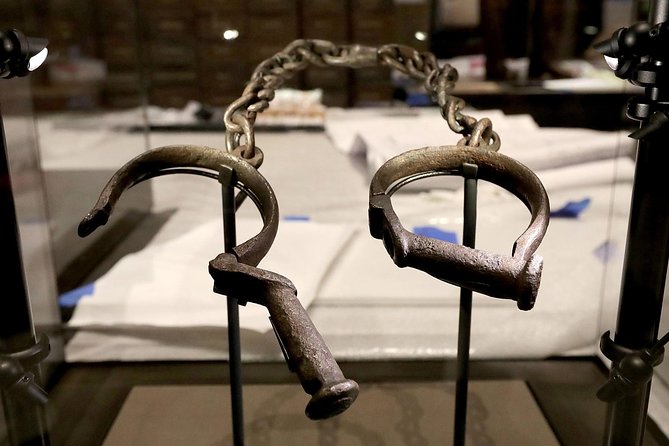
The tour guarantees no more than eight people. That is a meaningful difference from a large group moving through crowded museum galleries.
With eight people, you can usually hear the guide more easily and ask a follow-up question without slowing down a long line. The guide also has a better chance to learn whether you care most about the founding documents, presidential history, civil rights, or popular culture.
The small group does not guarantee a private tour. You choose between private and small-group options, and minimum numbers apply. At least two people are required for the tour to operate, and if that minimum is not met, an alternative or full refund is offered.
Private touring can make sense for families, groups with a shared interest, or anyone who wants to set the pace. The small-group option should suit people who want some personal attention without paying for a fully private guide.
Guide quality matters greatly on a museum tour. Brenda received especially strong praise for making a day comfortable for a blind wife and a husband with mobility issues, while Christina was described as personal and engaging. Those accounts suggest that the right guide can adjust the tone and focus of the visit instead of delivering a fixed speech.
Still, the written policy says the tour is not available for people with walking disabilities or wheelchair users, and it asks for a moderate level of physical fitness. If you have mobility concerns, contact the provider before booking. Do not rely on a general promise of flexibility.
How Much Time Do You Really Need?
The stated duration is about five hours and thirty minutes, including lunch. The Archives receives two hours, while the American History Museum receives two and a half hours.
That division is sensible. The Archives is smaller and focused, while the Smithsonian museum has many more objects and sections. You will not see everything at the American History Museum, but a guide can steer you toward the displays most likely to matter.
The tour begins at 10 a.m. and ends at the American History Museum. It works well as a central part of a full day on the National Mall. You can visit another nearby attraction before or after, though the tour itself is enough activity for anyone who wants a measured pace.
Do not book this expecting a leisurely museum day. You will walk between displays, stand during explanations, and move at the group’s pace. Comfortable shoes and light luggage are practical choices.
Who Should Book This Washington Tour?
I would recommend this experience to a first-time Washington visitor who wants the major highlights without spending hours planning a route through two large institutions.
It also suits families with older children and adults who enjoy stories more than labels. The objects are famous, but their meaning is easier to grasp when someone explains the circumstances behind them.
History-focused visitors may find the Archives especially worthwhile, while film fans and those interested in presidential or civil rights history will have plenty to look forward to at the second museum. The small-group limit is also useful for anyone who wants to ask questions.
I would hesitate if you need wheelchair access, have difficulty walking for several hours, or want guaranteed independent time. I would also think twice about the price if you are happy to read exhibit panels on your own and already know the National Mall museums.
Because the tour is often booked well ahead, with an average booking lead time of 43 days, you should reserve early if the date matters. Free cancellation is available up to 24 hours before the start time. Inside that window, the payment is not refunded and changes are not accepted.
Should You Book It?
Book this tour if you want the original founding documents explained in context, then want a guided path through the most recognizable objects at the American History Museum. The combination is efficient, the eight-person cap is appealing, and guides such as Brenda and Christina show how much a warm, adaptable guide can add.
Skip it if you prefer to explore alone, need step-free access, or cannot accept any risk of afternoon coordination trouble. If you do book, provide an accurate mobile number, carry only a small bag, confirm where and when you meet after lunch, and treat the $166.15 price as payment for interpretation and structure, not museum admission alone.
FAQ
Where does the tour begin?
You meet at the National Archives Museum, 701 Constitution Avenue NW, Washington, DC 20408, at 10 a.m.
Where does the tour end?
The experience ends at the Smithsonian National Museum of American History, 1300 Constitution Avenue NW, Washington, DC 20560.
How long does the tour last?
The tour lasts approximately five hours and thirty minutes, including a lunch break.
How many people can join the tour?
The group has a maximum of eight people. A minimum of two guests is required for the tour to operate.
Is lunch included?
No. The lunch break is included in the schedule, but you pay for your own meal.
What does the National Archives visit include?
The visit includes the Rotunda and the original handwritten Declaration of Independence, U.S. Constitution, and Bill of Rights. It also includes the Rubenstein Gallery and a 1297 copy of the Magna Carta.
What can you see at the American History Museum?
The tour highlights George Washington’s Revolutionary sword, the Star-Spangled Banner, the Greensboro lunch counter, First Ladies’ gowns, Dorothy’s ruby slippers, and Abraham Lincoln’s top hat.
Is hotel pickup included?
No. You make your own way to the National Archives, and the tour does not provide hotel pickup or drop-off.
Can I cancel for a refund?
Yes. You can cancel at least 24 hours before the local start time for a full refund. Cancellations or changes made less than 24 hours before the start time are not refunded or accepted.
More history tours in Washington DC
- DC Monuments & History Guided E-Cart Tour-Blankets
★ 4.5 · 450 reviews - Historic Georgetown: History, Gossip, & Architecture Walking Tour
★ 5.0 · 321 reviews - DC’s Original Food and History Walking Tour
★ 5.0 · 255 reviews - Smithsonian Museum of American History Exclusive Guided Tour
★ 5.0 · 245 reviews
More museums in Washington DC
- Smithsonian Museum of Natural History – Exclusive Guided Tour
★ 5.0 · 446 reviews - National Mall Tour with 10 Stops & U.S. Capitol or Museum Entry
★ 4.5 · 331 reviews - Smithsonian Museums Walking Tour with Reserved Air & Space Entry
★ 5.0 · 297 reviews - Capitol Combo: U.S. Capitol + Library Congress or Capitol Museum
★ 4.5 · 294 reviews
Recently added around Washington DC
- Small Group Washington DC Night Tour★ 4.5 · 3 reviews
- Washington DC Neighborhoods Personalized Self-Guided App Tour★ 3.5 · 3 reviews
- America’s Main Street and White House Private Full-Day Tour★ 5.0 · 3 reviews
- Beyond the Closet Walking Tour★ 5.0 · 3 reviews
- Sushi Masterclass in Washington D.C. (Includes 4-Course Meal)★ 5.0 · 3 reviews
- Pirate Ship Treasure Hunt Cruise with Face Painting★ 4.5 · 3 reviews
- Private Washington DC Grand Tour with Changing of the Guard.★ 5.0 · 3 reviews
- 250th: National Archives & American History Museum Guided Tour★ 5.0 · 3 reviews
National Archives, compared.

VIP Best of DC with US Capitol + National Archives Reserved Entry
Read our review →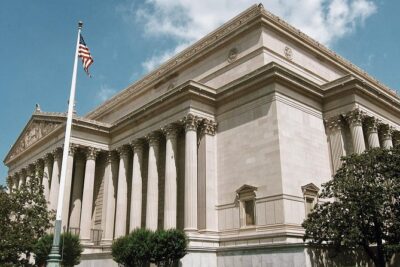
Skip-the-line National Archives Building Exclusive Guided Tour
Read our review →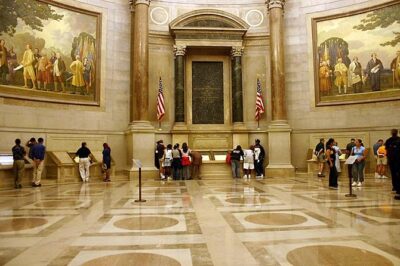
National Archives Skip the Line Guided Tour Semi-Private 6ppl Max
Read our review →
VIP National Archives Skip-The-Line Guided Tour 6 ppl Max
Read our review →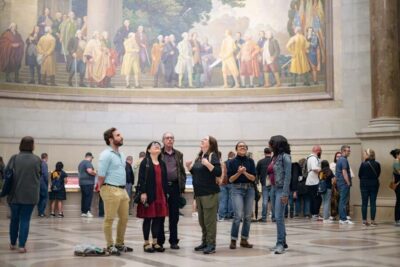

National Archives Skip the Line Tour Semi-Private 6ppl Max
Read our review →
Skip the Line National Archives and US Capitol Tour
Read our review →Browse the lists this tour appears in