
Reviewed · NATIONAL ARCHIVES
National Archives Skip the Line Tour Semi-Private 6ppl Max
The most moving part of this National Archives tour is the chance to see the documents themselves: the Declaration of Independence, Constitution, and Bill of Rights in the Rotunda. You are not simply looking at framed text. You are standing close to the original papers that helped define the United States.
I especially like the small-group format and the broad sweep of the visit. Your guide can connect Alexander Hamilton’s signature, the Emancipation Proclamation, Rosa Parks’ citation, and the Magna Carta in one clear story. Guides including Donna, Meghan, Maribeth, and Bess have been praised for making the material understandable across different ages and backgrounds.
The main consideration is time. Two hours gives you a useful guided introduction, but the Archives holds more than half a million artifacts. You will see selected highlights rather than explore every gallery at length. Bring photo ID, pack light, and note that the tour is listed as not suitable for wheelchair users.
In This Review
- Key points to know before you book
- Why the National Archives needs a guide
- Entering the Rotunda and meeting the founding documents
- Signatures, Federalist arguments, and Alexander Hamilton
- Public Vaults: letters from presidents
- The Emancipation Proclamation and Rosa Parks’ citation
- The 1297 Magna Carta in the Rubenstein Gallery
- Small groups, private options, and the guide’s role
- Is $111 a fair price for two hours?
- Practical details that affect your visit
- Who will get the most from this tour?
- Should you book the National Archives tour?
- FAQ
- How long does the National Archives tour last?
- What language is the tour conducted in?
- What documents will I see?
- How many people can join the semi-private tour?
- Is a private tour available?
- Do I need photo identification?
- Can I bring luggage or a large backpack?
- Is wheelchair access available?
- Can I cancel for a refund?
Key points to know before you book
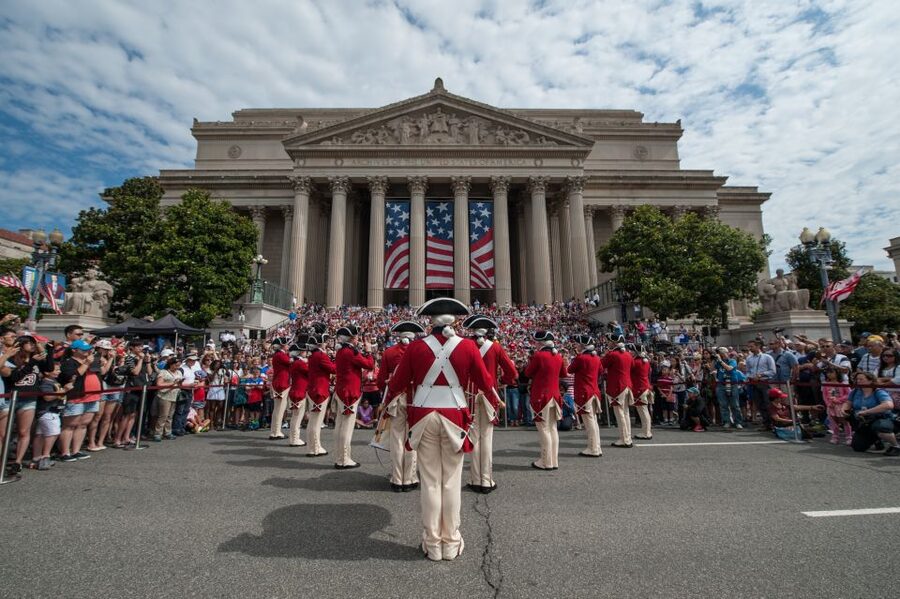
- The Rotunda is the heart of the tour: See the Declaration of Independence, Constitution, and Bill of Rights in their permanent display.
- The subject matter reaches beyond the founding: The route includes the Emancipation Proclamation and Rosa Parks’ civil rights citation.
- You also see documents from famous Americans: The Federalist Papers include signatures from figures such as Alexander Hamilton.
- The 1297 Magna Carta adds a wider perspective: The Rubenstein Gallery places American constitutional ideas beside an older document from England.
- The guide makes the difference: Donna, Meghan, Maribeth, Bess, Brenda, Ryan, Richard, and others have been singled out for clear storytelling and strong pacing.
- The group stays small: Semi-private tours allow no more than eight people, with private options available.
Why the National Archives needs a guide
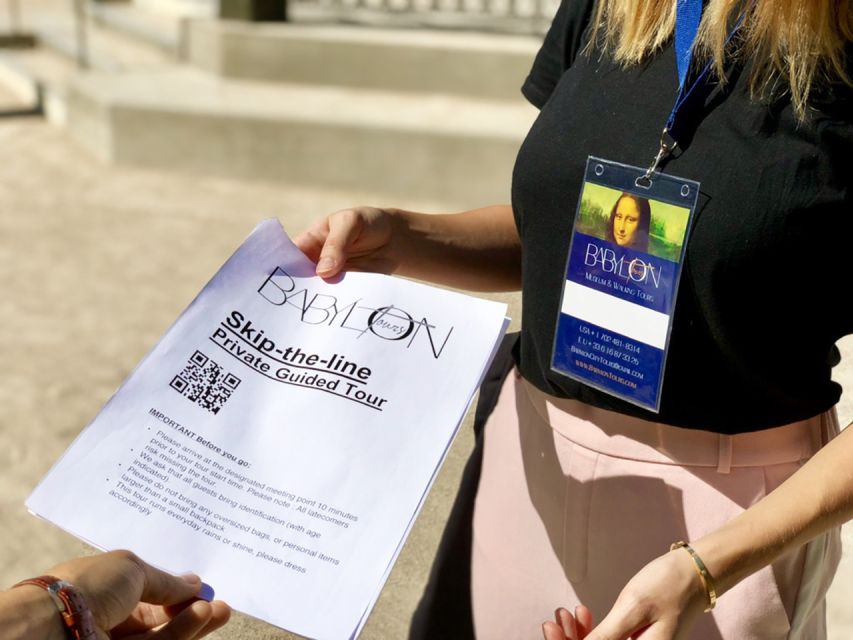
The National Archives is free to enter as a museum, but free entry does not mean the documents explain themselves. Much of the value here comes from understanding what you are seeing, why it mattered, and how the pieces connect.
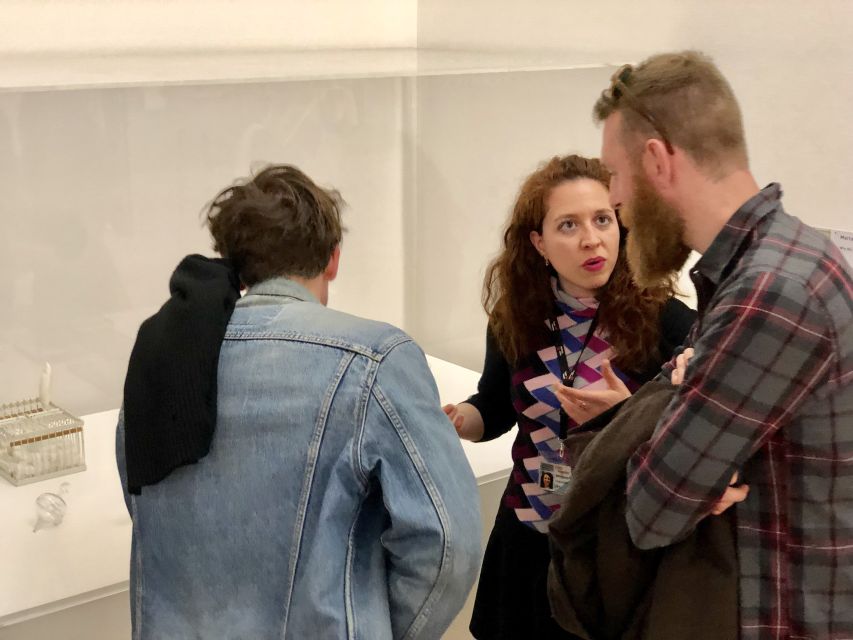
A guide can point out the signatures, wording, and political arguments that are easy to miss on your own. The tour also gives you a sensible route through a building with a large collection, instead of leaving you to choose a few famous names and move on.
This is especially useful if American history is new to you. One guide, Donna, has been praised for presenting the story slowly and clearly for people who do not speak English as their first language. Another guide, Maribeth, has been noted for putting each document into context and adding facts that made the visit easier to follow.
You should still expect a serious museum visit. The guide brings energy and stories, but the material includes slavery, civil rights, war, constitutional disputes, and the mechanics of government. It is not a casual sightseeing stop with a few famous objects tacked on.
More National Archives tours:
- VIP Best of DC with US Capitol + National Archives Reserved Entry
★ 4.5 · 2,491 reviews - Skip-the-line National Archives Building Exclusive Guided Tour
★ 5.0 · 381 reviews - National Archives Skip the Line Guided Tour Semi-Private 6ppl Max
★ 5.0 · 196 reviews
Entering the Rotunda and meeting the founding documents
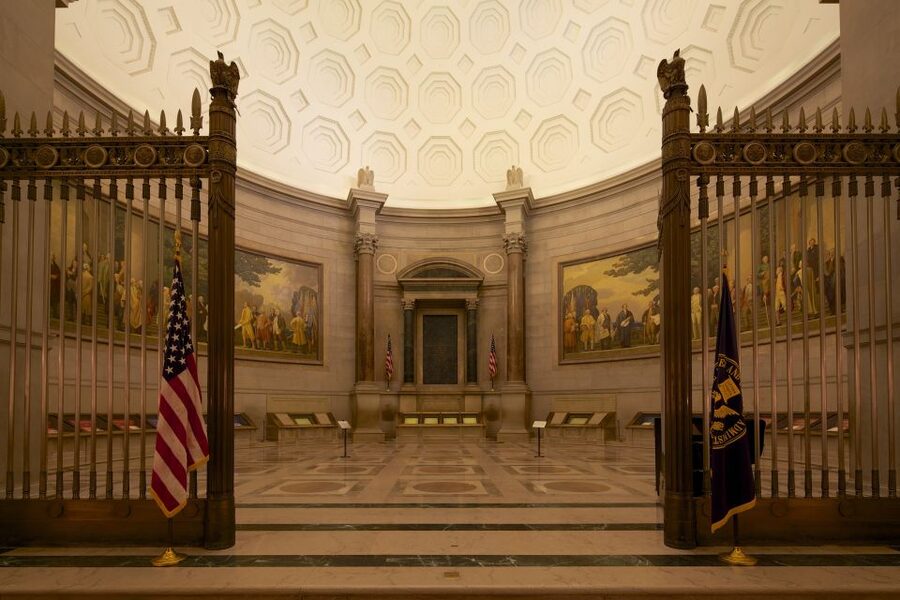
The tour begins with the National Archives Rotunda, the room most people picture when they think of this museum. Here, you see the Declaration of Independence, the Constitution, and the Bill of Rights in carefully protected displays.
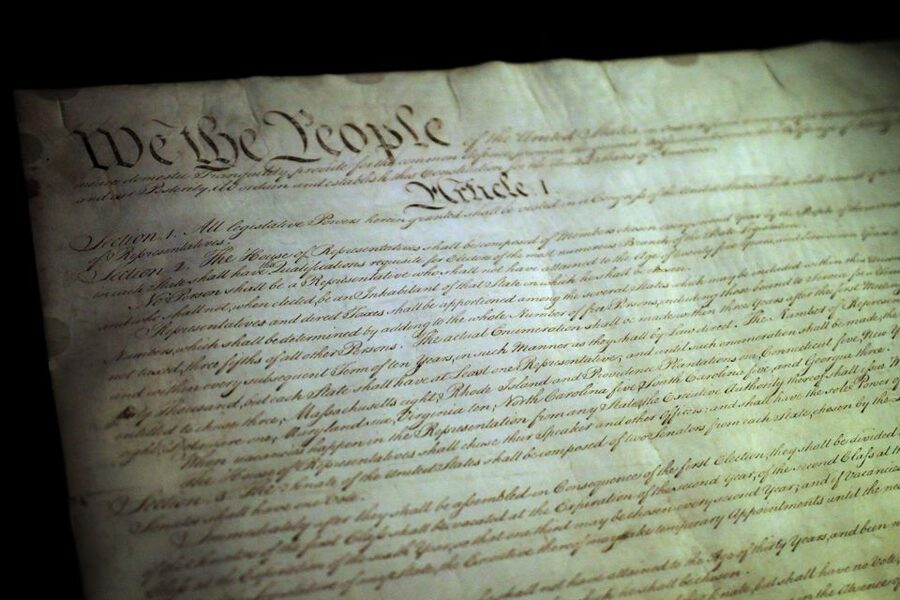
The documents date from the 17th and 18th centuries, and their physical condition is part of the appeal. You can look at the handwriting, layout, and signatures rather than viewing only a modern copy or digital version. The setting encourages you to slow down, even if the room is busy.
The Declaration is familiar from textbooks, but an in-person look brings attention to its status as an original document. The Constitution invites a different kind of reading. It is a working framework for government, and the tour helps you consider how its language shaped the country that followed.
The Bill of Rights is particularly useful for visitors who know the amendments as separate phrases. Seeing the document as a whole helps you place those protections in the early structure of the United States. Your guide can also connect the text to the Federalist Papers and the debates surrounding the new government.
The Rotunda can be the most crowded and visually demanding part of the visit. That is where the skip-the-line arrangement matters. The tour includes entry through a separate entrance, and one guide, Bess, was able to bring her group into the Rotunda first, allowing an uninterrupted look at the documents. Timing can vary, but the small-group setup should make it easier to stay near your guide and ask questions.
Signatures, Federalist arguments, and Alexander Hamilton
The Federalist Papers give the founding story a human and political voice. These essays argued for adoption of the Constitution and helped explain how the proposed government might work.
The documents are also linked to recognizable names. The display includes signatures from major statesmen, including Alexander Hamilton. For many people, that small detail changes the experience. You are no longer looking only at abstract political writing. You are looking at papers connected to people who argued, negotiated, and shaped the new nation.
I like this section because it helps explain that the Constitution did not appear in a vacuum. It came out of disagreement and persuasion. If you enjoy political history, this may be one of the most rewarding parts of the tour. If you prefer a simpler story, your guide can help separate the main ideas from the period language.
The group format helps here. With no more than eight people on the semi-private option, you can ask about a name or passage without trying to catch a guide’s voice across a large crowd. The available information also lists private tours, which may be a good fit if your group wants more freedom to pause.
Public Vaults: letters from presidents
The Public Vaults Exhibits shift the focus from formal founding documents to personal and official correspondence. You can see letters written by presidents including George Washington and John F. Kennedy.
That change of scale is important. The Rotunda presents documents that define institutions. The letters show presidents communicating as individuals, officials, and political actors. A handwritten or signed letter can make the people behind the office feel more immediate.
This part of the tour also gives your guide room to add background stories and surprising details. The exact emphasis can differ by guide, but the stated format includes historical and political information rather than a simple object-by-object march through the museum.
Do not expect every Public Vaults item to receive a long explanation. The National Archives has a huge collection, and the tour is built around selected highlights. Still, these letters provide a welcome change from the large constitutional documents and keep the two-hour route from becoming too narrow.
A few more Washington DC tours worth a look
- VIP National Archives Skip-The-Line Guided Tour 6 ppl Max
★ 5.0 · 126 reviews - National Archives Skip-the-Line Guided Tour
★ 5.0 · 85 reviews - Skip the Line National Archives and US Capitol Tour
★ 4.5 · 51 reviews
The Emancipation Proclamation and Rosa Parks’ citation
The tour then moves into some of the most important material in the collection: the Emancipation Proclamation and a citation issued to Rosa Parks.
The Emancipation Proclamation is often reduced to a single classroom sentence, but seeing the document places the measure within the political and military crisis of the 19th century. Your guide can explain its role in the effort to end slavery and the broader struggle that followed.
Rosa Parks’ citation adds a powerful later chapter. It illustrates that racial injustice and civil rights battles did not end with the founding documents or the Civil War. The citation is a small, concrete record tied to a major moment in the fight for equal treatment.
I find this pairing especially valuable because it prevents the tour from treating American history as a finished success story. The country’s ideals and its failures appear in the same museum. You see lofty language about rights alongside evidence of the long struggle to apply those rights.
This section may be the most meaningful stop for families and school-age visitors, though the content deserves a thoughtful pace. A guide who can explain events in plain language adds real value. Daniel’s guide was described as especially effective with a 10-year-old, and other guides have been praised for keeping a wide age range involved.
The 1297 Magna Carta in the Rubenstein Gallery
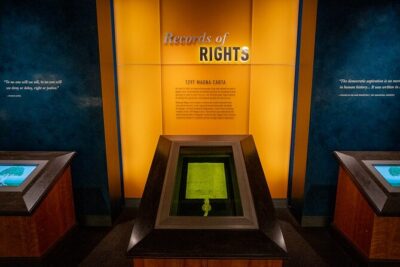
The Rubenstein Gallery offers a much older document: the Magna Carta of 1297. This is a useful surprise on a tour that many people expect to focus only on American history.
The Magna Carta helps place American constitutional ideas in a longer story. It was created centuries before the Declaration of Independence, yet it is often discussed in relation to limits on government power and the development of legal rights. The document gives you a visual reminder that the American founding drew on earlier political and legal traditions.
Its age also gives the visit a different mood. The Declaration and Constitution are central to the United States, but the Magna Carta widens the frame. You are looking at an older record that helps explain why written limits on authority mattered to later generations.
The Rubenstein Gallery stop is also a good reason to choose a guided visit. The significance of a document from 1297 is not always obvious from its label alone. A strong guide can explain why it appears in the National Archives and how it relates to the American documents you have just seen.
Small groups, private options, and the guide’s role
The tour is marketed as semi-private for up to six people, while the detailed conditions specify a maximum of eight for the semi-private group. Check the exact option at booking, but either way, this is far smaller than a standard museum tour.
That size is one of the clearest reasons to pay for the experience. You can usually remain close to the guide, hear the explanation, and ask questions without holding up a large crowd. A private option gives your own party more control over the conversation and pace.
The guide’s personality matters a great deal. Donna has been praised for lively storytelling and clear speech. Meghan has been described as engaging and strong on the subject. Maribeth has been credited with organization, context, and interesting facts. Bess made a point of getting her group into the Rotunda early, while Richard was valued for making sure his group did not miss important stops.
These details point to the real strength of the experience: interpretation. You are paying for a person who can connect objects and events, not just for admission to rooms you could visit on your own.
The tour is conducted in English. If you are comfortable following spoken English, the supplied descriptions suggest that guides make an effort to speak clearly. Visitors with different levels of historical background should be able to follow, since the format includes both basic explanations and extra political detail.
Is $111 a fair price for two hours?
At $111 per person, this is not a bargain museum visit. You are paying substantially more than the cost of walking into a public museum on your own.
The value depends on how much you want from the visit. If you already know the founding documents well, prefer to read labels at your own pace, and do not mind finding the highlights yourself, the price may be hard to justify. You will still be limited to the same museum displays, and temporary exhibits are not included.
For first-time visitors, international visitors, families, and anyone who wants the political story explained, the price is easier to defend. The two-hour route concentrates on the museum’s most important material and includes skip-the-line access through a separate entrance. A small group also gives you a better chance to ask questions than a large public tour.
The strongest value comes when your guide is good. The repeated praise for clear explanation, storytelling, organization, and the ability to engage children suggests that the experience rises or falls on the person leading it. You should book it for the guidance and context, not simply for faster entry.
Practical details that affect your visit
The tour lasts two hours and starts at times shown when you check availability. The meeting point may differ according to the option you book, so read the confirmation carefully rather than assuming every group begins in the same place.
Bring a valid passport or photo ID card. Security requires it, and you should not arrive without one.
Large luggage and large bags are not allowed through security. A handbag or small, thin backpack is permitted, but packing light will make the entrance easier. Food and drink are not included, and temporary exhibits are outside the tour price.
Dress appropriately for entry into some sites on the route. Certain rooms have quiet rules or restrictions on speaking, so your guide will explain what to expect before you enter.
The tour needs at least two people to operate. If that minimum is not met, you will be offered another date or a full refund. National Archives closures can also happen without warning from museum management. If a delay exceeds one hour, an alternative is provided, but the local partner does not offer a refund or discount in that situation.
Free cancellation is available up to 24 hours before the tour, and you can reserve now and pay later. Those terms are useful if your Washington plans are still changing.
Accessibility needs careful attention. The activity is listed as not suitable for wheelchair users, although the instructions also ask you to advise at booking if you need a wheelchair-accessible tour. Treat this as a point to confirm directly before paying.
Who will get the most from this tour?
I would choose this tour for a first visit to Washington, especially if you have only a short time for the National Archives. It gives you the essential documents plus several less obvious stops, including Rosa Parks’ citation and the Magna Carta.
Families can benefit from the storytelling and short, focused format. The two-hour length is long enough to add context but short enough to fit into a day of sightseeing. Guides have shown they can engage children and mixed-age groups.
It also suits visitors from outside the United States. The guide can explain the political background that American school lessons may take for granted, and clear English helps if you are not a native speaker.
History and government enthusiasts may want more time with individual documents than this tour allows. If you like reading every label or studying temporary exhibits, plan a separate museum visit. The tour does not include temporary exhibits, and its purpose is a guided set of highlights.
Should you book the National Archives tour?
Book it if you want the National Archives to make sense rather than simply see famous documents behind glass. The small group, skip-the-line entry, and strong guide-led storytelling make the $111 price reasonable for many first-time visitors, even though it is not the cheapest way to visit.
I would be especially inclined to book for a family, an international visitor, or anyone who wants the connection between the Constitution, civil rights, presidential letters, and the Magna Carta explained in one sitting. I would skip it if you prefer a quiet self-guided museum visit or need wheelchair access that has not been confirmed.
Pack light, bring photo ID, verify the meeting point, and check whether your booking says six or eight people maximum. If those details fit your plans, this is a focused and worthwhile way to meet the documents behind America’s political story.
FAQ
How long does the National Archives tour last?
The guided walking tour lasts two hours.
What language is the tour conducted in?
The live tour guide speaks English.
What documents will I see?
The route includes the Declaration of Independence, the Constitution, the Bill of Rights, the Federalist Papers, presidential letters, the Emancipation Proclamation, Rosa Parks’ citation, and the Magna Carta of 1297.
How many people can join the semi-private tour?
The detailed tour information sets a maximum of eight people per semi-private group. The activity title refers to six people, so check the exact group option when booking.
Is a private tour available?
Yes. Private and small-group options are available.
Do I need photo identification?
Yes. You must bring a valid passport or photo ID card.
Can I bring luggage or a large backpack?
No. Large bags and luggage are not allowed through security. A handbag or small, thin backpack is permitted.
Is wheelchair access available?
The activity is listed as not suitable for wheelchair users. The instructions also ask you to advise when booking if you require an accessible tour, so confirm this before booking.
Can I cancel for a refund?
Yes. You can cancel up to 24 hours in advance for a full refund. You can also reserve now and pay later.
Recently added around Washington DC
- Small Group Washington DC Night Tour★ 4.5 · 3 reviews
- Washington DC Neighborhoods Personalized Self-Guided App Tour★ 3.5 · 3 reviews
- America’s Main Street and White House Private Full-Day Tour★ 5.0 · 3 reviews
- Beyond the Closet Walking Tour★ 5.0 · 3 reviews
- Pirate Ship Treasure Hunt Cruise with Face Painting★ 4.5 · 3 reviews
- Sushi Masterclass in Washington D.C. (Includes 4-Course Meal)★ 5.0 · 3 reviews
- Private Washington DC Grand Tour with Changing of the Guard.★ 5.0 · 3 reviews
- 250th: National Archives & American History Museum Guided Tour★ 5.0 · 3 reviews
National Archives, compared.

VIP Best of DC with US Capitol + National Archives Reserved Entry
Read our review →
Skip-the-line National Archives Building Exclusive Guided Tour
Read our review →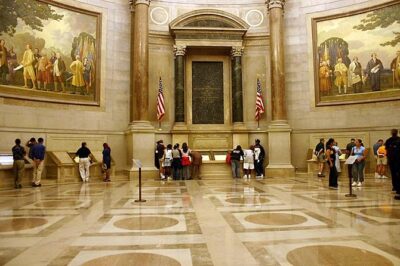
National Archives Skip the Line Guided Tour Semi-Private 6ppl Max
Read our review →
VIP National Archives Skip-The-Line Guided Tour 6 ppl Max
Read our review →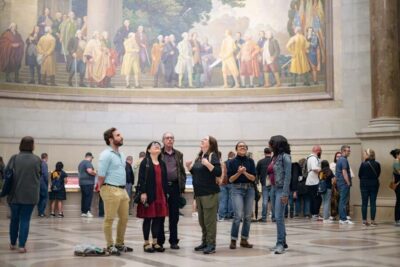
National Archives + American History Museum Tour 8ppl Max
Read our review →
Skip the Line National Archives and US Capitol Tour
Read our review →Browse the lists this tour appears in