
Reviewed · NATIONAL ARCHIVES
National Archives Skip the Line Guided Tour Semi-Private 6ppl Max
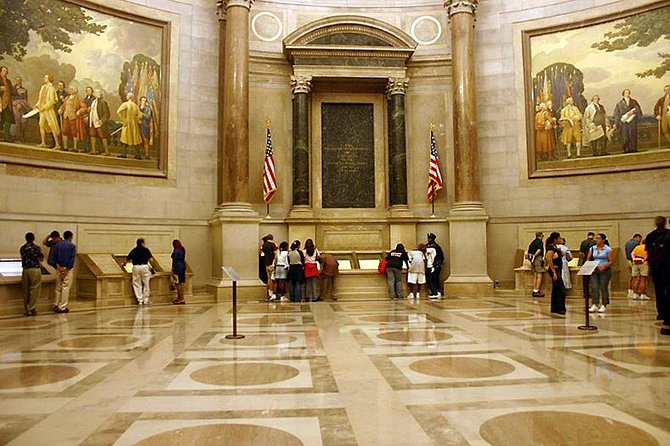
The National Archives is where American ideals become physical objects: the Constitution, Declaration of Independence, and Bill of Rights sit under soft light in the Rotunda, still carrying the signatures that shaped a nation. This small-group tour gives you a guide to explain what you are seeing instead of leaving you to read every panel alone.
I like the limited group size, capped at eight, and I like the range of material. You move from founding documents to presidential letters, the Emancipation Proclamation, Rosa Parks’s citation, and the 1297 Magna Carta. The main consideration is pace: in 90 minutes to two hours, you cannot study every exhibit in the building.
In This Review
- Key points at a glance
- Inside the National Archives Rotunda
- Why a guide helps with documents you have seen before
- The Public Vaults and presidential letters
- The Emancipation Proclamation and Rosa Parks
- The 1297 Magna Carta in the Rubenstein Gallery
- Group size, timing, and the skip-the-line claim
- Is $105.73 a fair price?
- Who should book this National Archives visit?
- FAQ
- Where does the tour start?
- Where does the tour end?
- How long does the tour last?
- How many people can join the tour?
- Is museum admission included?
- What documents can I see?
- Is hotel pickup included?
- Are large bags allowed?
- Is the tour suitable for wheelchair users?
- Can I cancel for a full refund?
- Should you book it?
Key points at a glance
- See the original founding documents: The Constitution, Declaration of Independence, Bill of Rights, and Federalist Papers are displayed in the Rotunda.
- A maximum of eight people: The guide can answer questions and keep the visit more personal than a large group tour.
- Go beyond the founding era: Displays include presidential correspondence, the Emancipation Proclamation, Rosa Parks material, and civil rights records.
- The Magna Carta adds useful context: The 1297 document helps explain the older legal ideas behind later American political documents.
- Plan for security and walking: Large bags and suitcases are not allowed, and the tour is not suitable for wheelchair users or people with walking disabilities.
Inside the National Archives Rotunda
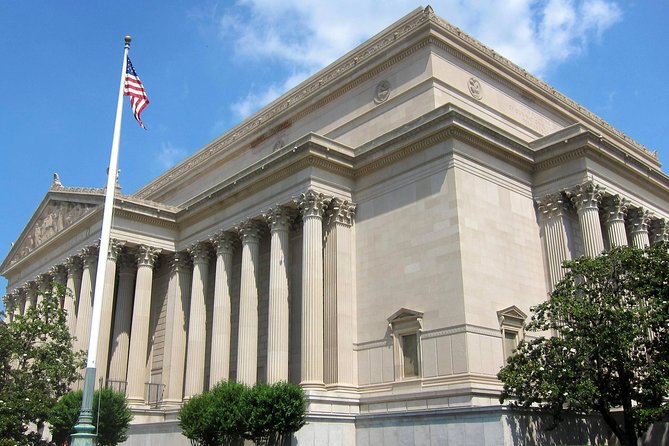
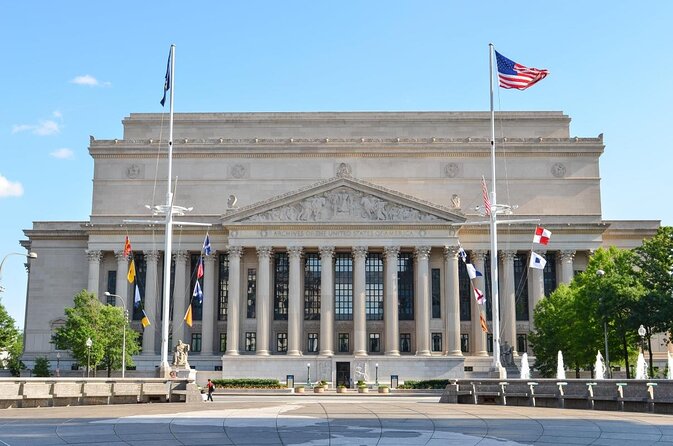
Your visit begins at the National Archives Museum, 701 Constitution Ave. NW. The building itself is grand and formal, a fitting setting for documents that helped define the United States. Once inside, the key stop is the Rotunda, where the country’s founding papers are displayed.
The first major document is the Declaration of Independence. You will see the original rather than a reproduction, though age and preservation mean the text is not as bold and easy to read as a classroom copy. That is part of the experience. The document feels less like a poster and more like a fragile working paper that survived wars, politics, and the passage of time.
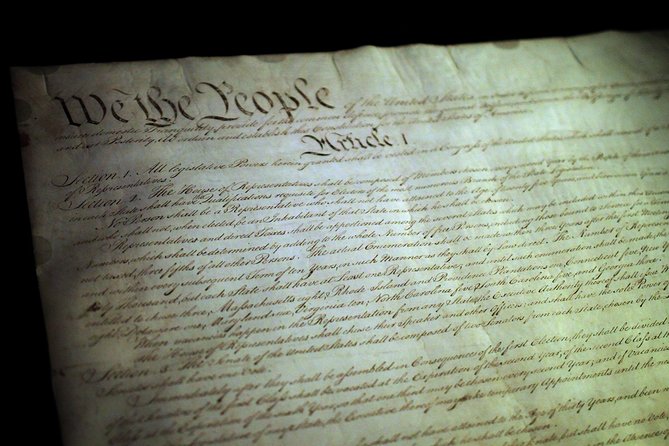
The Constitution follows, with its careful arrangement of articles and signatures. A guide can point out what the document does and does not say, explain the problems its writers were trying to solve, and connect its language to the debates that followed. That context is the main reason I would choose the guided option over walking through alone.
The Bill of Rights gives the Rotunda a more immediate feel. These amendments are familiar to most Americans, but seeing the original handwriting and layout changes the way you think about them. The Federalist Papers add another layer, showing how the new government was explained and defended during its creation.
You may also see signatures tied to names that appear throughout American history, including Alexander Hamilton. A good guide uses those names as doorways into the period rather than turning the stop into a list of dates. Donna, Jennifer, Meghan, Maribeth, Rebecca, Richard, Bess, Brenda, and Annette are among the guides praised for making the material clear, lively, and approachable.
More National Archives tours:
- VIP Best of DC with US Capitol + National Archives Reserved Entry
★ 4.5 · 2,491 reviews - Skip-the-line National Archives Building Exclusive Guided Tour
★ 5.0 · 381 reviews - VIP National Archives Skip-The-Line Guided Tour 6 ppl Max
★ 5.0 · 126 reviews
Why a guide helps with documents you have seen before
The National Archives can be meaningful even if you already know the broad story. The problem is that the displays cannot answer your questions. Why was a particular phrase included? What was happening when the document was written? Which parts were disputed? A guide can supply that missing layer.
The strongest part of this experience is the combination of access and explanation. You see the original papers, then hear why they matter. Several guides are described as using questions, stories, humor, and connections to modern life to keep children and teenagers involved. That can make a real difference for families, especially when younger visitors are not naturally drawn to eighteenth-century handwriting.
Maribeth, in particular, is praised for drawing nine and twelve-year-old children into the conversation with questions and chances to participate. Bess is noted for making the material fun for children, while Donna is praised for handling a wide range of questions. Richard is described as both funny and highly informed. Those details suggest a tour that can work for mixed-age groups, although your exact experience will depend on the guide assigned that day.
There is one important caveat. One poor experience involved a guide who talked too much about modern movies and politics, rushed the security process, and did not clearly connect commentary to the objects in front of the group. That is not a reason to dismiss the tour, but it is a reminder that guided visits depend heavily on the individual guide. If you need a strictly neutral, object-by-object presentation, you may prefer to explore independently.
The Public Vaults and presidential letters
After the Rotunda, the tour continues to the Public Vaults exhibits. This section changes the mood. Instead of focusing mainly on the creation of the federal government, it shows how the nation’s records reveal everyday decisions, private thoughts, and difficult chapters.
Letters from presidents including George Washington and John F. Kennedy are displayed here. Presidential correspondence can make political history feel more human. A letter has a different character from a speech or a law. You see the person writing to another person, often dealing with a problem that was not meant to become a famous historical artifact.
The exhibit also includes correspondence connected to the White House. A particularly unusual item is a letter from a twelve-year-old Fidel Castro. Small pieces like this can be more surprising than the expected presidential material because they show how later world figures appeared before they became widely known.
The Public Vaults section is also a good place to ask your guide questions. The tour is not simply about famous names. It is about how records are kept, what survives, and how a document can change the way you understand a period. Since collections may vary during the year, specific items on display can change.
The Emancipation Proclamation and Rosa Parks
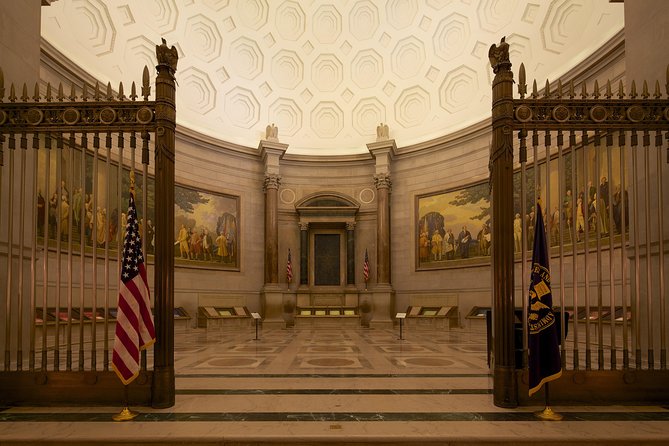
The National Archives does not present only a flattering version of the country. The tour includes documents tied to slavery, emancipation, segregation, and the long civil rights struggle. This is essential to understanding the United States, and it keeps the Rotunda’s founding ideals from being treated as the whole story.
The Emancipation Proclamation is one of the most important documents in the museum. A guide can explain its purpose, its limits, and the setting in which it was issued. The document helped change the course of the Civil War and the legal status of enslaved people in areas under rebellion, but it did not end slavery everywhere by itself. That distinction matters.
The display connected to Rosa Parks brings the story forward into the twentieth century. Her citation shows that racial injustice continued long after the founding documents were written. Seeing a formal record tied to her arrest and civil rights activism puts a human scale on a national struggle that can otherwise feel abstract.
If your timing coincides with a special display, you might see the original Emancipation Proclamation and Order No. 3. Those items are not guaranteed at every visit, but their appearance can make the experience especially significant. Ask your guide what is currently available rather than assuming every collection will be on view.
This part of the tour suits anyone who wants a fuller account of American history. It also gives parents a useful chance to discuss ideals and reality with older children. The subject matter is serious, so families should consider the ages and interests of everyone in the group.
A few more Washington DC tours worth a look
- National Archives Skip-the-Line Guided Tour
★ 5.0 · 85 reviews - National Archives Skip the Line Tour Semi-Private 6ppl Max
★ 4.9 · 76 reviews - Skip the Line National Archives and US Capitol Tour
★ 4.5 · 51 reviews
The 1297 Magna Carta in the Rubenstein Gallery

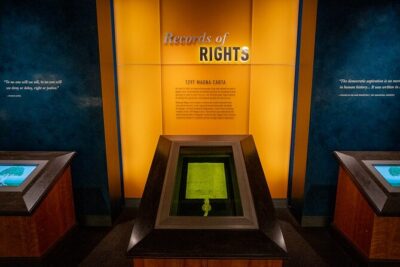
The final major stop is the Rubenstein Gallery, where you can see a Magna Carta dating to 1297. It was written long before European exploration of the Americas, yet it influenced the legal and political ideas that later shaped English and American government.
The Magna Carta is valuable here because it gives the tour a longer timeline. Without it, the American founding documents can seem to appear out of nowhere. With it, you can begin to see older arguments about law, authority, rights, and the limits of government.
Do not expect to read every word of the medieval document. Its importance is partly historical and political, and your guide will explain how its ideas were later remembered and reused. The connection is not that the Magna Carta created the United States directly. Rather, it belongs to the chain of legal thought that helped influence later constitutional traditions.
For many people, this is the most unexpected part of the visit. The American documents are the obvious draw, but the Magna Carta broadens the story beyond national pride. It shows that the arguments behind American government developed over centuries.
Group size, timing, and the skip-the-line claim
The tour lasts about 1.5 to two hours. That is enough time to cover the Rotunda, Public Vaults, and Rubenstein Gallery without turning the visit into an all-day museum marathon. It is a useful length if you have a packed Washington schedule and want to continue to another attraction afterward.
The group is limited to eight people. The tour title refers to six, but the supplied booking details specify a maximum of eight, so I would plan on eight rather than assume a smaller party. Even eight is a favorable number for a museum tour. You can hear the guide more easily, ask questions, and stay close to the displays.
Skip-the-line access can save time, especially at busy periods and near the opening of the museum. It does not mean you are guaranteed to walk straight through every checkpoint. Security measures can still create a wait, and lines may form even on tours advertised with priority access.
Arrive ready for screening. Large bags and suitcases are not allowed inside, while handbags and small, thin backpacks are permitted through security. Bring the mobile phone number requested at booking, including the country code, so the operator can contact you if needed.
The tour begins and ends at the National Archives Museum. There is no hotel pickup or drop-off, so you will need to make your own way there by public transportation, taxi, or rideshare. The museum is near public transportation, which makes the fixed meeting point fairly easy to manage as part of a day in central Washington.
Is $105.73 a fair price?
At $105.73 per person, this is not a cheap museum visit. Admission to the National Archives itself is listed as free, so you are paying for the guide, the small group, and the convenience of organized access rather than for entry.
I think the value depends on how you use museums. If you are comfortable reading labels, choosing your own route, and researching the documents later, you can enter for free and spend less. If you want the Constitution and Declaration explained in person, or if you are visiting with children who need a more active presentation, the added cost can be worthwhile.
The small group matters here more than it would in a broad sightseeing tour. The subject is detailed, and a guide who can respond to questions is more useful than a guide speaking to dozens of people. Several named guides, including Donna, Bess, Brenda, Jennifer, Richard, Meghan, and Maribeth, receive strong praise for clear explanations, humor, and enthusiasm.
The value is also higher if this is your first visit to Washington. You get a focused introduction to the country’s documentary record without spending hours trying to decide which cases matter most. On the other hand, repeat visitors or serious history buffs may want more free time with individual displays than this schedule allows.
Who should book this National Archives visit?
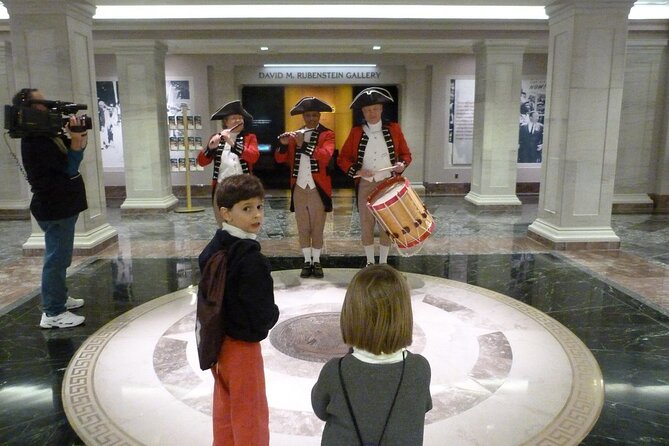
I would recommend it to families, couples, solo visitors, and anyone who wants the major documents explained in plain language. The format appears especially useful for families with school-age children and teenagers, since guides have used questions and stories to keep younger members involved.
It is also a good choice for people who want a serious museum visit without a full-day commitment. The subject includes slavery and civil rights, so it offers more than a patriotic look at the founding. You will see how American principles were written, tested, limited, and gradually expanded.
I would hesitate if you use a wheelchair or have a walking disability, since the experience is specifically not available for those needs. You should also think twice if you strongly dislike guided pacing or want to linger at every display.
The tour requires at least two participants to operate. If that minimum is not met, an alternative or full refund is offered. You can cancel for a full refund up to 24 hours before the start time, but cancellations or changes made inside that window are not refunded.
FAQ
Where does the tour start?
The tour starts at the National Archives Museum, 701 Constitution Ave. NW, Washington, DC 20408.
Where does the tour end?
The activity ends back at the National Archives Museum meeting point.
How long does the tour last?
The tour lasts approximately 1.5 to two hours.
How many people can join the tour?
The group has a maximum of eight people. The booking details state that at least two guests are required for the tour to operate.
Is museum admission included?
The tour includes admission to the guided museum experience, and the museum admission is listed as free. The price covers the semi-private tour and professional guide.
What documents can I see?
The route includes the Declaration of Independence, Constitution, Bill of Rights, Federalist Papers, presidential letters, the Emancipation Proclamation, Rosa Parks material, and a 1297 Magna Carta. Collections can vary during the year.
Is hotel pickup included?
No. Hotel pickup and drop-off are not included. You should arrange your own transportation by public transportation, taxi, or rideshare.
Are large bags allowed?
No. Large bags and suitcases are not allowed inside. Only handbags and small, thin backpacks are permitted through security.
Is the tour suitable for wheelchair users?
No. The tour is not available for people with walking disabilities or those using a wheelchair. A moderate level of physical fitness is required.
Can I cancel for a full refund?
Yes, if you cancel at least 24 hours before the experience start time. Cancellations and changes made less than 24 hours before the start time are not accepted for a refund.
Should you book it?
Book this tour if you want the founding documents explained, prefer a small group, and value a guide who can connect the Constitution and Declaration to slavery, civil rights, presidential correspondence, and the Magna Carta. The price is high beside free museum admission, but the focused commentary and group cap can justify it.
Skip it if you prefer to explore quietly at your own speed, need wheelchair access, or plan to spend several hours studying every case. For most first-time Washington visitors, especially families, this is a smart way to make the National Archives more than a quick look at famous papers behind glass.
Recently added around Washington DC
- Small Group Washington DC Night Tour★ 4.5 · 3 reviews
- Washington DC Neighborhoods Personalized Self-Guided App Tour★ 3.5 · 3 reviews
- America’s Main Street and White House Private Full-Day Tour★ 5.0 · 3 reviews
- Beyond the Closet Walking Tour★ 5.0 · 3 reviews
- Pirate Ship Treasure Hunt Cruise with Face Painting★ 4.5 · 3 reviews
- Sushi Masterclass in Washington D.C. (Includes 4-Course Meal)★ 5.0 · 3 reviews
- Private Washington DC Grand Tour with Changing of the Guard.★ 5.0 · 3 reviews
- 250th: National Archives & American History Museum Guided Tour★ 5.0 · 3 reviews
National Archives, compared.

VIP Best of DC with US Capitol + National Archives Reserved Entry
Read our review →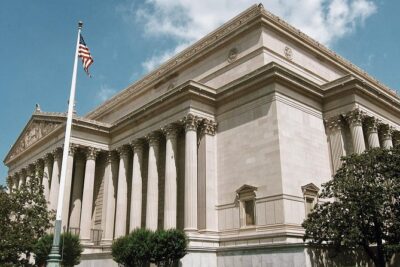
Skip-the-line National Archives Building Exclusive Guided Tour
Read our review →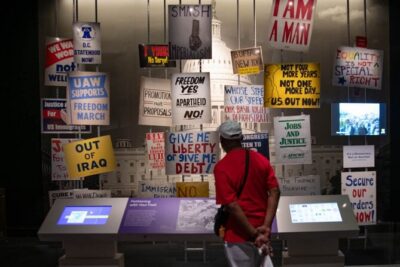
VIP National Archives Skip-The-Line Guided Tour 6 ppl Max
Read our review →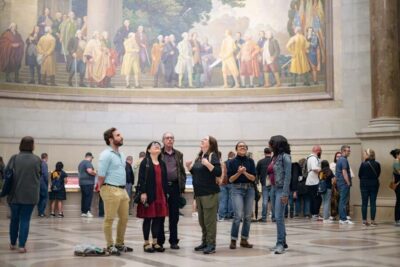
National Archives + American History Museum Tour 8ppl Max
Read our review →
National Archives Skip the Line Tour Semi-Private 6ppl Max
Read our review →
Skip the Line National Archives and US Capitol Tour
Read our review →Browse the lists this tour appears in