
Reviewed · AFRICAN AMERICAN HISTORY
African American History Tour with Museum of African American History Ticket
Washington’s African American story is written across the city, from the Capitol and White House to Howard University, LeDroit Park, and the National Museum of African American History and Culture. This tour connects those places with guide Kenny’s personal, story-driven approach, giving you much more context than a quick photo stop.
I like the small-group format, capped at 21 people, and I like the way the route links famous monuments with places many sightseeing tours skip. Kenny’s humor and strong command of local history are often a major part of the experience. The main catch is that several stops are short, and access to the Frederick Douglass and Mary McLeod Bethune homes depends on the day.
In This Review
- Key points to know before booking
- Why this tour gives Washington more meaning
- The Capitol and White House: power built by enslaved labor
- Constitution Hall and Marian Anderson’s turning point
- The Martin Luther King Jr. Memorial and the unfinished work
- Frederick Douglass House: the most schedule-sensitive stop
- LeDroit Park and Washington’s Black Broadway
- The African American Civil War Memorial
- Mary McLeod Bethune and the NCNW headquarters
- Ending at the National Museum of African American History and Culture
- Is $90 a fair price?
- Walking, weather, and group size
- Who should book this Washington DC tour?
- FAQ
- How long does the African American History Tour last?
- Where does the tour start and end?
- Is museum admission included?
- Can I visit the Frederick Douglass House inside?
- Is the Mary McLeod Bethune Council House included?
- What is the cancellation policy?
- Should you book it?
Key points to know before booking
- The route ends at the National Museum of African American History and Culture, with a same-day ticket included.
- Guide Kenny brings the history together through stories, linking national events to Washington neighborhoods and individual figures.
- Frederick Douglass House access depends on the day: interior visits are offered Tuesday, Wednesday, and Saturday.
- The tour covers a lot of ground in 3.5 hours, using an air-conditioned vehicle between walking stops.
- The Lincoln Memorial and Martin Luther King Jr. Memorial add powerful civil rights context to the earlier Capitol and White House stops.
- The $90 price is strongest for first-time visitors who want transportation, interpretation, and museum entry in one morning.
Why this tour gives Washington more meaning
Many Washington tours treat monuments as isolated objects. You take a picture, hear a date, and move on. This experience tries to connect the places into one African American story.
At the U.S. Capitol, you hear about enslaved workers who helped build the Capitol and White House. At the Lincoln Memorial, the focus shifts to Marian Anderson, the March on Washington, and the speech by Robert Moton at the memorial’s dedication. Later, LeDroit Park and Howard University show how Black Washington developed its own centers of education, music, politics, and community life.
That progression is the tour’s greatest strength. You are not just looking at marble buildings. You are hearing how African Americans shaped the capital despite slavery, segregation, and exclusion from many public institutions.
The tour begins at 9:30 a.m. at US Navy Memorial Plaza on Pennsylvania Avenue. It lasts about three and a half hours and ends at the museum on Constitution Avenue. The vehicle is air-conditioned, bottled water is included, and the small group makes it easier to ask questions than on a large coach tour.
More African American history tours in Washington DC:
- Guided African American History Tour with Reserved Museum Entry
★ 4.5 · 1,180 reviews - Washington, DC: African American History Tour & Museum Entry
★ 4.9 · 312 reviews - Washington DC: Walking Tour and African American Museum
★ 4.6 · 157 reviews
The Capitol and White House: power built by enslaved labor
The first major stop is the U.S. Capitol, where you have about 20 minutes. You can stand near the site associated with Barack Obama’s inauguration and hear how enslaved people helped construct the building that symbolizes American democracy.
The guide also explains how the Supreme Court once met inside the Capitol. That detail matters because the court made decisions affecting people of color for generations, including decisions that shaped segregation, citizenship, and civil rights. You get a useful reminder that the Capitol is both a symbol of freedom and a place tied to some of the country’s hardest contradictions.
Admission to the Capitol stop is free, but this is an exterior visit rather than a full Capitol tour. Twenty minutes is enough for orientation, photos, and a focused explanation. It is not enough for an inside visit or an extensive architectural tour.
The White House follows, with about 15 minutes outside. Here, the story runs from enslaved workers who helped build the house to Barack Obama’s presidency. The stop is brief and admission inside is not included, so consider it a historical and photo opportunity rather than a White House visit.
Constitution Hall and Marian Anderson’s turning point
One of the most meaningful stories on the route centers on Constitution Hall and Marian Anderson. In 1939, the celebrated African American contralto was refused permission to perform inside the hall because of her race. The incident became a national scandal, especially after the Daughters of the American Revolution denied her access to the venue they controlled.
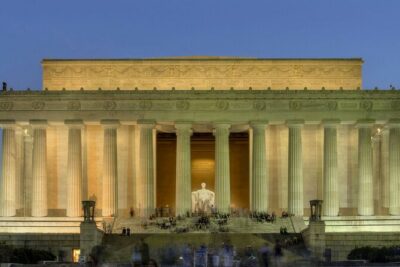
With help from First Lady Eleanor Roosevelt, Anderson performed instead on the steps of the Lincoln Memorial on Easter Sunday. About 75,000 people gathered for the concert.
That story gives the next stop at the Lincoln Memorial extra force. You are not simply seeing a memorial to a president. You are standing in a place where a major public challenge to racial discrimination took place. The guide also discusses the March on Washington and Robert Moton’s dedication speech for the memorial.
You have about 30 minutes at the Lincoln Memorial. That is one of the longer stops, and it needs to be. The steps, reflecting pool, and view toward the Washington Monument require some walking, and the site can be crowded. Comfortable shoes and water will help.
The Martin Luther King Jr. Memorial and the unfinished work
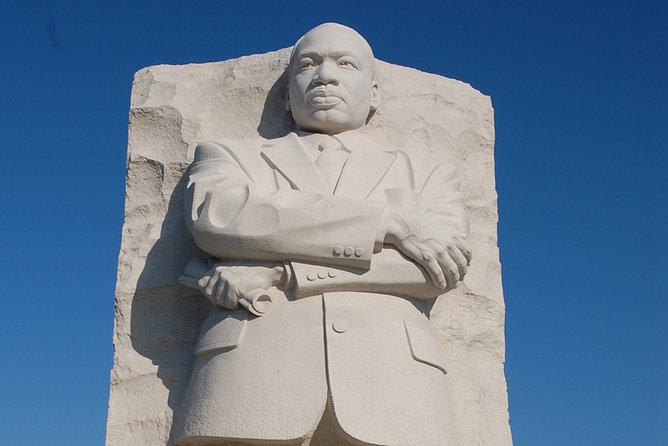
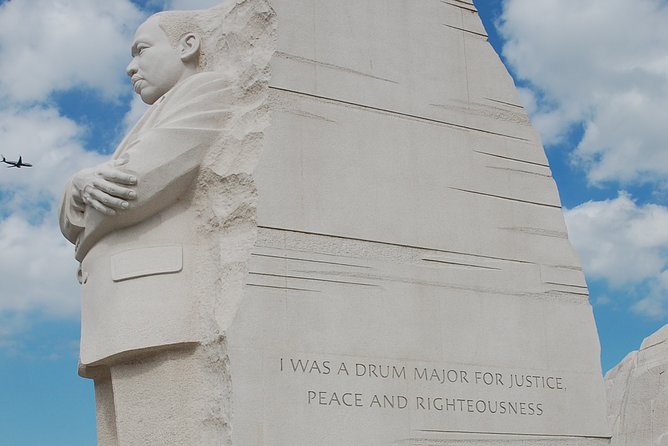
The Martin Luther King Jr. Memorial receives about 15 minutes. The guide points out the inscription wall, which carries 14 quotes and statements, along with the Mountain of Despair and Stone of Hope.
The memorial is compact, but its message is not. King’s words on the wall ask you to think beyond the famous speeches and consider the continuing work of civil rights. The setting beside the Tidal Basin also creates a sharp contrast between the peaceful view and the difficult events connected to the movement.
This is another stop where the guide’s explanation adds value. Without context, the memorial can become a quick photo stop. With the background, the quotes and sculptural details have more weight.
More American History Museum tours:
- Smithsonian Museum of American History Exclusive Guided Tour
★ 5.0 · 245 reviews - Smithsonian Museum of American History Semi-Private 8ppl Max
★ 5.0 · 135 reviews - DC Monuments Day or Night American History Electric Cart Tour
★ 5.0 · 91 reviews - National Archives + American History Museum Tour 8ppl Max
★ 5.0 · 80 reviews
Frederick Douglass House: the most schedule-sensitive stop
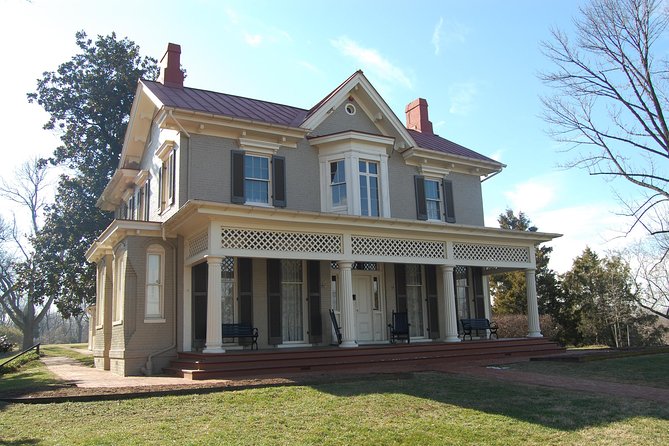
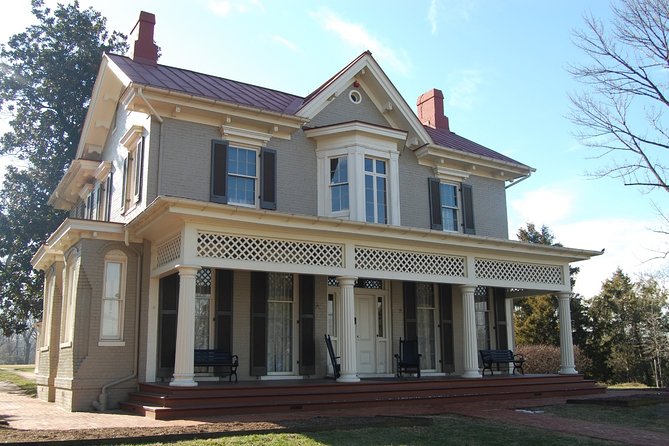
The Frederick Douglass National Historic Site can be one of the highlights, but you need to check the day before booking. Interior walking tours of the house are offered Tuesday, Wednesday, and Saturday. On other days, the vehicle passes the home while the guide explains its history.
When the house visit is available, you walk inside and learn about Douglass in the place where he lived. The home includes stairs, and the walking involved can be challenging for some people. One published rating specifically praised the house while noting that the steps require some effort, so plan accordingly.
This schedule is not a minor detail. If seeing Douglass’s home inside is a priority, choose Tuesday, Wednesday, or Saturday and confirm the current timing. On days without interior access, you still receive the story, but the experience is less substantial and the $90 price may feel less attractive.
The tour’s schedule can also change when a house reservation requires an earlier start. Make sure you read any messages sent before the day of the tour. A timing change from 9:30 to 8:30 caused confusion for one group, so this is a good place to be careful.
LeDroit Park and Washington’s Black Broadway
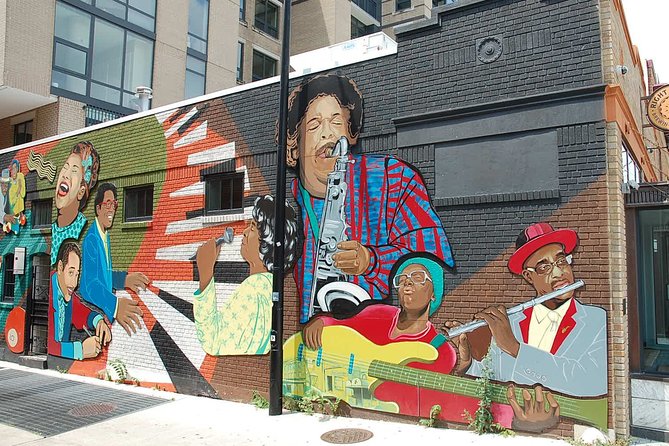
The drive through LeDroit Park gives you a look at a historic neighborhood rather than another grand monument. The area was first developed for white professors connected with Howard University, then homes were sold to both Black and white buyers. It became one of Washington’s early integrated neighborhoods.
LeDroit Park was also home to important figures such as Mary Church Terrell and Duke Ellington. In the early 20th century, the neighborhood was known as Black Broadway because of its theaters, music venues, and nightclubs.
You may not spend much time outside the vehicle here, but that is part of the point. The neighborhood helps you see African American life as more than a sequence of political struggles. Music, education, housing, business, and social life all shaped Washington.
The drive continues past Dunbar High School, founded in 1870 as the first public high school for African Americans in the United States. Its alumni and connections include Mary McLeod Bethune and poet Paul Laurence Dunbar. You also pass Howard University, founded in 1867, with schools and alumni linked to public life, law, literature, entertainment, and civil rights.
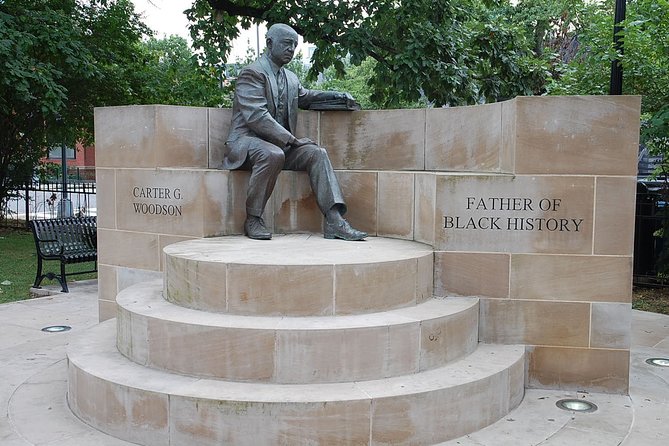
The route includes a drive past the Carter G. Woodson House as well. Woodson, often called the Father of Black History, helped create what became Black History Month. These drive-by stops are short, but they make the city feel connected rather than confined to the National Mall.
The African American Civil War Memorial
The African American Civil War Memorial receives about 10 minutes. That is not a long visit, but the memorial carries a large amount of information.
You learn about the 209,000 African American soldiers and sailors who served during the Civil War. Plaques list the names of the United States Colored Troops who served in 166 regiments. The Spirit of Freedom statue by sculptor Ed Hamilton anchors the memorial.
The stop works best if you take time to read at least some of the names and inscriptions. Ten minutes will not allow you to absorb everything, but it gives you a clear reason to return later if you want a closer look.
The memorial also helps correct the usual Washington sightseeing pattern. The Civil War story is often told mainly through presidents and generals. Here, the service and sacrifice of Black troops receive direct attention.
Mary McLeod Bethune and the NCNW headquarters
The tour passes the Mary McLeod Bethune Council House, and on Thursday through Saturday the group may stop for an interior visit if time allows. Bethune bought the French Second Empire-style house in 1943. She was an educator, civil rights leader, and founder of the National Council of Negro Women.
The NCNW headquarters at 633 Pennsylvania Avenue NW is another important address. Mary McLeod Bethune founded the organization in 1935 to support the rights and welfare of African American women and their families. The building has housed the organization since 1953 and is a National Historic Landmark.
These locations add a needed focus on Black women’s leadership. The tour does not limit African American history to presidents, male ministers, or famous musicians. Bethune’s work shows how education, organization, and civic action changed the country.
Access is not guaranteed in the same way as the scheduled Frederick Douglass visit. The Bethune House stop is time permitting, and the house schedule varies. If this is your main reason for booking, ask about the date before you commit.
Ending at the National Museum of African American History and Culture
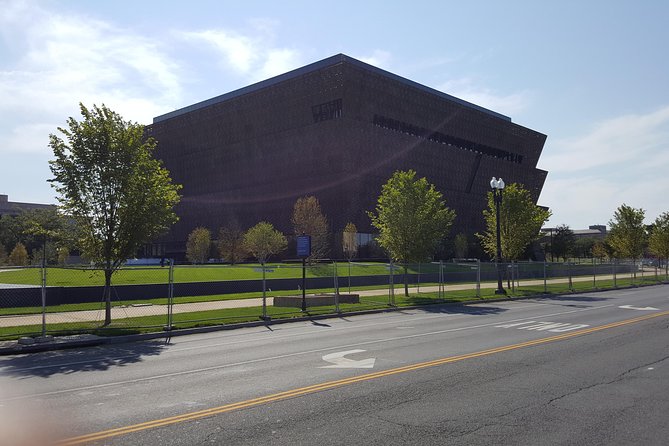
The tour ends at the National Museum of African American History and Culture, where you receive a same-day ticket. Once you arrive at the museum, the guided tour ends, but you can remain inside until closing at 5:30 p.m.
This arrangement is smart. The morning gives you a citywide introduction, then the museum gives you a place to spend several more hours with exhibits, objects, photographs, and recorded stories. The one-hour museum portion listed for the experience should be treated as a starting point, not a complete museum visit.
One of the best practical suggestions from the guide is to begin at the lower level and work upward. The museum’s chronology makes more sense when you start with slavery and early African American life before moving through emancipation, segregation, the civil rights era, and the present day.
The museum is large enough to fill much of an afternoon. If you rush through it after the vehicle tour, you will miss much of what your ticket adds to the day. I would keep the rest of your schedule light.
Is $90 a fair price?
At $90 per person, this is not the cheapest way to see Washington’s monuments. You are paying for more than admission, though. The price includes transportation in an air-conditioned vehicle, bottled water, a small-group tour, a local guide, and entry to the National Museum of African American History and Culture.
The value is strongest if you want interpretation rather than simple transportation. Kenny’s style is conversational and often funny, and his explanations connect the city’s landmarks with lesser-known people and events. Published ratings give the experience 4.7 out of 5 from 391 ratings, with 92 percent recommending it, which fits the tour’s main appeal: strong storytelling and broad coverage in a short time.
The value drops if you prefer to spend a long time at each site or if you are mainly interested in entering buildings. The White House and Capitol stops are outside visits, several locations are drive-bys, and the house visits depend on the day.
Walking, weather, and group size
You should expect some walking and steps, especially at the Lincoln Memorial and Frederick Douglass House. Most people can participate, and service animals are allowed, but the tour is not a completely seated sightseeing ride.
The vehicle helps during hot or rainy weather, and one published rating described the experience as worthwhile even in rain. Still, the tour requires good weather and may be rescheduled or refunded if conditions force cancellation. Bring comfortable shoes and be ready to move between the vehicle and outdoor sites.
With a maximum of 21 people, the group is small enough for questions without promising a private tour. The experience is offered in English, and mobile tickets make arrival simple. Public transportation is available near the starting point at US Navy Memorial Plaza.
Free cancellation is available up to 24 hours before the start time. Inside that window, refunds are not offered, and changes are not accepted. Since house access and start times can matter, confirm your date and watch for messages before tour morning.
Who should book this Washington DC tour?
I would recommend it to first-time visitors who want a clear introduction to African American Washington without arranging several separate sites. Families can also benefit, especially with older children and teenagers who may connect with the stories more easily than with a standard monument lecture.
It is a good fit if you want to see the National Mall, visit neighborhoods outside the central sightseeing zone, and finish at the African American museum. It also suits anyone who values a guide who can answer questions and add local context.
I would hesitate if you want a slow museum day, a full Capitol interior tour, or guaranteed access to both historic homes. You should also choose your date carefully if the Frederick Douglass House is essential.
FAQ
How long does the African American History Tour last?
The guided portion lasts approximately 3 hours and 30 minutes. It begins at 9:30 a.m. unless a different start time is arranged for a particular date.
Where does the tour start and end?
The tour starts at US Navy Memorial Plaza, 701 Pennsylvania Avenue NW. It ends at the National Museum of African American History and Culture, 1400 Constitution Avenue NW.
Is museum admission included?
Yes. You receive a same-day ticket to the National Museum of African American History and Culture at the end of the tour. The guided experience ends when you arrive, but you may stay in the museum until it closes at 5:30 p.m.
Can I visit the Frederick Douglass House inside?
Interior walking tours of the Frederick Douglass House are offered Tuesday, Wednesday, and Saturday. On other days, the tour passes the home and the guide explains its history.
Is the Mary McLeod Bethune Council House included?
The tour passes the Bethune Council House, and an interior visit may take place Thursday through Saturday if time allows. Access is not guaranteed, so confirm the schedule for your date.
What is the cancellation policy?
You can cancel at least 24 hours before the start time for a full refund. Cancellations or changes made less than 24 hours before the start time are not accepted. If poor weather or an insufficient number of participants cancels the tour, you can choose another date or receive a full refund.
Should you book it?
Book this tour if you want the city’s African American story explained as one connected narrative, not as a list of monuments. The combination of Kenny’s storytelling, neighborhood drives, civil rights landmarks, and a same-day museum ticket gives you a useful first day in Washington.
Choose your date with care, especially if you want the Frederick Douglass House or Bethune Council House. For most first-time visitors, the tour is worth the $90 because it handles the driving, covers places you might otherwise miss, and leaves you at the museum with the rest of the afternoon to explore.
More history tours in Washington DC
- DC Monuments & History Guided E-Cart Tour-Blankets
★ 4.5 · 450 reviews - Historic Georgetown: History, Gossip, & Architecture Walking Tour
★ 5.0 · 321 reviews - DC’s Original Food and History Walking Tour
★ 5.0 · 255 reviews - Tastes of Georgetown Food & History Small Group Walking Tour
★ 4.5 · 203 reviews
More museums in Washington DC
- Smithsonian Museum of Natural History – Exclusive Guided Tour
★ 5.0 · 446 reviews - National Mall Tour with 10 Stops & U.S. Capitol or Museum Entry
★ 4.5 · 331 reviews - Smithsonian Museums Walking Tour with Reserved Air & Space Entry
★ 5.0 · 297 reviews - Capitol Combo: U.S. Capitol + Library Congress or Capitol Museum
★ 4.5 · 294 reviews
Recently added around Washington DC
- Small Group Washington DC Night Tour★ 4.5 · 3 reviews
- Washington DC Neighborhoods Personalized Self-Guided App Tour★ 3.5 · 3 reviews
- America’s Main Street and White House Private Full-Day Tour★ 5.0 · 3 reviews
- Beyond the Closet Walking Tour★ 5.0 · 3 reviews
- Sushi Masterclass in Washington D.C. (Includes 4-Course Meal)★ 5.0 · 3 reviews
- Pirate Ship Treasure Hunt Cruise with Face Painting★ 4.5 · 3 reviews
- Private Washington DC Grand Tour with Changing of the Guard.★ 5.0 · 3 reviews
- 250th: National Archives & American History Museum Guided Tour★ 5.0 · 3 reviews
African American History, compared.
Guided African American History Tour with Reserved Museum Entry
Read our review →

DC Landmarks Walking Tour + African American Museum Admission
Read our review →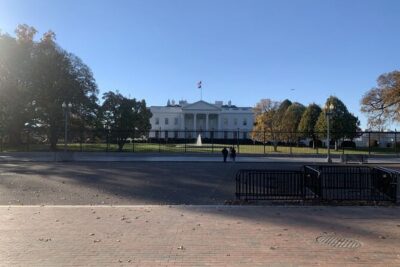
African-American Heritage Walking Tour of U Street in DC
Read our review →
Private Black History Tour Washington DC for up to 10 Guests
Read our review →Browse the lists this tour appears in