
Reviewed · AFRICAN AMERICAN HISTORY
Guided African American History Tour with Reserved Museum Entry
African American history in Washington, DC, is written into the city’s monuments, parks, streets, and memorials. This half-day tour connects those places in a clear story, from the Emancipation Memorial and Mary McLeod Bethune statue to the MLK Memorial, Lincoln Memorial, and the National Museum of African American History and Culture.
I like the way the tour mixes short walks with bus travel, giving you live commentary without asking you to march across the entire Mall. I also like the final museum stop, since you receive a complimentary timed-entry reservation and can continue exploring on your own after the guided portion. The main consideration is that the museum reservation is not guaranteed, and the group can reach 55 people, so this is not a quiet, intimate walking tour.
In This Review
- Key points at a glance
- Why this tour adds context to Washington’s monuments
- Starting at the US Navy Memorial Plaza
- Lincoln Park and two different visions of freedom
- Black Lives Matter Plaza and the White House
- The African American Civil War Memorial and Museum
- The Martin Luther King, Jr. Memorial
- The Lincoln Memorial and the limits of simple stories
- Entering the National Museum of African American History and Culture
- What the $89 price really buys
- Who will get the most from this experience
- Practical advice before you book
- Should you book this Washington, DC history tour?
- FAQ
- How long does the tour last?
- Where does the tour begin?
- What time should I arrive?
- Where does the tour end?
- Is museum admission included?
- Which sites are visited?
- Is transportation provided?
- Is lunch included?
- What is the cancellation policy?
Key points at a glance
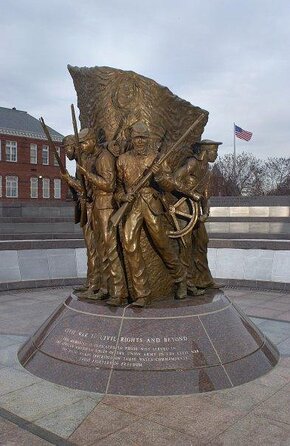
- A three-and-a-half-hour route links major landmarks: You visit Lincoln Park, Black Lives Matter Plaza, the African American Civil War Memorial, the Martin Luther King, Jr. Memorial, and the Lincoln Memorial.
- Guides provide the real substance: Guides including Dre, Elvis, Jeff, and De’Andre have been praised for connecting Washington’s monuments with lesser-known figures, inventions, neighborhoods, and political struggles.
- The museum comes last: The tour ends at the National Museum of African American History and Culture, where you can continue independently for the rest of the day if entry is available.
- The bus saves your feet: Transportation begins at the US Navy Memorial Plaza and combines drive-by views with guided stops on and off the bus.
- The $89 price covers more than transport: You pay for a local guide, bottled water, the sightseeing route, and access planning for one of Washington’s hardest museum reservations.
- Plan around the fixed start: Check in at least 20 minutes before the 10 a.m. departure, and remember that lunch is not included.
Why this tour adds context to Washington’s monuments
Many first-time visits to Washington focus on presidents, wars, and government buildings. Those subjects matter, but they can leave African American lives and contributions in the margins. This tour shifts the frame.
You still see familiar symbols such as the Lincoln Memorial and White House, but the guide places them within the longer struggle for freedom, citizenship, education, military service, voting rights, and economic opportunity. That approach gives the monuments more meaning. You are not simply checking off famous buildings. You are asking who was represented, who was excluded, and how public memory gets shaped.
The guides are the heart of the experience. Dre receives especially strong praise for connecting Black American history with the streets and neighborhoods around you. Elvis is noted for adjusting his presentation to children, older adults, and different interests. Jeff is described as both humorous and detailed, while De’Andre brings history and trivia together in a way that works well for families.
The subject matter can be challenging. You may hear about slavery, exclusion, redlining, unequal military service, and the limits of famous political promises. That is part of the value, but I would not choose this tour if you want only a light sightseeing ride.
More African American history tours in Washington DC:
- African American History Tour with Museum of African American History Ticket
★ 4.5 · 390 reviews - Washington, DC: African American History Tour & Museum Entry
★ 4.9 · 312 reviews - Washington DC: Walking Tour and African American Museum
★ 4.6 · 157 reviews
Starting at the US Navy Memorial Plaza
Your morning begins at the United States Navy Memorial and Naval Heritage Center, at 701 Pennsylvania Avenue NW. The meeting time is 10 a.m., but arrive by 9:40 so check-in does not delay the group.
The Navy Memorial is a practical starting point because it is near public transportation and easy to reach from central Washington. The first stop is guided from outside, and admission to the memorial area is free. From there, the group boards the bus for a route that combines drive-by views with stops where you get out and listen.
Seats are assigned first come, first served. If sitting near the guide or beside a family member matters to you, early arrival is useful. The maximum group size is 55, so the bus may feel full on a busy departure. You should also know that food is not permitted on the bus, though snacks are allowed, and bottled water is included.
Lincoln Park and two different visions of freedom
Lincoln Park gives the tour an important early pause. Here you see the Emancipation Memorial and the statue of Mary McLeod Bethune, with about 20 minutes for the guided stop.
The Emancipation Memorial reflects one version of emancipation and has long prompted discussion about how freedom is represented in public art. The nearby Bethune statue offers a different focus: an African American educator, organizer, and adviser whose work reached far beyond the classroom.
This pairing is useful because it places a nationally familiar symbol beside a woman whose public influence many people do not learn about in school. The guides use the stop to show that African American history is not limited to a few famous male leaders or a single period of protest.
You should expect a short outdoor visit, not an extended lecture at each statue. Wear comfortable shoes and dress for the weather. The tour requires good weather, and poor conditions can lead to a rescheduled outing or refund.
Black Lives Matter Plaza and the White House
The route continues to the White House area and Black Lives Matter Plaza. The White House is viewed from outside, and the guided stop lasts about 20 minutes.
This is a strong place to connect national power with public protest. The plaza became an internationally recognized site of demonstrations, and its position near the White House makes the relationship between government, policing, protest, and public space plain to see.
The stop also helps connect past and present. The tour does not treat African American history as something finished in the 1960s. Guides such as Dre have linked Washington’s present-day streets with older struggles over access, representation, and who gets heard in the capital.
Admission to the White House is not part of this experience. You are seeing the building and surrounding public space from outside, so set your expectations accordingly.
More American History Museum tours:
- Smithsonian Museum of American History Exclusive Guided Tour
★ 5.0 · 245 reviews - Smithsonian Museum of American History Semi-Private 8ppl Max
★ 5.0 · 135 reviews - DC Monuments Day or Night American History Electric Cart Tour
★ 5.0 · 91 reviews - National Archives + American History Museum Tour 8ppl Max
★ 5.0 · 80 reviews
The African American Civil War Memorial and Museum
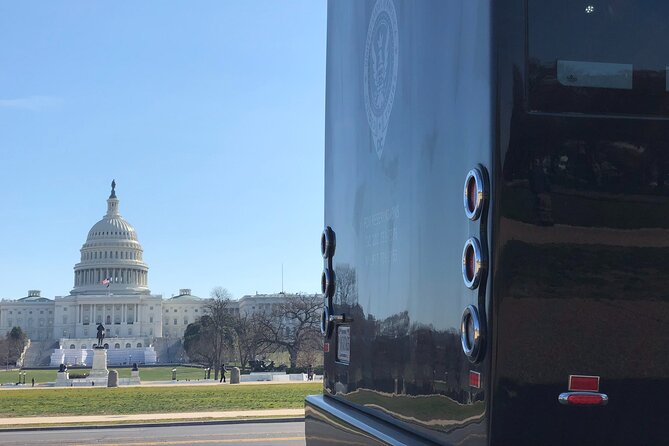
At the African American Civil War Memorial, the guide gives commentary from outside the building. The visit lasts about 20 minutes, and admission to the outdoor stop is free.
This stop is especially important for understanding the military side of emancipation. African American soldiers served in the Union army, but their service came within a system that treated them unequally. The guides use the memorial to discuss military participation, sacrifice, and the difficult path from military service to full citizenship.
Because the visit is outside only, you will not tour the interior African American Civil War Museum as part of this booking. That distinction matters. If the museum itself is a priority, plan a separate visit and check its current opening information.
The stop works best as part of the larger sequence. After seeing Bethune’s civic work and the protest space near the White House, you encounter African American service in wartime. The story keeps widening rather than staying fixed on one famous event.
The Martin Luther King, Jr. Memorial
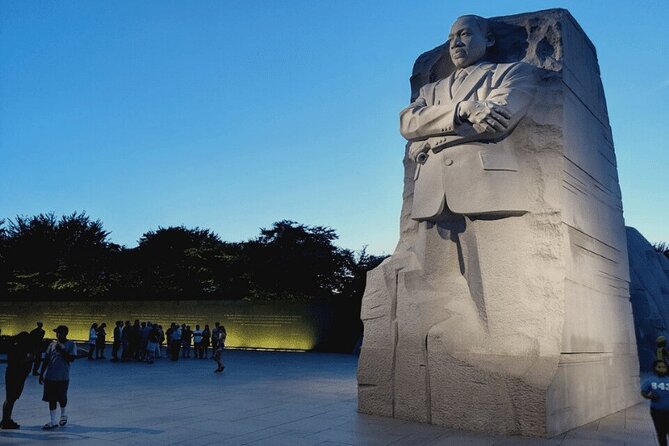
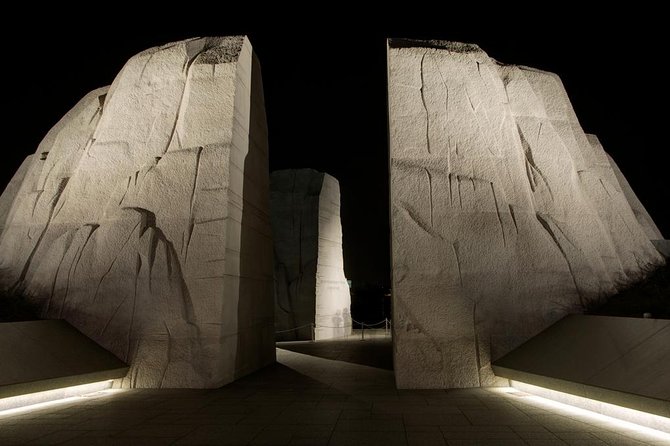
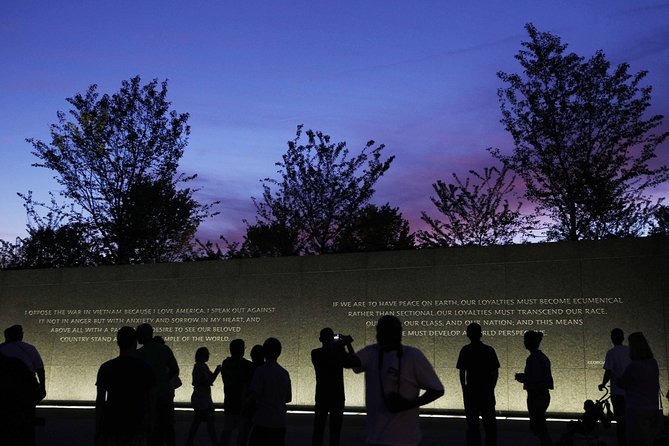
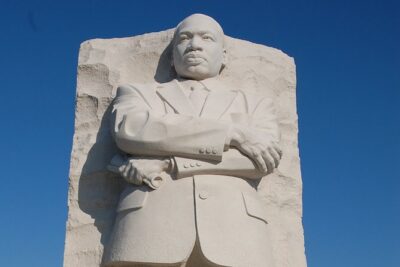
The Martin Luther King, Jr. Memorial receives its own guided stop of about 20 minutes. This is one of the tour’s most powerful locations, but the guide’s explanation is what gives the visit its shape.
You will have time to see the memorial, take photographs, and hear about King’s role in the Civil Rights movement. A strong guide also places King among other organizers, educators, workers, and local communities rather than presenting social change as the achievement of one person alone.
The tour’s guide commentary may include Washington details that are easy to miss when visiting independently. Past groups have heard about the route of King’s famous speech, the King Suite at the Waldorf Astoria, and the political limits behind well-known presidential actions. The exact stories can vary by guide and current conditions, but the broader point is consistent: the capital’s landmarks carry both public memory and unfinished arguments.
The Lincoln Memorial and the limits of simple stories
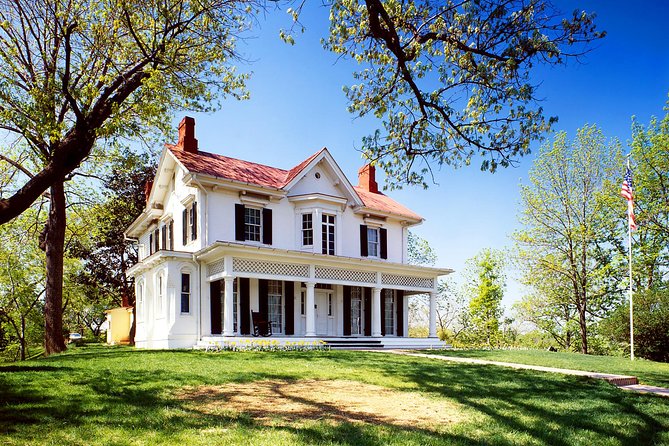
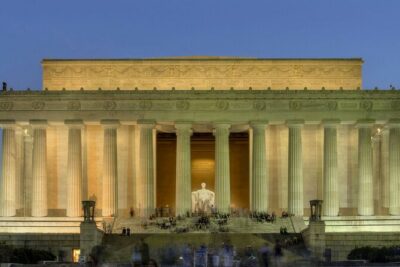
The Lincoln Memorial is the final major outdoor monument before the museum. You spend about 20 minutes here with the guide.
Most people know the steps from photographs and the 1963 March on Washington. This tour asks you to look again. Lincoln’s role in emancipation, the scope of the Emancipation Proclamation, and the experiences of Black Americans during and after the Civil War are more complicated than a simple hero story.
That complexity is one of the tour’s strongest features. Guides have discussed figures such as Robert Smalls, the Black men who served in the Civil War, and the African American doctors and workers whose contributions were overlooked. They also connect the memorial to the Civil Rights era and to the way speeches, marches, and public gatherings turned this space into a national stage.
The Lincoln Memorial is outdoors and exposed. Bring sun protection in warm weather and a layer in cooler months. The tour moves on a schedule, so you will not have unlimited time on the steps.
Entering the National Museum of African American History and Culture
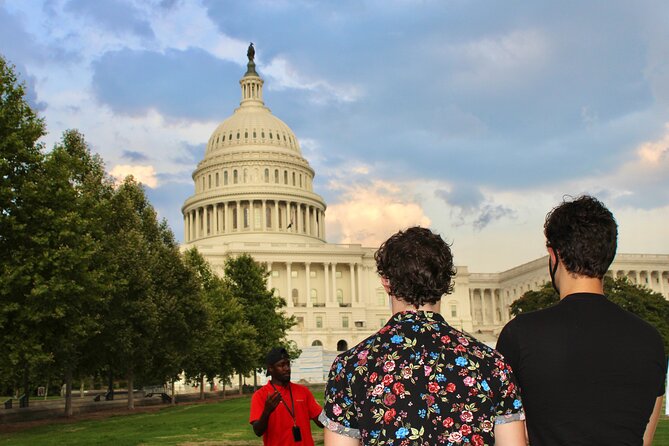
The tour ends at the National Museum of African American History and Culture, at 1400 Constitution Avenue NW. The stated city tour lasts about three and a half hours, with roughly an hour assigned to the museum portion, but you are welcome to explore the museum independently for the rest of the day if entry is available.
This ending makes good practical sense. The outdoor stops establish a timeline and introduce people and themes. The museum then gives you a place to pursue the subjects that catch your attention.
Your purchase includes a complimentary reservation for museum entry, but the tour company is not the Smithsonian and does not run an official Smithsonian tour. It accesses the public reservation system and does not control the museum’s availability. Entry is therefore not guaranteed, and you may face a wait even with an allotted time. The museum’s own rules apply.
That uncertainty is the tour’s biggest weakness. The museum is a major reason many people book, yet the reservation cannot be promised in the same way as a standard admission ticket. Contact the Smithsonian directly with questions about current entry procedures, and keep your schedule flexible.
If you do enter, allow more than the one-hour minimum whenever possible. The museum is large, and a short visit will give you only a first look. The tour ends at the museum rather than returning you to the Navy Memorial, so this is a good place to plan lunch or continue your day. Lunch is not included, but there are restaurants in the surrounding area.
What the $89 price really buys
At $89 per person, this is not the cheapest way to see Washington’s monuments. You can visit many outdoor memorials for free, and public transportation costs far less than a guided excursion.
The value comes from the interpretation and the route. You receive a local guide on and off the bus, live commentary during the drive, bottled water, organized transportation, and a planned sequence that would take effort to arrange independently. You also avoid having to navigate between Lincoln Park, the White House, the Civil War Memorial, the MLK Memorial, and the Lincoln Memorial on your own.
The museum reservation adds potential value, but I would not treat it as guaranteed admission. Think of the $89 as payment for the guide’s time, perspective, transportation, and coordination, with museum access as an intended extra.
I consider the price fair for families, first-time visitors, and anyone who wants historical interpretation rather than a simple monument transfer. It is less compelling if you already know Washington well, prefer a slow walking pace, or want to spend the whole day inside the museum.
Who will get the most from this experience
This tour suits you if African American history is a main reason for visiting Washington. It is also a good choice if you want a clear introduction before visiting the museum on your own.
Families can benefit from the mixed format. The bus offers rest between stops, while the outdoor visits give children and teenagers concrete places to connect with the stories. Elvis, in particular, has been praised for adjusting his presentation across age groups.
The tour also works well for visitors who want a broader national story. Guides have brought up inventors and public figures such as Benjamin Banneker, Alice Ball, Jesse Russell, Mary McLeod Bethune, Robert Smalls, and others. They have connected local places to subjects including NASA, technology, education, housing policy, and neighborhood change.
You may want a different experience if you need guaranteed museum access, a very small group, or extensive time at every stop. The group can reach 55 people, and each landmark visit is brief. This is a guided overview with strong commentary, not a private seminar.
Practical advice before you book
Arrive at least 20 minutes early at the Navy Memorial. The tour begins at 10 a.m., and late arrival could mean missing check-in or the departure.
Wear shoes suitable for short walks and outdoor standing. Bring water or use the included bottle, along with weather protection. The route requires good weather, and a cancellation for poor conditions results in an alternative date or a full refund.
Build extra time into your day after the tour for the National Museum of African American History and Culture. Do not schedule a tight afternoon appointment immediately afterward, since museum entry may involve waiting and the amount of time you want inside can easily exceed the listed hour.
Cancellation is free up to 24 hours before the start time. Within 24 hours, you generally receive no refund, and late changes are not accepted. The tour also requires a minimum number of participants, so a cancellation by the operator may result in another date, another experience, or a full refund.
Should you book this Washington, DC history tour?
Book it if you want a guided, story-driven introduction to African American history in Washington, especially if you are visiting the city for the first time. The strongest part is the connection between places: Bethune beside the Emancipation Memorial, protest near the White House, military service at the Civil War Memorial, and the Civil Rights movement at the Mall.
The guides make the difference. If you can request a guide, names such as Dre or Elvis have received especially warm praise, though availability is not promised. I would book this for families, out-of-town visitors, and anyone who wants context before entering the Smithsonian museum.
Think twice if your only goal is guaranteed museum entry or a leisurely, small-group walk. The museum reservation can change, the bus may be full, and the stops are timed. For the right reader, though, $89 buys a useful framework for understanding Washington, followed by time to explore the museum at your own pace.
FAQ
How long does the tour last?
The guided experience lasts approximately three hours and 30 minutes. The museum portion is listed as about one hour, but you may explore the National Museum of African American History and Culture independently for the rest of the day if you are admitted.
Where does the tour begin?
It begins at the United States Navy Memorial and Naval Heritage Center, US Navy Memorial Plaza, 701 Pennsylvania Avenue NW, Washington, DC 20004.
What time should I arrive?
The scheduled start time is 10 a.m. You should arrive at least 20 minutes early for check-in.
Where does the tour end?
The city tour ends at the National Museum of African American History and Culture, 1400 Constitution Avenue NW, Washington, DC 20560.
Is museum admission included?
The booking includes a complimentary timed-entry reservation for the National Museum of African American History and Culture. Entry is not guaranteed, and the company is not an official Smithsonian tour operator.
Which sites are visited?
The route includes the US Navy Memorial, Lincoln Park and its Emancipation Memorial and Mary McLeod Bethune statue, the White House and Black Lives Matter Plaza, the African American Civil War Memorial, the Martin Luther King, Jr. Memorial, the Lincoln Memorial, and the National Museum of African American History and Culture.
Is transportation provided?
Yes. The experience uses a bus with live commentary and includes guided stops both on and off the bus. Some locations are viewed as drive-by stops.
Is lunch included?
No. Lunch is not included, so plan to eat before or after the tour. Snacks are allowed, but food is not allowed on the buses.
What is the cancellation policy?
You can cancel up to 24 hours before the start time for a full refund. Cancellations or changes made within 24 hours are not accepted and are not refunded. Weather or minimum-participant cancellations may result in another date or a full refund.
More history tours in Washington DC
- DC Monuments & History Guided E-Cart Tour-Blankets
★ 4.5 · 450 reviews - Historic Georgetown: History, Gossip, & Architecture Walking Tour
★ 5.0 · 321 reviews - DC’s Original Food and History Walking Tour
★ 5.0 · 255 reviews - Tastes of Georgetown Food & History Small Group Walking Tour
★ 4.5 · 203 reviews
More museums in Washington DC
- Smithsonian Museum of Natural History – Exclusive Guided Tour
★ 5.0 · 446 reviews - National Mall Tour with 10 Stops & U.S. Capitol or Museum Entry
★ 4.5 · 331 reviews - Smithsonian Museums Walking Tour with Reserved Air & Space Entry
★ 5.0 · 297 reviews - Capitol Combo: U.S. Capitol + Library Congress or Capitol Museum
★ 4.5 · 294 reviews
Recently added around Washington DC
- Small Group Washington DC Night Tour★ 4.5 · 3 reviews
- Washington DC Neighborhoods Personalized Self-Guided App Tour★ 3.5 · 3 reviews
- America’s Main Street and White House Private Full-Day Tour★ 5.0 · 3 reviews
- Beyond the Closet Walking Tour★ 5.0 · 3 reviews
- Pirate Ship Treasure Hunt Cruise with Face Painting★ 4.5 · 3 reviews
- Sushi Masterclass in Washington D.C. (Includes 4-Course Meal)★ 5.0 · 3 reviews
- Private Washington DC Grand Tour with Changing of the Guard.★ 5.0 · 3 reviews
- 250th: National Archives & American History Museum Guided Tour★ 5.0 · 3 reviews
African American History, compared.
African American History Tour with Museum of African American History Ticket
Read our review →

DC Landmarks Walking Tour + African American Museum Admission
Read our review →
African-American Heritage Walking Tour of U Street in DC
Read our review →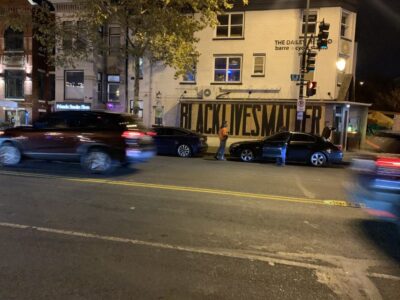

Private Black History Tour Washington DC for up to 10 Guests
Read our review →Browse the lists this tour appears in