
Reviewed · NATURAL HISTORY MUSEUM
Smithsonian Museum of Natural History Small Group Tour: 8ppl Max
The Hope Diamond is only the beginning. In two hours, this small-group tour moves through gems, Egyptian mummies, dinosaurs, giant mammals, coral reefs, and a 45-ton whale replica inside one of Washington’s most crowded and sprawling museums. Guides such as Brenda, Leigh, Meghan, and Richard have been praised for turning displays into stories and keeping children involved.
I like the eight-person limit, which gives you a real chance to ask questions instead of trailing behind a flag. I also like the efficient route through a building so large it covers the area of 18 football fields. The catch is simple: the museum itself is free, so the $89.67 price pays for the guide and structure, not admission. If you prefer wandering alone, that may feel steep.
In This Review
- Key points to know before booking
- Why a guide helps in a museum this big
- Starting with gems, minerals, and the Hope Diamond
- Ancient Egyptian mummies and the rituals of death
- Dinosaurs and the great animals of the earth
- Ocean Hall, coral, and Phoenix the whale
- What the eight-person limit really changes
- Is $89.67 a fair price?
- Timing, meeting point, and what to bring
- Who will get the most from this tour?
- Cancellation and overall booking advice
- Should you book it?
- FAQ
- How long does the Smithsonian Museum of Natural History tour last?
- What is the maximum group size?
- What does the tour cost?
- Is museum admission included?
- What exhibits will I see?
- Who leads the tour?
- Where does the tour meet and end?
- Is hotel transportation included?
- What should I bring to the museum?
Key points to know before booking
- The Hope Diamond anchors the tour: You’ll see the famous 46-karat blue diamond, along with other remarkable stones such as the Dom Pedro Aquamarine.
- Two hours covers the major sights: Expect a brisk highlights route rather than a full visit to all 126.5 million objects.
- Eight people is the maximum: The small group makes questions and conversation much easier than on a large coach tour.
- The guides are the main value: Brenda, Leigh, Meghan, Richard, Donna, Kate, Amanda, Tony, and Rebecca have each received praise for clear explanations, storytelling, and family-friendly conversation.
- The museum is free, but the tour is not: At $89.67 per person, compare the cost of guided context with the freedom of exploring on your own.
- Plan for walking and security: Wear comfortable shoes, bring only a small bag, and provide a mobile number with your country code when booking.
Why a guide helps in a museum this big
The National Museum of Natural History is not a quick stop where you can glance at a few cases and feel finished. Its collections span roughly 126.5 million years of natural history, and the building itself is enormous. Without a plan, you can spend much of your visit choosing corridors rather than understanding what you see.
This tour gives you a clear route through the museum’s headline rooms. I like that approach for a first visit, especially if you have only a morning or afternoon in Washington. You get orientation, major exhibits, and explanations of why the objects matter before you decide where to return on your own.
The guide also adds the human layer that labels often lack. A display case can tell you a stone’s name and weight. A good guide can explain why it became famous, who owned it, or what makes its color unusual. The strongest guide comments in the available feedback describe an experience built around stories, questions, and connections between rooms.
The style can vary by guide. Brenda has been praised for helping young children stay interested. Leigh is described as articulate, entertaining, and easy to follow. Kate reportedly used characters and role-play to give the route a narrative shape, while Richard contacted his group by text before the visit and shared behind-the-scenes details. Those names are useful signs of the experience’s strength, but you should not assume you can request a particular guide unless the operator confirms it.
More Natural History Museum tours:
- Smithsonian Museum of Natural History – Exclusive Guided Tour
★ 5.0 · 446 reviews - Smithsonian National Museum of Natural History Guided Tour
★ 4.1 · 159 reviews - Smithsonian Natural History + Air and Space Museum Private Tour
★ 5.0 · 67 reviews
Starting with gems, minerals, and the Hope Diamond
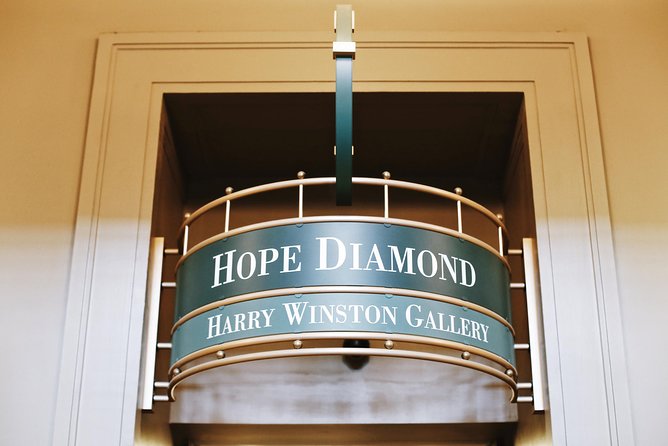
The tour begins at the Smithsonian National Museum of Natural History, at 1010 Madison Drive NW. From there, the guide leads you through the highlights, starting with some of the museum’s most famous treasures.
The Hope Diamond naturally gets top billing. This deep-blue 46-karat stone is large enough to command attention even in a room filled with glittering minerals. Its association with Marie Antoinette adds a royal and slightly unsettling thread to the story. The guide can give the diamond a place in history rather than leaving it as just another beautiful object behind glass.
You’ll also see the Dom Pedro Aquamarine, identified as the world’s largest gem of its kind. Its tall, carved form glows with a pale blue color from within. This is a good example of why a guided visit can work well here. You are not simply comparing shiny stones. You are learning how size, color, formation, ownership, and craftsmanship affect the importance of a mineral.
The gem displays are a strong early section because they offer instant visual appeal. They also make a pleasant contrast with the fossils and animal halls that follow. If your interests lean toward geology, you may want to linger longer than the standard route allows. The tradeoff is that two hours cannot give every mineral case equal time.
Ancient Egyptian mummies and the rituals of death
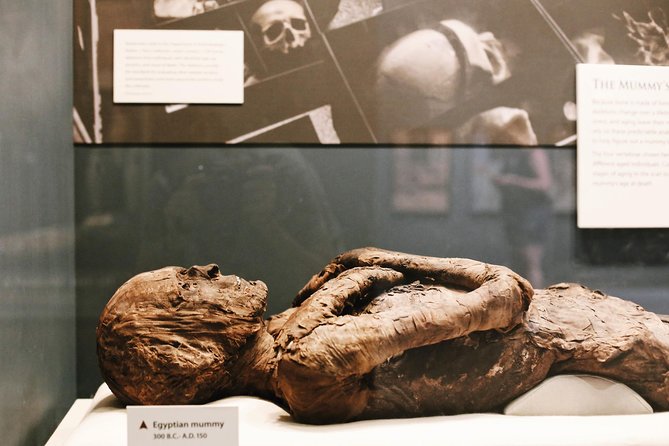
The route then shifts from the earth beneath your feet to the human past. Real mummies from Ancient Egypt introduce the subject of death rituals, burial, and the beliefs that shaped how people treated the dead.
This section can be more compelling with a guide than on a solo walk. Mummies are easy to view as dramatic objects, but the important questions concern ritual and meaning. A guide can help frame what you are seeing without reducing it to spectacle. The tour connects the physical remains with the customs surrounding death, giving this part more purpose.
Families should know that this is a museum setting, not a theatrical attraction. The material may not suit every young child, and the guide’s tone matters. The most successful experiences described by families involved guides who adjusted their explanations and answered questions patiently. If your children are curious about archaeology, this can be one of the most memorable stops.
The museum may also ask for quiet or limit speaking in certain rooms. Your guide will explain those rules before you enter. That is useful in a small group, since one person’s loud conversation can disturb the mood and the experience for everyone nearby.
Dinosaurs and the great animals of the earth
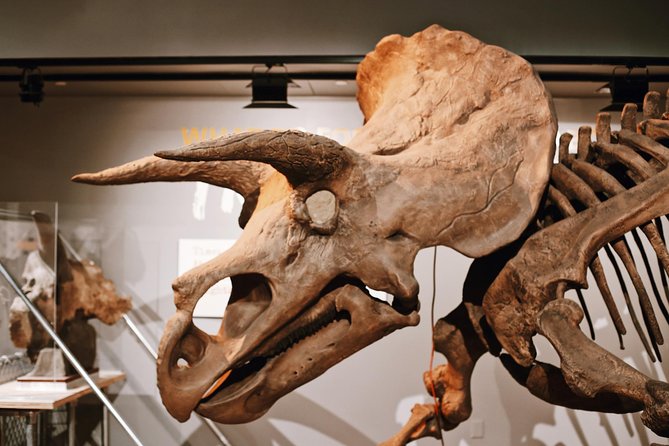
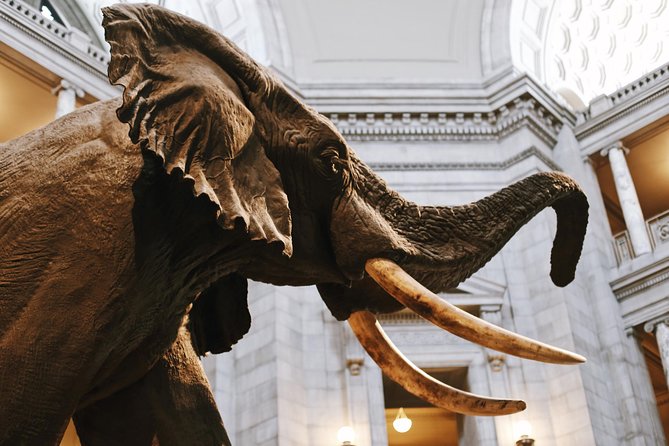
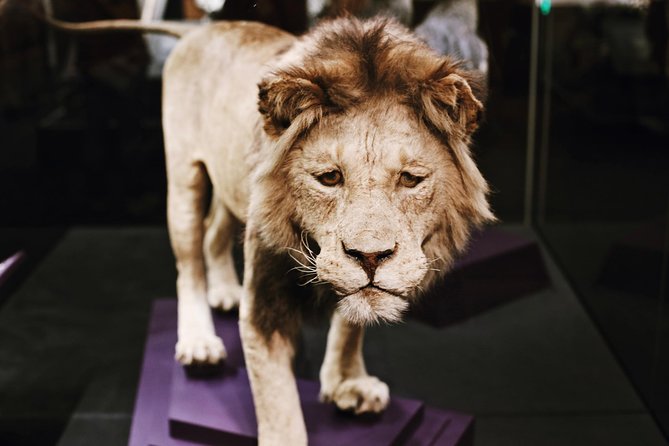
After the mummies, the tour steps into the animal world. The exact collection emphasis can vary during the year, but the route includes major creatures such as polar bears, elephants, giraffes, and dinosaurs.
The dinosaur displays give the tour a natural high point for many children. One family specifically singled out the T-Rex, while another called the museum’s Henry a highlight. Henry is the museum’s well-known dinosaur specimen, and returning visitors may find that familiar objects still have force when a guide adds context.
The larger animal displays help broaden the story beyond fossils. Polar bears, elephants, and giraffes let you compare animals from very different environments and body plans. The guide’s job is not just to point at each one. It is to help you see how the museum moves from ancient life to living species and from individual specimens to wider questions about the natural world.
This part of the visit is also where the walking pace may become noticeable. The building is huge, and a highlights tour asks you to keep moving. I would not book this experience expecting long stretches at every exhibit. You will get more from it if you accept that the goal is a smart introduction, not total coverage.
More Smithsonian museum tours:
- Smithsonian Museums Walking Tour with Reserved Air & Space Entry
★ 5.0 · 297 reviews - Smithsonian Museum of American History Exclusive Guided Tour
★ 5.0 · 245 reviews - The Smithsonian National Air & Space Museum Exclusive Guided Tour
★ 5.0 · 214 reviews - Smithsonian Air & Space Museum Guided Tour Semi-Private 8ppl Max
★ 5.0 · 154 reviews
Ocean Hall, coral, and Phoenix the whale
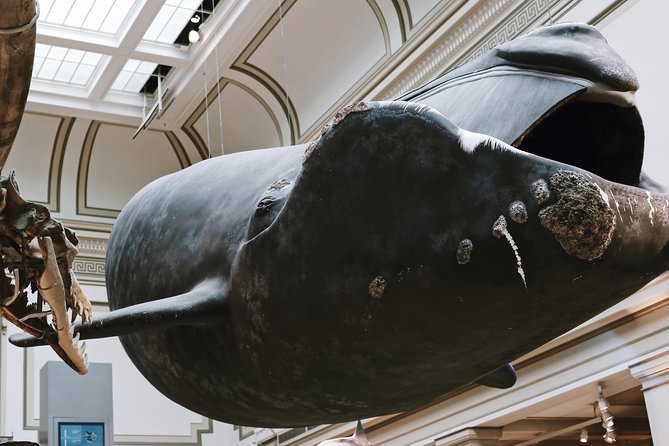
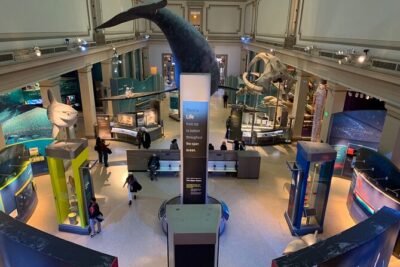
The final major section takes you below the surface in the Ocean Hall. Here you may see a live coral reef exhibit and Phoenix, a 45-ton whale replica based on a real living whale tracked by the museum.
The coral reef display offers a welcome change after the large mammals and fossils. It gives you a moving, living exhibit rather than a preserved specimen. Phoenix, by contrast, makes its point through sheer scale. A whale replica suspended in a hall helps you understand the animal’s size in a way that a photograph cannot.
I like the way this stop rounds out the visit. The tour has moved from stones to human remains, from extinct animals to modern wildlife, and finally into the ocean. That sequence gives the two hours a sense of direction instead of feeling like a random list of famous cases.
Still, the Ocean Hall may receive only a portion of the available time. If marine life is your main interest, you may want to stay after the guided portion ends. The tour finishes back at the meeting point, and the information provided indicates that you can continue exploring on your own after the scheduled visit.
What the eight-person limit really changes
A maximum of eight people is one of the clearest advantages here. In a large group, questions are often delayed, voices get lost, and the guide must aim every comment at the middle of the room. With eight or fewer, you can ask why a particular object matters or request a little more time in a section that interests you.
The small size also helps with children. Several guides, including Brenda, Amanda, and Tony, have been praised for keeping younger members involved. That does not guarantee every child will love two hours of museum walking, but it gives the guide room to adjust language, ask questions, and respond to changing attention spans.
The experience may occasionally be private if no other people book the same departure. One person described having a personal guide and found the chance to shape the conversation especially worthwhile. You should treat that as a possibility, not a promise.
The limit does not turn the experience into a VIP Smithsonian program. The tour provider is an outside company, and the museum itself remains a public institution. You will still enter a busy national museum, pass through security, and share the building with other visitors.
Is $89.67 a fair price?
At $89.67 per person, this tour is a paid guiding service inside a museum that does not charge general admission. That distinction matters. You are paying for planning, interpretation, and the chance to see the main sections efficiently, not for a special admission ticket.
I think the price can make sense for a first-time visitor who has limited time or dislikes wandering through large museums without context. It is also easier to justify for a couple or a small family that values conversation and a planned route. The strongest feedback gives special credit to guides who explain stories, answer questions, and make the experience feel more focused than a self-guided visit.
For a family of three or four, the total cost climbs quickly. If you are comfortable reading labels, choosing your own exhibits, and returning to favorite rooms, you can visit the free museum without paying for a guide. You may see less in two hours, but you will have complete control over the pace.
I would treat the tour as an orientation. Afterward, you can decide if the gems, dinosaurs, Egyptian displays, or Ocean Hall deserve more time. That makes the price easier to defend than a tour that simply rushes you out after a fixed route.
Timing, meeting point, and what to bring
The meeting point is 1010 Madison Drive NW in Washington, DC. The tour lasts about two hours and ends back at the meeting point. The museum is near public transportation, and the operator recommends using a taxi or Uber for hotel transportation since pickup and drop-off are not included.
You should wear comfortable clothes and shoes. A moderate amount of walking is involved, and the size of the building means you will be on your feet for much of the visit.
Security rules are worth taking seriously. Large bags and suitcases are not allowed inside. Only a handbag or small, thin backpack can pass through security, so pack lightly and avoid arriving with luggage.
Provide a mobile phone number, including the country code, when you book. The guide may need to contact you, and one guide, Richard, was specifically praised for texting before the visit to clarify the meeting plan. Confirmation is sent at booking.
The museum or another Washington attraction can sometimes close without warning or open late. If the museum opening is delayed by more than an hour, an alternative may be offered, but the stated policy does not promise a refund or discount in that situation. Security lines can also form even when a tour is described as having priority access.
Who will get the most from this tour?
I would recommend it first to a first-time Washington visitor who wants a fast, clear introduction to a major museum. It also suits families who want help keeping children focused, couples who enjoy guided conversation, and anyone who would rather hear a story than read every label.
The experience is less suited to a specialist who wants to study one collection in depth. A paleontology fan, Egyptology student, or mineral collector may find the pace too broad. The same is true if you want a quiet, unhurried visit with no fixed route.
The physical demands are moderate, but the stated information warns that accommodations are not provided for people with walking disabilities or those using wheelchairs. If that affects your plans, confirm suitability before booking rather than assuming the small group solves access concerns.
Cancellation and overall booking advice
You can cancel up to 24 hours before the start time for a full refund. Changes or cancellations made within 24 hours are not accepted for a refund. The local start time controls the cutoff.
The operator also offers a satisfaction guarantee with a 24-hour contact requirement after the tour. If something goes wrong, contact the provider promptly and give it a chance to address the issue before making a final judgment.
Should you book it?
Book this tour if you want to make sense of a vast museum in a short visit and you value a guide who can connect the Hope Diamond, mummies, dinosaurs, and ocean life into one readable story. The small group and repeated praise for guides such as Brenda, Leigh, Meghan, Richard, and Rebecca are the strongest reasons to choose it.
Skip it if the free admission is the main draw and you would rather set your own pace. The museum offers plenty to see without a paid guide, and two hours will never cover everything. For most first visits, though, this is a useful way to get oriented, see the famous pieces, and leave with a better idea of where to spend your extra time.
FAQ
How long does the Smithsonian Museum of Natural History tour last?
The tour lasts approximately two hours.
What is the maximum group size?
The tour has a maximum of eight travelers.
What does the tour cost?
The listed price is $89.67 per person.
Is museum admission included?
The itinerary identifies admission as free. The tour price pays for the small-group experience and professional guide rather than a general museum admission charge.
What exhibits will I see?
The route includes the Hope Diamond, gems and minerals, the Dom Pedro Aquamarine, Ancient Egyptian mummies, polar bears, elephants, giraffes, dinosaurs, the Ocean Hall, a live coral reef exhibit, and Phoenix, a 45-ton whale replica.
Who leads the tour?
The experience includes a professional art historian guide. Guides named in the available information include Brenda, Leigh, Meghan, Richard, Donna, Kate, Amanda, Tony, Rebecca, and Glennyce. A specific guide is not guaranteed.
Where does the tour meet and end?
The tour starts at 1010 Madison Drive NW, Washington, DC 20004. It ends back at the meeting point.
Is hotel transportation included?
No. Hotel pickup and drop-off are not included. Taxi or Uber is recommended for hotel transportation.
What should I bring to the museum?
Bring comfortable shoes and clothing, since a moderate amount of walking is involved. Large bags and suitcases are not allowed. Only handbags or small, thin backpacks can pass through security.
More history tours in Washington DC
- DC Monuments & History Guided E-Cart Tour-Blankets
★ 4.5 · 450 reviews - Historic Georgetown: History, Gossip, & Architecture Walking Tour
★ 5.0 · 321 reviews - DC’s Original Food and History Walking Tour
★ 5.0 · 255 reviews - Tastes of Georgetown Food & History Small Group Walking Tour
★ 4.5 · 203 reviews
More museums in Washington DC
- Guided African American History Tour with Reserved Museum Entry
★ 4.5 · 1,180 reviews - African American History Tour with Museum of African American History Ticket
★ 4.5 · 390 reviews - National Mall Tour with 10 Stops & U.S. Capitol or Museum Entry
★ 4.5 · 331 reviews - Washington, DC: African American History Tour & Museum Entry
★ 4.9 · 312 reviews
Recently added around Washington DC
- Small Group Washington DC Night Tour★ 4.5 · 3 reviews
- Washington DC Neighborhoods Personalized Self-Guided App Tour★ 3.5 · 3 reviews
- America’s Main Street and White House Private Full-Day Tour★ 5.0 · 3 reviews
- Beyond the Closet Walking Tour★ 5.0 · 3 reviews
- Pirate Ship Treasure Hunt Cruise with Face Painting★ 4.5 · 3 reviews
- Sushi Masterclass in Washington D.C. (Includes 4-Course Meal)★ 5.0 · 3 reviews
- Private Washington DC Grand Tour with Changing of the Guard.★ 5.0 · 3 reviews
- 250th: National Archives & American History Museum Guided Tour★ 5.0 · 3 reviews
Natural History Museum, compared.
Smithsonian National Museum of Natural History Guided Tour
Read our review →
Smithsonian Natural History + Air and Space Museum Private Tour
Read our review →
Smithsonian Natural History + Air & Space Museum Tour 8ppl Max
Read our review →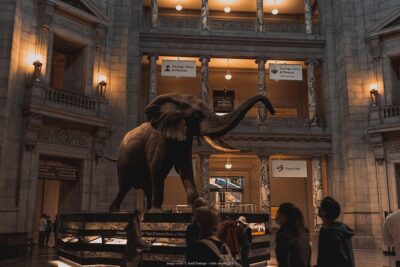
Two Smithsonian Museums Private Tour: American & Natural History
Read our review →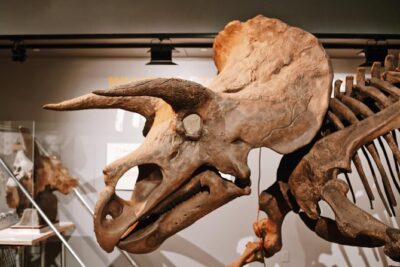
Smithsonian Natural History + Museum of American History 8ppl Max
Read our review →
Smithsonian Museum of Natural History Guided Tour
Read our review →
Smithsonian Natural History + American History – Exclusive Tour
Read our review →Browse the lists this tour appears in