
Reviewed · AIR & SPACE MUSEUM
Smithsonian Air & Space Museum Guided Tour Semi-Private 8ppl Max
The most useful thing about this tour is that it gives you a clear route through a huge museum. In about two and a half hours, your guide leads you from the Wright Flyer and early aviation to Lindbergh’s Spirit of St. Louis, Apollo 11 objects, moon rocks, and other major pieces of American flight history.
I like the eight-person limit, which makes it easier to ask questions and stay close to the guide. I also like the route’s mix of famous objects and small details, the sort that can turn a glass case into a human story. The main drawback is important: the museum is under major construction, so several advertised displays may be closed or moved.
In This Review
- Key points
- A smart way into Washington’s biggest flight museum
- The Wright Flyer and the first chapter of flight
- Lindbergh, Yeager, and aviation’s riskier age
- Apollo 11 artifacts and the emotional center
- Spacecraft, satellites, and the changing museum route
- Why a group of eight changes the visit
- What the $89.67 price really buys
- Timing, meeting point, and what to bring
- Who will get the most from this tour
- Booking, cancellations, and museum changes
- Should you book this Air and Space Museum tour?
- FAQ
- How long does the Smithsonian Air and Space Museum tour last?
- How many people are allowed in each group?
- Is museum admission included in the price?
- What objects might I see?
- Where does the tour start and end?
- Is the tour suitable for wheelchair users?
- What is the cancellation policy?
Key points
- See originals tied to landmark flights: The Wright Flyer, Spirit of St. Louis, Bell X-1, John Glenn’s Mercury capsule, and Apollo 11 artifacts are among the displays that may feature on the route.
- Small groups matter: With no more than eight people, your guide can use names, answer questions, and adjust the pace better than a large museum group.
- Expect a changing museum: Renovation work has closed some galleries, and the exact objects available can change.
- The guide supplies the value: Smithsonian admission is free, so the $89.67 price pays for structure, stories, and direction rather than entry.
- Choose morning or afternoon: The tour lasts about two hours and 30 minutes, leaving time to continue exploring afterward.
- Plan for walking and security: Large bags are not allowed, and the experience is not suitable for wheelchair users or people with walking disabilities.
A smart way into Washington’s biggest flight museum

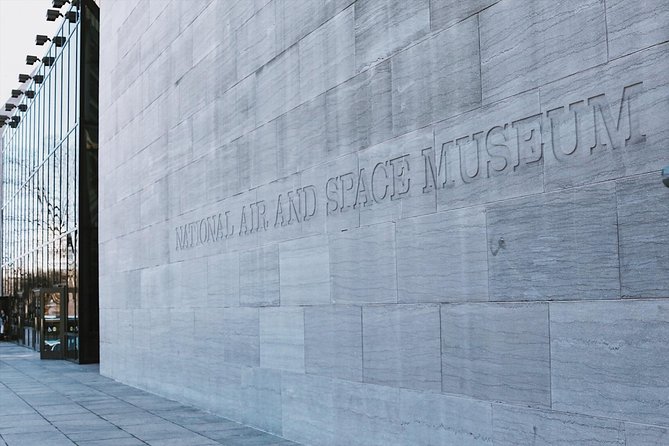
The National Air and Space Museum sits at 600 Independence Avenue SW on the National Mall, near public transport and other major Washington DC sights. You meet your guide there, pass through security, and begin with a planned path rather than wandering from one aircraft to the next.
That matters because the museum covers an enormous span of time. You are not just looking at old airplanes. You are moving from the first successful powered flight to record-setting aircraft, the Space Race, moon landings, orbiting laboratories, and the technology behind modern space travel.
A guide also helps you decide what deserves your attention. Museum labels can tell you a date and a name, but a good guide explains why an object mattered, who used it, and what problem its designers had to solve.
The tour is offered in English, with a morning or afternoon departure. Groups are capped at eight people, and at least two people must book for the tour to operate. If that minimum is not met, you are offered another option or a full refund.
More Air and Space Museum tours:
- Smithsonian Museums Walking Tour with Reserved Air & Space Entry
★ 5.0 · 297 reviews - The Smithsonian National Air & Space Museum Exclusive Guided Tour
★ 5.0 · 214 reviews - Smithsonian Air & Space Museum Guided Tour 8ppl Max
★ 4.8 · 89 reviews
The Wright Flyer and the first chapter of flight
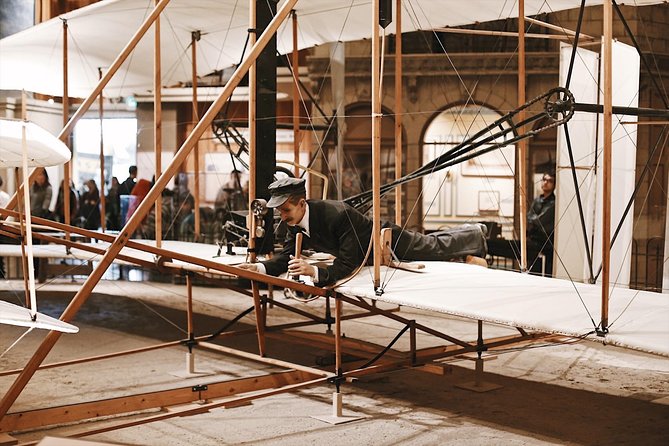
The route generally begins with the original Wright Flyer, the aircraft associated with the Wright brothers’ breakthrough at Kitty Hawk. This is an excellent opening because it gives the tour a clear starting point: controlled powered flight was once a fragile experiment, not an everyday fact.
The most useful commentary here is often about the work behind the machine. The Wright brothers were not simply lucky inventors. Their experiments involved bicycles, balance, wind, control, and repeated testing. One particularly memorable detail for families is the connection between the brothers’ bicycle business and their aircraft work.
You will likely spend more time here than you would on your own if you simply followed the crowd. Your guide can point out design features that are easy to miss and explain how the Wright Flyer differs from later aircraft.
The drawback is that museum construction can affect access. The display you expect may not be available, or the route may change around closed galleries. Check the museum’s current exhibition page before you go, especially if one particular aircraft is the reason you booked.
Lindbergh, Yeager, and aviation’s riskier age
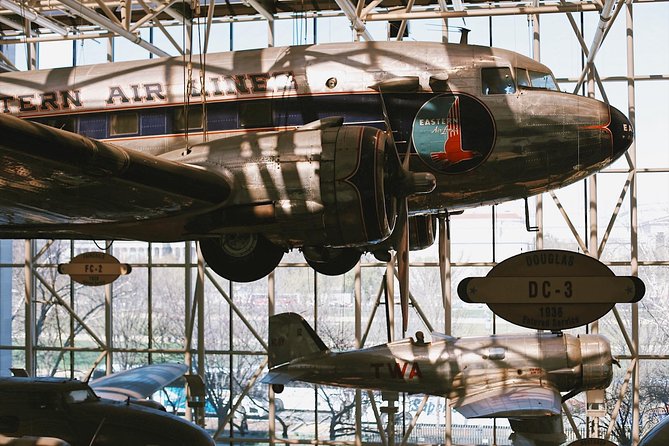
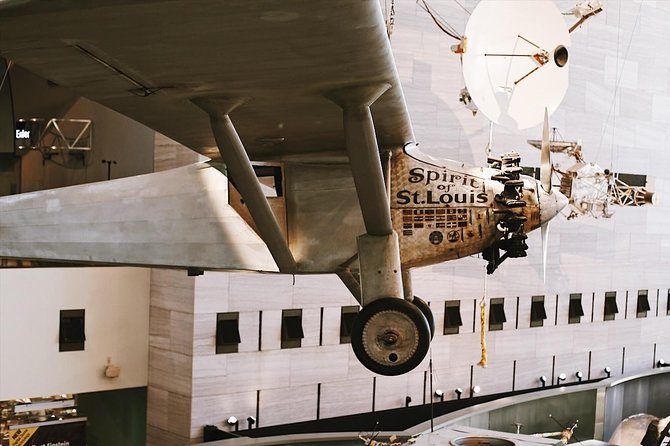
The next part of the tour generally shifts from early experimentation to aircraft that changed public ideas about distance and speed. Charles Lindbergh’s Spirit of St. Louis is one of the most powerful stops.
Lindbergh flew this aircraft from New York to Paris in 1927, completing the first solo nonstop transatlantic flight. Seeing the original plane helps you understand the physical challenge involved. It was not a sleek modern jet. It was a purpose-built aircraft carrying fuel, equipment, and one pilot across an ocean.
Your guide may also take you to Chuck Yeager’s Bell X-1, the aircraft associated with breaking the sound barrier. Put these objects together and the museum’s story becomes easy to follow: first humans learned to fly, then they crossed oceans, then they pushed aircraft beyond familiar limits.
John Glenn’s original Mercury capsule adds another personal scale to the story. Space travel can sound abstract when described through launch systems and mission statistics. A small capsule, built for one person, makes the risk and cramped conditions much easier to picture.
Apollo 11 artifacts and the emotional center
For many people, the strongest section is the Apollo 11 material. The tour generally includes Neil Armstrong’s Apollo 11 spacesuit, Buzz Aldrin’s space suit and moon boots, the Apollo 11 Command Module, and lunar samples brought back from the moon.
These objects are valuable for more than their fame. They show the practical side of the 1969 landing: the suits, boots, capsule, and rock samples that connected an enormous national effort to the bodies and hands of three astronauts.
The moon rocks are especially effective in person. A photograph can show their color and texture, but it cannot replace the simple fact that the material came from another world and was carried back by people.
The guide’s role is important here. A strong explanation can connect the hardware to the people inside it, the engineering choices, and the pressure surrounding the mission. Several guides, including Brenda, Amanda, Rebecca, Tim, Chris, and Leigh, have been praised for adding anecdotes, humor, and lesser-known details rather than repeating only the text on the signs.
Families should pay attention to the age mix in their group. Guides have adjusted explanations for teenagers and children, and one guide was specifically praised for keeping a 12-year-old interested. The tour is not designed only for aerospace specialists.
More Smithsonian museum tours:
- Smithsonian Museum of Natural History – Exclusive Guided Tour
★ 5.0 · 446 reviews - Smithsonian Museum of American History Exclusive Guided Tour
★ 5.0 · 245 reviews - Smithsonian Museum of Natural History Small Group Tour: 8ppl Max
★ 5.0 · 177 reviews - Smithsonian National Museum of Natural History Guided Tour
★ 4.1 · 159 reviews
Spacecraft, satellites, and the changing museum route
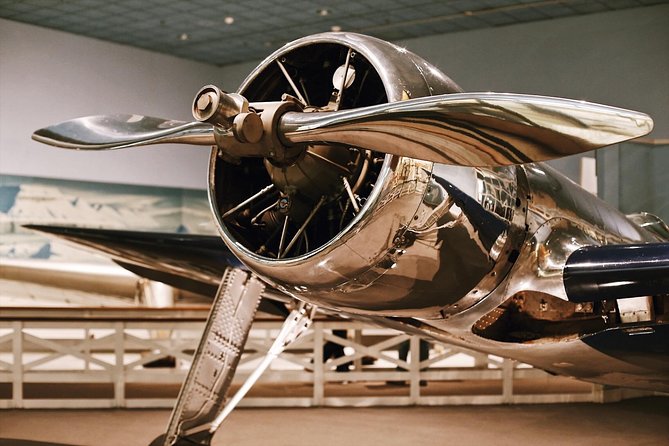
The museum’s space displays extend beyond Apollo. Depending on the current gallery arrangement, your route may include a backup lunar module, John Glenn’s Mercury capsule, a test vehicle for the Hubble Space Telescope, Skylab, and a model of the Space Shuttle’s mid-deck.
The labels attached to these objects matter. Some are original flight hardware. Others are backups, test vehicles, or models. A guide helps you understand that difference, which is crucial when you are looking at a display described as the Hubble Telescope or Skylab.
Skylab, America’s first space station, offers a bridge between the short Apollo missions and longer stays in orbit. It also raises a practical question: how do humans live and work away from Earth for weeks or months?
The Hubble display shows another side of space exploration. Space achievements depend not only on astronauts but also on instruments, maintenance, testing, and long-term scientific work. A guide can connect these pieces into a story instead of leaving you with a row of unrelated machines.
The construction warning cannot be treated as a footnote. The Air and Space Museum is undergoing major work for multiple years, and many exhibits described in older tour material may not be on display. The operator adjusts the route as galleries open and close, but no guide can show an object that the museum has removed from view.
Why a group of eight changes the visit
A maximum of eight people is one of the tour’s clearest advantages. It is large enough to operate even when a family or couple books with other participants, but small enough that your guide can keep track of everyone.
You can ask about an object without waiting for a large group to settle down. The guide can also make eye contact, use people’s names, and respond to different interests. Chris, for example, was noted for calling each person by name and engaging all seven people in his group.
The small format does not guarantee a private tour. You may share the guide with other people, and crowded galleries can still make it hard to stand directly in front of an exhibit. One complaint involved a busy day, obstructed views, and difficulty for a person with limited mobility.
That is a fair warning. A small group improves the guide’s attention, but it does not turn a public museum into a quiet room. If you dislike crowds or need frequent rest, ask about the walking demands before booking.
What the $89.67 price really buys
Smithsonian museums offer free admission, so the $89.67 per-person cost is entirely for the guided service. You are paying for a planned route, an English-speaking professional guide, and roughly two hours of interpretation.
This can be good value if you have limited time in Washington. The museum is too large to absorb every label in a single visit, and a guide takes you to important displays first. Afterward, you can stay in the museum and explore independently, revisit a favorite section, or visit the gift shop for freeze-dried ice cream.
The cost is harder to justify if you already know the subject well, enjoy reading every label, or have a full day available. One customer considered the tour expensive after learning that the museum itself was free and that an in-museum tour option cost much less.
That comparison is worth making before you reserve. The paid tour is not a shortcut to free admission, and it should not be mistaken for a private museum rental. Its value depends on how much you want interpretation and organization.
A 4.9 out of 5 rating from 154 ratings, with 99 percent recommending it, points to consistently strong guiding. Still, the lower ratings reveal the two real concerns: price and limited access during construction. Both are easy to understand before you book.
Timing, meeting point, and what to bring
You meet at the National Air and Space Museum, 600 Independence Avenue SW, and the tour ends there. Hotel pickup and drop-off are not included, so plan your own ride by public transport, taxi, or Uber.
Arrive ready for security screening. Large bags and suitcases are not allowed inside. Only handbags or small, thin backpacks can pass through security, and occasional lines may form even when a tour is advertised as having quick access.
Give the operator your mobile number, including the country code. Guides may use it to coordinate the meeting point, and one especially useful practice has been sending a photo and location message so you can identify the guide easily.
Wear practical clothing and shoes. The tour requires a moderate level of fitness, and it is not available to people using wheelchairs or those with walking disabilities. Some rooms may require quiet or limit speaking, so your guide will explain the rules before you enter.
The tour lasts about two hours and 30 minutes, though the described museum route is sometimes completed close to two hours. Keep extra time afterward if you want to see galleries that were skipped or stop at the shop.
Who will get the most from this tour
I would recommend this experience to a first-time museum visitor with only a few hours in Washington. It is also a strong choice for families with older children and teenagers who need a story and a pace, not just a building full of aircraft.
It suits people who are curious about both aviation and space. You will get early flight, military and experimental aircraft, Mercury, Apollo, Skylab, Hubble, and the Space Shuttle in one visit.
It is less suited to a wheelchair user, anyone with walking limitations, or someone who needs a very slow pace. It is also less appealing to a serious aerospace fan who wants to study every object independently and may resent paying for a guided overview.
The choice of guide can affect the feel of the visit. Brenda and Amanda have been singled out for warmth and enthusiasm, Rebecca for balancing anecdotes with historical detail, Tim for pleasant and clear explanations, Chris for personal attention, and Leigh for making the displays easy to follow. Guide assignments are not guaranteed, so book for the format and subject rather than a particular person.
Booking, cancellations, and museum changes
You can cancel for a full refund up to 24 hours before the scheduled start time. Changes or cancellations made less than 24 hours ahead are not refunded or accepted.
Museum closures can happen without warning. If opening is delayed by more than an hour, the operator says it will offer an appropriate alternative, but it does not promise a refund or discount in that situation.
Check the Smithsonian’s current list of open exhibitions before setting your expectations. The tour route changes with the renovation, and collections can vary during the year.
Should you book this Air and Space Museum tour?
Book it if you want a focused first visit, appreciate lively explanation, and value a group capped at eight. The guide can help you see the Wright Flyer, Lindbergh’s aircraft, Mercury and Apollo hardware, and moon material without spending your entire day deciding where to go next.
Skip it if the price feels high for a free museum, if you already have strong knowledge of flight history, or if construction has closed the objects you most want to see. For most first-time visitors who have limited time, the structure and personal attention make the $89.67 easier to justify, but only after you check the current exhibition list.
FAQ
How long does the Smithsonian Air and Space Museum tour last?
The experience lasts approximately two hours and 30 minutes. The museum portion is described as about two hours, and you can continue exploring independently afterward.
How many people are allowed in each group?
The tour has a maximum of eight people, including the guide’s group. At least two guests are required for the tour to operate.
Is museum admission included in the price?
The tour includes a small-group museum tour and a professional guide. Smithsonian admission itself is free, so the $89.67 price pays for the guided experience.
What objects might I see?
The route generally includes the original Wright Flyer, the original Spirit of St. Louis, Chuck Yeager’s Bell X-1, John Glenn’s Mercury capsule, Apollo 11 artifacts, moon rocks, a backup lunar module, a Hubble test vehicle, Skylab, and a Space Shuttle mid-deck model. Renovation work means some objects may not be on display.
Where does the tour start and end?
It starts and ends at the National Air and Space Museum, at 600 Independence Avenue SW, Washington, DC 20560.
Is the tour suitable for wheelchair users?
No. The experience is not available for people with walking disabilities or those using a wheelchair. A moderate level of physical fitness is required.
What is the cancellation policy?
You can cancel at least 24 hours before the start time for a full refund. Cancellations or changes made less than 24 hours before the tour are not refunded or accepted.
More museums in Washington DC
- Guided African American History Tour with Reserved Museum Entry
★ 4.5 · 1,180 reviews - African American History Tour with Museum of African American History Ticket
★ 4.5 · 390 reviews - National Mall Tour with 10 Stops & U.S. Capitol or Museum Entry
★ 4.5 · 331 reviews - Washington, DC: African American History Tour & Museum Entry
★ 4.9 · 312 reviews
Recently added around Washington DC
- Small Group Washington DC Night Tour★ 4.5 · 3 reviews
- Washington DC Neighborhoods Personalized Self-Guided App Tour★ 3.5 · 3 reviews
- America’s Main Street and White House Private Full-Day Tour★ 5.0 · 3 reviews
- Beyond the Closet Walking Tour★ 5.0 · 3 reviews
- Pirate Ship Treasure Hunt Cruise with Face Painting★ 4.5 · 3 reviews
- Sushi Masterclass in Washington D.C. (Includes 4-Course Meal)★ 5.0 · 3 reviews
- Private Washington DC Grand Tour with Changing of the Guard.★ 5.0 · 3 reviews
- 250th: National Archives & American History Museum Guided Tour★ 5.0 · 3 reviews
Air & Space Museum, compared.
Smithsonian Museums Walking Tour with Reserved Air & Space Entry
Read our review →
The Smithsonian National Air & Space Museum Exclusive Guided Tour
Read our review →
Smithsonian Air & Space Museum Guided Tour 8ppl Max
Read our review →
City Bus Tour, Seasonal Cruise, Optional Air & Space or Monument
Read our review →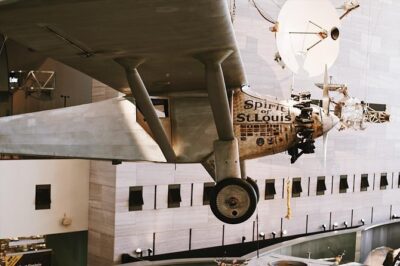
Smithsonian Natural History + Air and Space Museum Private Tour
Read our review →
Smithsonian Natural History + Air & Space Museum Tour 8ppl Max
Read our review →
Smithsonian Highlights Walking Tour with Air and Space
Read our review →
Browse the lists this tour appears in