
Reviewed · NATURAL HISTORY MUSEUM
Smithsonian Natural History + Air and Space Museum Private Tour
The best thing about this tour is its smart pairing of two huge Smithsonian museums. You begin with Henry the elephant, the Hope Diamond, Lucy, and the newly renovated fossil displays, then cross the National Mall to see the Wright Flyer and space hardware. A good guide turns a pile of famous objects into a story you can follow.
I like the private-guide format, which lets you ask questions and avoid wandering through every hall. I also like the carefully chosen route: Natural History first, then Air and Space, with time for a break between them. The main consideration is pace. Five and a half hours is enough for the major sights, not every room, and the Air and Space Museum remains under renovation.
In This Review
- Key points at a glance
- Why these two Smithsonian museums work well together
- Natural History begins with Henry and the Hope Diamond
- The Mall crossing and the break between museums
- Air and Space starts with the Wright brothers
- From early flight to the hard edge of space
- The guide makes or breaks the day
- Who gets the most value from $166.15
- Practical details that can shape your experience
- Should you book this Smithsonian tour?
- FAQ
- How long does the Smithsonian Natural History and Air and Space tour last?
- Where does the tour begin and end?
- Is this a private tour?
- Is lunch included in the price?
- Are museum admission tickets included?
- What should I bring to the museums?
Key points at a glance

- Henry the elephant and the Hope Diamond: Start with two of the most recognizable objects in the Smithsonian system.
- A focused fossil route: See Mastodon, T-Rex, and Diplodocus in the renovated Fossil Hall.
- The original Wright Flyer: The 1903 aircraft provides the starting point for the Air and Space story.
- Private means private only on the correct booking option: The tour includes an exclusive guide for your group unless you choose the SAVE! semi-private option.
- A full half-day across the National Mall: Plan for about five hours and 30 minutes, including a lunch break that you pay for yourself.
- Strong guide-based experience: Guides such as Rebecca, Brenda, Richard, Maureen, Amanda, Christopher, and Tim have been praised for clear stories, humor, organization, and adapting the route to group interests.
Why these two Smithsonian museums work well together
Washington has more museums than any sensible person can visit in a single trip. That is the charm, and also the trap. You can spend an entire morning in one Smithsonian building and still leave with half the collection unseen.
This experience solves that problem by giving you a practical route through two of the city’s most popular museums. You are not simply shown the front door and left to fend for yourself. Your guide leads you to major objects, explains why they matter, and keeps the day moving.
The two museums also balance each other nicely. Natural History looks at the planet, the animals that inhabit it, and the fossils that record life long before humans appeared. Air and Space then shifts your attention from deep time to human invention, from bones and minerals to flight and exploration beyond Earth.
That change of subject keeps the day lively. It also works well for families with different interests. One person can focus on dinosaurs, another on diamonds, and another on spacecraft without splitting up the group.
The experience is advertised at $166.15 per person and is recommended by 97 percent of customers, with a 4.9 rating from 67 ratings. That is not a cheap museum visit, especially since museum admission is free. You are paying for the guide’s time, the route planning, the explanations, and help handling two very large institutions in one day.
For a first visit, that can be worthwhile. If you are happy reading labels and choosing your own exhibits, you can visit the Smithsonian museums without paying for a tour. The value improves if your time in Washington is short, you want the main sights, or you prefer having a person connect the objects into a larger story.
More Air and Space Museum tours:
- Smithsonian Museums Walking Tour with Reserved Air & Space Entry
★ 5.0 · 297 reviews - The Smithsonian National Air & Space Museum Exclusive Guided Tour
★ 5.0 · 214 reviews - Smithsonian Air & Space Museum Guided Tour Semi-Private 8ppl Max
★ 5.0 · 154 reviews
Natural History begins with Henry and the Hope Diamond
The day starts at 10:00 a.m. at 1010 Madison Drive NW. The first museum portion lasts about two and a half hours.
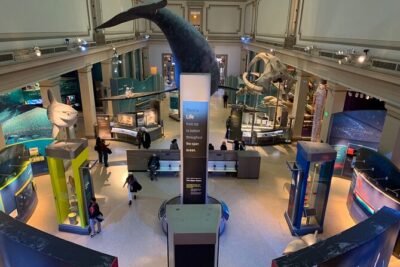
Natural History can feel like several museums in one. Stones, bones, insects, animals, and human cultures compete for your attention. A guide gives the visit a spine, helping you spend time on the best-known displays instead of burning your energy before reaching the exhibits you came to see.
Henry, the museum’s famous elephant, is an immediate attention-grabber. He is described as the largest taxidermied elephant in the world, and his position near the entrance makes him a fitting welcome to the collection. The elephant is not merely a large animal on display. It sets up one of the museum’s central ideas: the natural world is full of scale, adaptation, and strange surprises.
The Hope Diamond provides a very different kind of story. This famous blue diamond is associated with legends of a curse, although the tour presents that reputation with a sensible qualification. Your guide can add the human drama behind the stone, moving the object beyond its glass case and into the world of wealth, rumor, and public fascination.
Lucy is another likely highlight. The famous early human ancestor gives the museum a connection to human origins, while the broader fossil displays show how much of the story is pieced together from incomplete evidence. A guide can point out what the evidence tells us and where scientists must still ask questions.
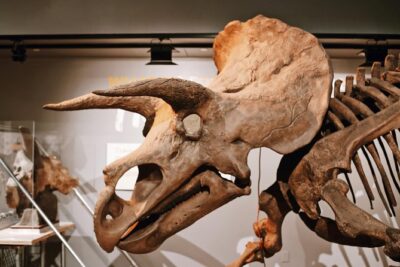
The recently renovated Fossil Hall is the museum’s major time-travel stop. Mastodon, T-Rex, and Diplodocus loom over the route, giving you a direct sense of the size and variety of creatures that once lived on Earth.
This part of the visit is especially useful for children, but adults get plenty from it too. The animals are visually arresting, yet the strongest moments come when the guide explains how fossils, bones, and geological clues help scientists reconstruct vanished worlds.
The drawback is that two and a half hours goes quickly. Natural History rewards slow wandering, and you will not see everything. The tour is best understood as a guided selection of major rooms and objects, not a complete examination of the building.
If you already have a favorite section, tell your guide early. Brenda has been praised for tailoring the tour to the interests of the group, while Rebecca has been credited with having a clear plan and adding details that are not obvious from the displays. That flexibility matters when your group has a strong interest in fossils, gems, animals, or human evolution.
The Mall crossing and the break between museums
After Natural History, you take a break before entering Air and Space. Lunch is included as a scheduled break, but the cost of lunch is not included.
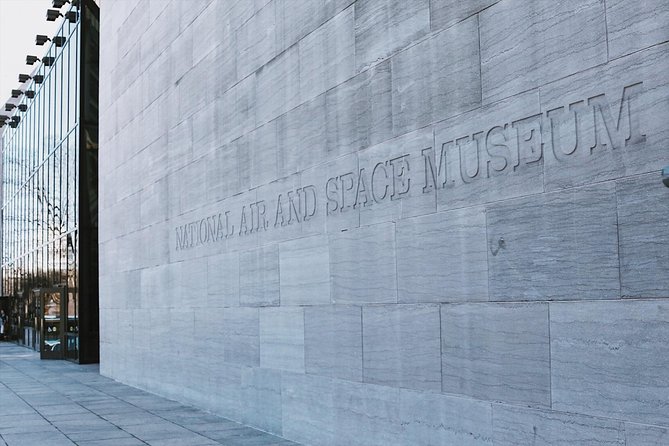
The two museums are close to one another across the National Mall, with the second portion ending at the National Air and Space Museum at 650 Jefferson Drive SW. The change of building gives you a useful reset after the crowded Natural History galleries.
Do not treat the break as wasted time. A half-day museum tour requires concentration, and the second museum asks you to shift from natural science to engineering and exploration. Use the pause to eat, drink water, and decide what questions you want to ask next.
The tour does not include hotel pickup or drop-off. You make your own way to the first meeting point, and the experience finishes at Air and Space. Both locations are near public transportation, which helps if you are staying outside the immediate Mall area.
Air and Space starts with the Wright brothers
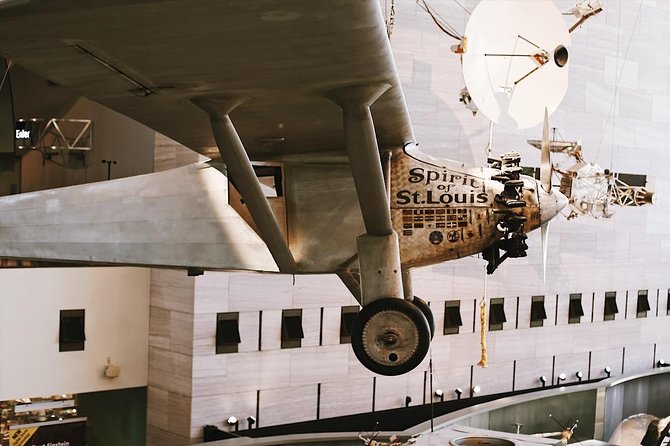
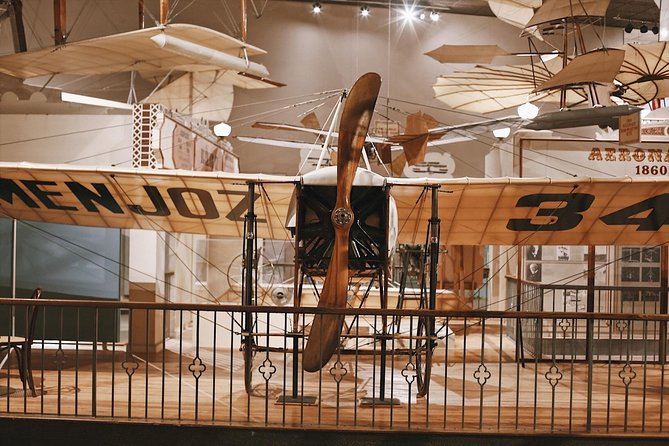
The Air and Space portion lasts about two hours. The museum is undergoing renovation, so the available displays can change and some areas may not be open. Still, the route has a clear beginning: the Wright brothers and their 1903 aircraft.
The original Wright Flyer is the kind of object that benefits from a guide. At first glance, it can seem fragile and surprisingly small compared with modern aircraft. Its importance comes from the problem it solved. Two brothers from Ohio worked through the challenge of controlled powered flight, tackling a question that had resisted inventors for years.
The story becomes more interesting when you understand that flight was not one single breakthrough. It involved control, balance, propulsion, materials, and the nerve to trust a machine that had never carried anyone before. Your guide uses the Wright Flyer to set up the changes that follow.
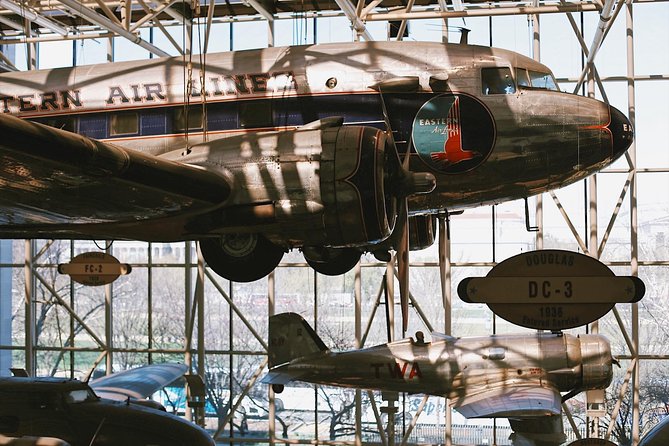
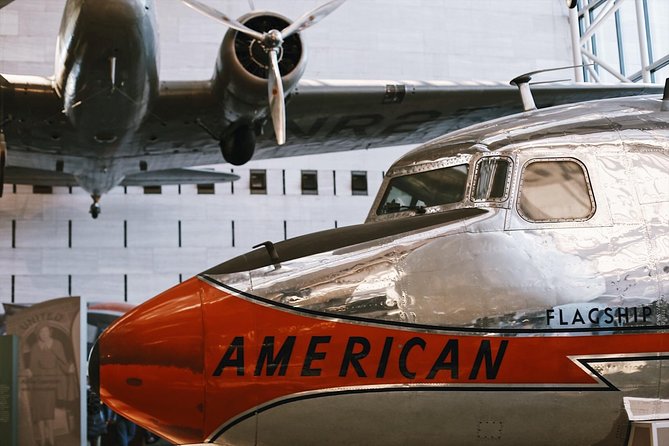
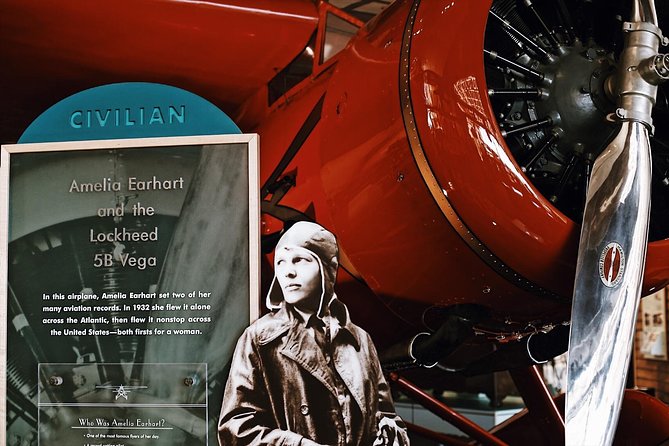
The museum also presents the first military flyer from 1909, another Wright brothers creation. From there, the route moves through record-setting aviation and the growth of commercial flight. The objects show how quickly an experimental idea became part of everyday life and military power.
This is where a good guide adds the most value. Christopher has been praised for bringing the aircraft to life with historical details and background information. Maureen has been credited with packing a great deal into a short visit. Those strengths are important here because aircraft can blur together when you view them without context.
More Natural History Museum tours:
- Smithsonian Museum of Natural History – Exclusive Guided Tour
★ 5.0 · 446 reviews - Smithsonian Museum of Natural History Small Group Tour: 8ppl Max
★ 5.0 · 177 reviews - Smithsonian National Museum of Natural History Guided Tour
★ 4.1 · 159 reviews - Smithsonian Natural History + Air & Space Museum Tour 8ppl Max
★ 5.0 · 59 reviews
From early flight to the hard edge of space
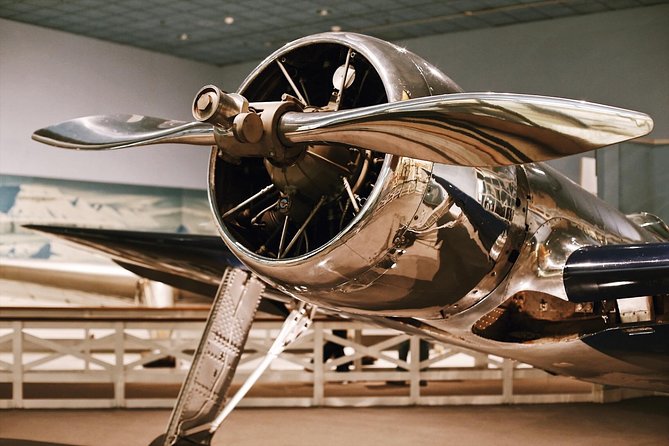
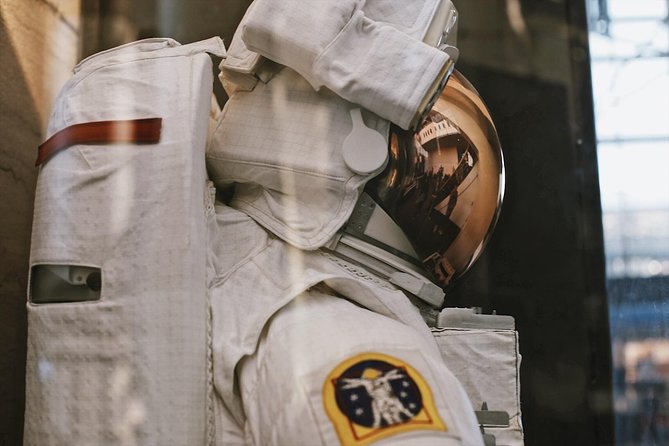
The second half of Air and Space shifts from airplanes to space exploration. You see actual artifacts connected with attempts to operate in an environment that is hostile to human life.
The objects are powerful because they are not only symbols. They represent practical problems: how to carry people, how to protect them, how to navigate, and how to return them safely to Earth. The museum’s space galleries connect imagination with engineering, showing how an idea becomes a machine and how that machine changes what people believe is possible.
A guide can also help you keep the scale of the story in mind. The Wright Flyer and later space artifacts belong to the same broad history of people testing the limits of movement, yet the technical and personal risks grow sharply as the destination moves beyond the atmosphere.
The renovation means you should not book this experience expecting every well-known Air and Space gallery to be available. The museum management can close areas without advance warning, and collections can vary during the year. If a museum opening is delayed by more than an hour, an alternative may be provided, but refunds or discounts are not available in that situation.
That policy is worth understanding before you pay. It does not make the tour a poor choice, but it means you should keep your expectations tied to the current museum setup rather than an older memory of the building.
The guide makes or breaks the day
This is a guide-led experience, so the individual you meet matters. The strongest pattern in the feedback is praise for guides who combine facts with storytelling and keep the route organized.
Rebecca has been described as enthusiastic, humorous, and careful about how long to spend in each area. Brenda has been praised for warmth, clear information, and adjusting the route to group interests. Richard’s style has been described as story-centered, with personal humor and anecdotes that make the objects easier to remember.
Amanda, Christopher, Tim, Doug, and Maureen have also received strong praise for explaining details that are easy to miss. Aron was credited with helping a group use the Metro after the museum visit, though transportation beyond the tour is not part of the advertised experience.
These details point to the real reason to book a private tour: you can ask questions as you go. You are not limited to a fixed audio guide or a wall label. If your child wants to know how a dinosaur fossil is found, or you want more on early aviation, you can direct the conversation.
The private option also means the guide is exclusively for your group. Be careful when selecting the booking type, since the SAVE! semi-private option does not include an exclusive guide. If privacy or personal space is important to you, confirm that you are choosing the private experience rather than the cheaper shared format.
The tour requires a moderate level of physical fitness. You should expect a long museum visit, walking between buildings, security procedures, and time on your feet. Large bags and suitcases are not allowed inside. Bring only a handbag or a small, thin backpack that can pass through security.
Who gets the most value from $166.15
The price makes the most sense for a first-time Washington visitor with limited time. You see major exhibits in two signature museums and get a person to help sort the essential objects from the endless choices.
Families can also get good value here. The guide can keep children moving and connect the exhibits to stories rather than asking them to read every label. The museums contain plenty for adults, too, and the private format makes it easier to adjust the pace when attention spans differ.
Couples and solo visitors who enjoy museums but do not want to plan every room may also appreciate the arrangement. The ratings include strong praise from solo visitors and couples, not only families.
I would be more cautious if you are a dedicated museum specialist. A paleontology fan, aviation historian, or space enthusiast may want many more hours in one building than this schedule permits. In that case, a self-guided visit lets you set your own pace and return to the sections that matter most to you.
The price also deserves a practical comparison. Admission to these Smithsonian museums is free, so the tour fee is entirely for the private service. You are buying efficiency and interpretation, not entry. If you have several days in Washington, you may prefer to visit independently and spend the money on a different paid attraction.
Practical details that can shape your experience
The experience is offered in English and uses a mobile ticket. Confirmation is provided at booking, and you must provide a mobile phone number with the country code. That requirement is easy to overlook, but it gives the operator a way to reach you if meeting details change.
The starting point is 1010 Madison Drive NW at 10:00 a.m. The tour ends at Air and Space, not back at your hotel. Plan your onward route before the day begins, especially if you have an evening reservation or another timed activity.
Dress appropriately for museum entry. Security measures can create lines even when a tour is described as having priority access, and certain rooms may require quiet or limit speaking. Your guide should explain those rules before you enter.
Museum closures can happen without warning. If a museum is delayed for more than an hour after the scheduled start, the operator says it will provide an appropriate alternative, but it will not provide a refund or discount. You can cancel for a full refund if you do so at least 24 hours before the start time. Changes or cancellations inside that window are not accepted for a refund.
Should you book this Smithsonian tour?
Book it if you have one day to make sense of Washington’s major museums, want a private guide, and would rather follow a strong route than plan every room yourself. The combination of Henry, the Hope Diamond, Lucy, the fossil giants, the Wright Flyer, and space artifacts gives you a satisfying sweep from prehistoric life to human flight.
Skip it if you are comfortable exploring on your own or want several uninterrupted hours in one collection. The museums are free, the schedule is brisk, and Air and Space is still changing during renovation.
For most first-time visitors, the tour’s value comes from what you do not have to figure out: where to go, what deserves your time, and how the objects fit together. Just choose the private option carefully, pack light, allow for walking, and remember that your lunch and transportation are your responsibility.
FAQ
How long does the Smithsonian Natural History and Air and Space tour last?
The experience lasts approximately five hours and 30 minutes. About two hours and 30 minutes are allocated to Natural History, followed by a break and about two hours at Air and Space.
Where does the tour begin and end?
It begins at 1010 Madison Drive NW, Washington, DC 20004, at 10:00 a.m. It ends at the Smithsonian National Air and Space Museum at 650 Jefferson Drive SW.
Is this a private tour?
It is a private tour if you select the private booking option. The guide is exclusively for your group. The SAVE! semi-private option is different and does not include a guide exclusively for your group.
Is lunch included in the price?
A lunch break is included in the schedule, but lunch itself is not included.
Are museum admission tickets included?
The tour includes the guided combination museum tour. The museum admission is listed as free.
What should I bring to the museums?
Bring your mobile ticket and a mobile phone number with the country code. Large bags and suitcases are not allowed. Only handbags or small, thin backpacks can pass through security.
More museums in Washington DC
- Guided African American History Tour with Reserved Museum Entry
★ 4.5 · 1,180 reviews - African American History Tour with Museum of African American History Ticket
★ 4.5 · 390 reviews - National Mall Tour with 10 Stops & U.S. Capitol or Museum Entry
★ 4.5 · 331 reviews - Washington, DC: African American History Tour & Museum Entry
★ 4.9 · 312 reviews
More Smithsonian museum tours
- Smithsonian Museum of American History Exclusive Guided Tour
★ 5.0 · 245 reviews - Smithsonian Museum of American History Semi-Private 8ppl Max
★ 5.0 · 135 reviews - Smithsonian Air & Space Museum Guided Tour 8ppl Max
★ 4.8 · 89 reviews - DC: Smithsonian Highlights Walking Tour with Air and Space
★ 4.9 · 58 reviews
Recently added around Washington DC
- Small Group Washington DC Night Tour★ 4.5 · 3 reviews
- Washington DC Neighborhoods Personalized Self-Guided App Tour★ 3.5 · 3 reviews
- America’s Main Street and White House Private Full-Day Tour★ 5.0 · 3 reviews
- Beyond the Closet Walking Tour★ 5.0 · 3 reviews
- Pirate Ship Treasure Hunt Cruise with Face Painting★ 4.5 · 3 reviews
- Sushi Masterclass in Washington D.C. (Includes 4-Course Meal)★ 5.0 · 3 reviews
- Private Washington DC Grand Tour with Changing of the Guard.★ 5.0 · 3 reviews
- 250th: National Archives & American History Museum Guided Tour★ 5.0 · 3 reviews
Natural History Museum, compared.
Smithsonian Museum of Natural History Small Group Tour: 8ppl Max
Read our review →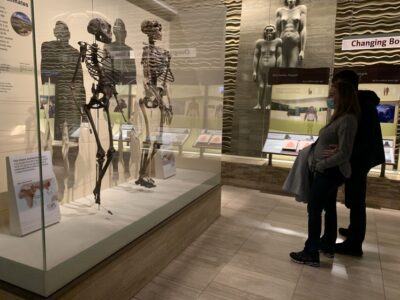
Smithsonian National Museum of Natural History Guided Tour
Read our review →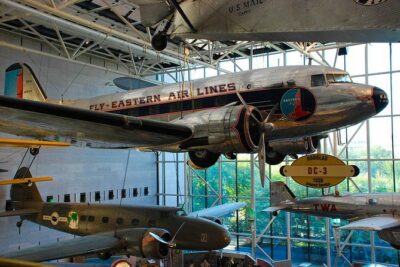
Smithsonian Natural History + Air & Space Museum Tour 8ppl Max
Read our review →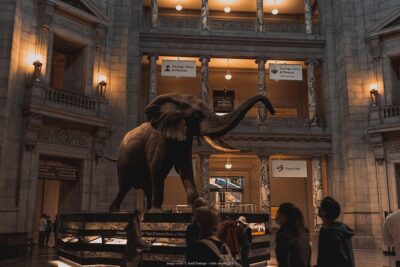
Two Smithsonian Museums Private Tour: American & Natural History
Read our review →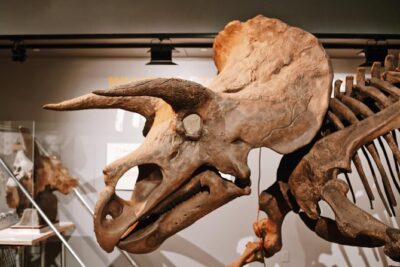
Smithsonian Natural History + Museum of American History 8ppl Max
Read our review →
Smithsonian Museum of Natural History Guided Tour
Read our review →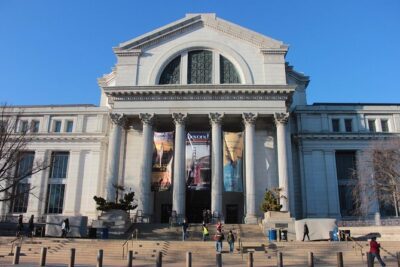
Smithsonian Natural History + American History – Exclusive Tour
Read our review →Browse the lists this tour appears in