
Reviewed · AMERICAN HISTORY MUSEUM
Natural History Museum & American History Museum
The Hope Diamond, real Egyptian mummies, Dorothy’s Ruby Slippers, and Lincoln’s Top Hat all appear on one packed Smithsonian day. This 5.5-hour tour links Washington’s Natural History and American History Museums, with a guide helping you pick out the objects that are easy to miss in these huge collections.
I like the small group limit of eight, which gives the guide room to explain rather than simply march you from case to case. I also like the clear two-part plan: two hours in each museum, with time between them to rest and reset.
The main drawback is the price, $166 per person, which is a serious outlay for museums that do not charge standard admission. You are paying for the guide, the skip-the-line arrangement, and the convenience of a tightly planned visit. Five and a half hours can also feel long if your group wants to read every label.
In This Review
- Key points at a glance
- Why combine these two Smithsonian museums?
- Starting with Henry at Natural History
- The Hope Diamond and the museum’s famous stones
- Mummies, fossils, and the big creatures
- From natural wonders to American memory
- Dorothy’s Ruby Slippers and the First Ladies collection
- The Star-Spangled Banner and Lincoln’s Top Hat
- How the schedule feels in practice
- Is $166 a fair price?
- Who should book this museum day?
- Practical details before you go
- Should you book it?
- FAQ
- How long does the tour last?
- Where does the tour begin?
- Where does the tour end?
- What is the maximum group size?
- What should I bring?
- Is the tour wheelchair accessible?
Key points at a glance

- Henry the elephant: Begin beside the world’s largest taxidermied elephant, a memorable welcome to the Natural History Museum.
- Fossil Hall highlights: See Mastodon, T-Rex, and Diplodocus in the recently renovated fossil galleries.
- Famous objects in one morning: The route includes the Hope Diamond, mummies, and major natural-history displays.
- American icons: Find Dorothy’s Ruby Slippers, Lincoln’s Top Hat, and the Star-Spangled Banner.
- Small-group format: Private or semi-private tours are available, with no more than eight people.
- Guide-led focus: English-speaking guides such as Brenda and Donna have been praised for clear, engaging explanations.
Why combine these two Smithsonian museums?
Washington’s Smithsonian museums are free, huge, and easy to underestimate. You can walk in with a short list of famous objects and still spend hours wandering past displays without finding the best route. This tour solves that problem by giving you a planned path through two of the city’s most popular museums.
The pairing also makes sense. Natural History asks how the world works: fossils, animals, minerals, insects, and human remains. American History asks how people have shaped their country through conflict, politics, technology, entertainment, and daily life. The subjects are different, but both museums use objects to tell large stories.
I would choose this tour if you have one day in Washington and want an expert-led introduction rather than a free-form museum visit. It is also useful early in a trip. After seeing the headline exhibits with a guide, you can return later to spend more time in the rooms that catch your interest.
The route is not designed for slow, detailed study. A two-hour highlights visit gives you a strong first look, not a complete survey of either museum. If you already know both institutions well, you may find the pace and selected stops less useful than exploring alone.
More American History Museum tours:
- Guided African American History Tour with Reserved Museum Entry
★ 4.5 · 1,180 reviews - African American History Tour with Museum of African American History Ticket
★ 4.5 · 390 reviews - Washington, DC: African American History Tour & Museum Entry
★ 4.9 · 312 reviews
Starting with Henry at Natural History
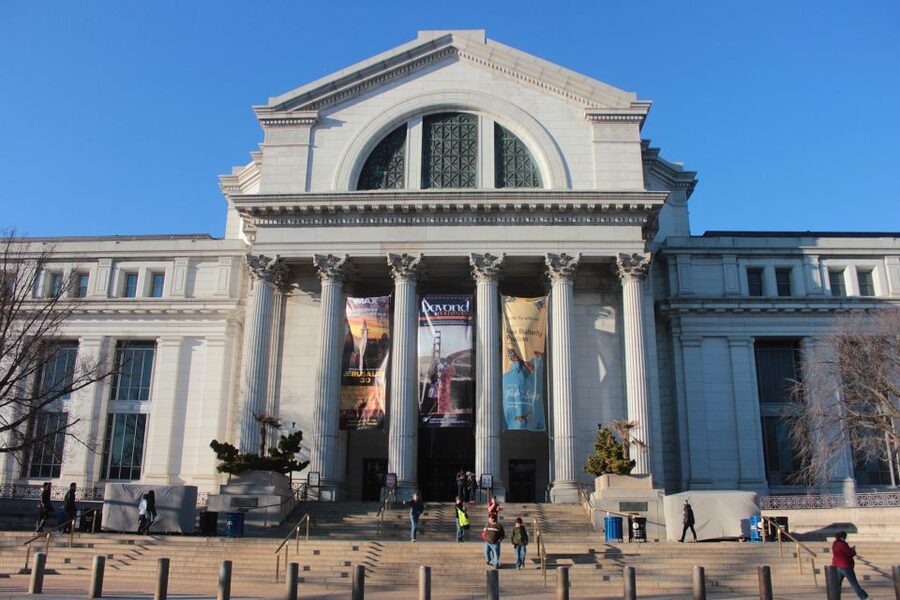
Meet your guide on the large stairs at the Madison Drive NW entrance of the Natural History Museum, facing the lawn of the National Mall. This location matters because the Mall has several Smithsonian entrances, and a little care at the start can prevent an avoidable scramble.
Natural History is a lively first stop. The opening collection covers the basic ingredients of the planet: stones, bones, bugs, animals, and fossils. I like beginning here because the exhibits appeal to different ages and interests. Children can focus on giant creatures and sparkling minerals, while adults can follow the scientific and cultural stories behind them.
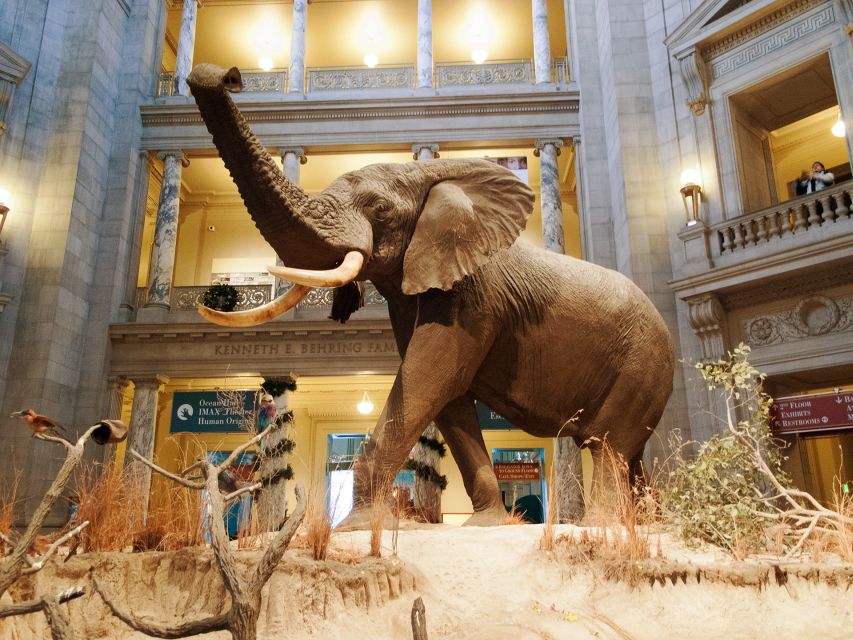
Henry, the museum’s enormous taxidermied elephant, provides the first big visual moment. He is described as the largest taxidermied elephant in the world, and his scale gives you an immediate sense of the museum’s ambition. He is not a small introductory display. He is the sort of object that makes you stop, look up, and remember where you are.
From there, your guide can help you sort the museum’s many possible directions. The collection is too large to absorb in two hours, so a guided highlights route is useful. Instead of spending half your visit on one room, you get a measured look at several of the museum’s strongest displays.
The Hope Diamond and the museum’s famous stones
The Hope Diamond is the Natural History Museum’s best-known jewel, and it is one of the central stops on this tour. Its reputation is helped by the old story that it is cursed, though the tour description sensibly treats that claim as supposed rather than proven fact.
The value of this stop is not only the stone itself. The Hope Diamond gives your guide a way to explain why certain minerals become famous, how gems are judged, and how stories can become part of an object’s identity. You get the sparkle, but also a little context for why this particular stone draws such attention.
The museum’s mineral displays can easily turn into a blur of glass cases if you are on your own. A guide helps you pause at selected pieces instead of trying to inspect everything. That is one place where the tour earns its keep, especially for anyone who does not already know much about geology.
Mummies, fossils, and the big creatures
The mummies provide a completely different kind of encounter. Seeing real human remains can be powerful, and you should expect the subject to be handled as part of the museum’s broader study of people and the natural world. It is a memorable stop, but it may not suit every child or every visitor.
The recently renovated Fossil Hall supplies the most obvious crowd-pleasers. Mastodon, T-Rex, and Diplodocus loom over the galleries, turning ideas about prehistoric life into something you can grasp at a glance. I like this part of the tour because the scale of the animals does much of the teaching for you.
You should keep your expectations realistic. The supplied plan promises highlights, not a full fossil lesson or a technical explanation of every specimen. Your guide will select the key displays, and the exact collection of stops can vary.
At the end of the two-hour Natural History visit, you get a break before moving to American History. Food and drinks are not included, so plan to buy your own refreshment or have a snack ready for the pause. Large bags and luggage are not allowed inside the museums, and only handbags or small, thin backpacks can pass through security. That rule is worth considering before you leave your hotel.
More Natural History Museum tours:
- Smithsonian Museum of Natural History – Exclusive Guided Tour
★ 5.0 · 446 reviews - Smithsonian Museum of Natural History Small Group Tour: 8ppl Max
★ 5.0 · 177 reviews - Smithsonian National Museum of Natural History Guided Tour
★ 4.1 · 159 reviews - Smithsonian Natural History + Air and Space Museum Private Tour
★ 5.0 · 67 reviews
From natural wonders to American memory
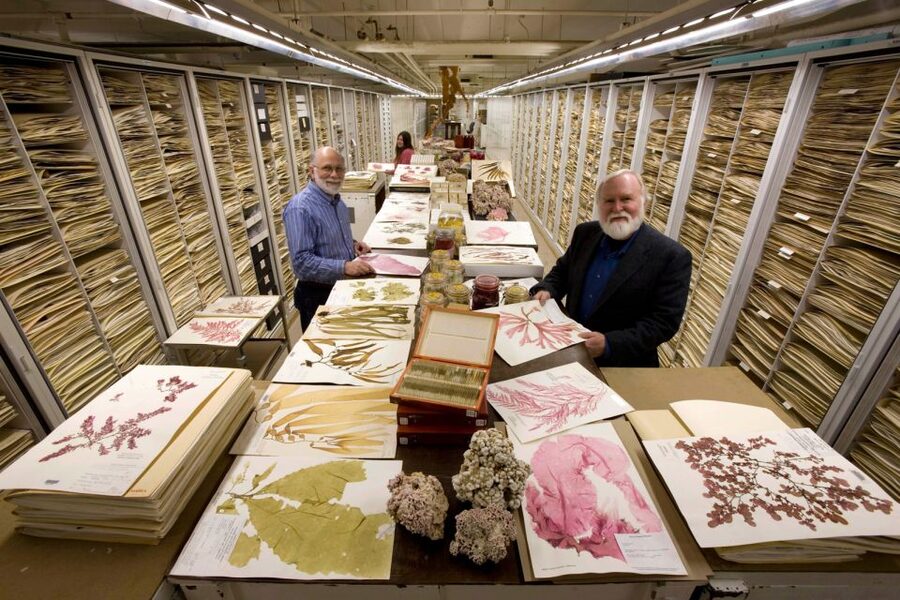
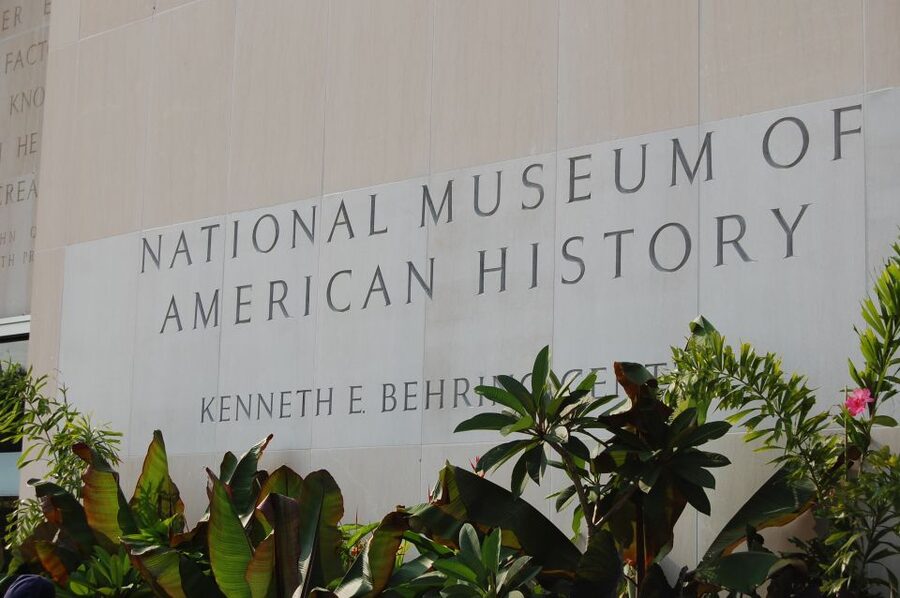
The second two-hour tour takes you to the National Museum of American History. This museum works through objects tied to American life, identity, politics, war, technology, transportation, homes, and popular culture.
The contrast with Natural History keeps the day fresh. You move from fossils and minerals to items people made, wore, carried, cooked with, marched under, or watched on screen. I find that shift useful because it turns a long museum visit into two distinct chapters rather than one endless indoor stretch.
The collection includes cars, trains, kitchens, military uniforms, political objects, and Hollywood memorabilia. That range can be both the museum’s strength and its problem. There is something for nearly every interest, but the sheer variety can make the visit feel scattered without a clear route.
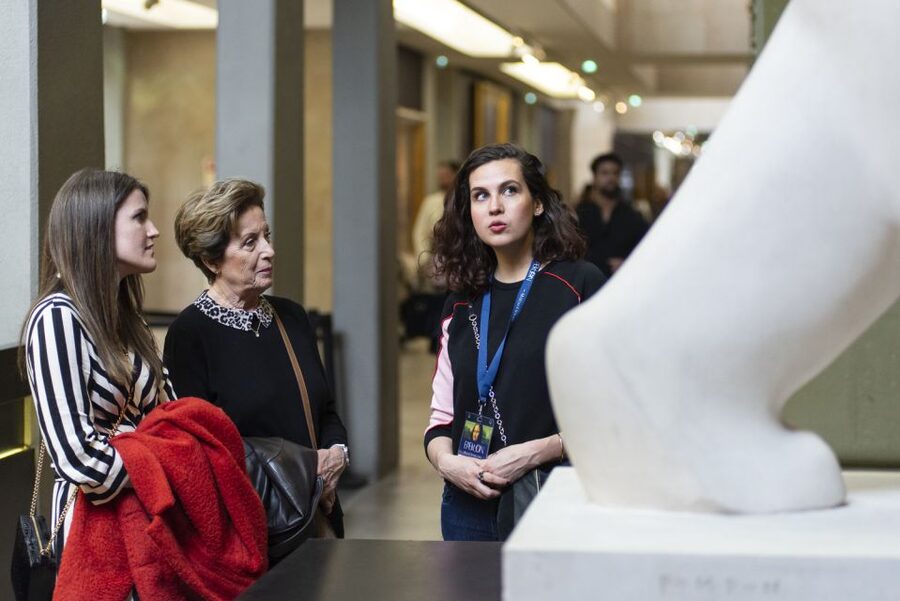
A small group helps here. With eight people or fewer, the guide can explain why a less glamorous object matters, not just point out the famous pieces. Guides Brenda and Donna are specifically praised for clear explanations and strong presentation. You are not guaranteed one of them, but the comments about their work suggest the kind of guiding style to expect: direct, attentive, and focused on making the objects understandable.
Dorothy’s Ruby Slippers and the First Ladies collection
Dorothy’s Ruby Slippers are among the day’s most recognizable objects. They rival the Hope Diamond in fame, but they represent a different kind of American memory. Instead of geology and inherited wealth, the slippers connect to film, storytelling, costume, and the lasting reach of Hollywood.
I like having the slippers in the same day as the Star-Spangled Banner and Lincoln’s hat. The mix keeps the American History Museum from becoming only a political or military museum. National identity is built from serious symbols, household objects, popular entertainment, and personal stories.
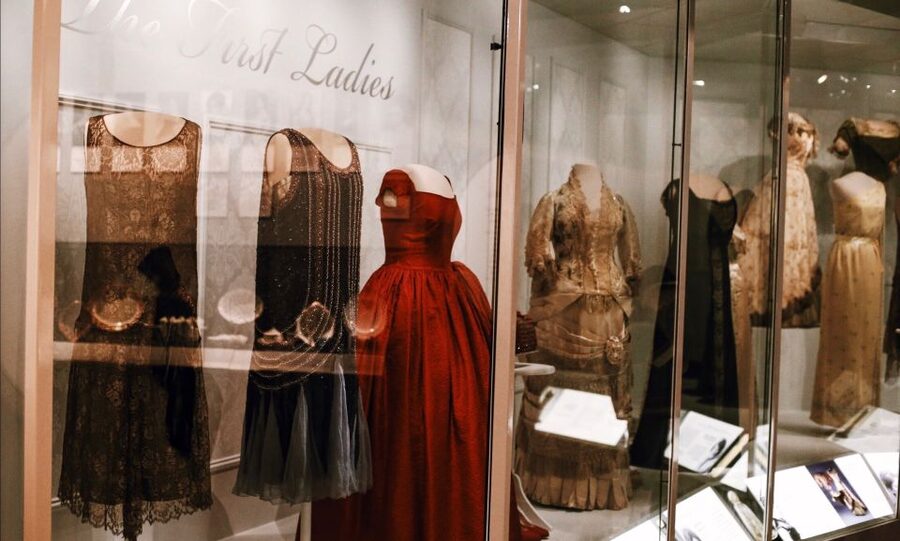
The First Ladies exhibit is another major stop. It is described as the most visited exhibit in Smithsonian history, and its appeal is easy to understand: clothing and personal objects make public figures feel more approachable. The display also gives the guide a chance to discuss how women in the White House have been presented, remembered, and judged.
Because the exhibit is popular, you should expect it to be a high-interest part of the route. The tour allows you to see the main display, but not necessarily every item or label. If First Ladies is your main reason for booking, tell the guide at the start so you can understand how much time the schedule permits.
The Star-Spangled Banner and Lincoln’s Top Hat
The Star-Spangled Banner is one of the museum’s strongest historical objects. It flew over Fort McHenry during the War of 1812 and helped inspire the song that later became the national anthem. You are looking at fabric, but the story attached to it involves war, national identity, survival, and memory.
The museum’s interpretation also helps show that national symbols are not fixed objects with only one meaning. Your guide can connect the flag to the way Americans have used symbols to tell stories about courage and belonging.
Lincoln’s Top Hat offers a more personal route into the past. It is an ordinary item in form, yet it carries the memory of one of the country’s most important presidents. That contrast is part of its power. A hat can tell you something about a person in a way a formal monument cannot.
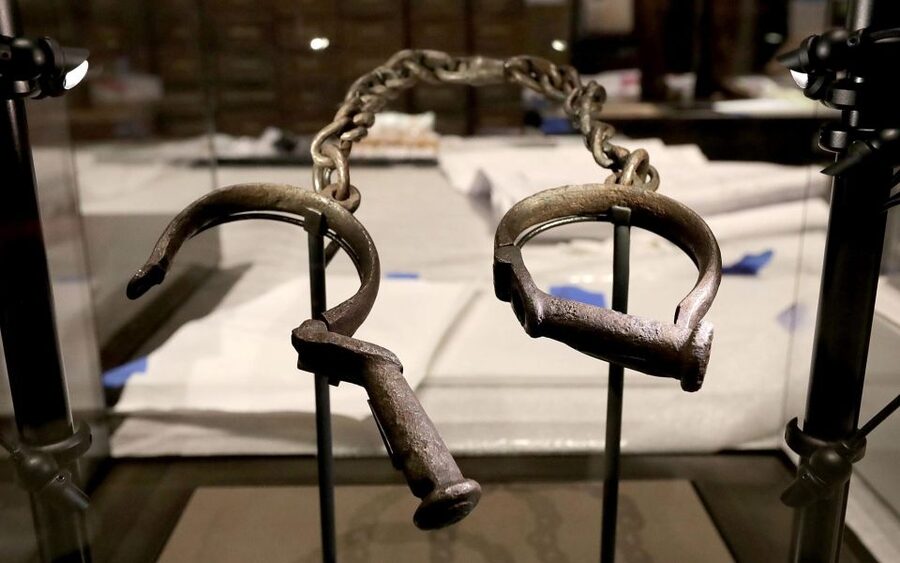
The Greensboro Lunch Counter brings the day into the history of civil rights and protest. It is a plain piece of furniture tied to a major struggle over segregation and public space. Placing it alongside the flag, political objects, uniforms, and presidential items makes one point clear: American history is not only a record of famous leaders. It also includes ordinary people challenging unfair systems.
How the schedule feels in practice
The advertised duration is 5.5 hours. Two hours are allocated to each museum, leaving roughly 1.5 hours for meeting, moving between sections, and the break. Starting times depend on availability, so check the schedule before booking your day around it.
This is a half-day commitment, but it is not a quick pop-in. You will be on your feet and paying attention for much of the time. Comfortable clothing is sensible, and appropriate dress is required for entry into some sites on the route.
Quiet or restricted-speaking rules apply in some museum rooms. Your guide will explain those rules before you enter. This is a small detail, but it helps you avoid interrupting a solemn or carefully controlled space.
The tour ends back at the starting point. That makes planning easier if you want to continue along the National Mall afterward, meet someone nearby, or return to your hotel. There is no hotel pickup or drop-off, so you must make your own way to the museum and away from it afterward.
Is $166 a fair price?
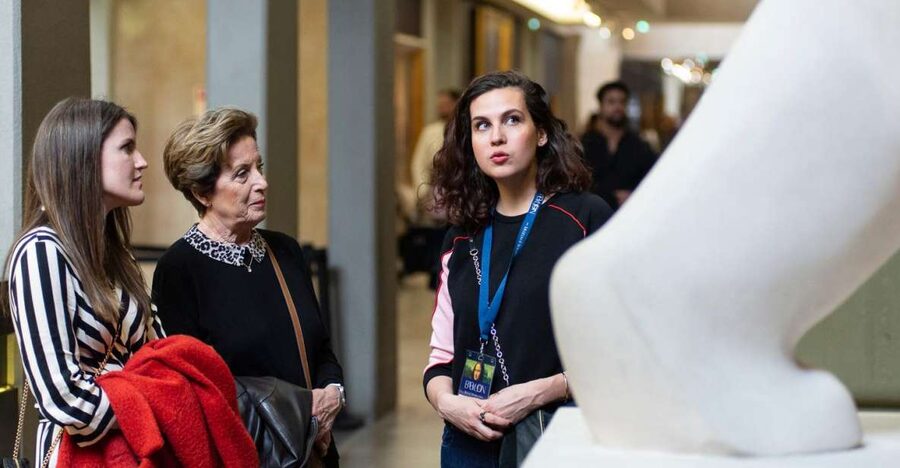
At $166 per person, this tour costs much more than simply entering the Smithsonian museums, whose standard admission is not listed as an added charge here. The price makes sense only if you value the guide and the structure.
You are paying for two guided highlights tours, a private or semi-private setting, and a group capped at eight. A large group can turn a museum visit into a listening exercise where people at the back miss half the explanation. This format gives you a better chance to hear the guide and ask a question.
The skip-the-ticket-line feature also has practical value, though the museums may still have security checks. Saving time is useful on a short Washington visit, especially when you have other sights planned.
I would not call this the economical choice for a museum fan who enjoys reading every label alone. It is a convenience purchase. I would consider it worthwhile for a first-time Washington visitor, a family that wants the major objects without museum fatigue, or anyone with limited time who prefers interpretation to wandering.
The price is also easier to justify if you book a private group and want the guide’s attention directed toward your interests. For a semi-private booking, at least two people are required for the tour to run. If that minimum is not reached, you are offered a refund or another date.
Who should book this museum day?
I would choose this tour for:
- First-time visitors who want the essential objects without planning two enormous museums alone.
- Families who need a clear route and short explanations rather than hundreds of labels.
- Small groups who prefer a guide and do not want to join a large walking tour.
- History and science fans who want both subjects in one day.
- Visitors with a tight Washington schedule who value skip-the-line access and a fixed plan.
I would think twice if you use a wheelchair, since the information provided is mixed. Wheelchair tours are listed as available by request, yet the additional information says the activity is not suitable for wheelchair users. Contact Babylon Tours DC before booking and get a clear answer for your needs.
I would also avoid bringing a suitcase or large day bag. Security allows only handbags or small, thin backpacks, and there is no hotel storage service included.
Practical details before you go
Bring a valid photo ID, such as a passport or ID card. Tour communication, including urgent guide contact details, is sent by email by the morning of the tour, and it is worth checking your spam folder for a message from Babylon Tours.
The tour is offered in English. Collections and selected highlights can change, and the museums may occasionally close or delay opening without warning. If a museum opening is delayed by more than an hour, an appropriate alternative is offered.
You can cancel up to 24 hours before the tour for a full refund, and you can reserve now while paying later. That flexibility is helpful when Washington plans depend on weather, government schedules, or a crowded sightseeing calendar.
Should you book it?
Book this tour if you want Washington’s two major Smithsonian collections reduced to a sensible half-day route, with famous objects explained by a guide and a group no larger than eight. The Hope Diamond, Henry the elephant, the fossils, Ruby Slippers, Star-Spangled Banner, and Lincoln’s hat give you plenty of memorable stops.
Skip it if you want the lowest-cost museum visit or prefer to set your own pace. At $166, the tour is best understood as a guided orientation and time-saving service, not an admission bargain. For a first visit, that structure can be worth paying for, especially if you want the major stories without losing a day to getting lost indoors.
FAQ
How long does the tour last?
The tour lasts 5.5 hours. It includes a two-hour highlights tour of the Natural History Museum, a break, and a two-hour highlights tour of the American History Museum.
Where does the tour begin?
Meet your guide on the large stairs at the Madison Drive NW entrance of the Natural History Museum, facing the lawn of the National Mall.
Where does the tour end?
The activity ends back at the meeting point at the Natural History Museum.
What is the maximum group size?
A maximum of eight people is permitted on each tour. Private and semi-private options are available.
What should I bring?
Bring a valid photo ID, such as a passport or ID card. Large bags, suitcases, and luggage are not allowed. Only handbags or small, thin backpacks can pass through museum security.
Is the tour wheelchair accessible?
The information provided is conflicting. Wheelchair tours are available by request, but the activity is also listed as not suitable for wheelchair users. Contact Babylon Tours DC before booking to confirm whether the current route meets your needs.
More history tours in Washington DC
- DC Monuments & History Guided E-Cart Tour-Blankets
★ 4.5 · 450 reviews - Historic Georgetown: History, Gossip, & Architecture Walking Tour
★ 5.0 · 321 reviews - DC’s Original Food and History Walking Tour
★ 5.0 · 255 reviews - Smithsonian Museum of American History Exclusive Guided Tour
★ 5.0 · 245 reviews
More museums in Washington DC
- National Mall Tour with 10 Stops & U.S. Capitol or Museum Entry
★ 4.5 · 331 reviews - Smithsonian Museums Walking Tour with Reserved Air & Space Entry
★ 5.0 · 297 reviews - Capitol Combo: U.S. Capitol + Library Congress or Capitol Museum
★ 4.5 · 294 reviews - U.S. Capitol Tour with Library of Congress or Capitol Museum
★ 4.0 · 286 reviews
Recently added around Washington DC
- Small Group Washington DC Night Tour★ 4.5 · 3 reviews
- Washington DC Neighborhoods Personalized Self-Guided App Tour★ 3.5 · 3 reviews
- America’s Main Street and White House Private Full-Day Tour★ 5.0 · 3 reviews
- Beyond the Closet Walking Tour★ 5.0 · 3 reviews
- Pirate Ship Treasure Hunt Cruise with Face Painting★ 4.5 · 3 reviews
- Sushi Masterclass in Washington D.C. (Includes 4-Course Meal)★ 5.0 · 3 reviews
- Private Washington DC Grand Tour with Changing of the Guard.★ 5.0 · 3 reviews
- 250th: National Archives & American History Museum Guided Tour★ 5.0 · 3 reviews
American History Museum, compared.
Guided African American History Tour with Reserved Museum Entry
Read our review →
African American History Tour with Museum of African American History Ticket
Read our review →
Smithsonian Museum of American History Exclusive Guided Tour
Read our review →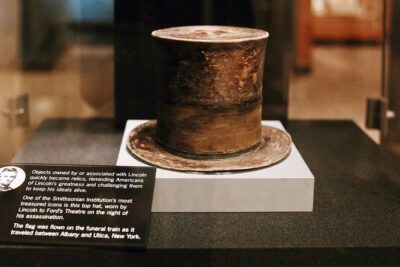
Smithsonian Museum of American History Semi-Private 8ppl Max
Read our review →
DC Monuments Day or Night American History Electric Cart Tour
Read our review →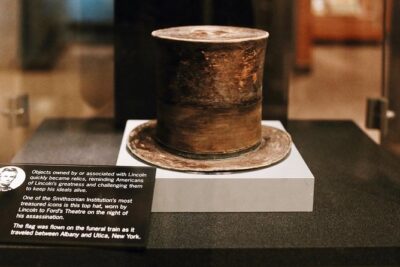
National Archives + American History Museum Tour 8ppl Max
Read our review →
National Archives + American History Museum Exclusive Guided Tour
Read our review →Browse the lists this tour appears in