
Reviewed · NATIONAL ARCHIVES
National Archives + American History Museum Exclusive Guided Tour
The original Declaration of Independence, Constitution, and Bill of Rights are the heart of this Washington DC experience. You then move to the Smithsonian National Museum of American History for the Star-Spangled Banner, Dorothy’s ruby slippers, Abraham Lincoln’s top hat, and the First Ladies exhibit. Annemarie and Brenda are named as guides who add clear explanations and can shape the visit around your interests.
I like the private guide option, which gives you room to ask questions and request extra attention to subjects that matter to you. I also like the efficient pairing of two major museums, with private transportation available between stops if needed. The main drawback is the walking: this is not suitable for wheelchair users or people with walking disabilities, and the supplied tour details contain conflicting meeting-point information involving Arlington National Cemetery, so confirm the plan before you go.
In This Review
- Key points to know before booking
- Two Washington museums, one guided history lesson
- Starting with the Charters of Freedom
- The lunch break and transfer between museums
- Seeing the Star-Spangled Banner at American History
- First Ladies, Lincoln, and the objects people remember
- Private guiding and the semi-private choice
- The Arlington Cemetery detail needs clarification
- Walking, security, and what to bring
- Who gets the best value from this tour
- Should you book the National Archives and American History tour?
- FAQ
- Where does the tour start?
- Where does the tour end?
- How long does the experience last?
- Is lunch included?
- Are museum admission tickets included?
- Is this a private tour?
- Is the tour suitable for wheelchair users?
Key points to know before booking
- The National Archives begins with America’s founding documents: You see the handwritten Declaration of Independence, Constitution, and Bill of Rights in the Rotunda.
- The American History Museum adds famous objects and popular culture: Highlights include the Star-Spangled Banner, First Ladies exhibit, Lincoln’s top hat, and Dorothy’s ruby slippers.
- Your guide can tailor the private tour: Special interests should be included when you book, and Brenda has allowed an extra stop during a private visit.
- The schedule takes about 5.5 hours: Allow time for two museum visits, a lunch break at your own cost, and the transfer between locations.
- The meeting details need checking: The main information gives the National Archives at 10:00 a.m., while another section mentions Arlington National Cemetery first.
- Expect security and walking: Large bags and suitcases are not allowed, and the tour runs rain or shine.
Two Washington museums, one guided history lesson
This tour links the National Archives with the Smithsonian National Museum of American History. That pairing makes sense. The Archives explains the ideas and arguments behind the United States, while the American History Museum shows how those ideas became laws, institutions, objects, memories, and symbols.
I like this format for a first visit to Washington DC because the museums can feel overwhelming on your own. Both have large collections, and the most famous objects are not always arranged in a way that tells a simple story. A guide helps you spend your time on the pieces that matter most, rather than wandering from room to room and missing the main points.
The advertised price is $166.15 per person, with a minimum of two people per booking. That is not a casual museum admission price, so the value depends on how much you want from the visit. You are paying mainly for the guide’s time, planning, interpretation, and the private transfer option, not simply for entry to the museums.
If you enjoy asking questions, want help connecting individual objects to larger events, or have only one day for major sights, the cost can make sense. If you are happy to read labels and move at your own pace, it may feel expensive.
More American History Museum tours:
- Guided African American History Tour with Reserved Museum Entry
★ 4.5 · 1,180 reviews - African American History Tour with Museum of African American History Ticket
★ 4.5 · 390 reviews - Washington, DC: African American History Tour & Museum Entry
★ 4.9 · 312 reviews
Starting with the Charters of Freedom
The National Archives is listed as the first stop, with about two hours there. The meeting point is given as the National Archives Research Center at 700 Pennsylvania Avenue NW, with a 10:00 a.m. start.
The visit begins in the Rotunda, where the handwritten Declaration of Independence, Constitution, and Bill of Rights are displayed. These documents are not just famous texts. They let you see the physical evidence of the country’s founding debates, including the wording that later generations have argued over, amended, and expanded.
A good guide can make this room far more useful than a quick photograph and a glance at the cases. The tour is designed to explain the unusual conditions that brought the documents into being and to connect the founding language with changing ideas of citizenship.
That last point is important. The experience does not treat the founding documents as a finished answer to every question. It encourages you to consider who was included when the country declared that all men are created equal, and how the meaning of citizenship has changed over time.
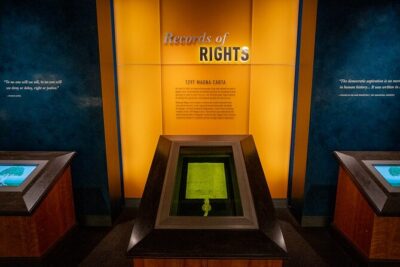
The Rubenstein Gallery adds another layer with a 1297 copy of the Magna Carta. Seeing that older document beside the American founding papers gives you a longer view of political rights and limits on government. It also helps explain that the United States did not create its political ideas in isolation.
The National Archives portion is free of an admission charge according to the tour details, but the guide is the reason to book this particular format. You can visit the museum without a paid tour. The benefit here is having someone frame the documents, point out their importance, and help you think about the gaps between ideals and practice.
The lunch break and transfer between museums
After the Archives, you get a break for lunch at your own expense. The provided information does not specify a restaurant or set meal, so plan for this as personal time rather than an included food stop.
The break matters because the full visit lasts about five and a half hours. You are not being rushed through one short gallery. You are moving from one major museum to another, with time to pause between them.
Private transportation is included between tour locations if necessary. That can be useful in poor weather or when you want to preserve energy for the second museum. Hotel pickup and drop-off are not included, so you need to make your own way to the starting point and leave from the Smithsonian National Museum of American History at the end.
The end point is listed as 1300 Constitution Avenue NW. This is practical if you plan to continue sightseeing on the National Mall after the tour. It also means you should not expect to be returned to your hotel.
Seeing the Star-Spangled Banner at American History
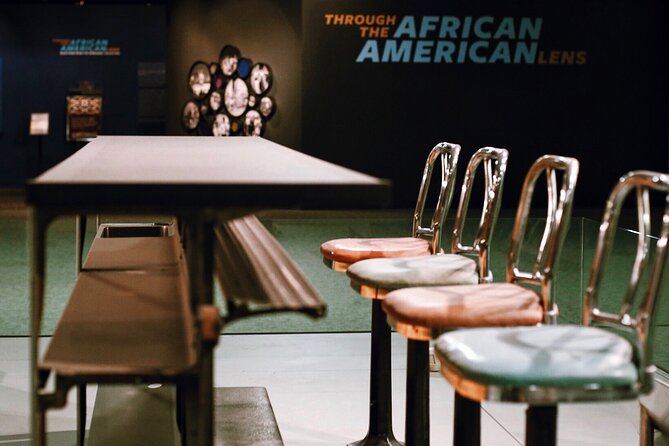
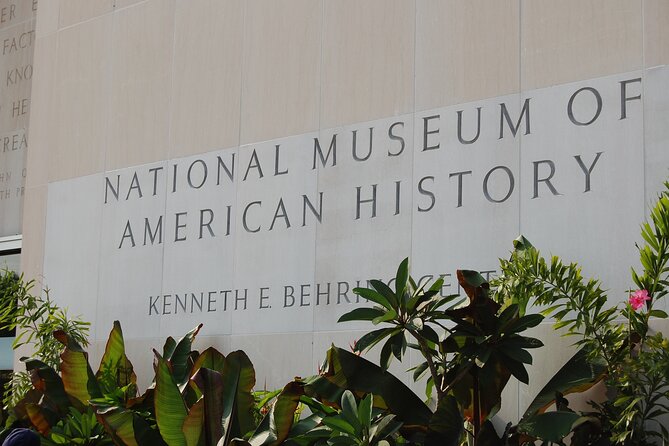
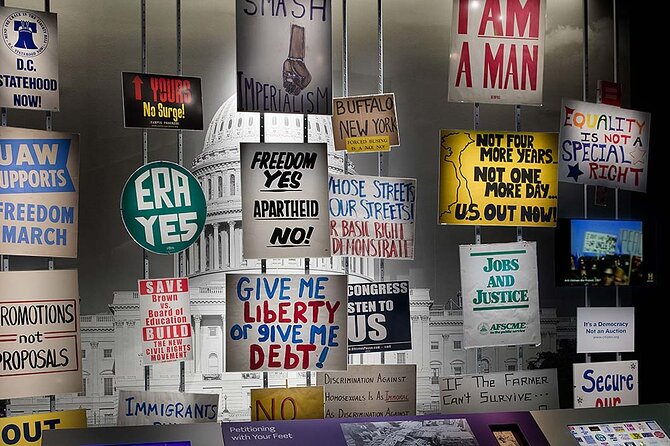
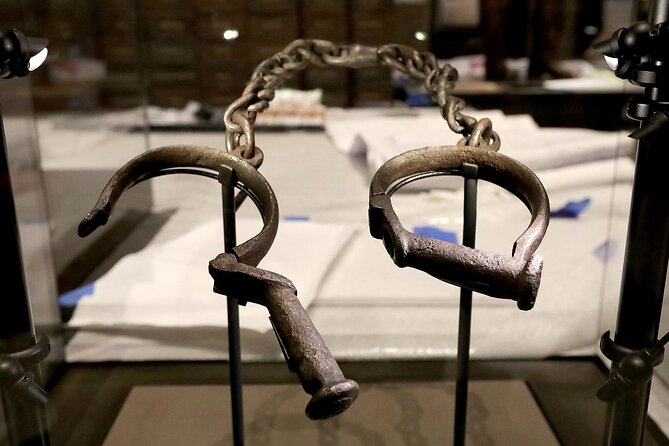
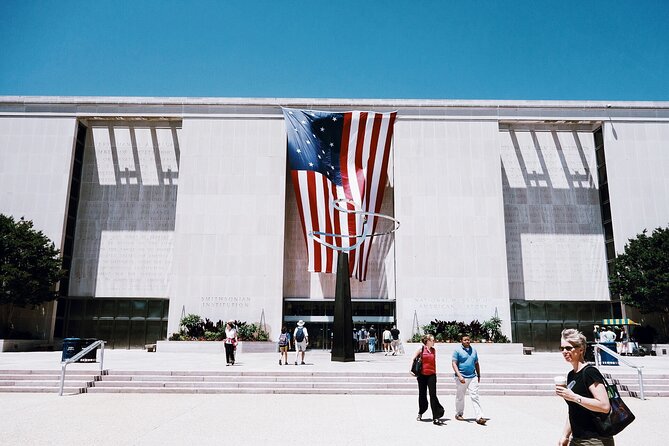
The second museum stop lasts about two and a half hours. The Smithsonian National Museum of American History covers an enormous range of subjects, so the guide’s route matters.
The Star-Spangled Banner is one of the central sights. This is the flag that flew over Fort McHenry and inspired the poem later adapted into the national anthem. Its scale and condition give the story a physical presence that a textbook cannot match.
The guide’s role is to connect the object with the larger national story rather than treating it as a stand-alone relic. You can consider how a military flag became a national symbol, and how symbols gain meaning through repeated public use.
The museum also brings popular culture into the story. Dorothy’s ruby-red slippers, worn by Judy Garland in The Wizard of Oz, are among the best-known objects on display. Their appeal is easy to understand: they connect a film, a character, a performer, and a shared memory across generations.
That contrast is part of what makes this museum useful. The nation’s story is not only presidents and wars. It also includes entertainment, clothing, household life, public ceremony, and the objects people remember from childhood.
More National Archives tours:
- VIP Best of DC with US Capitol + National Archives Reserved Entry
★ 4.5 · 2,491 reviews - Skip-the-line National Archives Building Exclusive Guided Tour
★ 5.0 · 381 reviews - National Archives Skip the Line Guided Tour Semi-Private 6ppl Max
★ 5.0 · 196 reviews - VIP National Archives Skip-The-Line Guided Tour 6 ppl Max
★ 5.0 · 126 reviews
First Ladies, Lincoln, and the objects people remember
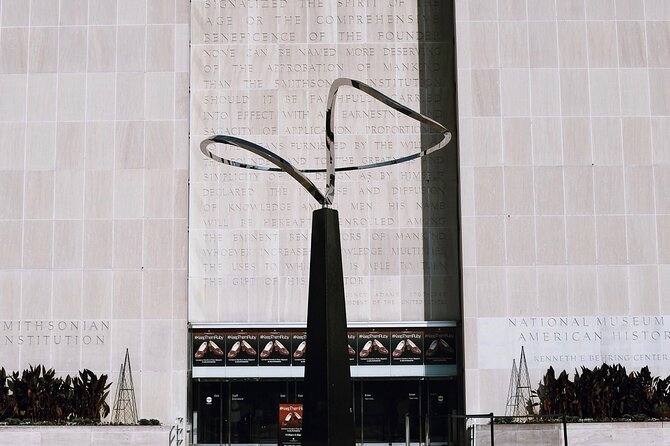
The First Ladies exhibition is another major stop. It has been described as the most visited exhibition in Smithsonian history, and it offers a way to look at the presidency through personal style, public duties, and changing expectations placed on women in national life.
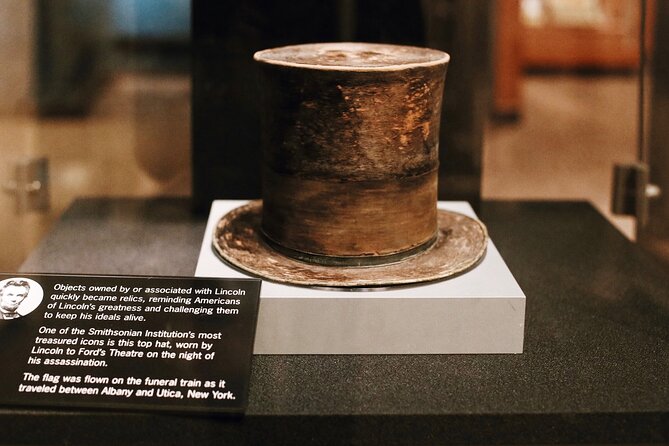
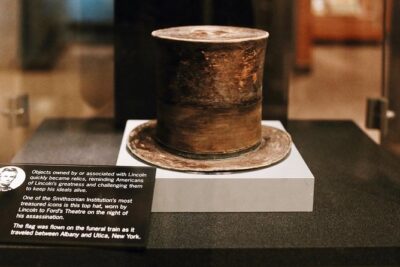
You also see the top hat Abraham Lincoln wore on the night he went to Ford’s Theatre. It is a small object compared with the Star-Spangled Banner, but its power comes from the event attached to it. The hat turns an abstract account of Lincoln’s assassination into something immediate and personal.
George Washington’s sword is another listed highlight. Objects like this can easily become a parade of famous names unless someone explains why they matter. A private guide can slow down for the pieces that interest you and move faster through displays that do not.
The tour is strongest when it treats these objects as living touchstones, not just decorations. The slippers can raise questions about American film and memory. The flag can lead to a discussion about national identity. The First Ladies exhibit can show how public roles change. Lincoln’s hat can make a major event feel close and human.
Private guiding and the semi-private choice
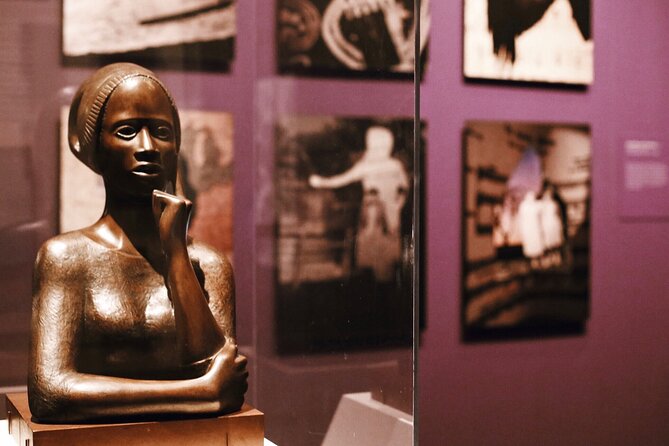
The standard private option gives your group its own guide. You should list special interests when booking, since the guide can prepare around subjects such as political history, presidential stories, military history, women’s roles, or American popular culture.
The named guides in the supplied information are Annemarie and Brenda. Annemarie is described as kind and detailed, while Brenda is noted for her strong command of the subject and for allowing an additional stop during the visit. Those details point to the kind of service this tour aims to provide: explanation, flexibility, and attention to the group’s priorities.
There is also a Save! Book Semi-Private choice. If you select it, the guide is not exclusively assigned to your group. Check the exact group arrangement and price before paying, since the private experience and the lower-cost semi-private option offer different levels of control.
A private tour is especially useful for families with mixed interests. One person can ask about the Constitution, another can focus on film history, and another can request more time with presidential artifacts. It is also a sensible choice for anyone who prefers to ask questions without feeling they are holding up a large group.
The Arlington Cemetery detail needs clarification
One part of the tour information describes a different opening: meeting at the welcome center by the gates of Arlington National Cemetery, touring the cemetery, stopping at gravesites, visiting the Tomb of the Unknown Soldier, and seeing Arlington House. It names John F. Kennedy, Jacqueline Kennedy, Robert McNamara, and Thurgood Marshall among the people connected with the cemetery.
That description does not match the stated National Archives meeting point, the two-stop itinerary, or the listed 10:00 a.m. start at 700 Pennsylvania Avenue NW. It may refer to another version of the experience, but the supplied details do not resolve the conflict.
This is the one point I would settle before booking or immediately after confirmation. Ask specifically:
- Is Arlington National Cemetery part of your booked route?
- Do you begin at the Archives or at Arlington?
- Is the lunch break and museum timing the same?
- Is private transportation included for the complete route?
Do not assume you can simply arrive at Arlington because that appears in one section. The clearest itinerary for this experience begins at the National Archives and ends at the American History Museum.
Walking, security, and what to bring
You need a moderate level of physical fitness. The tour includes museum walking, time on your feet, transfers, and possibly additional walking if the Arlington portion applies. It is not available to people with walking disabilities or wheelchair users.
The tour runs rain or shine. Bring practical clothing and shoes, and remember that some attractions require appropriate dress. Security checks can create lines even when skip-the-line access is advertised, so do not count on walking straight through every entrance.
Large bags and suitcases are not allowed inside the museums. Only handbags or small, thin backpacks are permitted through security. Pack lightly, especially if you plan to continue sightseeing after the tour.
Some rooms require very quiet behavior or restrict speaking. Your guide will explain those rules before you enter. Museum collections can also change during the year, so the exact display arrangement may not be identical on every date.
Give the provider your mobile phone number with country code. That is important for meeting instructions and last-minute contact, particularly because the meeting-point information needs confirmation.
Who gets the best value from this tour
I would recommend this experience most strongly to:
- First-time Washington visitors who want a clear route through two major museums
- Families who need help keeping children focused on the best-known objects
- History fans who want context rather than a quick look at famous documents
- People with limited sightseeing time
- Small groups that value a private guide and the chance to request special subjects
- Anyone who wants both political history and popular culture in the same half-day
I would be more cautious if you prefer slow, independent museum visits. Two hours at the Archives and two and a half hours at American History give you a useful introduction, but neither museum can be fully seen in that time.
I would also hesitate if walking is difficult, if you need wheelchair access, or if the $166.15 price would prevent you from spending time at other Washington sights. The museum admissions themselves are not the main reason for the fee. You are buying structure and personal interpretation.
The free cancellation policy offers some protection. You can cancel up to 24 hours before the start time for a full refund. Cancellations or changes made less than 24 hours before the start are not refunded or accepted. Museum closures can occur without warning, and no refund or discount is promised if an opening is delayed by more than an hour, though an alternative may be offered.
Should you book the National Archives and American History tour?
Book it if you want the big sights explained in a logical order, prefer a private guide, and value the ability to focus on your own interests. The combination of the founding documents, Magna Carta, Star-Spangled Banner, First Ladies exhibit, Lincoln’s hat, Washington’s sword, and Judy Garland’s slippers gives you a lively cross-section of American life.
Skip it if you mainly want free museum access and plenty of unstructured time. You can visit the institutions independently, and the five-and-a-half-hour schedule will not cover every gallery.
Before paying, clarify the Arlington Cemetery reference and confirm the starting point. Once that is settled, this is a strong choice for a focused, guided introduction to two of Washington DC’s most important museums.
FAQ
Where does the tour start?
The main meeting point is the National Archives Research Center at 700 Pennsylvania Avenue NW, Washington, DC 20408. The listed start time is 10:00 a.m.
Where does the tour end?
The stated end point is the Smithsonian National Museum of American History at 1300 Constitution Avenue NW, Washington, DC 20560.
How long does the experience last?
The tour lasts approximately five hours and 30 minutes, including the lunch break.
Is lunch included?
No. You have a lunch break, but the meal is at your own expense.
Are museum admission tickets included?
The itinerary lists admission tickets as free. The tour price covers the guided walking and museum tour, with private transportation between locations if necessary.
Is this a private tour?
The experience is described as a private tour in which only your group participates. A semi-private option is also available, but the guide is not exclusively assigned to your group under that choice.
Is the tour suitable for wheelchair users?
No. The tour is not available for people with walking disabilities or those using a wheelchair. A moderate level of physical fitness is required.
More history tours in Washington DC
- DC Monuments & History Guided E-Cart Tour-Blankets
★ 4.5 · 450 reviews - Historic Georgetown: History, Gossip, & Architecture Walking Tour
★ 5.0 · 321 reviews - DC’s Original Food and History Walking Tour
★ 5.0 · 255 reviews - Smithsonian Museum of American History Exclusive Guided Tour
★ 5.0 · 245 reviews
More museums in Washington DC
- Smithsonian Museum of Natural History – Exclusive Guided Tour
★ 5.0 · 446 reviews - National Mall Tour with 10 Stops & U.S. Capitol or Museum Entry
★ 4.5 · 331 reviews - Smithsonian Museums Walking Tour with Reserved Air & Space Entry
★ 5.0 · 297 reviews - Capitol Combo: U.S. Capitol + Library Congress or Capitol Museum
★ 4.5 · 294 reviews
Recently added around Washington DC
- Small Group Washington DC Night Tour★ 4.5 · 3 reviews
- Washington DC Neighborhoods Personalized Self-Guided App Tour★ 3.5 · 3 reviews
- America’s Main Street and White House Private Full-Day Tour★ 5.0 · 3 reviews
- Beyond the Closet Walking Tour★ 5.0 · 3 reviews
- Pirate Ship Treasure Hunt Cruise with Face Painting★ 4.5 · 3 reviews
- Sushi Masterclass in Washington D.C. (Includes 4-Course Meal)★ 5.0 · 3 reviews
- Private Washington DC Grand Tour with Changing of the Guard.★ 5.0 · 3 reviews
- 250th: National Archives & American History Museum Guided Tour★ 5.0 · 3 reviews
National Archives, compared.

VIP Best of DC with US Capitol + National Archives Reserved Entry
Read our review →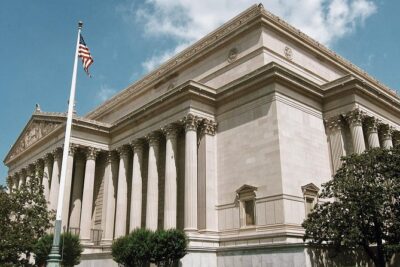
Skip-the-line National Archives Building Exclusive Guided Tour
Read our review →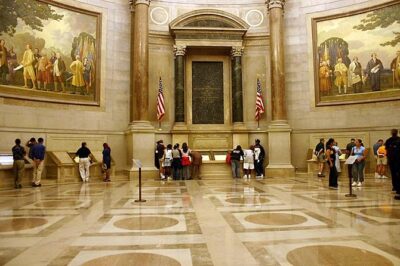
National Archives Skip the Line Guided Tour Semi-Private 6ppl Max
Read our review →
VIP National Archives Skip-The-Line Guided Tour 6 ppl Max
Read our review →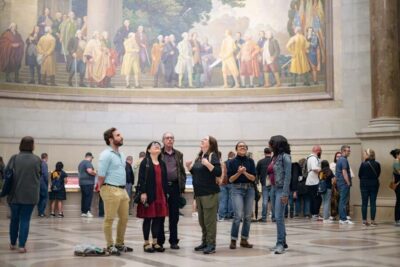
National Archives + American History Museum Tour 8ppl Max
Read our review →
National Archives Skip the Line Tour Semi-Private 6ppl Max
Read our review →Browse the lists this tour appears in