
Reviewed · EMBASSY ROW
Embassy Row Spy History Tour with a Former CIA Officer
The best part of this Washington walk is its hands-on spycraft. With former CIA officer Rosanna, you move through Embassy Row and Dupont Circle while connecting real events to the discreet methods used by intelligence officers. You also get to practice spotting a signal and unloading a dead drop.
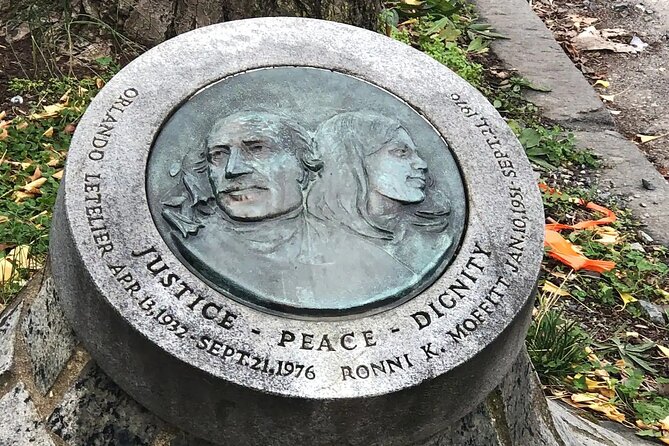
I like the small-group feel, with no more than 25 people, and the way the tour mixes old spy stories with an activity you can actually try. I also like the broad range of subjects, from espionage during the Revolutionary War to the assassination of Orlando Letelier. The main drawback is its short 90-minute length, so each topic gets a brisk treatment rather than a full historical study.
In This Review
- Key points at a glance
- Why Embassy Row makes a good spy walk
- At the Dupont Circle Hotel, a suspicious death
- Revolutionary War spies and a CIA tradition
- Sheridan Circle and the Letelier assassination
- Trying your hand at a dead drop
- What the former CIA guide adds
- Group size, walking effort, and the weather
- Is $75 a fair price?
- Who should book this Embassy Row experience?
- Should you book it?
- FAQ
- How long does the Embassy Row Spy History Tour last?
- Where does the tour begin?
- Where does the tour end?
- Who leads the tour?
- What language is the tour offered in?
- What is included in the price?
- Is the tour suitable for people with limited mobility?
- What happens if the weather is poor?
Key points at a glance
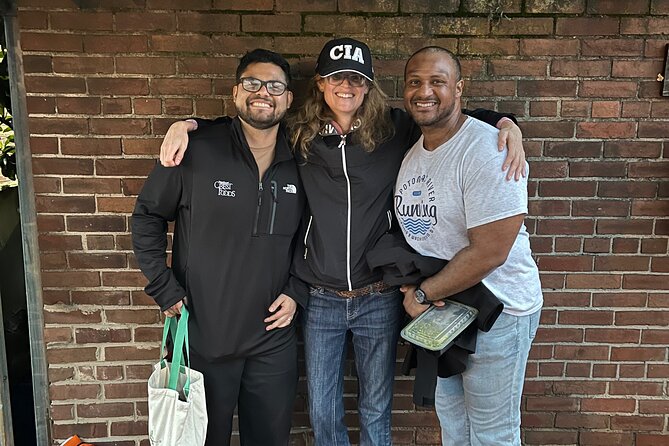
- Former CIA officer guide: Rosanna leads the walk and brings professional intelligence experience to the discussion.
- Real Washington locations: The route includes the Dupont Circle Hotel and Sheridan Circle, both tied to serious spy-related stories.
- Hands-on dead drop exercise: You practice impersonal communication, look for a signal, and attempt to retrieve a hidden message.
- Revolutionary War connection: The tour shows that American espionage did not begin in the twentieth century.
- Compact walking format: The experience lasts about 1 hour and 30 minutes and returns to the Dupont Memorial.
- Weather matters: Poor weather can lead to a rescheduled tour or full refund, and a moderate level of fitness is expected.
Why Embassy Row makes a good spy walk
Embassy Row is a natural setting for a spy-focused tour. The streets around Massachusetts Avenue and Dupont Circle carry the formal look of diplomacy, but this experience asks you to consider the less visible work that can take place around embassies, hotels, memorials, and public sidewalks.
You are not simply looking at grand buildings and hearing dates. The route uses specific Washington locations to discuss suspicious deaths, covert communication, and political violence. That gives the walk a useful structure. Each stop has a place, a story, and a link to the wider world of intelligence work.
Because the tour is only about 90 minutes, you should expect a focused introduction rather than a full account of Washington espionage. That is a fair trade if you want a manageable activity between museum visits. It may feel too brief if you already know a great deal about Cold War intelligence or want lengthy discussion at every stop.
The tour begins and ends at the Rear Admiral Samuel Francis Dupont Memorial in Washington, DC. Returning to the same point makes planning easier, especially if you are combining the walk with time in Dupont Circle. The area is near public transportation, another practical advantage in a city where a short Metro ride can save your legs.
More Embassy Row tours:
- Dupont Circle and Embassy Row Architectural Walking Tour
★ 5.0 · 117 reviews - Embassy Row: Architecture, Mansions & International Intrigue
★ 4.5 · 27 reviews - DC: Historic Embassy Row & Dupont Circle (2 Hr Walking Tour)
★ 5.0 · 5 reviews
At the Dupont Circle Hotel, a suspicious death
One early stop focuses on a suspicious death at the Dupont Circle Hotel. The subject immediately sets the tone: this is not only a tour of famous buildings or well-known political figures. It looks at the uncertainty that often surrounds intelligence stories, where motive, opportunity, and official explanations may not line up neatly.
A hotel is also an apt place for this kind of discussion. Hotels bring together diplomats, officials, journalists, businesspeople, and people who prefer not to be noticed. You can better understand how an ordinary public setting might become important when you consider the movement of people through lobbies, rooms, restaurants, and nearby streets.
The strength of this stop is the question it raises. You are encouraged to think about evidence and suspicion instead of accepting a simple spy-movie version of events. Since the tour has limited time, do not expect every detail of the case to receive a full legal or investigative treatment. The value is in seeing the location and learning why it became part of Washington’s spy story.
Revolutionary War spies and a CIA tradition
The next subject reaches back to the Revolutionary War. That historical jump is useful because it places modern intelligence work in a longer American tradition. Espionage was not invented by the CIA, satellites, or the Cold War. Secret messages, coded information, informants, and risky communication mattered during the country’s founding period too.
Rosanna also discusses a tradition followed by CIA officers before they deploy. This is one of the tour’s more unusual details because it connects a historic city walk with the working culture of a modern intelligence service.
The exact appeal here depends on your interests. If you like the practical side of spy work, the pre-deployment tradition may be more memorable than a list of old events. It gives you a glimpse of how an organization creates rituals and shared habits around difficult assignments.
I would pay close attention during this section. The tour is designed as a conversation, and the guide’s professional background is central to the experience. Rosanna’s role is not just to point out a building. She helps explain how intelligence work can involve routine, discipline, and human judgment, not only dramatic escapes and secret gadgets.
Sheridan Circle and the Letelier assassination
Sheridan Circle provides the setting for a discussion of the assassination of Orlando Letelier. This is the tour’s most serious political story, and it shows how espionage and international conflict can reach an otherwise ordinary Washington street.
A location-based discussion makes the event easier to grasp than a name and date in a book. You can place the incident within the city and consider how close political power, diplomatic activity, and residential neighborhoods can be. The setting also helps you understand why Washington has been such an important stage for intelligence operations and political violence.
This stop may be heavier than the more playful dead drop exercise later in the walk. That contrast is worth keeping in mind. The tour uses spycraft as an entry point, but it does not treat every story as entertainment. The Letelier discussion adds weight and reminds you that intelligence work can have fatal consequences.
The guide’s former CIA experience is especially useful here, though you should not expect classified information. The value comes from context, questions, and the connection between a public place and a major political crime.
More history tours in Washington DC:
- Guided African American History Tour with Reserved Museum Entry
★ 4.5 · 1,180 reviews - DC Monuments & History Guided E-Cart Tour-Blankets
★ 4.5 · 450 reviews - Smithsonian Museum of Natural History – Exclusive Guided Tour
★ 5.0 · 446 reviews - African American History Tour with Museum of African American History Ticket
★ 4.5 · 390 reviews
Trying your hand at a dead drop
The most interactive part of the tour asks you to practice impersonal communication. You try to spot a signal and then unload a dead drop, a method for passing information without a direct face-to-face meeting.
This exercise gives you a practical feel for one basic problem in covert work: how do two people communicate while limiting contact? You have to pay attention to the surroundings and notice something that could be easy to miss. Even a short activity can make the earlier stories more concrete.
I like this feature because it changes the pace. You have been listening to cases and history, then you are asked to do something rather than simply nod along. It also works for people who are curious about spy methods but do not want a highly technical lecture.
Keep your expectations sensible. This is an introduction to the idea of a dead drop, not a professional intelligence-training course. The fun is in testing your observation and following the instructions. It may also be the part children or teenagers remember best, though the tour’s overall subject matter includes serious deaths and political violence.
What the former CIA guide adds
A former CIA officer gives the tour a point of view that a standard sightseeing guide may not have. Rosanna can discuss spy activity as part of an institution and a profession, not only as a collection of dramatic stories.
That background does not mean every question can be answered in detail. Intelligence work has obvious limits, and the tour should be approached as a public history experience, not access to confidential material. Still, a guide who has worked in the field can explain why impersonal communication matters, how professional traditions develop, and why small details may carry weight.
The personal tone also matters. Rosanna’s responses to visitors show an easy, conversational style. She has handled questions about television recommendations and kept the exchange warm even during a cold-weather walk. That suggests a guide who is comfortable talking with the group rather than delivering a stiff speech.
The experience is offered in English. If you enjoy asking questions, listening closely, and discussing how spy stories are presented in popular culture, you will likely get more from the tour than someone who wants only a quick list of landmarks.
Group size, walking effort, and the weather
The maximum group size is 25 people. That is not a private tour, but it is small enough to keep the walk more personal than a large bus excursion. Your experience will still depend on how many people attend and how easily the group gathers at each stop.
You should have a moderate level of physical fitness. The tour lasts about 90 minutes and takes place outdoors, so comfortable shoes and clothing suited to the forecast are sensible choices. The supplied details do not specify the total distance or the number of stairs, so you should not assume it is fully effortless.
Weather is an important practical point. The activity requires good weather, and poor conditions may cause cancellation. If that happens, you are offered another date or a full refund. I would check the forecast before heading out, especially in winter. One visitor specifically handled cold weather well, but that does not make a warm coat optional.
Service animals are allowed, and the route is near public transportation. Bottled water is not included, so bring your own if you want it during the walk. All fees and taxes are included in the $75 price.
Is $75 a fair price?
At $75 per person, this tour costs more than a basic self-guided walk through Dupont Circle. You are paying for a specialized subject, a former CIA officer, a planned route, and an interactive exercise. The price makes the most sense if you would otherwise spend time and money seeking out spy-related museums, books, or separate guided walks.
The 90-minute duration keeps the commitment manageable. You can fit it into a day that also includes museums, monuments, or dinner in the area. The downside is that $75 is a substantial price for a short activity, particularly if you prefer broad city tours that cover many landmarks.
I see the value in the focus. This is not trying to be a general Washington tour. It is for people who want Embassy Row, intelligence stories, and a guide with direct professional experience. If those subjects interest you, the specific content and dead drop exercise help justify the cost. If you are only mildly curious about spies, a free walk or museum visit may offer better value.
The tour has a five-star rating based on eight reviews, a small sample that should be read in proportion. The strongest praise centers on the informative, engaging approach and the interactive format. That matches the design of the experience: the stories give you context, while the activity keeps you involved.
Who should book this Embassy Row experience?
I would recommend it to adults and older children interested in espionage, political history, intelligence methods, or unusual Washington stories. It also suits repeat visitors who have already seen the major monuments and want a more specialized way to spend part of an afternoon.
It is a good pick if you prefer conversation to a large scripted tour. Rosanna’s personable approach appears to be a major part of the appeal, so come ready to listen and ask questions.
You may want to skip it if you need a fully indoor activity, dislike walking, or want a long and highly detailed account of each case. The weather requirement and moderate fitness recommendation also matter. This is an outdoor neighborhood walk, not a museum program with a guaranteed climate-controlled setting.
Book at least a little ahead if possible. The experience is booked on average 14 days in advance, which suggests that it can require planning even though it is short. You receive confirmation at booking, and free cancellation is available until 24 hours before the start time. Cancellations made inside that window are not refunded, and changes are not accepted.
Should you book it?
Book this tour if you want a compact, story-driven walk that turns Embassy Row into a setting for espionage history. The former CIA guide, the Letelier assassination discussion, and the chance to attempt a dead drop give it more purpose than a routine neighborhood stroll.
I would pass if your main goal is architecture, monuments, or a broad introduction to Washington. For the right audience, $75 buys a distinctive 90-minute experience with real locations and a clear human guide. Just dress for the weather, allow for steady walking, and remember that the tour offers a focused taste of spy history rather than a full course.
FAQ
How long does the Embassy Row Spy History Tour last?
The tour lasts approximately 1 hour and 30 minutes.
Where does the tour begin?
It begins at the Rear Admiral Samuel Francis Dupont Memorial in Washington, DC 20009.
Where does the tour end?
The activity ends back at the meeting point, the Rear Admiral Samuel Francis Dupont Memorial.
Who leads the tour?
The tour is led by Rosanna, a former CIA officer.
What language is the tour offered in?
The tour is offered in English.
What is included in the price?
All fees and taxes are included. Bottled water is not included.
Is the tour suitable for people with limited mobility?
The tour recommends a moderate level of physical fitness. The available details do not provide a specific accessibility assessment, but service animals are allowed.
What happens if the weather is poor?
If poor weather causes the tour to be canceled, you are offered a different date or a full refund.
Recently added around Washington DC
- Small Group Washington DC Night Tour★ 4.5 · 3 reviews
- Washington DC Neighborhoods Personalized Self-Guided App Tour★ 3.5 · 3 reviews
- America’s Main Street and White House Private Full-Day Tour★ 5.0 · 3 reviews
- Beyond the Closet Walking Tour★ 5.0 · 3 reviews
- Pirate Ship Treasure Hunt Cruise with Face Painting★ 4.5 · 3 reviews
- Sushi Masterclass in Washington D.C. (Includes 4-Course Meal)★ 5.0 · 3 reviews
- Private Washington DC Grand Tour with Changing of the Guard.★ 5.0 · 3 reviews
- 250th: National Archives & American History Museum Guided Tour★ 5.0 · 3 reviews
Embassy Row, compared.
Dupont Circle and Embassy Row Architectural Walking Tour
Read our review →
Embassy Row: Architecture, Mansions & International Intrigue
Read our review →
Historic Embassy Row & Dupont Circle (2 Hr Walking Tour)
Read our review →
Embassy Row & Dupont Circle: Gilded Age History Small-Group Tour
Read our review →Browse the lists this tour appears in