
Reviewed · EMBASSY ROW
Dupont Circle and Embassy Row Architectural Walking Tour
Washington’s grandest residential avenue is the subject here, and it is more colorful than a simple parade of handsome buildings. On this walk from Dupont Circle to Embassy Row, you’ll hear how private mansions became embassies, clubs, and cultural institutions, while stories about Alice Roosevelt Longworth, the Hope Diamond, Woodrow Wilson, and other former residents keep the architecture human.
I like the small-group format, capped at 20 people, because a walking tour works best when you can hear the guide and ask a question. I also like the mix of architectural styles and personal stories. The main drawback is that you view most embassies from the street, rather than going inside, and the tour may run longer than two hours.
In This Review
- Key points to know before you go
- Why Dupont Circle is the right starting point
- Massachusetts Avenue and the former Millionaires Row
- The Indonesian Embassy and the Hope Diamond connection
- Anderson House and Washington’s private power
- The Turkish ambassador’s residence near Sheridan Circle
- Sheridan Circle’s strange Civil War monument
- Kalorama, Woodrow Wilson, and a quieter Washington
- Washington’s Spanish Steps and the Hobbitt House
- Finishing at the Phillips Collection
- What the guides add to the experience
- Timing, group size, and walking comfort
- Is $48 a fair price?
- Who should book this Dupont Circle walk?
- FAQ
- How long does the Dupont Circle and Embassy Row tour last?
- Where does the tour begin and end?
- Does the tour go inside the embassies?
- Is admission to the Woodrow Wilson House included?
- How large is the walking group?
- What is the cancellation policy?
- Should you book it?
Key points to know before you go
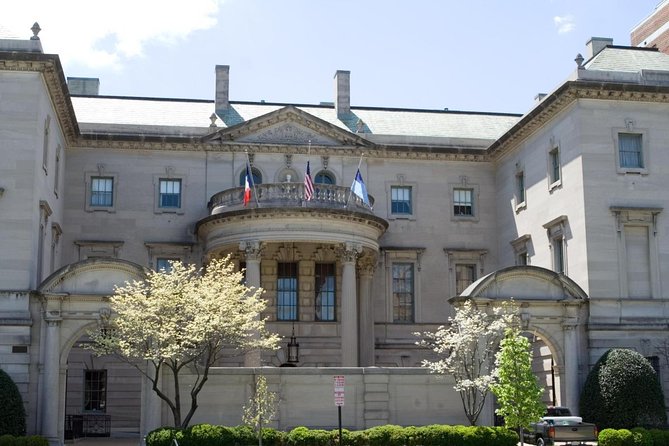
- A mansion-to-embassy story: See how Massachusetts Avenue shifted from Washington’s most fashionable residential address to a diplomatic corridor.
- A strong guide makes the difference: Guides including Sam, Mark, Christine, Ellery, Carolyn, and Natalie have led engaging tours with history, humor, and architecture.
- A manageable two-hour walk: The route is long enough to cover Dupont Circle, Embassy Row, Kalorama, and several notable houses without taking up your whole day.
- Street views, not a diplomatic interior tour: You’ll see the exteriors of embassies and former mansions, with one paid admission not included.
- Unusual stops: Look for Washington’s Spanish Steps, the Hope Diamond connection, Sheridan Circle’s odd Civil War monument, and the so-called Hobbitt House.
- Good value for a history-minded visitor: At $48, you pay about $24 per hour for a guided look at an area that is easy to pass through without understanding.
Why Dupont Circle is the right starting point
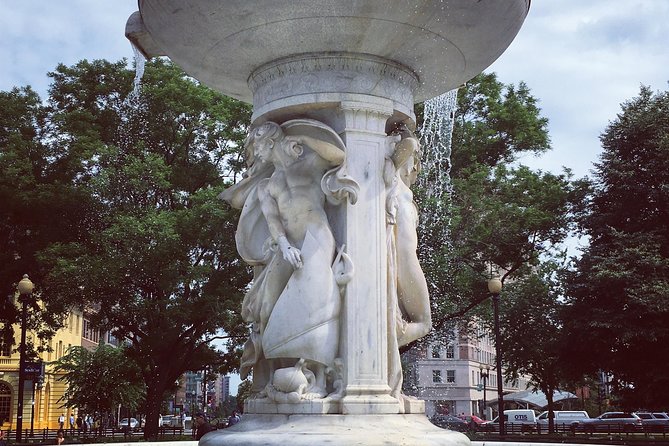
The tour begins at Dupont Circle, one of Washington’s most recognizable neighborhood centers. Its fountain, designed by the same firm connected with the Lincoln Memorial, gives you an easy meeting place and a quick introduction to the district.
Your guide explains why Dupont Circle was created and how it took its name. That opening matters because the neighborhood makes more sense once you know it was planned as an important urban address, not simply a pretty traffic circle with cafés and benches.
From here, you set off on foot toward Massachusetts Avenue and Embassy Row. The route is best understood as a stroll through changing fortunes. Washington’s political and social elite once built large homes here to display wealth and position. Later, many of those properties became diplomatic missions, private clubs, or offices.
That change gives the walk its central question: who had the money and influence to build these places, and what happened when the old social order faded?
More architecture tours in Washington DC:
- Historic Georgetown: History, Gossip, & Architecture Walking Tour
★ 5.0 · 321 reviews - Historic Georgetown Architectural Walking Tour
★ 5.0 · 77 reviews - DC: Historic Georgetown History & Architecture 2 Hour Tour
★ 4.8 · 33 reviews
Massachusetts Avenue and the former Millionaires Row
Embassy Row is not one single architectural style. Along the route, you can expect to see Neo-classical, Beaux-Arts, Queen Anne, and other designs placed close together. Your guide points out details that are easy to miss when you walk the avenue alone, then ties them to the people who commissioned and occupied the houses.
The stories reach beyond presidents and diplomats. You hear about heiresses, industrial fortunes, newspaper owners, social climbers, and political families who used their homes as part of Washington’s social machinery.
Alice Roosevelt Longworth is one of the memorable personalities connected with the area. Her reputation for independence and sharp wit helps turn a façade into something more than a decorative object. Evalyn Walsh McLean adds another thread, since her family and social world connect directly to the famous Hope Diamond.
This people-centered approach is one of the tour’s strongest features. You do not need a background in architectural history to follow it. If terms such as Beaux-Arts or Queen Anne are new to you, the buildings provide the visual examples while the guide supplies the context.
The Indonesian Embassy and the Hope Diamond connection
One early stop is the Embassy of Indonesia, an opulent building with an unusually famous former occupant and owner connection. The property was once associated with the Hope Diamond, the large blue stone surrounded by stories of wealth, glamour, and misfortune.
You will not be touring the embassy interior, but the exterior story gives the stop extra interest. It also shows how the route works at its best: architecture provides the starting point, while a tale about money, status, and public fascination makes you look more closely.
Allow about five minutes here. That may sound brief, but the tour keeps moving, and the building is part of a larger sequence rather than a stand-alone museum visit.
Anderson House and Washington’s private power
Anderson House is an imposing mansion that once belonged to one of Washington’s wealthiest couples. It is now the headquarters of the Society of Cincinnati, described as the nation’s oldest patriotic organization.
This stop helps explain the difference between an embassy and a former private home. A mansion like Anderson House was built to express social rank in a city where access, connections, and entertaining mattered. Its current role adds another layer, showing how these buildings continue to serve institutions long after the original owners are gone.
The Society of Cincinnati connection also links the avenue to the early American military and political world. Your guide uses the building to connect national history with the more intimate story of the people who lived behind its walls.
More Embassy Row tours:
- Embassy Row: Architecture, Mansions & International Intrigue
★ 4.5 · 27 reviews - Embassy Row Spy History Tour with a Former CIA Officer
★ 5.0 · 8 reviews - DC: Historic Embassy Row & Dupont Circle (2 Hr Walking Tour)
★ 5.0 · 5 reviews - Embassy Row & Dupont Circle: Gilded Age History Small-Group Tour
★ 5.0 · 3 reviews
The Turkish ambassador’s residence near Sheridan Circle
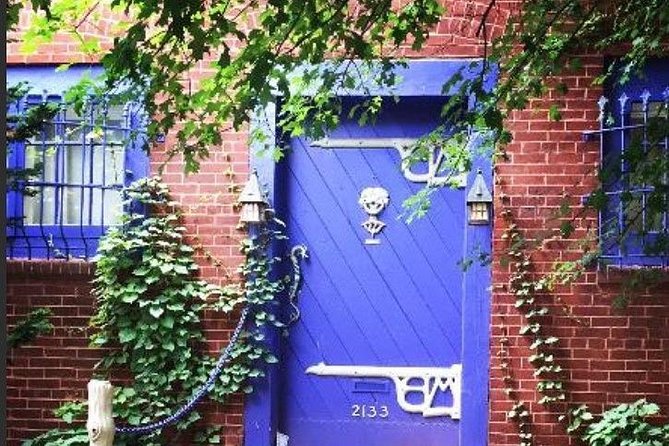
The Residence of the Turkish Ambassador is a Beaux-Arts mansion off Sheridan Circle. Its grand design gives you a clear example of the formal, richly detailed style found along Embassy Row.
The house also has a music connection. Ahmet Ertegun, later known for his major role in the music business, got his start there. This is another reason the tour feels broader than a standard architecture walk. You move from diplomacy to social history, then into the arts without leaving the same few blocks.
The tour only pauses briefly at the residence, so do not expect a long architectural lecture on one building. Instead, you get a series of concise stories that build a picture of the avenue as a place where politics, wealth, culture, and international life overlap.
Sheridan Circle’s strange Civil War monument
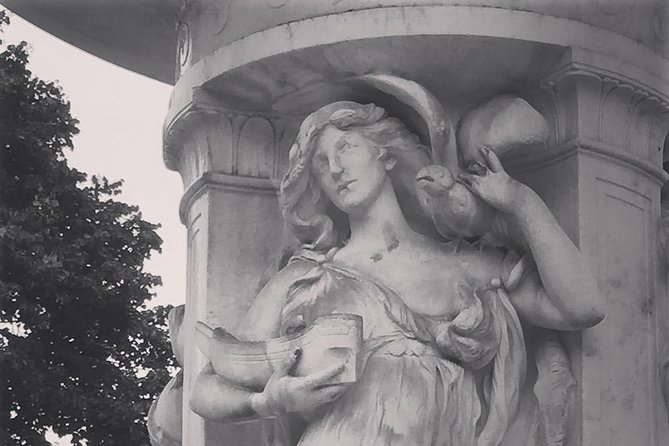
Sheridan Circle contains a Civil War monument with an unusual backstory. It was designed by the sculptor associated with Mount Rushmore, which gives the stop an unexpected connection to one of the most famous monuments in the United States.
The monument is a useful pause in the route. Rather than looking only at private houses and embassies, you get a piece of public civic art and a reminder that Washington’s streets are filled with national symbols.
The odd story behind the monument is exactly the sort of detail that can make a walking tour worthwhile. You might pass the circle on your own and register only a statue. With a guide, it becomes part of the city’s ongoing argument about war, memory, and public space.
Kalorama, Woodrow Wilson, and a quieter Washington
The route continues into Kalorama, a residential area whose name means beautiful view in Greek. Compared with Massachusetts Avenue, it feels quieter and more domestic, though it remains connected to powerful Washington figures.
Here you pass the former home of President Woodrow Wilson. The house was his post-presidency residence, a detail that gives the tour a more personal angle on a national figure. You are seeing where a former president lived after leaving office, not just where official history says he worked.
The Woodrow Wilson House is the one stop where admission is not included. The tour passes the property, but this experience does not present itself as an interior visit. If you want to go inside, treat that as a separate plan and check current admission details before booking.
Kalorama also makes a useful contrast with the large diplomatic properties. The neighborhood shows how the same part of Washington can feel residential, political, and international within a short walk.
Washington’s Spanish Steps and the Hobbitt House
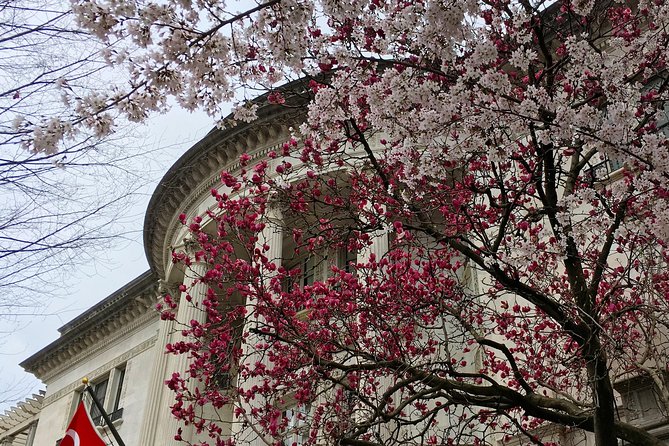
One of the route’s more surprising features is Washington’s own Spanish Steps. They are a modest version of the famous European landmark, set in a quiet urban pocket. You will not mistake them for Rome’s grand staircase, but that is part of their appeal. They offer a small change of pace and a good place to notice how Washington hides intimate public spaces among formal avenues.
The tour also points out the spot known as the Hobbitt House. Edward Lind Morse painted his famous inventor father there. This is a compact, quirky story, and it gives the neighborhood a creative side that can be missed when attention stays fixed on embassies and presidents.
These smaller stops help keep the walk from becoming a procession of official buildings. They add odd corners, family stories, and local character to a route otherwise dominated by wealth and power.
Finishing at the Phillips Collection
The final stop is the exterior of the Phillips Collection at 1600 21st Street NW. It was the first modern art museum in the United States, and its red brick exterior provides a fitting end to a tour that has moved through architecture, politics, and culture.
The tour concludes here rather than returning to Dupont Circle. That is useful if you want to continue toward the museum or make your own plans nearby, but it means you should note the ending point when arranging lunch, transport, or another timed activity.
The stop itself is brief, around five minutes. Admission to the museum is not part of the walking tour, and the experience does not promise an art collection visit. Think of it as a final architectural and cultural landmark, not a museum tour.
What the guides add to the experience
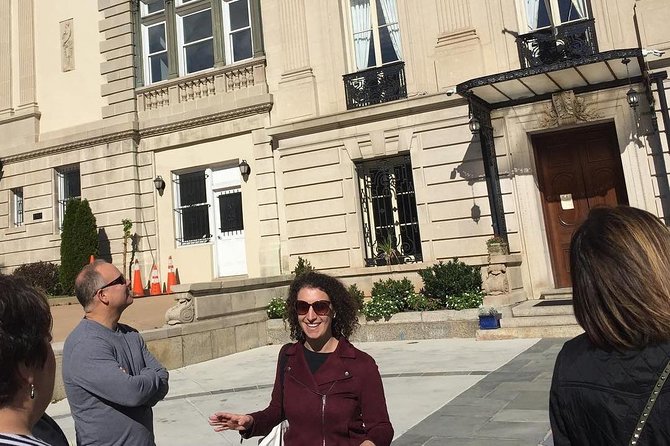
The guide is the key variable on any walking tour, and this one depends heavily on storytelling. Sam is especially associated with energetic presentations, humor, and present-day observations. Mark has been praised for being considerate and clear, while Christine and Ellery have been noted for combining architecture with personal stories about the houses.
Natalie and Carolyn have also led tours that balance building details with stories about the people who lived there. The exact guide is not guaranteed, so you should book for the route and format rather than for one named person.
The best guides on this walk do not assume you already understand architecture. They explain enough to help you recognize a style, then move quickly to the human story behind the building. That balance suits you if you enjoy history but do not want a technical lecture.
The tour can also work for families and mixed-age groups. The stories about unusual residents, diamonds, music, and eccentric houses give younger listeners something to hold onto, while adults get more background on Washington society and diplomacy.
Timing, group size, and walking comfort
The advertised duration is about two hours, but you should keep your schedule flexible. One outing ran roughly 2 hours and 20 minutes, so avoid booking a tightly timed meal, show, or museum entry immediately afterward.
The maximum group size is 20 people. That is not an ultra-private tour, but it is small enough for a guide to manage questions and keep the group together. The mobile ticket is convenient, and the meeting point at Dupont Circle is near public transportation.
You should expect to walk outdoors for the entire experience. Heat, humidity, rain, and cold have all been part of the conditions on different outings. Check the forecast, wear comfortable shoes, and bring what you need for the weather. The tour can still be enjoyable in poor conditions, but comfort will affect how much you absorb.
Service animals are allowed, and most people can participate. The information provided does not state a specific distance, grade, or number of stairs, so contact the operator if those details matter for you.
Is $48 a fair price?
At $48 per person, this is not the cheapest way to stroll around Dupont Circle. You can walk Massachusetts Avenue for free and read about the buildings on your own.
The value comes from the interpretation. For about $24 per hour, you receive a guided route through a neighborhood where the important details are often the names, former occupants, architectural choices, and changes in use. Without that background, many of the grand façades blur together.
The price is easier to justify if you are interested in architecture, Washington society, presidential history, or international institutions. It is less compelling if you want to enter embassies, spend time inside historic houses, or visit the Phillips Collection as part of the same ticket.
The tour has earned a 5 rating from 117 reviews and is recommended by 98 percent of bookers. Those figures do not remove the need to consider weather, walking, or your interest in exterior sightseeing, but they do reflect a consistently strong experience.
Who should book this Dupont Circle walk?
I would choose this tour if you want a focused introduction to one of Washington’s most elegant neighborhoods. It works particularly well early in a DC visit, since the guide can point out nearby food, markets, and other places to explore afterward.
It also suits people who have lived in the Washington area for years but have never stopped to learn why the houses and embassies look the way they do. A local resident can know the streets well and still miss the stories attached to them.
Families, couples, solo visitors, and friend groups can all fit the format. You should be comfortable walking outdoors and listening while standing at several stops. If your main goal is to tour embassy interiors, this is not the right product.
Free cancellation is available up to 24 hours before the start time. Changes or cancellations inside that window are not accepted for a refund, and a minimum number of participants is required for the tour to operate.
FAQ
How long does the Dupont Circle and Embassy Row tour last?
The scheduled duration is approximately two hours. You should allow extra time because the walk can sometimes run to about 2 hours and 20 minutes.
Where does the tour begin and end?
The tour begins at Dupont Circle in Washington, DC. It ends at the Phillips Collection, 1600 21st Street NW.
Does the tour go inside the embassies?
No interior access is promised. The experience focuses on exterior views and the stories behind the buildings, homes, embassies, and former residents.
Is admission to the Woodrow Wilson House included?
No. Admission to the Woodrow Wilson House is not included in the tour price.
How large is the walking group?
The tour has a maximum of 20 participants. It is designed as a small-group experience with a local guide.
What is the cancellation policy?
You can cancel up to 24 hours before the start time for a full refund. Cancellations or changes made less than 24 hours in advance are not accepted, and the tour may be canceled if its minimum number of participants is not reached.
Should you book it?
Book this walk if you want the stories behind Washington’s grand façades, not just a photo stop. The combination of Dupont Circle, Embassy Row, Kalorama, the Hope Diamond connection, Woodrow Wilson’s former home, the Spanish Steps, and the Phillips Collection gives you a well-shaped two-hour outing.
Skip it if you need indoor visits or a purely architectural lecture. For most curious visitors, though, the $48 cost buys something a self-guided walk cannot: a sharper eye for the buildings and a better sense of the people, ambition, and changing fortunes behind them.
More walking tours in Washington DC
- Arlington National Cemetery Walking Tour & Changing of the Guards
★ 5.0 · 2,566 reviews - Ghosts of Georgetown & The Exorcist Steps Walking Tour
★ 5.0 · 610 reviews - Georgetown Foodie Culinary Tour & Neighborhood Walk
★ 5.0 · 437 reviews - Gastronomic Georgetown Walking Food Tour
★ 4.5 · 373 reviews
Recently added around Washington DC
- Small Group Washington DC Night Tour★ 4.5 · 3 reviews
- Washington DC Neighborhoods Personalized Self-Guided App Tour★ 3.5 · 3 reviews
- America’s Main Street and White House Private Full-Day Tour★ 5.0 · 3 reviews
- Beyond the Closet Walking Tour★ 5.0 · 3 reviews
- Pirate Ship Treasure Hunt Cruise with Face Painting★ 4.5 · 3 reviews
- Sushi Masterclass in Washington D.C. (Includes 4-Course Meal)★ 5.0 · 3 reviews
- Private Washington DC Grand Tour with Changing of the Guard.★ 5.0 · 3 reviews
- 250th: National Archives & American History Museum Guided Tour★ 5.0 · 3 reviews
Embassy Row, compared.
Embassy Row: Architecture, Mansions & International Intrigue
Read our review →
Embassy Row Spy History Tour with a Former CIA Officer
Read our review →
Historic Embassy Row & Dupont Circle (2 Hr Walking Tour)
Read our review →
Embassy Row & Dupont Circle: Gilded Age History Small-Group Tour
Read our review →Browse the lists this tour appears in