
Reviewed · EMBASSY ROW
Embassy Row: Architecture, Mansions & International Intrigue
Washington’s Embassy Row is where old American money meets modern diplomacy. On this two-hour walk, former millionaires’ mansions become embassies, ambassadors’ offices, and reminders of how Washington’s social map changed over time. The best stories include political connections, family fortunes, scandals, and the curious question of what a statue on Sheridan Circle has to do with Mount Rushmore.
I like the small group limit of 15, which makes it easier to hear your guide and ask questions. I also like the mix of architecture and people-centered history: you are not only looking at facades, but learning about the families who built them and the countries that later took them over.
The main drawback is that this is an outdoor walking tour with no interior visits listed. The route is easy but fairly full, and the exact end point may not be the same spot as the Dupont Circle fountain, so listen for your guide’s directions before splitting up.
In This Review
- Key things to know before you book
- Why Embassy Row is worth your morning
- Starting at Dupont Circle
- Reading the mansions along Embassy Row
- The Saraswati statue and cultural exchange
- The Society of the Cincinnati
- The Indian Embassy and Gandhi
- Ireland, Sheridan Circle, and the Mount Rushmore puzzle
- The Woodrow Wilson House from the sidewalk
- Ending at the Spanish Steps
- Pace, group size, and comfort
- Who will get the most from this tour
- Is $49 a fair price?
- Final call: book it if you want stories with your architecture
- FAQ
- Where does the Embassy Row tour begin?
- What time does the tour start?
- How long does the walking tour last?
- Where does the tour end?
- How large is the group?
- Is the tour offered in English?
- What is included in the price?
Key things to know before you book
- Gilded Age mansions now used as embassies: See grand homes built by wealthy Americans before they became diplomatic properties.
- A guide-led walk with real personality: Becca, Mark, Tyler, Dan, John, and Eli have each led tours praised for clear storytelling and friendly answers.
- More than embassy facades: The route includes Dupont Circle, the Saraswati statue, Gandhi, Sheridan Circle, the Woodrow Wilson House, and the Spanish Steps.
- A manageable two-hour route: The walk is described as easy, with plenty of shade, though comfortable shoes still matter.
- A cap of 15 people: This is small enough for questions without the cost of a private tour.
- Good follow-up options: Your guide can point you toward places to eat, shop, museums, and public transportation near Dupont Circle.
Why Embassy Row is worth your morning
Washington can feel like a city of monuments and government buildings. Embassy Row offers something different. Massachusetts Avenue NW passes through a residential district where grand houses reveal the ambitions of America’s wealthy families, then take on a second life as international offices.
That change is the heart of the tour. You see how a mansion designed to display private wealth can later serve public diplomacy. A facade may tell you about stone, windows, and architectural fashion, but the story becomes more interesting when you learn who paid for it, who lived there, and why a foreign government chose the property.
I like this setting because the history is close to street level. You are walking through a neighborhood, not moving from one fenced monument to the next. The homes, embassies, circles, statues, and steps fit together as one urban story.
The tour costs $49 per person. That is not bargain-basement pricing for a two-hour walk, but the value depends on how much you want context. If you would happily read plaques and search buildings on your phone, you can cover much of the route yourself. If you want a guide to connect architecture, diplomacy, local history, and the occasional scandal, the fee is reasonable, especially with a group capped at 15.
More architecture tours in Washington DC:
- Historic Georgetown: History, Gossip, & Architecture Walking Tour
★ 5.0 · 321 reviews - Dupont Circle and Embassy Row Architectural Walking Tour
★ 5.0 · 117 reviews - Historic Georgetown Architectural Walking Tour
★ 5.0 · 77 reviews
Starting at Dupont Circle
The meeting point is the fountain at Dupont Circle, with a 10:00 a.m. start. Your guide begins by explaining the neighborhood before leading you toward Embassy Row.
This opening matters. Dupont Circle is not just a convenient place to meet. It gives you a sense of the district’s position in Washington and helps explain why the area attracted wealthy residents, diplomats, artists, and social institutions.
You also get practical suggestions for after the walk, including places to eat or shop. That small touch is useful. You can finish the tour with a better idea of where to spend the rest of your morning instead of immediately returning to a hotel or searching for lunch.
The first stop is brief, about 10 minutes, so do not expect a full neighborhood walking tour before Embassy Row. Think of it as an orientation that puts the grand houses into a local setting.
Reading the mansions along Embassy Row
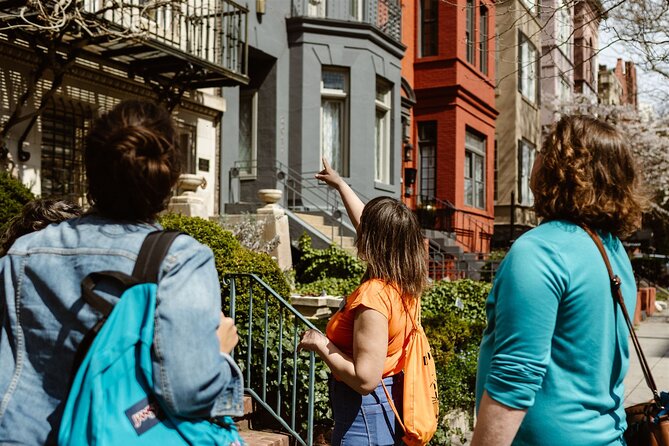
The main portion of the experience is a 30-minute exploration of Embassy Row. Here, the focus turns to the mansions built by millionaires and later acquired for diplomatic use.
This is where the tour earns its keep. You can admire architecture on your own, but a guide adds the human layer. Look for the scale of the buildings, the materials, the formal entrances, and the way the homes occupy their lots. These were not modest city residences. They were built to announce status.
The most effective guides connect those buildings to their former owners. Becca has been praised for making the Gilded Age homes lively, including the less polished parts of their stories. Mark is known for mixing historical details with small tidbits while keeping the pace easy. Tyler has been praised for answering questions comfortably and setting a steady rhythm.
Do not expect to enter every embassy. The experience is an exterior walk, and that is also part of its appeal. Diplomatic buildings are working offices, so the street view is your main chance to study them. You get the setting without the formal security procedures and delays of an interior tour.
A possible weakness is that two hours can only cover so much. Embassy Row could support a much longer walk, but this tour selects a manageable set of stops. If you want every architectural detail or a building-by-building survey, you may find the pace selective.
The Saraswati statue and cultural exchange
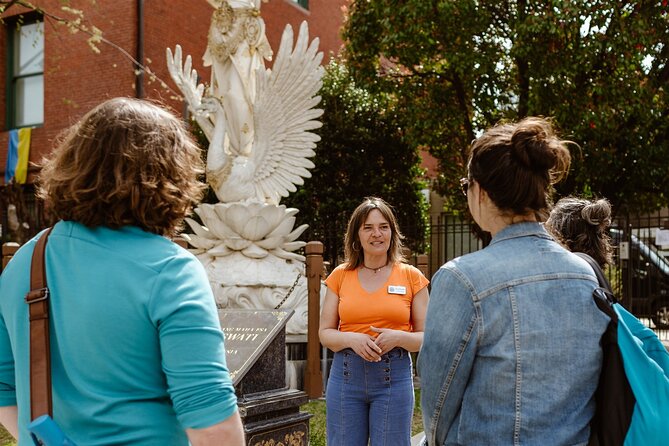
The statue of Goddess Dewi Saraswati is a short stop, listed at about five minutes. Located along Embassy Row near the Indian Embassy, it honors the Hindu goddess associated with knowledge, music, and the arts.
This gives the tour a welcome change of scale. After looking at large mansions, you pause at a public artwork with religious and cultural meaning. The flowers around the statue and its placement near the Indian Embassy help connect the street to India’s cultural presence in Washington.
Five minutes is enough for an explanation and a look, but not a long art discussion. If this stop interests you, pay close attention and take a moment to study the statue before the group moves on.
More Embassy Row tours:
- Embassy Row Spy History Tour with a Former CIA Officer
★ 5.0 · 8 reviews - DC: Historic Embassy Row & Dupont Circle (2 Hr Walking Tour)
★ 5.0 · 5 reviews - Embassy Row & Dupont Circle: Gilded Age History Small-Group Tour
★ 5.0 · 3 reviews
The Society of the Cincinnati
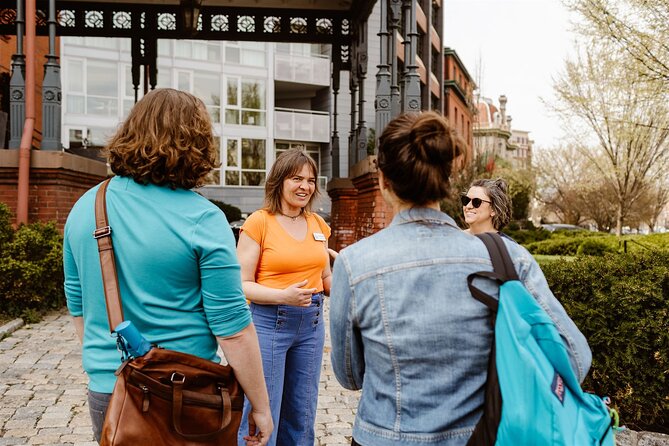
The Society of the Cincinnati receives about 10 minutes. Here, your guide discusses the millionaires who built the home and the society that inherited it.
This stop adds a different thread to the mansion story. Embassy Row was shaped not only by diplomatic needs, but also by American wealth, old institutions, and organizations with strong historical ties. The building becomes a way to discuss how private houses and elite societies helped shape Washington’s identity.
I especially like this stop for people who want more than a parade of foreign flags. It keeps the focus on the American side of Embassy Row and shows how the district developed before many properties became diplomatic missions.
The Indian Embassy and Gandhi
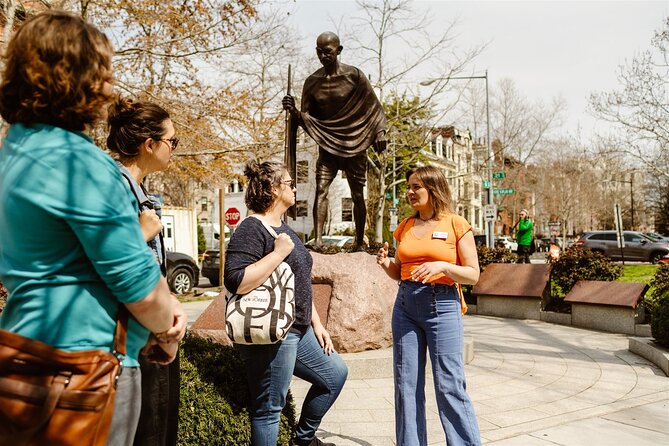
The Indian Embassy is another brief stop, about five minutes. Your guide discusses the building’s role in Indian-American relations and points out the nearby statue of Mahatma Gandhi on Massachusetts Avenue NW.
The pairing works well. The embassy represents formal diplomacy, while Gandhi’s statue recalls peace and nonviolence in a more public, symbolic way. Together, they show how Embassy Row communicates through both official buildings and public art.
You should not expect a long visit inside the embassy or an extended Gandhi lecture. This is a compact outdoor stop within a larger route. Still, it gives you a useful way to think about the avenue: international relationships appear in architecture, statues, gardens, and street names, not only in government offices.
Ireland, Sheridan Circle, and the Mount Rushmore puzzle

The Irish Embassy comes next, with about five minutes devoted to the building and Ireland’s ties with the United States. Its location on Massachusetts Avenue gives the guide another chance to discuss how national identity is expressed through diplomatic property.
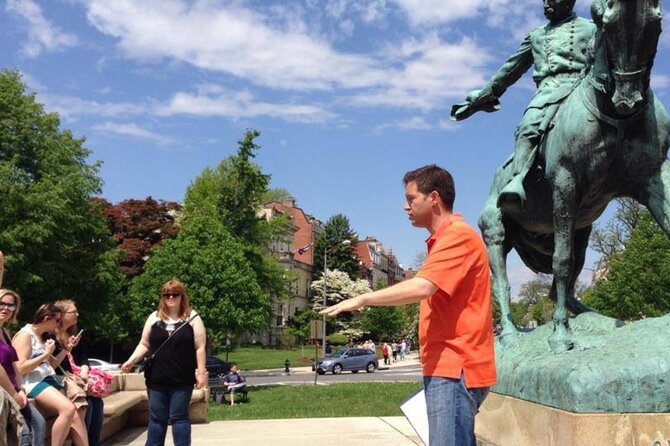
Then the walk reaches Sheridan Circle. The equestrian statue of General Philip Sheridan prompts a question about its connection to Mount Rushmore. That kind of detail is exactly what makes a walking tour memorable. You see a statue, hear a question, and suddenly a familiar American monument has a local connection.
The stop is short, so the point is likely a focused story rather than a long military biography. If you enjoy odd links between famous places, keep this part in mind. It is the sort of fact you might not notice while walking alone.
The Woodrow Wilson House from the sidewalk
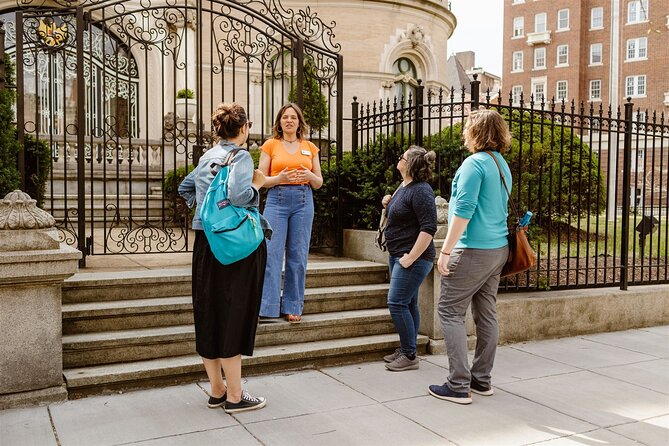
The tour pauses outside the President Woodrow Wilson House for about 10 minutes. Your guide discusses the house and Wilson’s unusual place in Washington history.
The key point is that Wilson was the only president to live in Washington after leaving office, apart from Barack Obama at the time of the tour description. You view the property from outside, so the value comes from the explanation rather than an interior visit.
This stop also reinforces the tour’s larger theme. Embassy Row is not only about foreign governments. It is tied to presidents, former national leaders, wealthy households, and the people who gave Washington its social and political character.
If you want to tour a presidential home inside, this walk will not replace that experience. But as part of a neighborhood route, the Wilson House adds a useful piece of context without sending you far from Embassy Row.
Ending at the Spanish Steps
The Spanish Steps are the final listed stop, with about five minutes for this picturesque staircase near Dupont Circle. They were inspired by Rome’s famous steps and offer a quieter visual finish after the formal buildings and political stories.
This is a pleasant ending because it brings you back to the neighborhood’s residential character. The tour begins with a circle, passes grand avenues and embassies, and finishes with a small urban retreat surrounded by greenery and historic homes.
There is an important practical detail here. The activity information says the tour ends back at the meeting point, but the provider’s explanation indicates that the actual finish may be within sight of the starting point and a Metro station rather than directly at the fountain. The guide should clarify this on the day. It is not a major problem, but you should know where you are before arranging a tight connection.
Pace, group size, and comfort
The full experience lasts about two hours. The route is described as an easy walk, and one participant specifically liked the amount of shade. Even so, you are outside for the entire tour, so wear walking shoes and plan for the day’s weather.
The group limit of 15 is one of the strongest features. A large crowd can make a residential architecture walk frustrating, especially when the guide is speaking on a sidewalk beside a road. A small group helps you hear the stories, see the buildings, and ask questions without holding up a long line.
The guides appear to be a major part of the experience. Becca has been praised for energy, preparation, clear speech, and storytelling. Mark has been described as personable and passionate about history. Tyler is praised for a comfortable pace and easy answers, while Dan is singled out for keeping the group engaged with more information than expected. John and Eli have also led well-received walks.
That does not guarantee that every guide will suit every personality. One person found the facts inaccurate, while the provider disputed that account. The broader pattern points to strong guide performance, but I would still recommend asking questions respectfully and giving the guide room to lead. A walking tour works best when the group shares the conversation rather than turning it into a debate.
Who will get the most from this tour
This is a good choice if you like:
- Historic houses and architecture, but want the stories behind the facades.
- Washington history beyond the National Mall.
- Diplomatic buildings and international culture.
- Short walks with frequent stops.
- Guides who can answer questions and offer local suggestions.
- Small groups rather than large bus tours.
It suits first-time Washington visitors who want to understand Dupont Circle and Embassy Row before exploring more of the city. It also suits repeat visitors who have seen the major monuments and want a different side of Washington.
Families can enjoy it if children are willing to walk and listen. The stories about millionaires, embassies, presidents, and scandals may hold attention better than a purely architectural lecture. Couples and solo visitors also benefit from the small group format.
You may want to skip it if you need interior access to embassies, dislike walking, or already know Embassy Row in detail. One critical experience suggests that independent walkers can follow the route with a phone. That is fair. The tour’s value comes from interpretation and storytelling, not exclusive access.
The activity is offered in English, uses a mobile ticket, allows service animals, is near public transportation, and says most people can participate. Confirmation arrives when you book, and cancellation is allowed up to 24 hours before the experience for a full refund.
Is $49 a fair price?
At $49, you are paying for a licensed professional guide, a two-hour small-group walk, and a planned sequence of stories. You are not paying for admission to interiors, transportation, food, or a private tour.
For someone who would otherwise stroll the avenue and search each building one at a time, the value is less certain. You can see the outside of the mansions for free. But a good guide saves research time and gives the route shape. The strongest guide reports suggest that Becca, Mark, Tyler, and Dan can turn a simple walk into a lively history lesson.
The price also buys convenience. You meet at a clear landmark, follow a set route, hear local recommendations, and finish close to public transportation. If you have only one morning in Washington, that structure can be worth more than the admission cost suggests.
Final call: book it if you want stories with your architecture
I would book this tour if you want to see Washington’s polished diplomatic side while also hearing about the American millionaires, societies, presidents, and scandals behind the buildings. The small group, shaded route, and strong guide reputation make it a useful addition to a first visit or a smart change of pace on a return trip.
I would not book it expecting embassy interiors or a full architectural survey. For that, walk independently or seek a longer specialist tour. But if you want a friendly, focused introduction to Dupont Circle and Embassy Row, $49 is a fair price for two hours of guided context.
FAQ
Where does the Embassy Row tour begin?
The tour begins at the Dupont Circle fountain in Washington, DC 20036.
What time does the tour start?
The listed start time is 10:00 a.m.
How long does the walking tour last?
The experience lasts approximately two hours.
Where does the tour end?
The activity information says it ends back at the meeting point. The provider also explains that the finish may be within sight of the starting point and a Metro station, rather than at the exact fountain.
How large is the group?
The tour has a maximum of 15 participants.
Is the tour offered in English?
Yes. The tour is offered in English.
What is included in the price?
The price includes a professional licensed tour guide and a two-hour guided small-group walk along Embassy Row. Admission tickets to buildings are not listed, and the stops are described as free.
Recently added around Washington DC
- Small Group Washington DC Night Tour★ 4.5 · 3 reviews
- Washington DC Neighborhoods Personalized Self-Guided App Tour★ 3.5 · 3 reviews
- America’s Main Street and White House Private Full-Day Tour★ 5.0 · 3 reviews
- Beyond the Closet Walking Tour★ 5.0 · 3 reviews
- Pirate Ship Treasure Hunt Cruise with Face Painting★ 4.5 · 3 reviews
- Sushi Masterclass in Washington D.C. (Includes 4-Course Meal)★ 5.0 · 3 reviews
- Private Washington DC Grand Tour with Changing of the Guard.★ 5.0 · 3 reviews
- 250th: National Archives & American History Museum Guided Tour★ 5.0 · 3 reviews
Embassy Row, compared.
Dupont Circle and Embassy Row Architectural Walking Tour
Read our review →
Embassy Row Spy History Tour with a Former CIA Officer
Read our review →
Historic Embassy Row & Dupont Circle (2 Hr Walking Tour)
Read our review →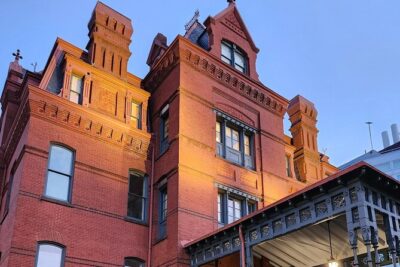
Embassy Row & Dupont Circle: Gilded Age History Small-Group Tour
Read our review →Browse the lists this tour appears in