
Reviewed · EMBASSY ROW
Embassy Row & Dupont Circle: Gilded Age History Small-Group Tour
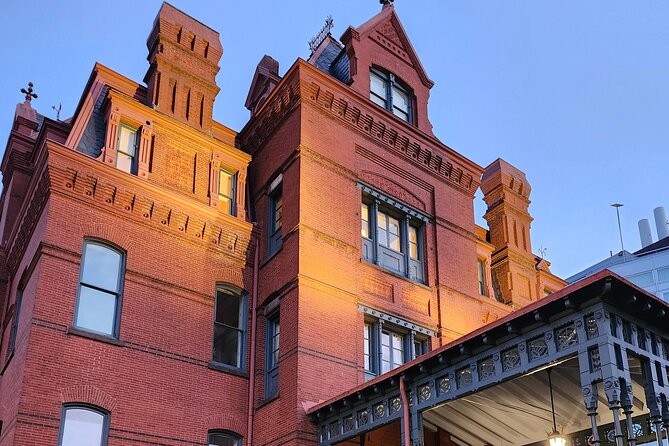
Washington’s grandest homes often reveal their best stories from the sidewalk. On this 90-minute walk through Dupont Circle and Embassy Row, you’ll meet brewer Christian Heurich, socialite Evalyn Walsh McLean, the Society of the Cincinnati, and a mansion with more than 100 secret passages. The buildings are the backdrop; the people are the show.
I like the small maximum of 15 people, which should make it easier to hear the guide and ask questions. I also like the route’s mix of famous addresses and odd details, from the Three Graces to the Mansion on O Street. The main drawback is clear: this is an exterior tour, so you won’t enter the mansions described, and some optional admissions cost extra.
In This Review
- Key points
- Why this walk makes Dupont Circle more interesting
- Heurich House and the 1921 Biergarten
- The Mansion on O Street and its secret passages
- Anderson House and the Society of the Cincinnati
- Evalyn Walsh McLean and the Embassy of Indonesia
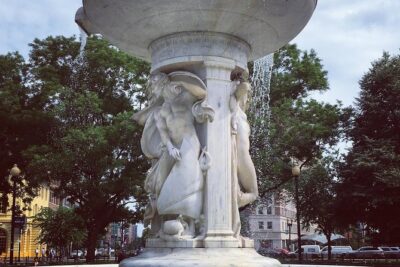
- The Three Graces and Dupont Circle
- Sulgrave Club and the Wadsworth family
- An early African-American architect’s mansion
- Storytelling is the main attraction
- What the $69 price really covers
- Who should take this Dupont Circle walk
- Should you book it?
- FAQ
- How long is the Embassy Row and Dupont Circle tour?
- What time does the tour begin?
- Where does the tour start?
- Where does the tour end?
- Does the tour enter the mansions?
- Are admission fees included?
- How many people can join the tour?
- What happens if bad weather cancels the tour?
Key points
- Start with beer and Gilded Age style: Meet at the 1921 Biergarten beside Heurich House, the former mansion of a historic brewer.
- Hear the stories behind Embassy Row: Learn how Evalyn Walsh McLean’s lavish home became the Embassy of Indonesia.
- Look for the quirky side of Washington: The Mansion on O Street is known for more than 100 secret passages and unusual memorabilia.
- See Dupont Circle in context: The park gives the neighborhood its name and anchors the final part of the walk.
- Keep the group manageable: The tour accepts no more than 15 people, a useful size for a storytelling-heavy outing.
- Plan for the weather: Poor weather can cancel the experience, with a different date or full refund offered.
Why this walk makes Dupont Circle more interesting
Dupont Circle is easy to visit on your own. You can stroll the park, admire the embassies, and pass elegant townhouses without spending a dollar. What you won’t have on your own is the thread tying those places together.
This tour follows that thread through Washington’s Gilded Age, when immense fortunes shaped the city’s social life and architecture. You’ll hear about brewers, old family money, socialites, fraternal organizations, architects, and diplomatic households. The result is less a parade of façades and more a neighborhood story told one address at a time.
I find that approach useful because Embassy Row can feel like a long line of impressive but closed buildings. A good guide gives you a reason to stop, look up, and notice who lived there and why the house changed hands.
The experience begins at 2:30 p.m. and lasts about an hour and a half. That timing works well as an afternoon activity, especially if you want to pair it with other sightseeing nearby. The walk finishes at Dupont Circle North Metro Station, so you can continue by Metro or make your way around the neighborhood on foot.
More Embassy Row tours:
- Dupont Circle and Embassy Row Architectural Walking Tour
★ 5.0 · 117 reviews - Embassy Row: Architecture, Mansions & International Intrigue
★ 4.5 · 27 reviews - Embassy Row Spy History Tour with a Former CIA Officer
★ 5.0 · 8 reviews
Heurich House and the 1921 Biergarten
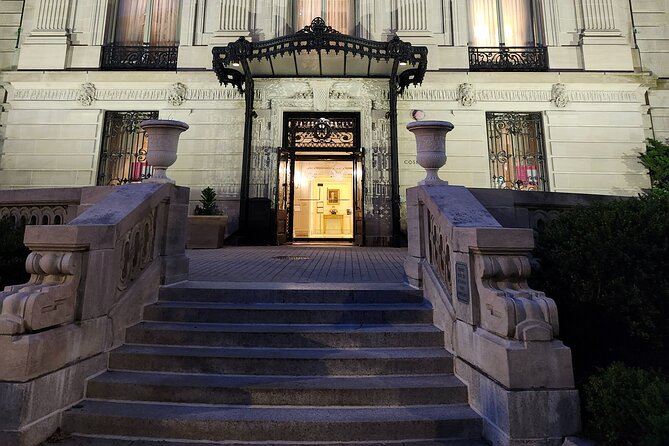
The meeting point is the 1921 Biergarten at 1307 New Hampshire Avenue NW, beside Heurich House Museum. The first stop takes about 15 minutes and centers on the former mansion of a historic brewer.
This is a smart opening. Beer connects the house to ordinary city life, while the mansion introduces you to the wealth and ambition of Washington’s older elite. You begin with a place that feels social rather than purely ceremonial.
Admission to this stop is free, but the tour is still an exterior experience. You should expect to learn about the site and view the setting rather than receive a full mansion tour. If you are hoping to spend time inside a historic house, keep that distinction in mind from the start.
The biergarten also gives the group a clear, practical meeting place. Arrive ready to walk and check the address carefully, since the tour starts at a specific venue rather than at Dupont Circle itself.
The Mansion on O Street and its secret passages
The Mansion on O Street supplies one of the tour’s most unusual details: more than 100 secret passages. You’ll see some of the house’s fun statues and memorabilia, then hear how to visit this quirky property.
That information matters because the Mansion on O Street is not simply another grand residence. Its appeal comes from surprise, clutter, hidden routes, and the odd contrast between a historic mansion and a playful house of discoveries. It gives the walk a change of pace after the more formal opening at Heurich House.
The practical point is that this stop does not mean you enter the house as part of the walking tour. You learn how to visit it, but any admission is not included in the $69 tour price. If the secret passages are your main reason for booking, check the separate visiting arrangements before you go.
Still, even from outside, the stop adds personality. Washington history can become too polished, all marble and official doors. The Mansion on O Street brings in a little mischief.
Anderson House and the Society of the Cincinnati
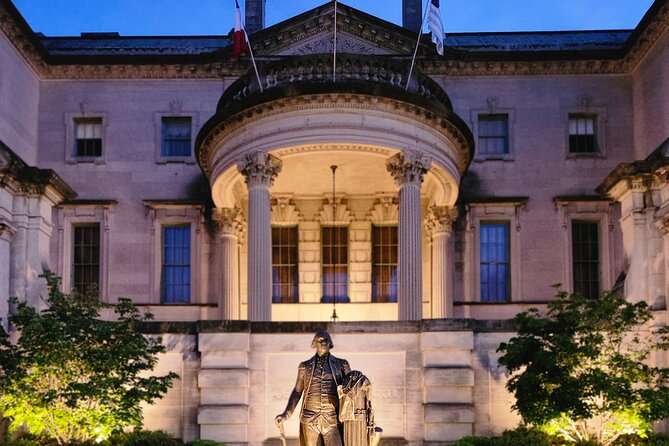
Anderson House is the route’s clearest Gilded Age mansion stop. It houses the Society of the Cincinnati, a fraternal order that predates the Constitution.
That detail gives the house a wider American frame. You are not only looking at an impressive residence. You are hearing about an organization tied to the country’s earliest political and military era, then seeing how that older institution fits into a later period of wealth and display.
The scheduled stop lasts about 15 minutes. That is enough time for a focused explanation, though not enough for an extensive interior visit. Admission is not included, and the tour does not enter the mansions described, so you should treat Anderson House as an architectural and storytelling stop from the street.
I like the contrast here. The Society of the Cincinnati brings an older national story into a neighborhood better known for grand homes, embassies, and social life. It also helps explain why these buildings are more than pretty shells.
More history tours in Washington DC:
- Guided African American History Tour with Reserved Museum Entry
★ 4.5 · 1,180 reviews - DC Monuments & History Guided E-Cart Tour-Blankets
★ 4.5 · 450 reviews - Smithsonian Museum of Natural History – Exclusive Guided Tour
★ 5.0 · 446 reviews - African American History Tour with Museum of African American History Ticket
★ 4.5 · 390 reviews
Evalyn Walsh McLean and the Embassy of Indonesia
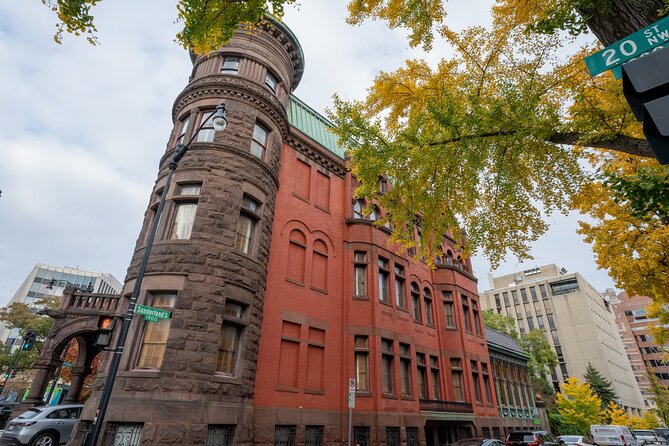
At the Embassy of Indonesia, the guide tells the story of Evalyn Walsh McLean, a socialite known for elaborate parties and enormous wealth. Her former home later became an embassy.
This is the kind of change that makes a city walk worthwhile. The address moves from private luxury to public diplomacy, but the house remains tied to the life of a woman whose parties and fortune made her famous. You get a compact lesson in how Washington’s grand residences can change purpose while keeping their social importance.
The stop lasts about 10 minutes. That short time suits the format because the story has a strong hook: a wealthy hostess, lavish entertaining, and a former home now representing another nation. You’ll be viewing the embassy from outside, with no admission included.
Please keep expectations realistic around embassy stops. Security and access are naturally limited, and this tour is designed around exterior viewing and explanation. Its value comes from the story attached to the address, not from entering a diplomatic building.
The Three Graces and Dupont Circle
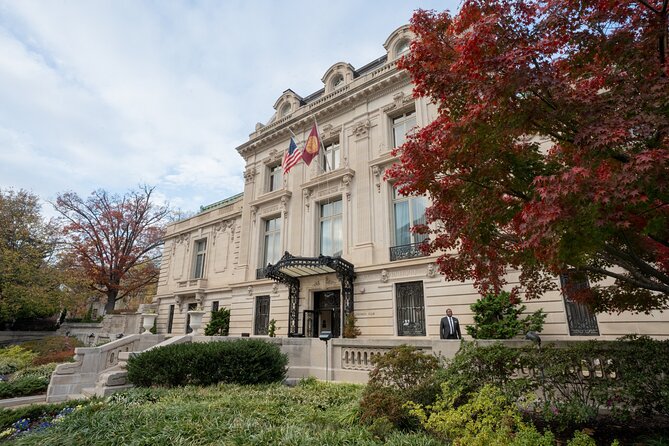
Dupont Circle itself gives the walk a needed pause from house after house. The guide explains the park that lends its name to the neighborhood and traces Dupont Circle from its early establishment to the present.
The Three Graces are a special highlight of the route. Guide Shane has a particular interest in Alice Roosevelt Longworth, and the tour’s storytelling includes the personalities connected with this part of Washington. The statues offer a visual focus, while the surrounding circle helps place the neighborhood’s development in everyday city space.
This portion should be especially useful if you are new to Dupont Circle. Instead of treating the park as a simple meeting point, the tour shows how the circle relates to the streets, homes, and institutions around it.
The route ends at Dupont Circle North Metro Station, between 1908 and 1998 Q Street NW. That is convenient if you want to continue sightseeing, find a meal nearby, or return to your hotel by public transportation.
Sulgrave Club and the Wadsworth family
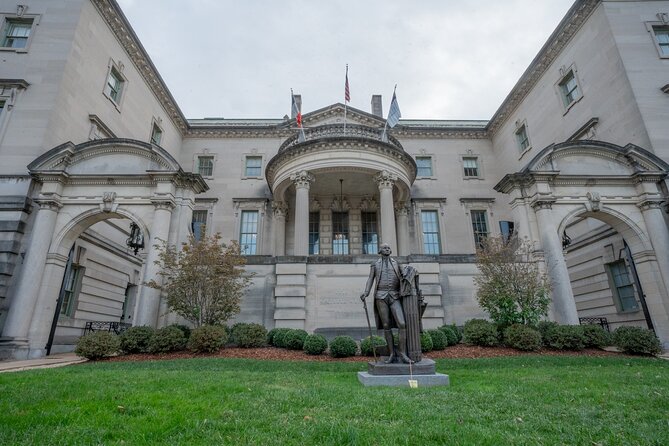
The Sulgrave Club brings a more somber note. Here, the guide tells tragic stories about the Wadsworth family, for whom the house was built.
A stop like this keeps the tour from becoming a nonstop celebration of wealth. Big houses can suggest success, but the people connected to them often had private troubles, family losses, and difficult turns. The Wadsworth story adds a human cost to the polished façades.
The stop lasts about 10 minutes. That is brief, so you should expect a concentrated story rather than a full family biography. Since the tour remains outside, the house serves as a visual anchor for the account.
I appreciate this kind of balance in a neighborhood tour. You see the grandeur, but you also hear that money and status did not guarantee an easy life.
An early African-American architect’s mansion
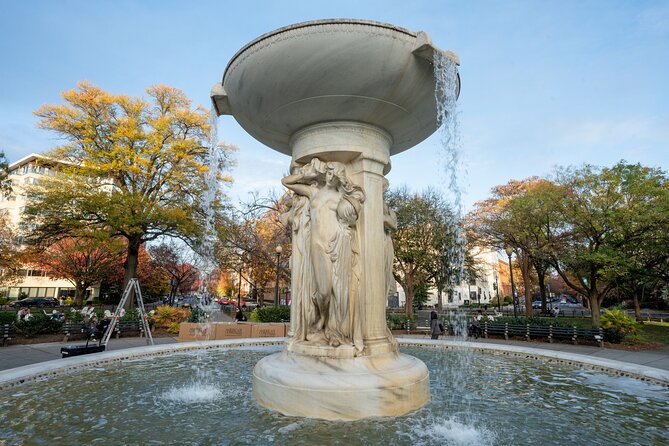
Another stop introduces a mansion designed by an early African-American architect. The supplied details do not identify the architect or the exact house, so the guide’s explanation is important here.
This stop broadens the tour beyond the familiar names of wealthy white residents and socialites. Architecture is often presented as the work of owners or famous firms, while the designers themselves disappear from the story. Calling attention to an early African-American architect gives you a more useful way to look at the neighborhood.
Because you do not enter the home, the building’s exterior details will carry much of the visual interest. Listen for what the guide points out and how the design fits the surrounding streets. This is a good example of why the small group matters. With no interior rooms or museum labels to guide you, the explanation does the work.
Storytelling is the main attraction
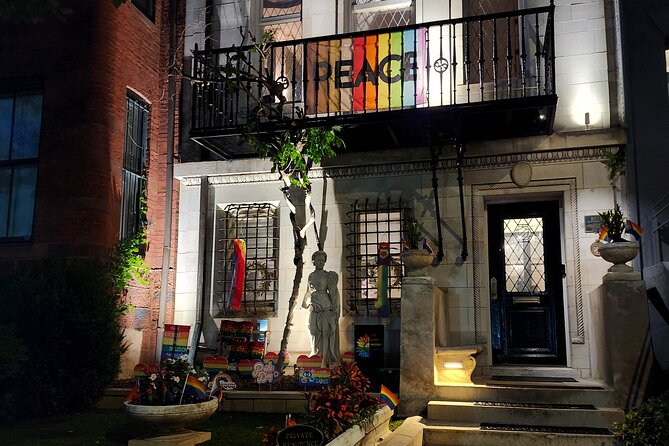
The strongest part of this experience is the guide’s storytelling. Shane is specifically associated with the route, and the available feedback highlights his use of stories and pictures to bring the neighborhood to life. He also has a special interest in the Three Graces, especially Alice Roosevelt Longworth.
That tells you what to expect: this is not a lecture packed with dates, and it is not a mansion-entry tour. It is a guided walk built around memorable people and visual stops. You’ll likely get more from it if you enjoy social history, architecture, and small details that make a street feel personal.
The guide can also adjust the experience when conditions are difficult. In cold and rainy weather, Shane went beyond the basic plan to customize the tour for the group. That is encouraging, though it does not remove the need to dress for an outdoor walk.
A group limit of 15 is another plus. The size is small enough for the guide to manage questions and keep everyone together without the feel of a large bus tour. At the same time, it is not a private tour, so you should expect to share the pace and conversation with other participants.
What the $69 price really covers
At $69 per person, this is not a bargain if you measure value by indoor admissions or hours of sightseeing. The tour lasts about 90 minutes, which works out to roughly $46 per hour, and the included item is the expert guide. You do not receive entry to Anderson House, the Embassy of Indonesia, Sulgrave Club, or the other mansions described.
The price makes more sense if you are paying for a focused local guide and a carefully linked route. You could walk these streets independently, but you would miss the connections between the brewer’s mansion, secret passages, old fraternal life, socialite culture, embassy use, family tragedy, and the park at the center of it all.
I would book it for the interpretation, not for access. If you mainly want to enter historic interiors, spend more time at museums, or avoid walking outdoors, this is not the right use of your money. If you want a compact introduction to one of Washington’s most story-filled neighborhoods, the small-group format helps justify the cost.
The free cancellation policy also gives you some flexibility. You can cancel at least 24 hours before the 2:30 p.m. start for a full refund. Poor weather may cancel the tour, in which case you can choose another date or receive a full refund.
Who should take this Dupont Circle walk
I think this tour suits you best if you:
- Enjoy architecture but want the people and politics behind the buildings
- Like short guided walks rather than long museum visits
- Are curious about socialites, family fortunes, embassies, and unusual homes
- Want a small group, with a maximum of 15 people
- Can comfortably spend 90 minutes outdoors
- Have already seen Washington’s major monuments and want a neighborhood-focused experience
It may be less suitable if you need guaranteed indoor access, dislike weather-dependent plans, or want a broad survey of all Washington history. The focus is narrow, but that is also its strength.
The route is near public transportation, and most people can take part. Service animals are allowed. Since the start and finish are in different places, note that you will walk from Heurich House to Dupont Circle North Metro Station rather than return to the original meeting point.
Should you book it?
Book this walk if you want stories attached to buildings, not just a series of impressive exteriors. The strongest reasons are the small group, the unusual stops, the Three Graces and Alice Roosevelt Longworth connection, and the guide-led way the neighborhood’s past is tied together.
Skip it if entering mansions is essential or if $69 feels too high for a 90-minute exterior walk. For the right audience, though, the route offers a lively look at Dupont Circle that you would be unlikely to assemble on your own in such a short time. Check the forecast, wear comfortable shoes, and arrive at the 1921 Biergarten before the 2:30 p.m. start.
FAQ
How long is the Embassy Row and Dupont Circle tour?
The tour lasts approximately 1 hour and 30 minutes.
What time does the tour begin?
The tour starts at 2:30 p.m.
Where does the tour start?
It starts at the 1921 Biergarten at Heurich House, 1307 New Hampshire Avenue NW, Washington, DC 20036.
Where does the tour end?
It ends at Dupont Circle North Metro Station, located at 1908 to 1998 Q Street NW, Washington, DC 20036.
Does the tour enter the mansions?
No. This is an exterior tour, so you do not enter the mansions described along the route.
Are admission fees included?
Admission to the Heurich House stop is free. Admission fees for Anderson House, the Embassy of Indonesia, Sulgrave Club, and other properties are not included.
How many people can join the tour?
The tour has a maximum of 15 participants.
What happens if bad weather cancels the tour?
If poor weather causes a cancellation, you will be offered a different date or a full refund. You can also cancel at least 24 hours before the start time for a full refund.
Recently added around Washington DC
- Small Group Washington DC Night Tour★ 4.5 · 3 reviews
- Washington DC Neighborhoods Personalized Self-Guided App Tour★ 3.5 · 3 reviews
- America’s Main Street and White House Private Full-Day Tour★ 5.0 · 3 reviews
- Beyond the Closet Walking Tour★ 5.0 · 3 reviews
- Pirate Ship Treasure Hunt Cruise with Face Painting★ 4.5 · 3 reviews
- Sushi Masterclass in Washington D.C. (Includes 4-Course Meal)★ 5.0 · 3 reviews
- Private Washington DC Grand Tour with Changing of the Guard.★ 5.0 · 3 reviews
- 250th: National Archives & American History Museum Guided Tour★ 5.0 · 3 reviews
Embassy Row, compared.
Dupont Circle and Embassy Row Architectural Walking Tour
Read our review →
Embassy Row: Architecture, Mansions & International Intrigue
Read our review →
Embassy Row Spy History Tour with a Former CIA Officer
Read our review →
Historic Embassy Row & Dupont Circle (2 Hr Walking Tour)
Read our review →Browse the lists this tour appears in