
Reviewed · HISTORICAL TOURS
Washington DC History of Slavery Walking Tour
Washington DC’s grand monuments can make the city’s past look tidy. This walk pulls back that curtain, connecting Lafayette Square, Decatur House, the National Mall, and the National Museum of African American History and Culture to the lives of enslaved people and African Americans who shaped the capital. The guide, identified as Dr. Koura and Dr. Gibson in tour information, teaches with the focus of an academic and the warmth of a good classroom leader.
I like the small private format, since your group can ask questions and set the pace more easily than on a large scheduled walk. I also like the use of phone-delivered images, which adds faces and documents to places that may otherwise look like ordinary city blocks. The main drawback is that one hour is tight, and some stops are outdoor explanations rather than interior visits. You should also expect a fair amount of walking, so comfortable shoes matter.
In This Review
- Key points to know before you book
- Why this walk changes the way you see Washington
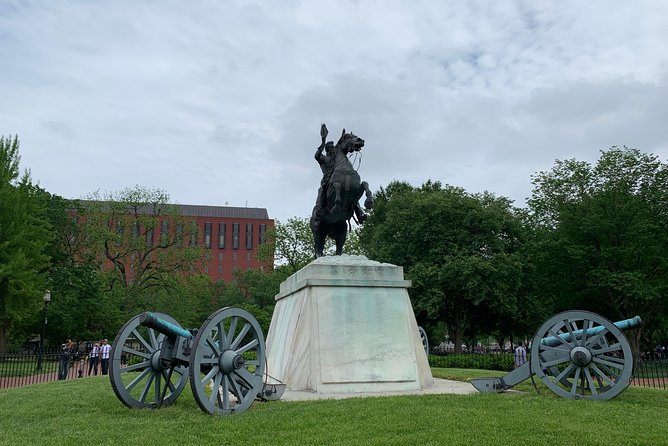
- Lafayette Square: starting beside the White House
- Decatur House and the slave pen
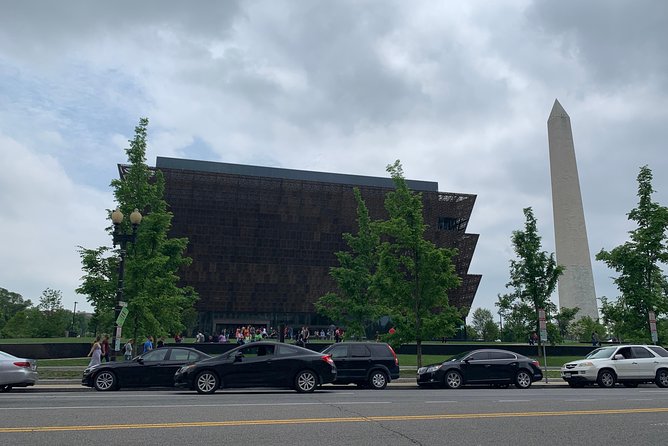
- The Washington Monument and the National Mall
- The C&O Canal lockhouse at Constitution and 17th
- Ending at the National Museum of African American History and Culture
- What the private format really adds
- Guide style and the role of visuals
- Price, pace, and practical value
- Who should choose this Washington walk?
- Should you book the History of Slavery Walking Tour?
- FAQ
- How long does the Washington DC History of Slavery Walking Tour last?
- Where does the tour begin?
- Where does the tour end?
- Is admission to the museum included?
- Is this a private tour?
- What happens if bad weather cancels the tour?
Key points to know before you book
- Five meaningful stops: Lafayette Square, Decatur House, the Washington Monument area, the C&O Canal lockhouse, and the National Museum of African American History and Culture.
- Private attention: Only your own group participates, creating room for questions and conversation.
- Academic guidance: Dr. Koura and Dr. Gibson are associated with the experience and bring a teaching-focused approach to the subject.
- Outdoor storytelling: The tour examines sites from the street and does not include admission to the museum or other buildings.
- Easy route planning: Begin at Lafayette Square and finish near the southeast corner of the African American History and Culture Museum, close to 15th Street.
- A short but active hour: The pace is manageable for most participants, yet you will cover enough ground to want good walking shoes.
Why this walk changes the way you see Washington
I find Washington easiest to understand when you stop treating its monuments as isolated photo opportunities. The city’s avenues, squares, houses, canals, and government buildings are all part of a longer story, including forced labor, Black resistance, public service, business, education, and cultural influence.
That is the purpose of this experience. It does not attempt to cover every chapter of African American history in the capital. Instead, it uses a handful of central locations to show how slavery and Black life were tied to the development of the Federal City.
The subject is serious, but the teaching style is not described as stiff or purely lecture-based. Dr. Koura is praised for using questions, small quizzes, stories, and a personable manner to keep families and teenagers involved. That matters here. A talk about slavery can become a list of dates and names unless the guide helps you connect those details to the pavement beneath your feet.
You may also receive photographs and other visuals by text message during the walk. This is useful because many of the locations do not look dramatically different from an ordinary downtown streetscape. The images help put historical people back into the story, giving you something concrete to remember after the tour ends.
More history tours in Washington DC:
- Guided African American History Tour with Reserved Museum Entry
★ 4.5 · 1,180 reviews - DC Monuments & History Guided E-Cart Tour-Blankets
★ 4.5 · 450 reviews - Smithsonian Museum of Natural History – Exclusive Guided Tour
★ 5.0 · 446 reviews
Lafayette Square: starting beside the White House
The meeting point is Lafayette Square, at Pennsylvania Avenue and 16th Street Northwest. This is a practical place to begin because it is central, near public transportation, and surrounded by the symbols of national power.
The first ten minutes focus on slavery at this location. The value is not simply seeing a park. It is learning how slavery existed beside the institutions that presented the United States as a republic built on liberty. That contrast gives the tour its central tension from the first stop.
Lafayette Square can be busy with people crossing, taking photographs, and visiting the area around the White House. Your guide’s job is to make this polished public space feel connected to people whose lives are often left out of the standard monument story.
Because this is an outdoor stop, you should listen closely and use the surrounding buildings as visual reference points. There is no admission charge, and you do not enter the White House or another historic property here.
Decatur House and the slave pen
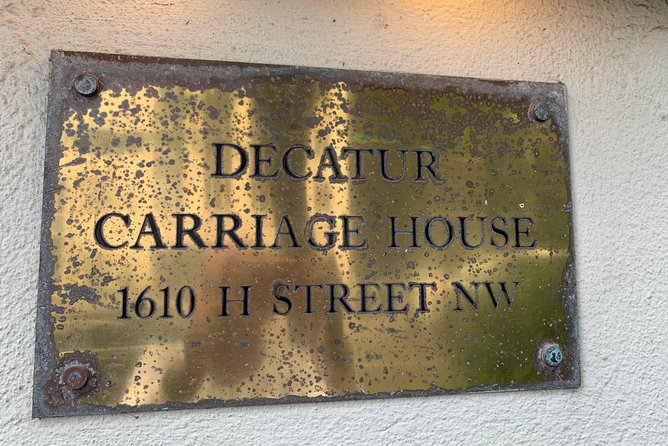
The next ten-minute stop is Decatur House, where the tour examines the slave pen. This is one of the most direct physical reminders of slavery on the route.
A slave pen was a place where enslaved people were held before sale or transfer. At Decatur House, the subject becomes especially stark because the site is close to the center of political and social life in Washington. You are not being asked to picture slavery as something distant or confined to another part of the country. The stop places it within the capital itself.
You should expect an explanation from outside rather than an interior tour. That is an important limitation. The stop is short, and you may wish you had more time to absorb the details, especially if you are new to the subject.
Still, this is the kind of location that makes the walk worthwhile. A textbook can tell you that slavery shaped Washington. Standing at a specific site helps you understand the city’s physical connection to that system.
The Washington Monument and the National Mall
The route continues to the National Mall for a brief stop near the Washington Monument. The monument itself is familiar to nearly everyone who visits Washington, but the tour asks you to consider the Mall through a different lens.
The National Mall is filled with national symbols, memorials, and open views. It can also be difficult to interpret because there is so much to see. A guide who connects the space to African American lives and contributions can help you notice relationships that a quick photograph will miss.
This is also the point where the amount of walking becomes more apparent. One participant described the route as a pleasant way to get plenty of steps, while another felt that there was a lot of walking and not enough to see. Both reactions are useful. You should book this for the connection between sites and the guide’s interpretation, not because every few minutes brings a new building entrance or exhibit.
The Washington Monument stop is free and brief. Give yourself permission to keep looking after the guide moves on. The Mall rewards a slower eye, even when the official stop lasts only about ten minutes.
More walking tours in Washington DC:
- Arlington National Cemetery Walking Tour & Changing of the Guards
★ 5.0 · 2,566 reviews - Ghosts of Georgetown & The Exorcist Steps Walking Tour
★ 5.0 · 610 reviews - Georgetown Foodie Culinary Tour & Neighborhood Walk
★ 5.0 · 437 reviews - Gastronomic Georgetown Walking Food Tour
★ 4.5 · 373 reviews
The C&O Canal lockhouse at Constitution and 17th
At Constitution Avenue and 17th Street, the tour pauses at the lockhouse connected with the C&O Canal. This stop broadens the story beyond government buildings and grand avenues.
Canals depended on labor, commerce, transport, and workers whose efforts could be easy to overlook when you see only the finished city. The lockhouse offers a more ordinary, workaday setting than Lafayette Square or the National Mall. That change is helpful. It reminds you that Washington’s past was also built through movement, service, maintenance, and physical work.
Again, this is an outdoor stop with no admission fee. The guide supplies the meaning, so the experience depends heavily on the quality of the explanation and your willingness to picture the earlier city.
I would pay attention to how this location fits the broader route. The walk is not just a series of famous landmarks. It moves from the political center to places that reveal how people lived and worked around it.
Ending at the National Museum of African American History and Culture
The final stop is outside the National Museum of African American History and Culture at 1400 Constitution Avenue Northwest. The tour ends on the southeast corner near 15th Street.
The building’s exterior architecture is the focus here. You do not receive museum admission as part of the walk, so plan a separate visit if you want to explore the galleries. That separation can be useful. The walking tour gives you a short introduction to the city’s slavery and Black history, while the museum can provide a much longer visit on your own schedule.
Ending here also gives the route a clear shape. You begin with slavery near Lafayette Square and finish beside a national institution devoted to African American history and culture. The final setting points toward survival, achievement, memory, and public recognition without pretending that the earlier injustice can be set aside.
If you already plan to visit the museum, this walk can give you extra context before you go. If your schedule is tight, at least note the ending point so you can return later.
What the private format really adds
The private setup is one of the strongest reasons to choose this experience. Only your group participates, so you are not trying to hear a guide over a crowd or waiting for a dozen strangers to finish taking photographs.
A private walk also gives you a better chance to ask about family connections, local history, language, or a particular person mentioned during the tour. The guide’s use of questions and quizzes works especially well with families. Parents who want their teenagers to engage with Washington beyond the usual monument checklist may find this format particularly useful.
The tradeoff is that private does not mean long. The listed duration is about one hour, and the five-stop route leaves limited time for extended discussion at each location. If your group likes a slow pace or asks many questions, you may feel that the hour passes quickly.
That short length can still be an advantage on a crowded DC schedule. You can fit the walk between other sights without giving up half a day. Just do not expect a full museum-style treatment of slavery in Washington.
Guide style and the role of visuals
The guide makes or breaks a subject like this. The strongest descriptions of the experience point to Dr. Koura’s teaching skill, warmth, energy, and command of both Washington history and African American contributions. Dr. Gibson is also named in the tour information and associated comments.
The emphasis is not limited to famous figures. The stated aim is to introduce lesser-known people and overlooked chapters, which helps correct the usual monument-first version of Washington. You may hear about individuals whose names never appeared in your school lessons, along with the broader influence of African and African American culture on the capital.
The phone visuals are a practical tool. Expect images of people and historical material sent during the walk. They can make an outdoor explanation easier to follow and give you a record of the individuals discussed.
There is a possible downside. If you prefer a tour with frequent building entries, artifacts, or large physical displays, the phone images may feel thin. One middling assessment specifically found more pictures and discussion than things to see. I would treat that as a fair warning rather than a fatal flaw. The product is interpretation, not a chain of indoor attractions.
Price, pace, and practical value
The cost is $40 per person, with fees and taxes included. Private tours often cost more than large group walks, but here the price buys personal attention rather than admissions or transportation.
I think the value is strongest for a small group that wants a focused introduction and may ask questions along the way. A family of four, a couple interested in Washington’s less familiar stories, or friends visiting for a first trip can get more from the guide than from a generic monument stroll.
The value is weaker if you are mainly looking for interiors, extensive artifacts, or a long route. Every listed stop is free, and private transportation is not included. You must get yourself to Lafayette Square and make your own way afterward.
The walk is offered in English, and confirmation arrives when you book. Most people can participate, service animals are allowed, and the route is near public transportation. The practical advice is simple: wear supportive shoes, allow enough time to reach the starting point, and be ready to spend the hour outdoors.
The tour requires good weather. You can cancel for a full refund up to 24 hours before the start time. If poor weather forces cancellation, you are offered another date or a full refund. Changes or cancellations made within 24 hours are not refunded, so check the forecast before the cutoff.
Who should choose this Washington walk?
I would recommend it to you if you want more than the standard story of presidents, wars, and memorials. It is especially suited to families, since the guide’s questions and quizzes can keep younger participants involved. It also fits couples and friends who prefer an intimate conversation to a large public group.
You do not need to be a specialist. The point is to learn, ask questions, and see familiar parts of Washington with added context. The tone appears welcoming to first-time visitors and even to people who grew up in the DC area but still have gaps in their understanding of the city.
You may want a different option if you dislike walking, need extensive indoor access, or have only a few minutes at each stop. The route is short in clock time but active on foot. One hour is enough for an introduction, not enough for every story the city holds.
Should you book the History of Slavery Walking Tour?
Book it if you want a serious, personal lesson woven through central Washington, and if you value a guide who teaches rather than simply points at monuments. The private format, academic approach, and focus on overlooked African American stories give this walk a clear purpose.
Go in with the right expectations. You will not enter the museum, use private transport, or see a display at every stop. You will walk outdoors, look at familiar places, receive phone-based visuals, and rely on Dr. Koura or Dr. Gibson to connect those places to slavery and Black life in the capital.
At $40, it is a fair choice for a compact private introduction, especially before a separate visit to the National Museum of African American History and Culture. Wear good shoes, arrive ready to listen, and book this because you want context, not just another set of monument photographs.
FAQ
How long does the Washington DC History of Slavery Walking Tour last?
The tour lasts approximately one hour.
Where does the tour begin?
It begins at Lafayette Square, at Pennsylvania Avenue Northwest and 16th Street Northwest in Washington, DC.
Where does the tour end?
It ends at the National Museum of African American History and Culture, on the southeast corner near 15th Street.
Is admission to the museum included?
No. The tour includes an explanation of the museum’s exterior architecture, but museum admission is not included.
Is this a private tour?
Yes. Only your group participates in this private activity.
What happens if bad weather cancels the tour?
You will be offered a different date or a full refund if the experience is canceled because of poor weather.
Recently added around Washington DC
- Small Group Washington DC Night Tour★ 4.5 · 3 reviews
- Washington DC Neighborhoods Personalized Self-Guided App Tour★ 3.5 · 3 reviews
- America’s Main Street and White House Private Full-Day Tour★ 5.0 · 3 reviews
- Beyond the Closet Walking Tour★ 5.0 · 3 reviews
- Pirate Ship Treasure Hunt Cruise with Face Painting★ 4.5 · 3 reviews
- Sushi Masterclass in Washington D.C. (Includes 4-Course Meal)★ 5.0 · 3 reviews
- Private Tour In different languages★ 5.0 · 3 reviews
- Private Washington DC Grand Tour with Changing of the Guard.★ 5.0 · 3 reviews
Historical Tours, compared.
Guided African American History Tour with Reserved Museum Entry
Read our review →
DC Monuments & History Guided E-Cart Tour-Blankets
Read our review →
African American History Tour with Museum of African American History Ticket
Read our review →
Historic Georgetown: History, Gossip, & Architecture Walking Tour
Read our review →

Smithsonian Museum of American History Exclusive Guided Tour
Read our review →
Tastes of Georgetown Food & History Small Group Walking Tour
Read our review →
Small-Group History Tour Pub Crawl of Washington, D.C.
Read our review →Browse the lists this tour appears in