
Reviewed · GEORGETOWN
The History of Black Georgetown
Georgetown is often presented through grand homes, presidents, and polished streets. This tour turns your attention to the Black community that built, lived in, and shaped the neighborhood, from the old port and slave trade to churches, schools, political gatherings, and burial grounds.
I like the route’s range. You see Georgetown University’s Healy Hall, a former alley community, a site tied to enslaved people, Mount Zion Church, and two historic cemeteries. I also like the small-group format and the mid-tour break at Thomas Sweet. The main consideration is physical: you will walk for two to two and a half hours, and much of the value comes from listening closely rather than simply checking off sights.
- Patrick Healy’s Healy Hall: Learn how Georgetown University’s only Black president shaped one of its best-known buildings.
- Former Bell’s Court: See how an alley community reflected the close social networks of Black Washington.
- Slave holding pens on O Street: Confront a difficult part of Georgetown’s commercial past.
- Mount Zion United Methodist Church: Visit one of Georgetown’s oldest Black congregations.
- Rose Park and its cemeteries: Connect political life, community gatherings, worship, and remembrance.
- A personal route with Katie: The private format and small maximum group size allow room for questions and conversation.
In This Review
- Georgetown Beyond the Presidents and Congresspeople
- Healy Hall and Patrick Healy’s Complicated Legacy
- Bell’s Court and the Life of an Alley Community
- Thomas Sweet Gives the Route a Useful Pause
- The O Street Row Houses and Georgetown’s Slave Trade
- Emma Brown and the Story of Black Education
- Mount Zion Church and Georgetown’s Black Congregation
- Rose Park and Public Life in Black Georgetown
- Mount Zion Cemetery and the Female Union Band Society Cemetery
- What the Two-Hour Format Gives You
- Is $30 a Fair Price?
- Who Should Book This Georgetown Walk?
- Booking, Weather, and Cancellation Advice
- Should You Book the History of Black Georgetown?
- FAQ
- How long does the History of Black Georgetown tour last?
- Where does the tour begin?
- Where does the tour end?
- What language is the tour offered in?
- How much does the tour cost?
- Is the tour private?
- Is a refreshment included?
- Can I cancel for a refund?
Georgetown Beyond the Presidents and Congresspeople
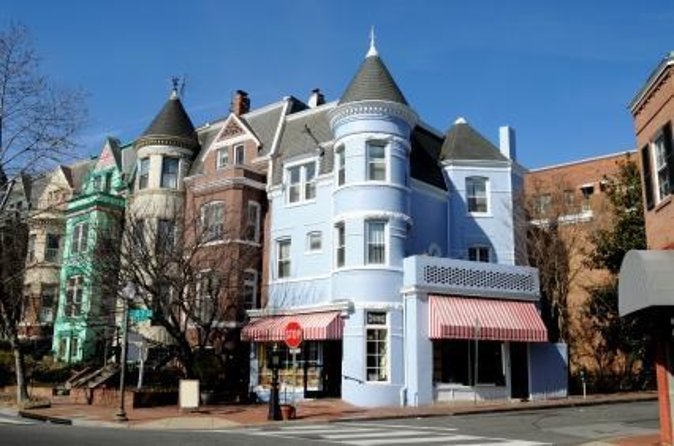
The most useful thing about this tour is its change of focus. Georgetown can look like a preserved parade of Federal-era houses and fashionable shops, but its story also includes enslaved people, free Black residents, teachers, ministers, business owners, students, and neighborhood organizers.
You begin at 3206 O Street NW, close to Healy Hall. From there, the route moves through streets and small public spaces rather than staying on one grand avenue. That matters because Black Georgetown is not presented as one isolated landmark. Its story appears in university buildings, row houses, alleys, churches, parks, and cemeteries.
Guide Katie leads the experience in English. Her style, based on the information available about the tour, is personable and well paced, with room for extra details and questions. That is especially useful here because the subject has many layers. You are not just memorizing dates. You are working out how institutions, neighborhoods, and families fit together.
The tour is described as private, with a maximum of 20 people. Before booking, I would confirm exactly how the private arrangement applies to your date, since a maximum group size does not necessarily mean every departure is exclusive to your party. Either way, a smaller group should make it easier to hear and ask about subjects that deserve care.
Healy Hall and Patrick Healy’s Complicated Legacy
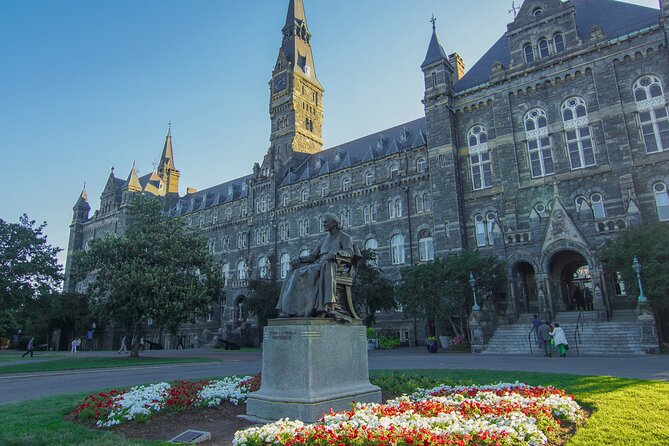
The first stop is Gothic-style Healy Hall, built under the direction of Patrick Healy and named for him. Healy was Georgetown University’s only Black president, making the building an important entry point into the university’s place in Black Georgetown.
This stop offers more than an attractive architectural photograph. It puts a Black leader at the center of an institution often read only through its Catholic and academic history. The building itself is familiar to many people who know Georgetown, but the story behind its name changes how you see it.
I like beginning here because the tour does not treat Black history as something found only at the edge of the neighborhood. It starts with a major institution and asks you to consider leadership, education, identity, and public memory.
You will spend about 10 minutes at the stop, with free admission. Since this is a walking tour, the building is viewed from the route rather than treated as a separate museum visit. If you want a long interior exploration of Georgetown University, this tour is not designed for that.
More Georgetown tours:
- Ghosts of Georgetown & The Exorcist Steps Walking Tour
★ 5.0 · 610 reviews - Georgetown Foodie Culinary Tour & Neighborhood Walk
★ 5.0 · 437 reviews - Gastronomic Georgetown Walking Food Tour
★ 4.5 · 373 reviews
Bell’s Court and the Life of an Alley Community
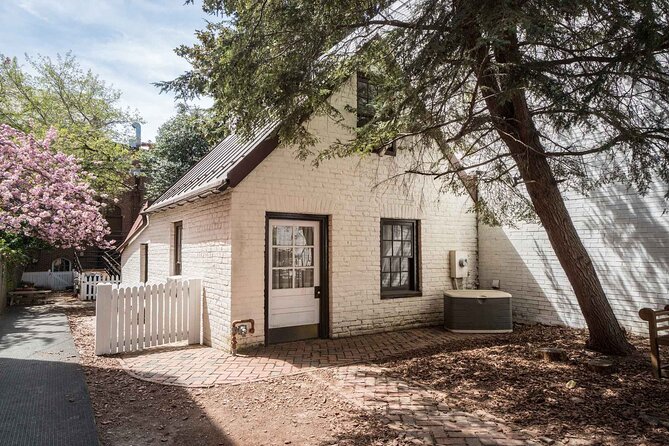
The route continues to Pomander Walk Northwest, formerly known as Bell’s Court. The court was owned by Alexander Graham Bell and was characteristic of the alley communities found throughout Washington, DC.
That detail is easy to miss if you walk through Georgetown on your own. The city’s alleys were not just service lanes behind better-known houses. They could be close-knit Black communities, with their own social ties and daily rhythms. A stop here helps you read the built environment differently.
The physical setting is also a reminder that neighborhoods change names and uses over time. Pomander Walk may sound quaint today, while Bell’s Court points to an earlier period and a different social arrangement. The tour uses that contrast to connect a quiet corner of Georgetown with the people who once lived there.
Again, the stop lasts about 10 minutes. You will want comfortable shoes and a willingness to look carefully at ordinary spaces. The route’s strength is not a dramatic monument at every turn. It is the way the guide gives meaning to places you could otherwise pass without a second thought.
Thomas Sweet Gives the Route a Useful Pause
About halfway through, you stop at Thomas Sweet for a refreshment and restroom break. Coffee and tea are not included, so plan to pay for anything you order.
This is a practical feature, not filler. Two hours of walking and concentrated historical discussion can be tiring, especially if you are visiting Washington in warm weather. The break gives you a chance to sit briefly, use the restroom, and continue the conversation informally.
The stop also helps the pace. A tour that discusses slavery, segregation, community life, and institutional history benefits from a moment to reset. You are not rushed from one serious subject to another without breathing room.
Do not treat this as a full meal stop. The listed experience includes time for refreshment, not food. If you need lunch or a substantial snack, eat before the tour or plan it afterward.
The O Street Row Houses and Georgetown’s Slave Trade
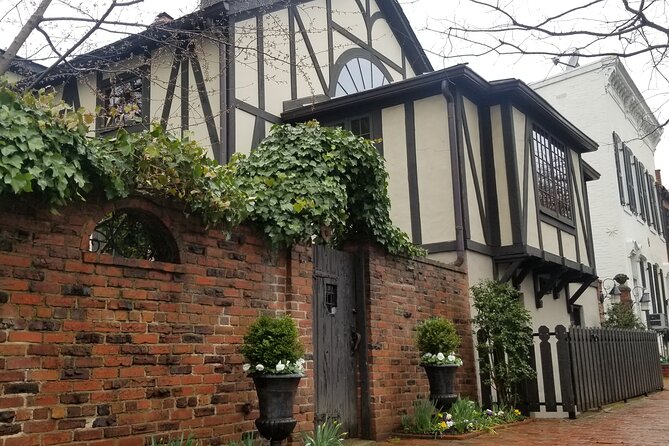
One of the hardest stops is at 3146 O Street NW. The row houses there once served as holding pens for enslaved people. The pens were later torn down by an Irish entrepreneur who had spent childhood as an indentured servant in the West Indies.
This is where the tour places Georgetown’s role in the slave trade directly in front of you. It is one thing to read that enslaved people were bought, sold, and held in the city. It is another to stand on a residential street and learn that buildings at this address were connected to that system.
The story also carries a complicated contrast between different forms of unfree labor. The person who removed the pens had experienced indentured servitude, yet the site was tied to the confinement of enslaved people. That does not erase the difference between those systems, but it gives the guide an opening to discuss how labor, race, commerce, and power operated in the wider Atlantic world.
This stop may feel brief at about 10 minutes, but the subject is not small. Give yourself time to absorb it. Georgetown’s attractive streets can soften the past if you let them. This part of the walk restores some of the moral weight that polished architecture can hide.
More history tours in Washington DC:
- Guided African American History Tour with Reserved Museum Entry
★ 4.5 · 1,180 reviews - DC Monuments & History Guided E-Cart Tour-Blankets
★ 4.5 · 450 reviews - Smithsonian Museum of Natural History – Exclusive Guided Tour
★ 5.0 · 446 reviews - African American History Tour with Museum of African American History Ticket
★ 4.5 · 390 reviews
Emma Brown and the Story of Black Education
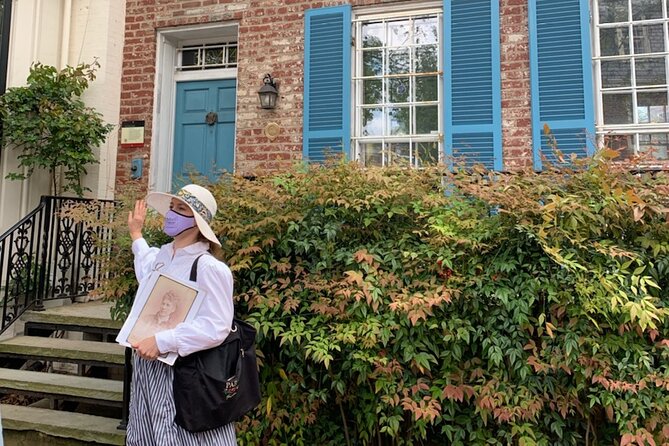
The route also passes the house of Emma Brown, one of the first Black teachers in Washington, DC, to reach the level of principal. The information provided does not assign a formal stop time, so this appears to be a shorter point along the route.
That makes it valuable as a personal story within the larger tour. Education is often discussed through institutions, but Emma Brown’s position brings the subject down to one person’s achievement and professional life. Her story helps you think about who taught Black children, who held authority in schools, and how much effort was required to reach a leadership role.
If you enjoy tours that connect national themes to individual lives, pay close attention here. Small biographical details often stay with you longer than broad statements. Ask Katie for more context if time allows, since the available description gives only the essential outline of Brown’s role.
Mount Zion Church and Georgetown’s Black Congregation
At 1332 29th Street NW, you reach Mount Zion United Methodist Church, one of Georgetown’s oldest Black congregations. The church brings together worship, community organization, and continuity.
A congregation is more than a building. It can be a place where people gathered for worship, mutual support, education, political discussion, and mourning. That wider role is central to understanding how Black communities maintained social life in a city shaped by racial restrictions and unequal power.
This stop lasts about 10 minutes. You should not expect a long church service or an extensive interior visit based on the information provided. Instead, the focus is the congregation’s place in Georgetown and the wider Black Washington story.
I find church stops most useful when the guide explains how a congregation served its neighborhood. Here, Mount Zion helps connect the earlier stories of slavery and alley communities with later efforts to build durable institutions.
Rose Park and Public Life in Black Georgetown
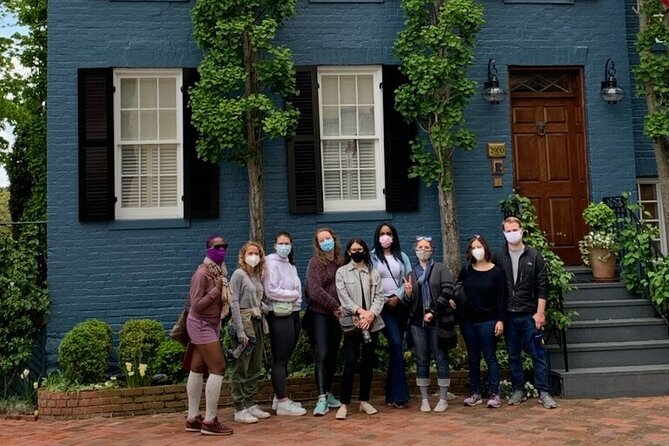
Rose Park was the site of political rallies and community gatherings for Georgetown’s Black community. The park may look like a simple green space, but its importance comes from what happened there.
Public gathering places matter because political life does not happen only in government buildings. Rallies and community meetings give residents a way to organize, express demands, share news, and build support. Rose Park lets you picture Black Georgetown as an active community with its own public voice.
The stop lasts around 10 minutes. You will likely appreciate the change of setting after the denser street stops, though the park itself is not presented as a major monument with a large visitor center or display. Its meaning comes through the guide’s explanation.
This is also a good point to consider the tour’s broader method. The route does not rely only on famous figures. It includes the places where ordinary residents gathered. That creates a fuller picture of how a neighborhood works.
Mount Zion Cemetery and the Female Union Band Society Cemetery
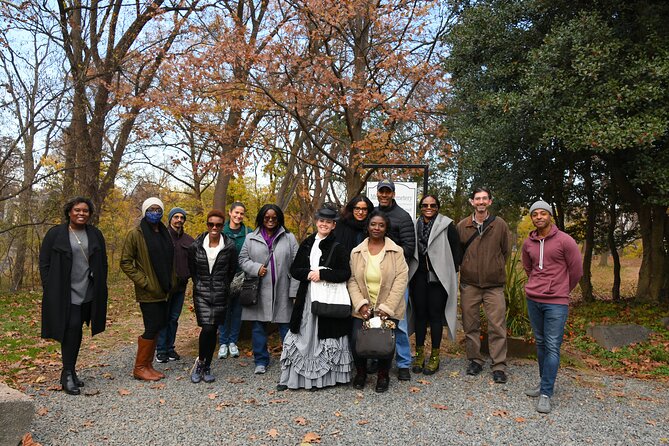
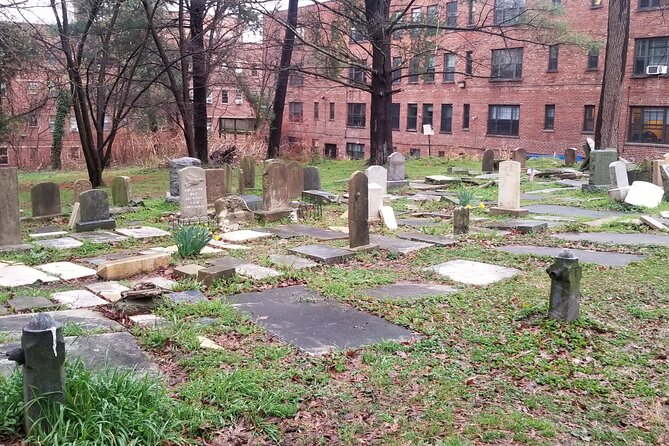
The tour ends at Mount Zion and Female Union Band Society Cemeteries, at 2501 Mill Road NW. Together, they form the oldest cemetery site in Georgetown and contain the remains of enslaved and free Black citizens.
Ending here gives the walk a quiet, serious finish. After hearing about labor, education, worship, and politics, you arrive at a place of remembrance. The cemeteries connect people who lived under very different conditions, including those who were enslaved and those who were free.
The site also asks you to think about whose lives receive public attention. A cemetery can preserve names and relationships that are not always visible in the more polished version of Georgetown. It is a fitting final stop because it shifts the focus from buildings and institutions to the people themselves.
The cemetery visit is listed as about 10 minutes. That may not be enough for a detailed genealogy tour or a slow survey of every grave. Still, as the endpoint of a two-hour route, it gives the experience a clear emotional and historical shape.
You finish here rather than returning to the starting point. That affects your planning. The end point is on Mill Road NW, so check your next destination before you begin, especially if you have dinner reservations or another timed activity.
What the Two-Hour Format Gives You
The advertised duration is approximately two hours to two and a half hours. That is long enough to cover seven main locations without turning the walk into an all-day commitment.
The pace appears to balance explanation and movement. Most formal stops last about 10 minutes, with a 15-minute break at Thomas Sweet. The route includes several nearby Georgetown locations, but you should still expect regular walking and periods of standing.
A moderate level of physical fitness is recommended. Service animals are allowed, and the tour is near public transportation. Weather matters: the experience requires good conditions, and a poor-weather cancellation may lead to another date or a full refund.
I would wear supportive shoes, bring water, and allow extra time before the start. Washington walking tours can feel easy at the beginning and more demanding later, particularly in heat or humidity. The refreshment stop helps, but it does not replace sensible planning.
Is $30 a Fair Price?
At $30 per person, the cost is reasonable for a guided experience lasting more than two hours, especially if the group remains small. You are paying for interpretation and access to a connected story, not admission to a series of paid attractions. The stops themselves have no admission charge.
The value rises if you have already seen the National Mall and want a focused neighborhood experience. It also works well for returning visitors to Washington who want something beyond the standard monuments. One local participant still learned new information, which suggests the route can offer more than an introductory overview.
The price may feel less useful if you prefer to walk independently with a guidebook, or if you want extensive interior access to buildings. This is a discussion-led route through public streets and sites. Its success depends heavily on the guide’s ability to explain context and answer questions.
The tour has a five-star rating from 27 reviews, with 100 percent recommending it. Those figures indicate strong satisfaction, but I would judge the experience by your interests. If Black history, local community life, and overlooked urban stories appeal to you, $30 buys a focused two-hour lesson in place. If you only want landmark photos, choose another activity.
Who Should Book This Georgetown Walk?
I would recommend it to first-time visitors who want to see Washington beyond the usual federal monuments. It is also a smart choice for repeat visitors, local residents, history lovers, teachers, students, and anyone bringing a friend who has already seen much of central DC.
The tour suits people who like questions without easy answers. Georgetown’s past includes achievement and oppression, institutional power and community strength, elegant architecture and commercial exploitation. You will get more from it if you are ready to hold those contrasts together.
It may not suit young children who need constant visual action, though the private format can make it easier to adjust the pace. The duration and subject matter also require attention. If you want a light sightseeing stroll, this is not the right pick.
The experience is offered in English. Because the tour has a maximum of 20 people and is described as private, it can be a good option for families or small groups that want a more personal discussion. Confirm the exact group arrangement when booking.
Booking, Weather, and Cancellation Advice
You receive confirmation at the time of booking, and the tour is often reserved well ahead of the date, with an average booking lead time of 47 days. That makes early planning sensible if your Washington schedule is fixed.
Free cancellation is available up to 24 hours before the start time for a full refund. Changes or cancellations made less than 24 hours ahead are not accepted for a refund.
The tour can be canceled if weather is poor or if the minimum number of participants is not reached. In either case, you are offered another date or experience, or a full refund. Since this is an outdoor walk, check the forecast and keep a little flexibility in your itinerary.
Should You Book the History of Black Georgetown?
Book this tour if you want to understand Georgetown as a lived community rather than simply admire its houses. The strongest parts are the direct discussion of the slave trade, the stories of Black institutions such as Mount Zion Church, and the way Rose Park and the cemeteries reveal community life beyond famous names.
I especially like the route for repeat Washington visitors. You will pass familiar landmarks, but the guide gives them a different frame, from Patrick Healy’s university leadership to the working communities once found in Georgetown’s alleys. Katie’s personable pacing also makes the private or small-group format useful for questions.
Skip it if you dislike walking, outdoor touring, or serious historical subjects. For everyone else, $30 is a fair price for a focused, human-scale look at a part of Washington that many standard tours leave out.
FAQ
How long does the History of Black Georgetown tour last?
The tour lasts approximately two hours to two hours and 30 minutes.
Where does the tour begin?
The tour begins at 3206 O Street NW, Washington, DC 20007.
Where does the tour end?
The tour ends at Mount Zion and Female Union Band Society Cemeteries, 2501 Mill Road NW, Washington, DC 20007.
What language is the tour offered in?
The tour is offered in English.
How much does the tour cost?
The listed price is $30 per person.
Is the tour private?
The experience is described as a private tour and has a maximum of 20 travelers. Confirm the exact private arrangement for your booking.
Is a refreshment included?
No. The tour stops at Thomas Sweet for a refreshment and restroom break, but coffee and tea are not included in the price.
Can I cancel for a refund?
Yes. You can cancel at least 24 hours before the start time for a full refund. Cancellations or changes made less than 24 hours before the experience are not refunded or accepted.
Recently added around Washington DC
- Small Group Washington DC Night Tour★ 4.5 · 3 reviews
- Washington DC Neighborhoods Personalized Self-Guided App Tour★ 3.5 · 3 reviews
- America’s Main Street and White House Private Full-Day Tour★ 5.0 · 3 reviews
- Beyond the Closet Walking Tour★ 5.0 · 3 reviews
- Pirate Ship Treasure Hunt Cruise with Face Painting★ 4.5 · 3 reviews
- Sushi Masterclass in Washington D.C. (Includes 4-Course Meal)★ 5.0 · 3 reviews
- Private Washington DC Grand Tour with Changing of the Guard.★ 5.0 · 3 reviews
- 250th: National Archives & American History Museum Guided Tour★ 5.0 · 3 reviews
Georgetown, compared.
Ghosts of Georgetown & The Exorcist Steps Walking Tour
Read our review →
Georgetown Foodie Culinary Tour & Neighborhood Walk
Read our review →
Historic Georgetown: History, Gossip, & Architecture Walking Tour
Read our review →
Tastes of Georgetown Food & History Small Group Walking Tour
Read our review →
The Escape Game DC: 60-Minute Adventure in Georgetown
Read our review →
Browse the lists this tour appears in