
Reviewed · NATIONAL GALLERY OF ART
National Portrait Gallery & American Art Museum Guided Tour
The Old Patent Office Building is the first surprise here. Before you reach a single painting, you are walking through a grand Civil War-era building that served as a hospital, where Walt Whitman helped wounded soldiers. I like that the tour connects the building to the art inside, and I like the way it moves from presidential power to ordinary American life.
I also appreciate the focused two-and-a-half-hour format. You get a guided route through two large museums without trying to see every room. The possible drawback is simple: this is a highlights tour, not a slow, room-by-room study, and temporary exhibitions are not included. Guides Leigh and Bess have earned especially strong praise for clear explanations and thoughtful personal attention.
In This Review
- Key points to know
- Why the Old Patent Office Building matters
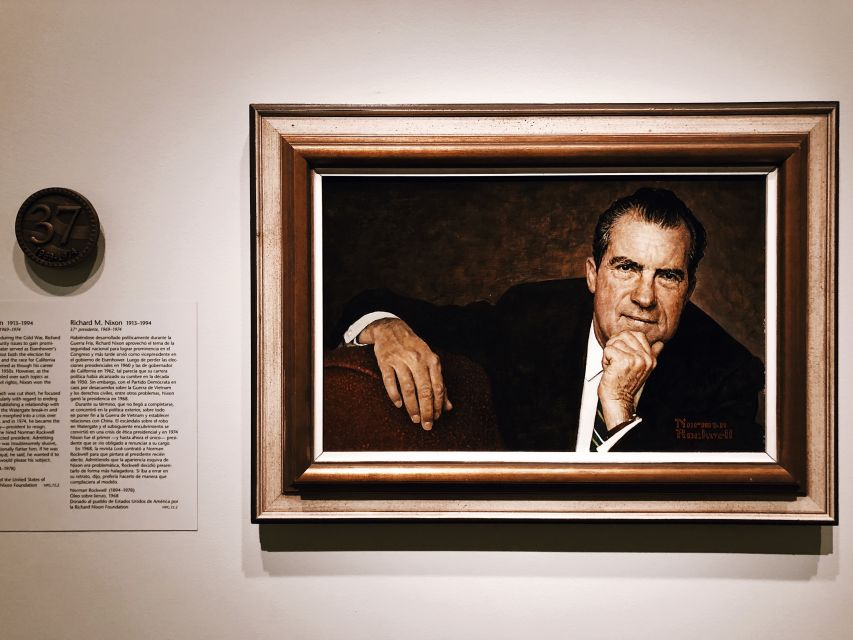
- Presidential portraits beyond the official pose
- From daguerreotypes to Robber Barons and Suffragettes
- The Greensboro Lunch Counter and the weight of objects
- Crossing into the American Art Museum
- WPA photographs and American life during hard times
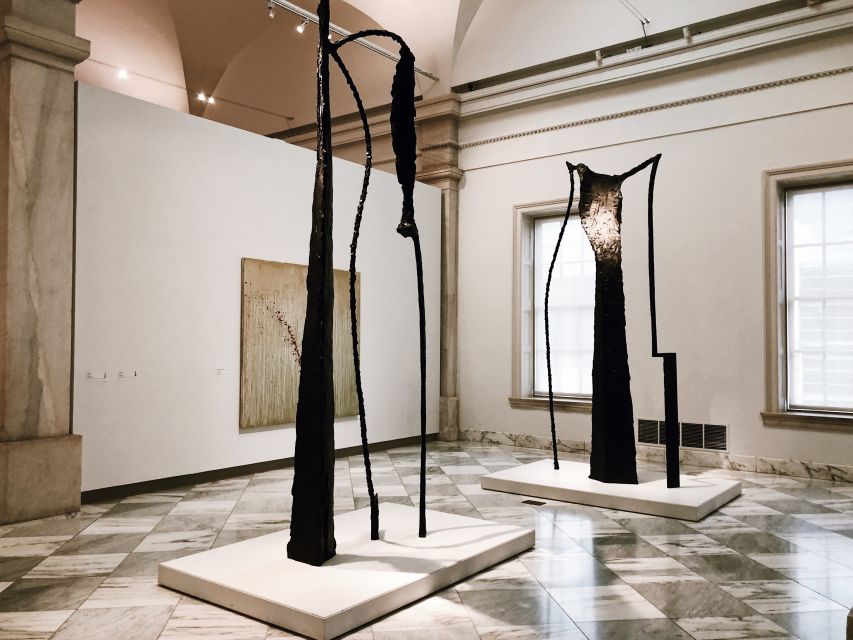
- Modern art that may leave you puzzled
- Is $86 a fair price for 2.5 hours?
- Who will enjoy this museum route most?
- Final call: book it for the connections
- FAQ
- How long does the National Portrait Gallery and American Art Museum tour last?
- What museums are included?
- Is the tour private or shared?
- What language is the tour offered in?
- Can I bring luggage or a large backpack?
- Is the tour wheelchair accessible?
Key points to know
- Walt Whitman’s Civil War connection: The building once served as a hospital where the poet aided injured soldiers.
- Presidential portraits with a human angle: The collection includes presidents, first ladies, and major political figures.
- A direct link to Civil Rights history: The Greensboro Lunch Counter gives the tour a powerful physical touch point.
- American art across several eras: You may see work by Mary Cassatt, Edward Hopper, David Hockney, and Georgia O’Keeffe.
- Guides who shape the experience: Leigh and Bess are named guides praised for clear, engaging tours and careful follow-up.
- Good for a first visit: The route helps you choose what deserves more of your own time later.
Why the Old Patent Office Building matters
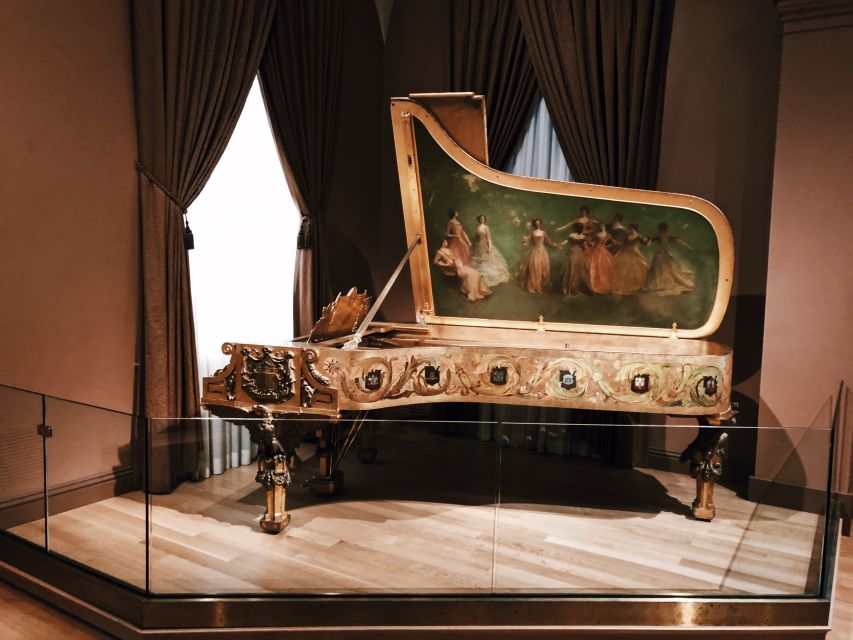
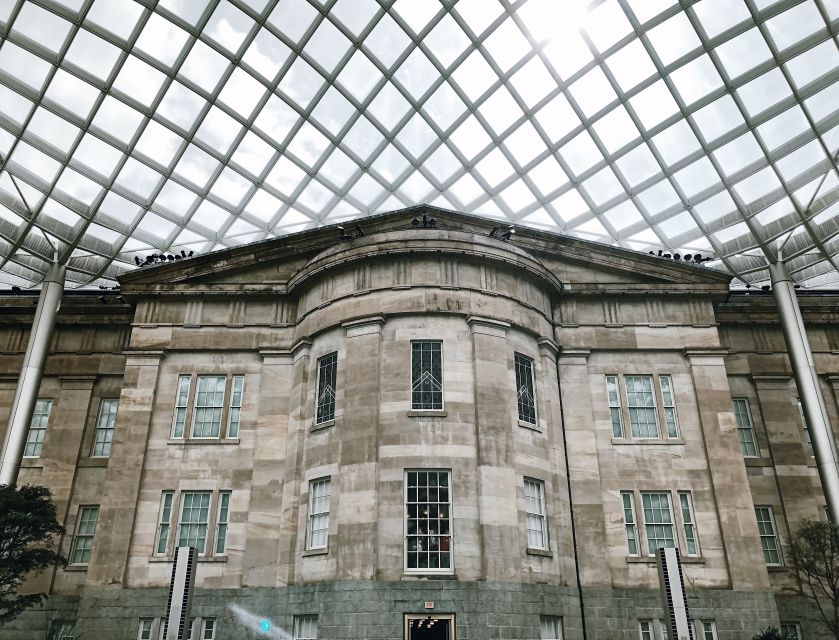
The tour begins in a place that has never been just a neutral box for art. The Old Patent Office Building has been tied to American invention, wartime care, and public culture. Art exhibitions have had a presence here since 1829, long before the building became the home of the National Portrait Gallery and the American Art Museum.
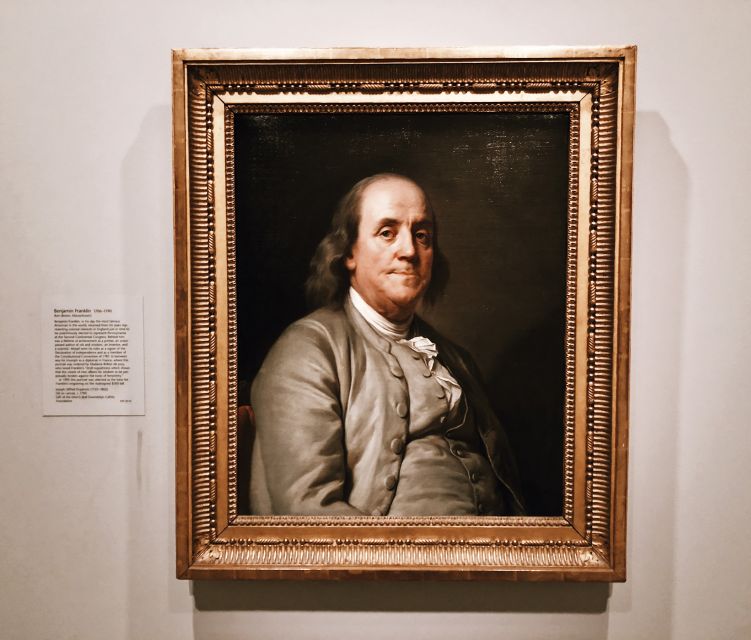
That background changes how you read the collections. You are not simply entering a museum filled with framed objects. You are entering a building that has moved through several chapters of American life. During the Civil War, it served as a hospital, and Walt Whitman helped injured soldiers there. His portrait now hangs among thousands of other images, creating a neat connection between the place and the person.
I like this beginning because it gives the tour a clear question: how do Americans choose to remember themselves? The National Portrait Gallery answers through faces and biographies. The American Art Museum answers through paintings, photographs, and changing ideas about daily life.
The building itself can also be tiring. It is large, and a moderate amount of walking is involved. The guide helps you use your time well, but you should wear comfortable shoes and expect to remain on your feet for much of the 2 to 2.5 hours.
More National Gallery of Art tours:
- The National Gallery of Art DC – Exclusive Guided Museum Tour
★ 5.0 · 166 reviews - DC National Gallery of Art Guided Tour Semi-Private 8ppl Max
★ 5.0 · 85 reviews - Curated Tour – National Gallery of Art with French Art Historian
★ 5.0 · 31 reviews
Presidential portraits beyond the official pose
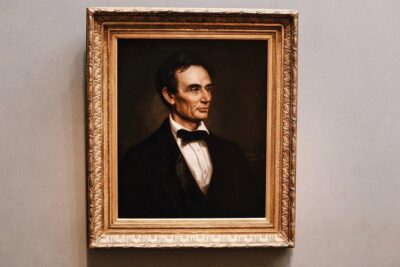
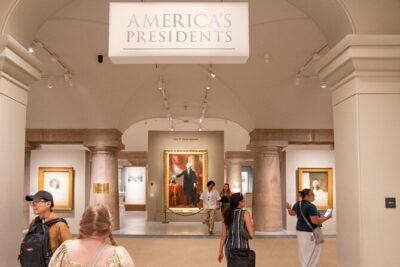
The National Portrait Gallery is best known for its collection of presidents and first ladies, but the real value comes from seeing political figures as people rather than as names in a textbook. A portrait can show how a leader wanted to be remembered, how an era viewed power, and how public taste changed over time.
The presidential collection gives the tour an easy starting point. You may recognize the subjects quickly, but the guide helps you look at the choices around them: clothing, setting, posture, expression, and symbols of office. Those details can reveal more than a short biography.
The collection also reaches beyond presidents. Major Civil War leaders such as Ulysses S. Grant and William T. Sherman appear alongside other figures who helped shape the nation. This gives the gallery a wider frame. American history is not told only through elected officials. Military leaders, reformers, artists, activists, and public figures also enter the national memory.
I find this section especially useful if you are visiting Washington with family members or friends who do not normally seek out art museums. Portraits offer an easy way in. You can begin with a familiar face, then follow the guide into questions about power, conflict, public image, and memory.
The tour also introduces 19th-century daguerreotypes and early photographs. These images feel more immediate than many painted portraits, partly because of their age and partly because early photography carries a sense of technical wonder. You get a look at the period when photography began changing how Americans recorded themselves.
From daguerreotypes to Robber Barons and Suffragettes
The route through the Portrait Gallery does not stop with presidents. It moves into the social and economic forces that shaped the United States during the 19th and early 20th centuries.
The Robber Barons represent wealth, industry, and the concentration of economic power. The Suffragettes point in another direction, toward women organizing for political rights. Seen together, these subjects make the gallery more than a parade of famous faces. You begin to see competing versions of progress, one built around money and industry, another built around protest and expanded citizenship.
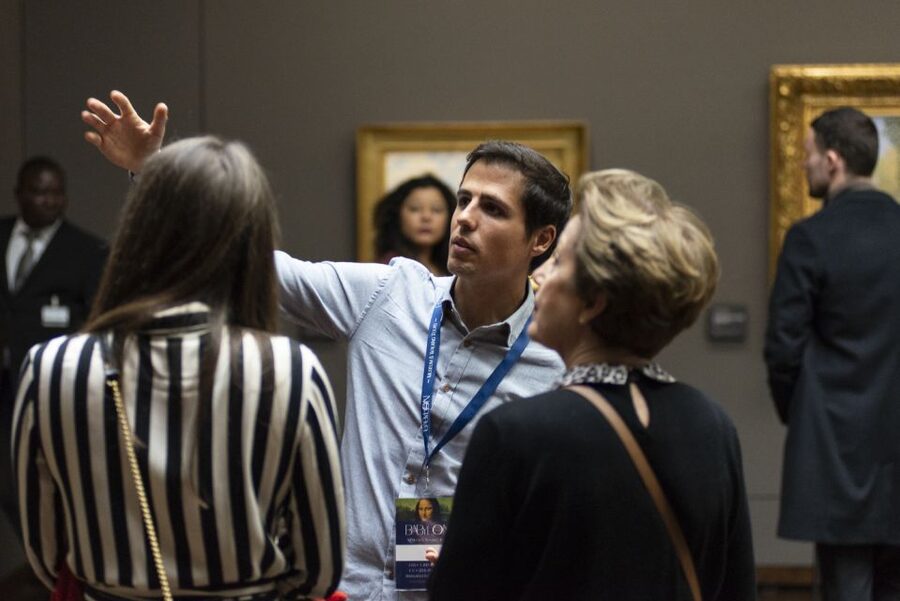
A guide can make a major difference here. The information is not hard to find in a book, but a good guide helps you connect one portrait to the next. Leigh is particularly praised for an articulate, interesting style and for quickly building a friendly connection with the group. Bess is also praised for strong preparation, clear guidance during the visit, and follow-up after the tour.
That personal touch matters in a portrait gallery. You may be looking at a face you have seen many times without ever asking why that particular image became famous. The guide can point out the mystery behind iconic works and help you notice details that a quick visit would miss.
Still, the pace has limits. If you want to spend twenty minutes with every photograph or read every label, this tour may feel brisk. The benefit is that you see the main story in a manageable block of time. The trade-off is that you will need to return on your own if one collection catches your attention.
The Greensboro Lunch Counter and the weight of objects
One of the most important stops is the Greensboro Lunch Counter. It is not simply an object connected to the Civil Rights Movement. It is a physical place where segregation, protest, and public action meet.
A lunch counter can look ordinary at first. That is exactly why it works so well in a museum. It connects major national events to a familiar setting, where people sat, ate, waited, and decided whether to accept an unjust system. The counter gives the tour a human scale and a direct link to the courage of people who challenged segregation.
I like this part because it breaks up the flow of portraits and paintings. You are not only looking at representations of history. You are standing before an object that carries the marks of a real struggle. The guide’s explanation helps place it in the wider Civil Rights story without reducing it to a quick symbolic stop.
Some museum rooms have quiet rules or limits on speaking. In those areas, your guide will explain the contents before you enter, then follow the room’s requirements. That can interrupt the usual rhythm, but it is useful to know in advance. You may need to listen before entering rather than expect a running talk beside every object.
More National Portrait Gallery tours:
- National Archives + National Portrait Gallery Tour 6ppl Max
★ 5.0 · 34 reviews - DC National Archives + National Portrait Gallery – Exclusive Tour
★ 5.0 · 27 reviews - DC Portrait Gallery & American Art Museum – Exclusive Guided Tour
★ 5.0 · 24 reviews - National Gallery of Art, American Art & Portrait Gallery Tour
★ 5.0 · 22 reviews
Crossing into the American Art Museum
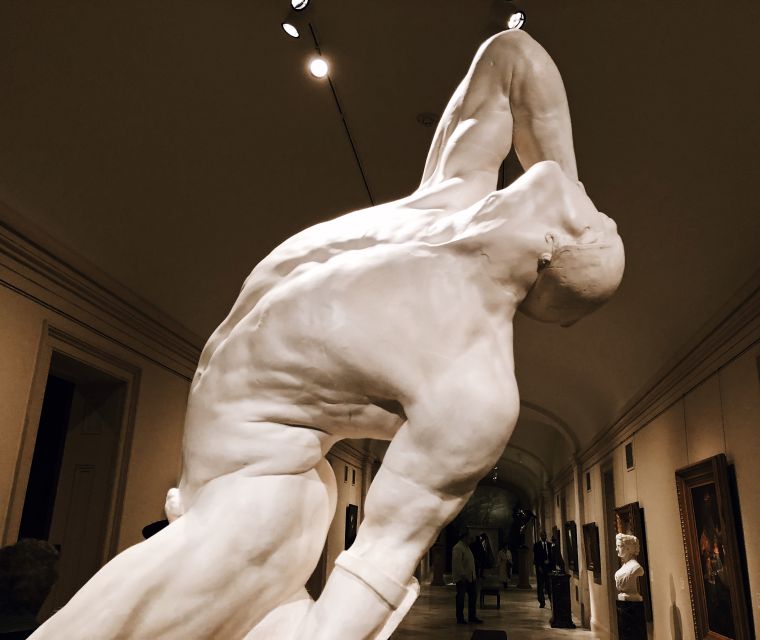
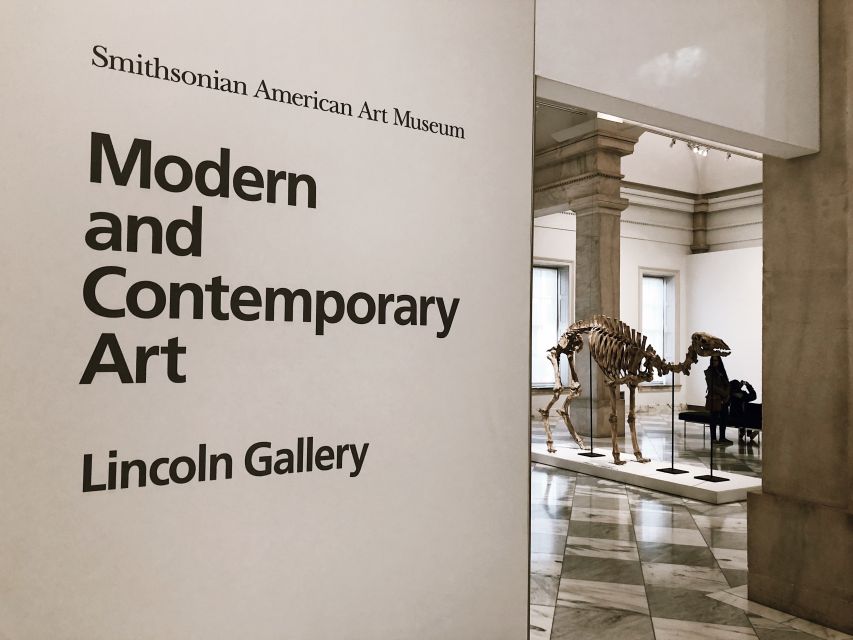
The second half shifts from people and public memory to the many ways American artists have pictured the country. This is where the tour broadens from formal portraiture to everyday life, emotion, place, labor, and private imagination.
Mary Cassatt offers a link to Impressionism and to the experience of an American artist working within a wider international art world. Edward Hopper brings a very different mood, with paintings that can make familiar scenes feel quiet, isolated, or slightly tense. David Hockney adds a more modern visual language, while Georgia O’Keeffe’s flowers bring scale, color, and a direct physical charge.
These names give you useful anchors. You do not need a long art education to enjoy the route. Cassatt, Hopper, Hockney, and O’Keeffe each provide a different way to talk about how an artist frames the world. The guide can help you compare them rather than treating each painting as a separate island.
Georgia O’Keeffe’s flowers are especially good for conversation because they are familiar subjects treated in an unfamiliar way. Their scale and form can feel intimate, bold, or provocative. You may not agree with every interpretation, but the works give the group something clear to discuss.
The portrait of former President Barack Obama adds another point of conversation. It is a modern image of a public figure, but it does not behave like a traditional presidential portrait. The contrast helps explain how official portraiture keeps changing. A president’s image can now be expected to say something about identity, personality, and the public’s changing ideas about leadership.
WPA photographs and American life during hard times
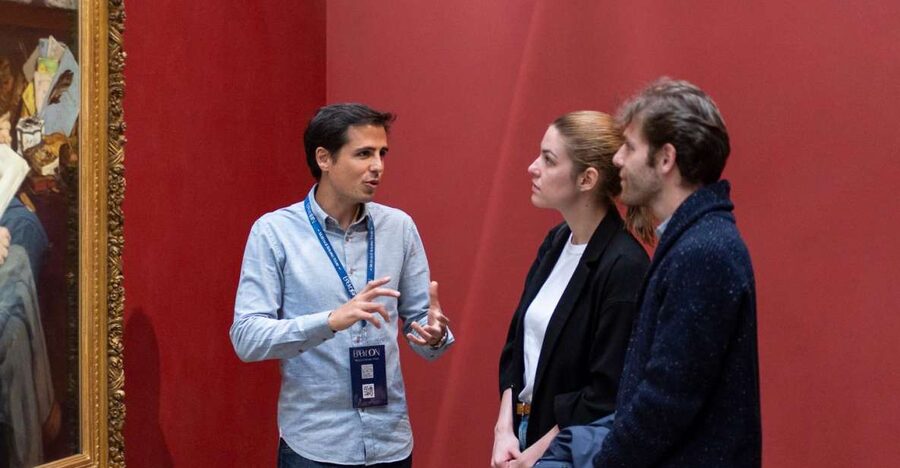
The tour also covers WPA-era photographs created during the Great Depression. These images help explain how photography became a way to document hardship, work, migration, and daily life across the country.
This section matters because it moves the focus away from powerful individuals. Presidential portraits ask who led the nation. WPA photography asks how ordinary people lived through a national crisis. Together, the two museums offer a fuller view of American experience.
The photographs can also raise difficult questions. A documentary image may record suffering, but it is still shaped by the photographer’s choices. What gets included? What stays outside the frame? Who is looking, and who is being looked at? A guide can bring those questions into the discussion without turning the stop into a lecture.
If you enjoy social history, this may be one of the most useful parts of the tour. If you mainly want famous paintings, the photography section may feel like a change of pace. I would keep an open mind. It gives the art museum a strong connection to real events and shows why museums collect photographs as carefully as paintings.
Modern art that may leave you puzzled
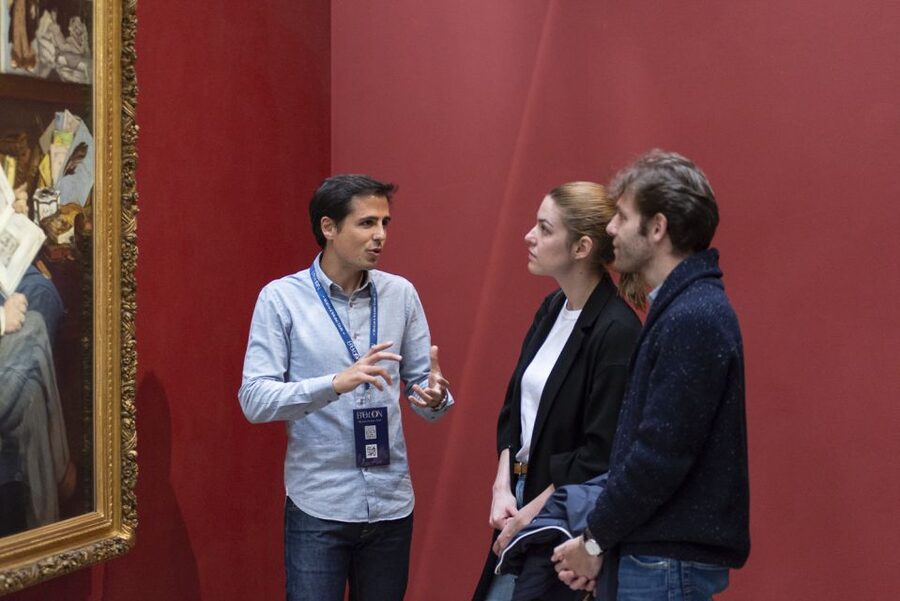
Not every work will explain itself. Some modern pieces may leave you scratching your head, which is part of the point. The guide’s job is not to tell you that there is one correct reaction. It is to offer context, visual clues, and possible ways into the work.
This is where a small-group or private format can be valuable. You can ask why a work matters, admit that it does not make sense, or compare your response with someone else’s. A large group can make that harder, while a private tour gives you more control over the conversation.
The experience is available as a private tour or in small groups. The exact meeting point can vary by option, so check your confirmation carefully. Semi-private tours require at least two participants to run. If that minimum is not met, you will be offered another date or a full refund.
The English-speaking art historian guide is included in the price. There is no hotel pickup or drop-off, so you need to reach the meeting point yourself. Large bags and luggage are not allowed, and only handbags or small, thin backpacks can pass through security. Bring valid photo identification, such as a passport or ID card.
Is $86 a fair price for 2.5 hours?
At $86 per person, this is not the cheapest way to enter a Washington museum. The value depends on how much guidance you want and how efficiently you want to use your time.
If you already know both museums well, you may prefer to enter on your own and choose your own rooms. But if the collections feel overwhelming, the tour saves you from wandering through a large building without a clear plan. You get a connected story, a professional art historian, and help with works that might otherwise seem obscure.
The price makes the most sense for a first visit, a short Washington stay, or a group with mixed interests. One person may care about presidents, another about Civil Rights history, and another about modern art. This route gives each of you a reason to pay attention.
Temporary exhibitions are not included, so check what you most want to see before booking. If a special exhibition is your main reason for visiting, you will need to arrange that separately. The tour focuses on the permanent collections and the building’s major themes.
The booking terms also offer some flexibility. You can reserve now and pay later, and cancellations made at least 24 hours ahead receive a full refund. Museum closures can happen without much warning. If opening is delayed by more than an hour, an alternative is provided, but the supplier does not provide a refund or discount in that situation.
Who will enjoy this museum route most?
I would recommend this tour to you if you want context more than a checklist. It suits people who like art but do not always know what to look for, as well as history-minded visitors who want more than dates and names.
It is also a good choice for:
- First-time visitors to both museums
- People with only one afternoon for the collections
- Couples who prefer a personal guide to a large group
- Families with older children or teenagers interested in presidents and Civil Rights history
- Art lovers who want to compare Cassatt, Hopper, Hockney, and O’Keeffe
- Visitors who enjoy discussion around modern art rather than a fixed lecture
It may be less suitable if you want a quiet, independent visit or if you plan to linger over a small number of works. It is also not listed as suitable for wheelchair users, so anyone needing an accessible route should contact the provider before booking and request an accessibility check. The tour involves a moderate amount of walking.
Final call: book it for the connections
Book this tour if you want the two museums to feel connected rather than like separate stops. The best parts are the link between the building and Walt Whitman, the move from presidential portraits to Civil Rights history, and the jump from Cassatt and Hopper to WPA photographs and modern works.
The strongest reason to choose it is the guide. Leigh and Bess are specifically praised for clear, engaging leadership, and that kind of personal explanation is useful in collections this large. Just remember that $86 buys a guided highlights route, not unlimited time with every gallery, and temporary exhibitions are extra.
If you prefer to set your own pace, skip the guide and plan a museum visit on your own. If you want help seeing why these works matter, and you want American political, social, and artistic history in one compact outing, this is a sound Washington choice.
FAQ
How long does the National Portrait Gallery and American Art Museum tour last?
The tour lasts about 2 to 2.5 hours. Starting times vary, so check availability when booking.
What museums are included?
The experience includes the National Portrait Gallery and the American Art Museum, both housed in the Old Patent Office Building.
Is the tour private or shared?
Private and small-group options are available. Semi-private tours require at least two participants to operate.
What language is the tour offered in?
The live guided tour is offered in English.
Can I bring luggage or a large backpack?
No. Luggage and large bags are not allowed. Security permits handbags or small, thin backpacks only.
Is the tour wheelchair accessible?
The activity is listed as not suitable for wheelchair users. If you require an accessible tour, advise the provider when booking so your needs can be checked.
More museums in Washington DC
- Guided African American History Tour with Reserved Museum Entry
★ 4.5 · 1,180 reviews - Smithsonian Museum of Natural History – Exclusive Guided Tour
★ 5.0 · 446 reviews - African American History Tour with Museum of African American History Ticket
★ 4.5 · 390 reviews - National Mall Tour with 10 Stops & U.S. Capitol or Museum Entry
★ 4.5 · 331 reviews
Recently added around Washington DC
- Small Group Washington DC Night Tour★ 4.5 · 3 reviews
- Washington DC Neighborhoods Personalized Self-Guided App Tour★ 3.5 · 3 reviews
- America’s Main Street and White House Private Full-Day Tour★ 5.0 · 3 reviews
- Beyond the Closet Walking Tour★ 5.0 · 3 reviews
- Pirate Ship Treasure Hunt Cruise with Face Painting★ 4.5 · 3 reviews
- Sushi Masterclass in Washington D.C. (Includes 4-Course Meal)★ 5.0 · 3 reviews
- Private Washington DC Grand Tour with Changing of the Guard.★ 5.0 · 3 reviews
- 250th: National Archives & American History Museum Guided Tour★ 5.0 · 3 reviews
National Gallery of Art, compared.
The National Gallery of Art DC – Exclusive Guided Museum Tour
Read our review →
DC National Gallery of Art Guided Tour Semi-Private 8ppl Max
Read our review →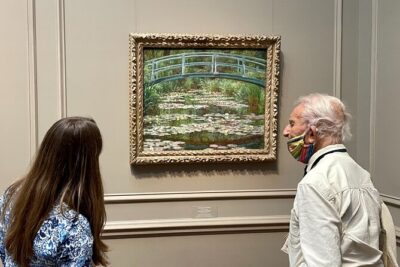
Curated Tour – National Gallery of Art with French Art Historian
Read our review →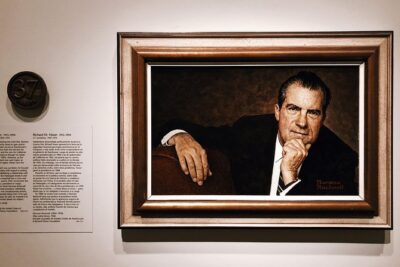
DC Portrait Gallery & American Art Museum – Exclusive Guided Tour
Read our review →
National Gallery of Art, American Art & Portrait Gallery Tour
Read our review →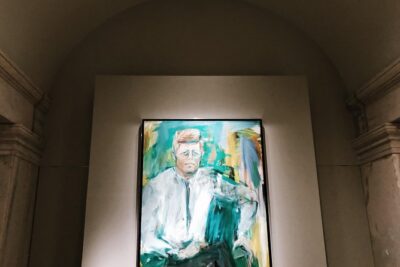
National Portrait Gallery and American Art Museum Tour: 8ppl Max
Read our review →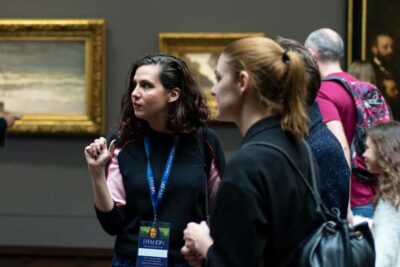
National Portrait Gallery & American Art Museum Semi-Private Tour
Read our review →Browse the lists this tour appears in