
Reviewed · HISTORICAL TOURS
DC Spy History Walking Tour
Washington’s spy past is hiding in plain sight. On this 90-minute walking tour, you move from a former CIA-linked saloon to the old Soviet Embassy, the Mayflower Hotel, and a hotel tied to a suspicious death involving a Putin aide. The stories are about real places, not movie sets, which gives the walk its strongest appeal.
I like the small group of eight or fewer, since you can ask questions without shouting across a crowd. I also like the central route, which ends near Dupont Circle and lets you keep exploring afterward. The main drawback is the walking time between stops. One hour and 30 minutes sounds brisk, and part of that time may pass without much narration.
In This Review
- Key points to know before you book
- Why Washington works so well for a spy-history walk
- Starting at the American Red Cross Building
- Air America at 918 16th Street NW
- The former Soviet Embassy at 1125 16th Street
- The Mayflower Hotel and wartime intrigue
- The Dupont Circle Hotel and a suspicious death
- How much walking should you expect?
- What the small group adds
- Is $49.99 a fair price?
- Who should book this experience?
- Ending near the Embassy of Ireland
- Booking, cancellation, and practical details
- Should you book the DC Spy History Walking Tour?
- FAQ
- How long does the DC Spy History Walking Tour last?
- Where does the tour start?
- Where does the tour end?
- Is the tour close to public transportation?
- How many people can join the tour?
- What language is the tour offered in?
- What locations are included?
- Is bottled water included?
- Is transportation included?
- Can I cancel for a full refund?
Key points to know before you book
- A former CIA airline headquarters: See the building once associated with Air America, the agency’s clandestine airline.
- Cold War secrets at 1125 16th Street: The former Soviet Embassy was linked to American spies handing over information.
- A compact group: The tour accepts a maximum of eight people, making questions and conversation easy.
- Five outdoor story stops: Each stop lasts about five minutes, so expect short explanations rather than long site visits.
- A practical finish: The walk ends in front of the Embassy of Ireland, close to Dupont Circle Metro.
- A good fit for curious history fans: The tour works best if you enjoy espionage, diplomacy, political intrigue, and real-world mysteries.
Why Washington works so well for a spy-history walk
Washington is full of grand government buildings and diplomatic addresses. That official setting makes the covert stories more striking. A plain city block can carry links to intelligence work, foreign embassies, secret meetings, or a death that still invites questions.
This tour does not take you inside working government offices or restricted diplomatic buildings. Instead, you stand outside and listen as your guide explains what happened at each address. That format keeps the experience simple and mobile, but it also means the quality depends heavily on the guide’s storytelling.
The route connects five sites across a central part of the city. You get a quick look at several addresses rather than one long presentation in a single place. I think that variety is the point. Every few minutes, the subject shifts from CIA operations to Soviet espionage, wartime activity, or modern political mystery.
The group size matters here. With no more than eight people, you should have a real chance to ask about details that catch your attention. You can also socialize with people who already enjoy spy stories, which adds a pleasant club-like feel without making the tour formal.
More history tours in Washington DC:
- Guided African American History Tour with Reserved Museum Entry
★ 4.5 · 1,180 reviews - DC Monuments & History Guided E-Cart Tour-Blankets
★ 4.5 · 450 reviews - Smithsonian Museum of Natural History – Exclusive Guided Tour
★ 5.0 · 446 reviews
Starting at the American Red Cross Building
The tour begins at the Dunkin’ inside the American Red Cross Building at 2025 E Street NW. You will need to make your own way there, since transportation to the starting point is not included.
This is a useful location for a walking tour because it sits in central Washington, near major sights and public transportation. Give yourself enough time to arrive without rushing. The tour runs for about 90 minutes, and missing the start could mean losing the first story and falling behind the group.
The opening stop is the Exchange Saloon, formerly known as Capitol Couples. The address has a striking backstory: a married couple used the establishment while infiltrating the CIA in the 1970s.
The stop lasts about five minutes, and admission is not included. The supplied details do not say that you enter the saloon, so you should expect the guide to explain the location from outside. That is typical of a street-based history walk, but it is worth knowing if you hoped for an interior visit.
This first story sets the tone. The subject is not simply famous spies and headline-making operations. It also covers ordinary-looking places connected to deception, relationships, and access. For me, that human angle is more interesting than a list of agency names.
Air America at 918 16th Street NW
The second stop is 918 16th Street NW, the former headquarters of Air America. The CIA operated the airline as a clandestine organization, giving this address a direct link to American intelligence work.
The guide spends about five minutes here. There is no admission fee, but there is no indication of an indoor visit. You will most likely hear the story while standing near the building and then continue on foot.
This stop adds useful context to the popular image of espionage. Intelligence work was not limited to agents meeting in dark rooms. It also involved transportation, logistics, and organizations that could operate under a less obvious public identity.
I would pay close attention to how your guide explains Air America’s role. The supplied material identifies it as a CIA-operated clandestine airline, but the broader significance comes from the explanation around it. If you like the practical machinery behind secret operations, this may be one of the more satisfying stops.
The former Soviet Embassy at 1125 16th Street
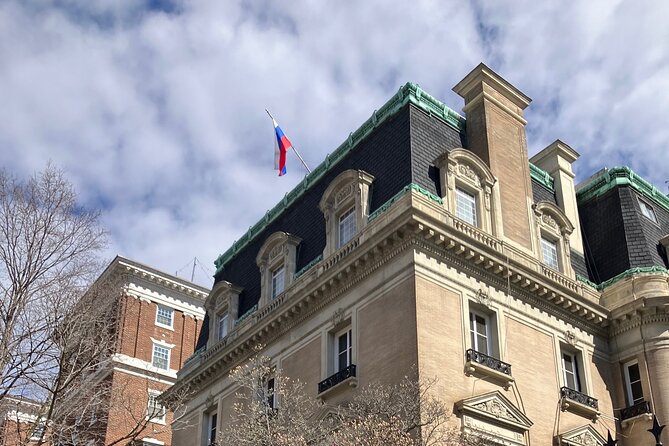
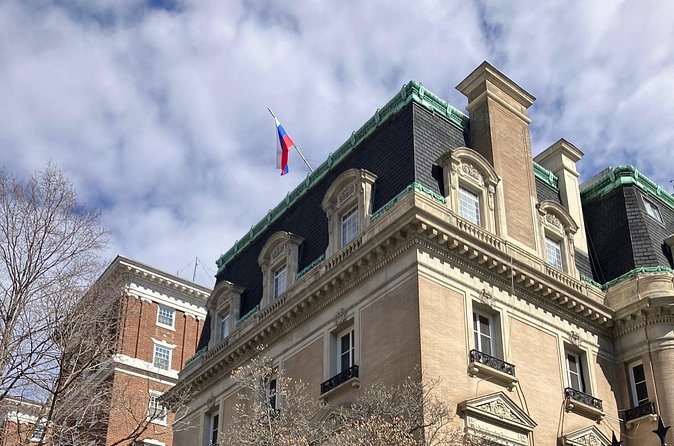
The third stop takes you to 1125 16th Street NW, the former Soviet Embassy and the current residence of the Russian ambassador. This is likely the most visually and politically charged address on the route.
The site is linked to stories of American spies handing over secrets during the Cold War. You are not simply hearing about an abstract rivalry between Washington and Moscow. You are standing outside a diplomatic building where the tension between the two powers had a very local presence.
The stop lasts roughly five minutes and is free to visit from the outside. Since it is still used as a diplomatic residence, do not expect to enter or wander around the property. The value is in the setting and the guide’s account of what took place around it.
This is also a good place to ask questions. A small group makes it easier to pause for clarification about the Cold War, the building’s former role, or the difference between embassy work and intelligence activity. The tour is offered in English, so you should be comfortable following a spoken explanation while standing outdoors.
More walking tours in Washington DC:
- Arlington National Cemetery Walking Tour & Changing of the Guards
★ 5.0 · 2,566 reviews - Ghosts of Georgetown & The Exorcist Steps Walking Tour
★ 5.0 · 610 reviews - Georgetown Foodie Culinary Tour & Neighborhood Walk
★ 5.0 · 437 reviews - Gastronomic Georgetown Walking Food Tour
★ 4.5 · 373 reviews
The Mayflower Hotel and wartime intrigue
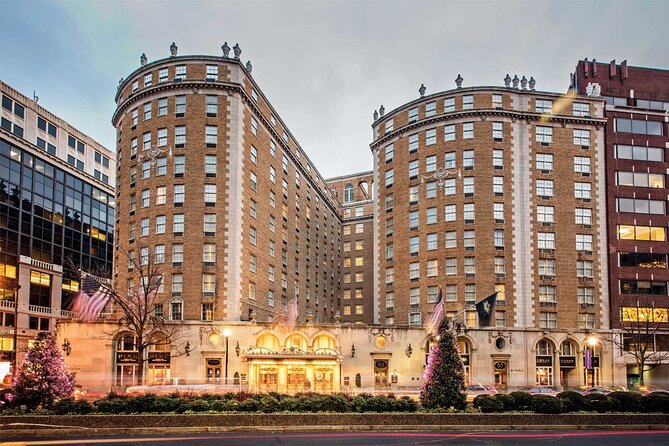
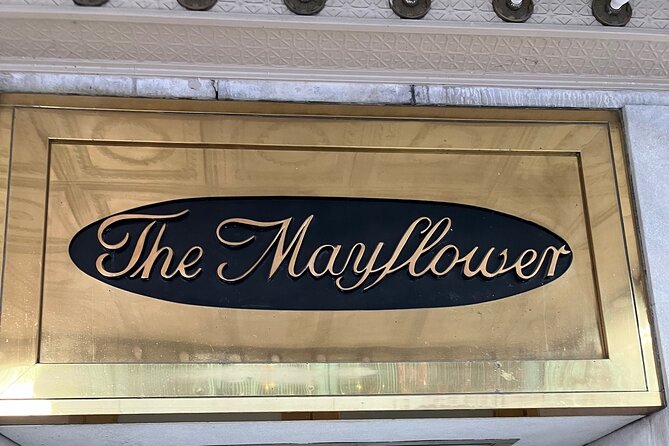
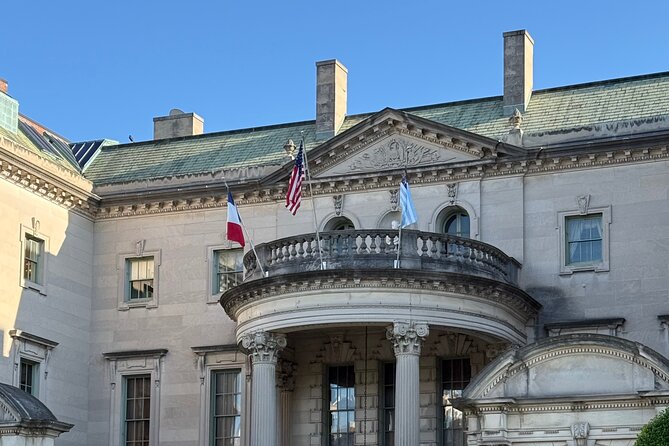
The Mayflower Hotel is the fourth stop. The hotel is linked to CIA agents practicing their craft, as well as a German operation during World War II.
That combination gives the tour a broader time frame. The route is not limited to one spy scandal or one decade. It moves from wartime activity to the Cold War and then to more recent political intrigue.
The Mayflower is a working hotel, so the information provided does not promise a special interior tour or access to rooms connected with the stories. You should treat this as an exterior history stop, with about five minutes for the explanation.
Still, a hotel is an apt setting for spy history. Hotels bring together diplomats, officials, business people, and strangers passing through town. That creates natural opportunities for meetings, observation, and quiet exchanges. The guide’s job is to connect that ordinary public setting with the covert activity associated with it.
If you enjoy the social side of espionage, this stop should appeal to you. It shows how intelligence work can blend into everyday city life rather than taking place only in secure compounds.
The Dupont Circle Hotel and a suspicious death
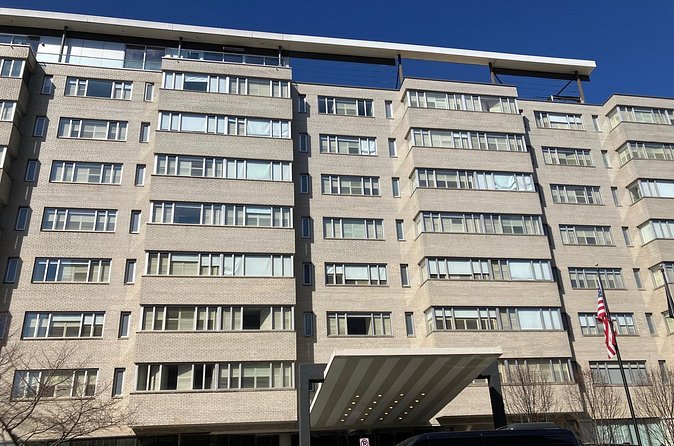
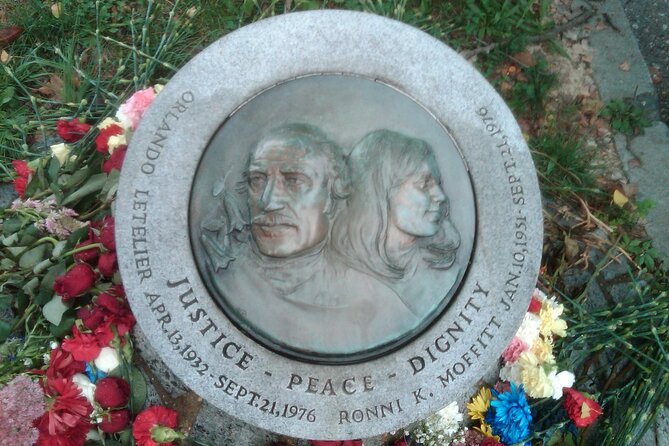
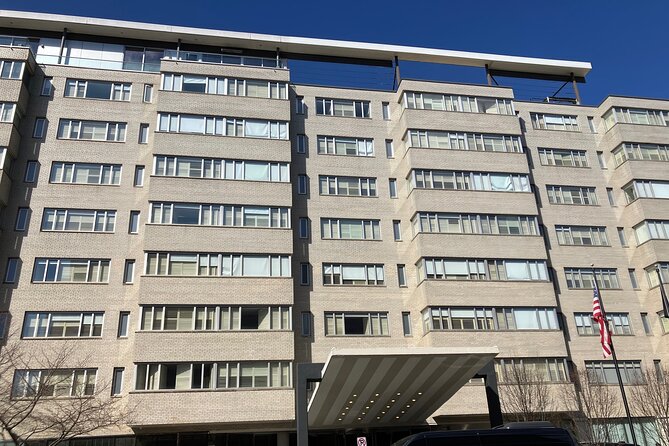
The final listed stop is the Dupont Circle Hotel. The site is associated with the suspicious death of an aide to Vladimir Putin.
This is the most modern and mysterious story on the route. Unlike the earlier stops, which focus on agency operations, wartime activity, and Cold War secrets, this one brings the subject closer to present-day international politics.
The stop lasts about five minutes. Again, there is no stated interior access, so expect to hear the account outside. The short format may leave you wanting more detail, especially if this case is new to you. That is one of the tour’s strengths and limitations: it introduces many intriguing subjects, but it cannot fully investigate each one in 90 minutes.
The story also gives the route a strong ending. You finish with a question rather than a neat historical conclusion. If you like unsolved mysteries and political intrigue, that unresolved feeling may be part of the appeal.
How much walking should you expect?
You should be ready to walk between five stops in central Washington. The tour lasts about an hour and a half, but only about five minutes at each listed stop is assigned to the main explanation. The remaining time is spent moving between locations and gathering the group.
One direct assessment of the experience found the pace comfortable, with no rushed stops or overly long talks. Another found that there was a lot of walking and not enough information during some of it. Both points are useful. The tour is not a nonstop lecture, and the quiet stretches may feel fine if you enjoy walking through the city. If you want constant narration, you may find the gaps frustrating.
Wear comfortable shoes and plan for outdoor conditions. The details do not specify seating, indoor shelter, or weather arrangements. Bottled water is included, which is a small but helpful touch, especially if the day is warm.
Your guide can help you take photos at several political landmarks. That makes the walk more useful for people who want a visual record of the route, though you should not expect a photo stop at every address.
What the small group adds
The maximum group size is eight. That is a major advantage for this kind of tour. Spy stories often prompt questions, and a compact group gives you space to ask about a name, building, operation, or historical detail without slowing down a large crowd.
The group format also makes it easy to meet people with similar interests. If you are fascinated by espionage, you will have an obvious topic for conversation before and after the walk.
A small group does not guarantee a perfect experience. The guide still needs to fill the walking sections with useful context and keep the pace comfortable. The available comments suggest that storytelling is a major strength, but the amount of information while walking can vary.
You should think of this as a guided introduction to Washington’s spy connections, not a specialist seminar. It covers five locations and several dramatic themes in a short period. That works well for a first look. If you already know a great deal about CIA history, you may want more dates, names, and operational detail than the tour provides.
Is $49.99 a fair price?
At $49.99 per person, the tour is not the cheapest way to walk around Washington. You are paying for the guide’s research, storytelling, route planning, bottled water, and the chance to ask questions in a group of no more than eight.
The value depends on how much you want interpretation. You can walk past these buildings on your own, but you would not automatically know about the married couple linked to CIA infiltration, Air America, the Soviet Embassy’s Cold War connections, or the death tied to the Dupont Circle Hotel.
The price makes more sense if you are genuinely interested in espionage and want a focused experience rather than a broad sightseeing tour. It is less attractive if you prefer entering historic buildings, seeing artifacts, or spending a long time at one site.
The current information gives the tour a rating of 4.8 from 12 reviews, with 92 percent recommending it. That is a strong response, though the sample is small. The most praised elements are the engaging stories, the sense that Washington’s past comes alive, and the way the tour can spark interest even if you arrive without much knowledge of espionage.
Who should book this experience?
I would recommend it to history fans, mystery lovers, and anyone who has already seen Washington’s major monuments and wants a different angle on the city. It also suits locals who want a short, unusual activity with a clear theme.
The tour is especially useful for you if:
- You like real events more than fictional spy stories.
- You enjoy walking between city landmarks.
- You want a small group and a chance to ask questions.
- You are happy hearing about buildings from outside.
- You want to continue exploring near Dupont Circle afterward.
I would think twice if you need a seated activity, dislike outdoor walking, or want a detailed lecture at every stop. The tour is compact and story-led. It gives you several leads to follow, but it cannot explain every operation or mystery in full.
The walk is suitable for most people, and service animals are allowed. It is near public transportation, but you must arrange your own transport to the meeting point and from the ending point.
Ending near the Embassy of Ireland
The tour finishes in front of the Embassy of Ireland at 2234 Massachusetts Avenue NW. This is a practical end point, since Dupont Circle Metro station is a short walk away.
That location gives you an easy next step. You can use the Metro, continue around Dupont Circle, or make your own plans in central Washington. The tour does not include transportation from the ending point, so check your route before you set out.
The ending also keeps the experience from taking over your day. At about 90 minutes, it can fit before another attraction, a meal, or an afternoon of independent sightseeing. Keep in mind that the tour’s stated duration is approximate, so leave a little breathing room if you have a timed booking afterward.
Booking, cancellation, and practical details
You receive confirmation when you book. The experience is offered in English and uses a mobile ticket, so keep your booking accessible on your phone.
Free cancellation is available if you cancel at least 24 hours before the start time. Cancellations made less than 24 hours ahead are not refunded, and changes inside that window are not accepted. The cut-off follows Washington’s local time.
The experience is booked, on average, 13 days ahead. That does not guarantee that every date will sell out, but it is a useful reason to reserve early if your schedule is fixed.
Should you book the DC Spy History Walking Tour?
Book it if you want short, vivid stories tied to real Washington addresses, especially if CIA history, Cold War secrets, diplomacy, and suspicious deaths already interest you. The small group, central route, photo help, and easy finish near Dupont Circle add real practical value.
Skip it if you want indoor access, museum exhibits, or constant narration during every minute of the walk. The strongest part is the guide’s storytelling at the five stops. The weaker part can be the walking time between them.
For the right audience, $49.99 buys a focused look at a side of Washington that most standard sightseeing tours ignore. Go with comfortable shoes, a curious mind, and realistic expectations about what a 90-minute outdoor walk can cover.
FAQ
How long does the DC Spy History Walking Tour last?
The tour lasts approximately 1 hour and 30 minutes.
Where does the tour start?
It starts at the Dunkin’ inside the American Red Cross Building at 2025 E Street NW, Washington, DC 20006.
Where does the tour end?
The tour ends in front of the Embassy of Ireland at 2234 Massachusetts Avenue NW, Washington, DC 20008.
Is the tour close to public transportation?
Yes. The ending point is a short walk from Dupont Circle Metro station.
How many people can join the tour?
The tour has a maximum of eight travelers.
What language is the tour offered in?
The tour is offered in English.
What locations are included?
The route includes the Exchange Saloon, 918 16th Street NW, 1125 16th Street NW, the Mayflower Hotel, and the Dupont Circle Hotel.
Is bottled water included?
Yes. Bottled water is included.
Is transportation included?
No. You must arrange transportation to the starting point and from the end point yourself.
Can I cancel for a full refund?
Yes, if you cancel at least 24 hours before the experience starts. Cancellations made less than 24 hours before the start time are not refunded.
Recently added around Washington DC
- Small Group Washington DC Night Tour★ 4.5 · 3 reviews
- Washington DC Neighborhoods Personalized Self-Guided App Tour★ 3.5 · 3 reviews
- America’s Main Street and White House Private Full-Day Tour★ 5.0 · 3 reviews
- Beyond the Closet Walking Tour★ 5.0 · 3 reviews
- Pirate Ship Treasure Hunt Cruise with Face Painting★ 4.5 · 3 reviews
- Sushi Masterclass in Washington D.C. (Includes 4-Course Meal)★ 5.0 · 3 reviews
- Private Washington DC Grand Tour with Changing of the Guard.★ 5.0 · 3 reviews
- 250th: National Archives & American History Museum Guided Tour★ 5.0 · 3 reviews
Historical Tours, compared.
Guided African American History Tour with Reserved Museum Entry
Read our review →
DC Monuments & History Guided E-Cart Tour-Blankets
Read our review →
African American History Tour with Museum of African American History Ticket
Read our review →
Historic Georgetown: History, Gossip, & Architecture Walking Tour
Read our review →

Smithsonian Museum of American History Exclusive Guided Tour
Read our review →
Tastes of Georgetown Food & History Small Group Walking Tour
Read our review →
Small-Group History Tour Pub Crawl of Washington, D.C.
Read our review →Browse the lists this tour appears in