Reviewed · PRIVATE
Captivating DC Private Photography Workshop
The best part of this Washington workshop is that you are not simply walking past famous monuments. You are learning how to see them differently, using reflection, symmetry, framing, and light to turn familiar sights into stronger photographs. Guide Brandon J works with your group alone, which gives the session a personal feel.
I like the focus on both camera technique and visual storytelling, especially at the Lincoln Memorial and Vietnam Veterans Memorial. I also like the late 6:00 pm start, since the changing light leads naturally into low-light and night photography. The main drawback is the price: at $170 per person, this makes the most sense for people who truly want hands-on instruction, not just a guided monument walk.
In This Review
- Key points at a glance
- Why this workshop is different from a standard National Mall walk
- Starting at the Three Servicemen Statue
- Lincoln Memorial: framing a familiar icon
- World War II Memorial: balance, motion, and experimentation
- Reflecting Pool and Washington Monument: symmetry with meaning
- Vietnam Veterans Memorial: reflection and restraint
- What the private format is worth
- Is $170 per person good value?
- Who should book this experience?
- Practical details before you go
- Should you book it?
- FAQ
- Where does the photography workshop start?
- What time does the workshop begin?
- How long does the experience last?
- Is this a private activity?
- Which Washington locations are included?
- Are snacks included?
- What happens if the weather is poor?
Key points at a glance
- Private instruction with Brandon J: Only your group takes part, so you can ask questions and receive direct help.
- Four major photo stops: The route includes the Lincoln Memorial, World War II Memorial, Reflecting Pool and Washington Monument, and Vietnam Veterans Memorial.
- Practical camera lessons: Work on framing, composition, reflections, symmetry, establishing shots, close-ups, details, and long exposures.
- A useful evening schedule: The 6:00 pm start supports sunset-style light changes and low-light practice.
- Storytelling beyond snapshots: You are encouraged to photograph emotion, symbolism, and historical meaning, not only buildings.
- Bring your own supplies: Snacks are not included, and you should bring the camera or phone you plan to use.
Why this workshop is different from a standard National Mall walk
The National Mall is easy to photograph badly. The monuments are grand, but a grand subject does not automatically make a strong picture. You can point your camera at the Washington Monument, press the shutter, and still end up with a flat image that looks like thousands of others.
This workshop takes a more thoughtful route. Brandon J focuses on how photographs communicate feeling and story. That means you may look at the same memorial through several approaches: a wide establishing shot to show the setting, a close-up to capture texture or expression, and a detail that suggests a larger story without showing everything.
That approach suits you if you want to improve rather than simply collect proof that you were there. It also works well if you are unsure what to do with your camera’s settings. One review describes Brandon as modest about his camera skills, but notes that he knows far more than he initially lets on. You can ask to see his photography portfolio on his phone or Instagram, which may help you understand his approach before trying the techniques yourself.
The experience lasts about two and a half hours. Since it is private, you are not adjusting your pace to a bus full of people or waiting while strangers finish taking pictures. The tradeoff is that the tour is only as useful as your willingness to participate. If you want a passive sightseeing outing, you may not get full value from the fee.
A few more Washington DC tours worth a look
- Private Vacation Photoshoot with Photographer in Washington DC
★ 4.5 · 7 reviews - 1 Hour Private Photoshoot in National Mall
★ 5.0 · 7 reviews
Starting at the Three Servicemen Statue
You meet at the Three Servicemen Statue beside the Vietnam Veterans Memorial at 6:00 pm. This is a practical starting point because the workshop finishes back at the same meeting point, so the route has a clear beginning and end.
The opening location also sets the tone. The Three Servicemen Statue offers human figures rather than a distant monument, giving you a natural place to begin thinking about posture, expression, scale, and the relationship between people and memorial design.
Your exact camera or phone is up to you. The workshop is not limited to one type of equipment, and the information provided does not require a particular camera model. Bring the device you actually plan to use, since advice is most useful when it applies to your own controls and habits.
The tour is near public transportation, and service animals are allowed. Most people can participate, but you should remember that this is an outdoor walking activity around a large memorial area. Comfortable footwear and a charged device are sensible choices, even though those items are not listed as formal requirements.
Lincoln Memorial: framing a familiar icon
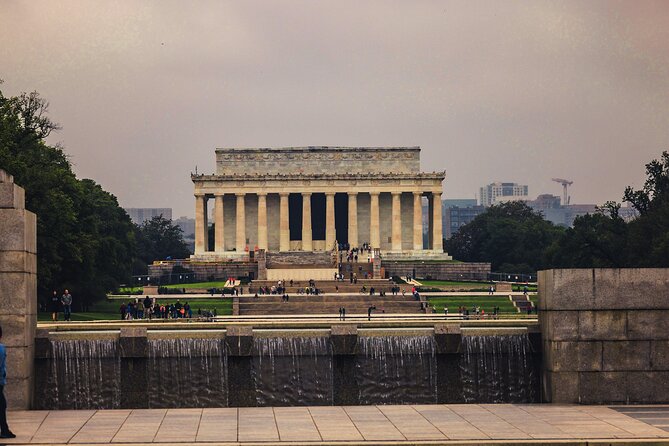
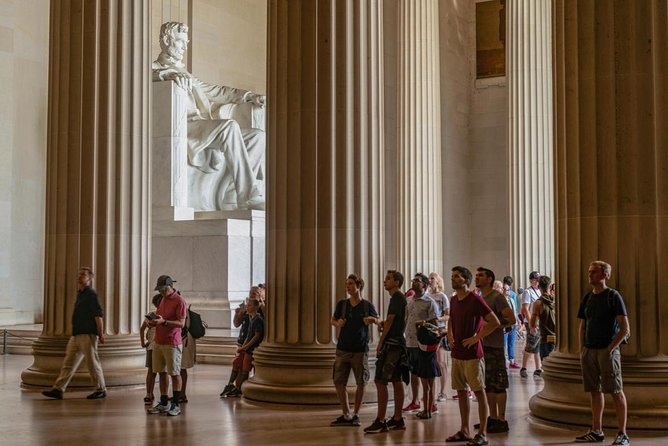
The Lincoln Memorial is the first major photography lesson. Its scale can overwhelm a camera, so the useful question is not simply how to fit the whole building into the frame. You will work on framing and composition, choosing what belongs in the picture and what distracts from it.
The nearby Reflecting Pool gives you another tool. Clear reflections can make a photograph feel balanced, but small ripples, poor alignment, or weak light can reduce the effect. Brandon can help you think about where to place the horizon, how much water to include, and how the memorial and reflection should relate to each other.
You will also practice three kinds of images:
- Establishing shots that show the memorial in its setting
- Close-ups that focus attention on a particular feature
- Detail images that suggest the larger place through a smaller subject
This is valuable because a complete photo set needs more than one wide view. If every picture is composed from the same distance, your final collection can feel repetitive. Mixing wide, medium, and close views gives you more control over the story you tell.
The Lincoln Memorial is also a good place to discuss emotional tone. A centered, symmetrical image may feel formal and calm. A tighter detail may feel more personal. The subject remains the same, but your choices change the message.
World War II Memorial: balance, motion, and experimentation
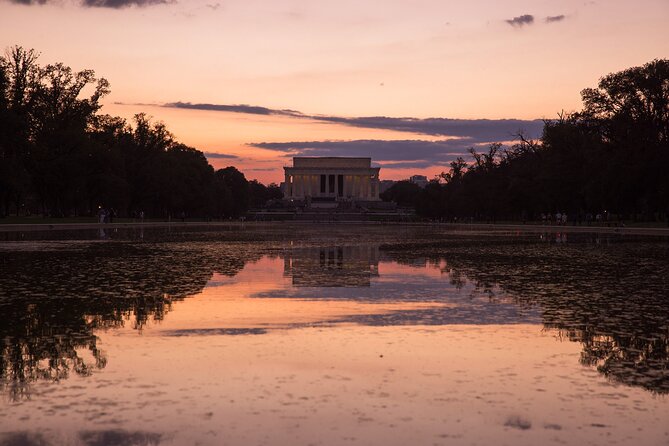
At the World War II Memorial, the lesson shifts toward balance and dramatic structure. The memorial provides strong architectural elements, so you can practice arranging foreground, middle distance, and background without allowing one area to overpower the rest.
This is also where the workshop introduces long-exposure practice for night photography. Long exposures can show movement and light in ways that a quick snapshot cannot. The supplied details do not promise a particular camera result, so your success will depend on your equipment, conditions, and how much practice you get. Still, having an instructor nearby is useful when you are trying a technique that can feel uncertain at first.
You may also experiment with street photography. That broadens the session beyond monument studies and asks you to respond to passing moments, human movement, and changing scenes. Street photography can feel less controlled than photographing stone and water, which makes it a good exercise in timing.
This stop may be especially helpful if you usually photograph only static subjects. You can work on waiting for a pleasing arrangement instead of firing off a series of random frames. The goal is not to force drama into every picture. It is to notice how movement, spacing, and the surrounding setting affect a composition.
Same city, a very different couple of hours:
- DC Memorials Night Tour: Glass-Roof Convertible Upgrade Option
★ 4.5 · 6,933 reviews - National Mall Monuments Night Tour with 10+ Stops, Entry Tickets
★ 4.5 · 4,863 reviews - Washington DC Monuments by Moonlight Tour by Trolley
★ 4.5 · 3,956 reviews - Hop-on Hop-off Sightseeing Tour by Open-top Bus with 18 Stops
★ 3.5 · 3,848 reviews
Reflecting Pool and Washington Monument: symmetry with meaning
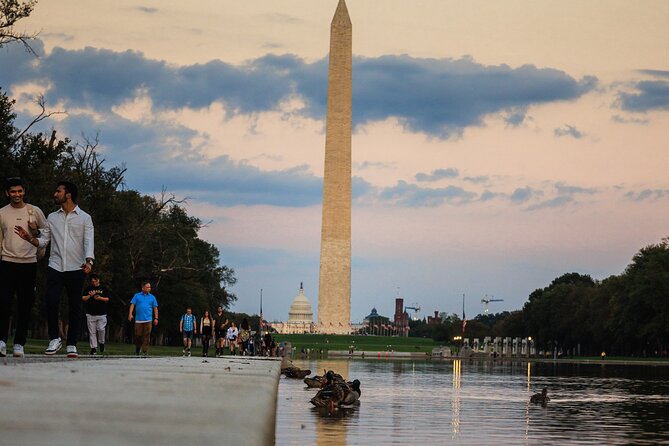
The Reflecting Pool and Washington Monument provide one of the most recognizable views in Washington. They also offer a clear lesson in symmetry. The long water surface can guide the eye toward the monument, while the monument itself gives the frame a strong vertical anchor.
Symmetry sounds simple, but it takes care. A slightly crooked horizon or uneven framing can weaken the effect. Here you can work on lining up the reflection, managing the amount of sky and water, and using the available light on the pool’s surface.
The workshop also connects the Washington Monument to ideas of leadership and national ideals. That context matters because a photograph can record a shape without saying much. Thinking about the symbolism behind the subject may help you decide whether the image should feel formal, imposing, peaceful, or reflective.
The evening timing is important here. The workshop begins at 6:00 pm, and the route transitions toward night photography as the light changes. The exact conditions will vary, and the experience requires good weather, but the schedule gives you a chance to practice beyond bright daylight.
If you are using a phone, you can still work on alignment, reflection, and timing. If you use a camera with manual controls, this is a logical place to ask about settings for changing light. The provided information does not specify camera instruction at a particular technical level, so tell Brandon what you use and what you want to learn.
Vietnam Veterans Memorial: reflection and restraint
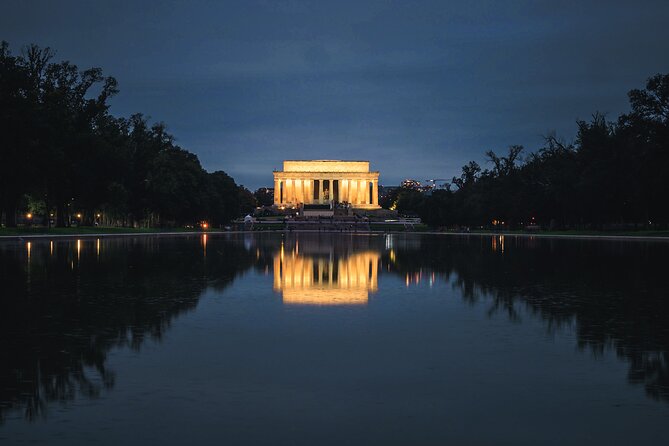
The final main stop is the Vietnam Veterans Memorial, near the starting point. Its reflective surface and solemn design create a very different photographic challenge from the bright geometry of the Washington Monument.
Here, the lesson centers on reflective surfaces and low lighting. The polished wall can mirror people and surroundings, but the effect is tied to angle, light, and your position. You will need to think carefully about what appears in the reflection and what should remain outside the frame.
The memorial also calls for restraint. This is not a place where every creative effect will feel appropriate. A strong photograph may be quiet, simple, and respectful rather than dramatic. The emotional weight of the site makes composition and timing more important than showing off a technical trick.
Working in low light can help you become more deliberate. You may need to hold the camera steadily, watch for blur, and consider how much detail you want to retain. The tour description specifically highlights low-light conditions, but it does not promise a particular amount of darkness or a guaranteed night scene.
Ending here brings the workshop back to its starting point and gives the route a natural shape. You begin with figures and memorial meaning, work through architecture and reflection, and finish with a surface that asks you to consider both the image and the subject.
What the private format is worth
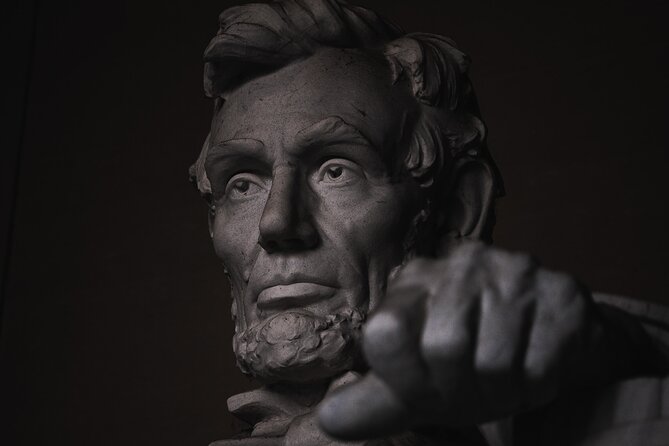
The private format is the strongest reason to choose this experience over a larger photography walk. Only your group participates, so you do not have to share Brandon’s attention with a crowd. You can ask about a specific problem, repeat a technique, or spend more time at a stop that matters to you.
This format is particularly useful if the people in your group have similar goals. A couple working on phone photography, a family member learning a new camera, or a small group preparing for night photography can all shape the session around their needs.
The private setup can also feel less intimidating. One highly positive assessment describes Brandon as friendly and reassuring from the start. That matters in a workshop because beginners often hesitate to admit they do not understand a setting or composition choice.
Still, private does not mean unlimited. The tour lasts about 2 hours and 30 minutes and covers several major locations. You will need to keep moving, especially if the group wants meaningful time at each stop. If you hope to master every feature on a complicated camera in one evening, the time may feel short.
Is $170 per person good value?
At $170 per person, this is not a bargain sightseeing tour. You are paying for a private lesson, a guide’s time, and access to instruction at several of Washington’s best-known photo locations.
The price makes more sense if you already care about photography. You may leave with better images, but the more lasting value is learning how to make better decisions on your own. Framing, reflection, balance, and visual storytelling can be applied long after you leave Washington.
The fee is harder to justify if you only want someone to show you the monuments. You can see these landmarks without booking a workshop, and the group photo included with the experience is a small extra rather than the main reason to go.
I would also compare the price with your equipment and goals. If you are bringing a phone and want help composing more carefully, the private format may still be useful. If you have a camera you rarely use and want practical guidance, the session could save you frustration. If you already work comfortably with manual settings and composition, you may find the instruction less necessary.
Who should book this experience?
I would recommend it most strongly to:
- Beginners who want calm, one-on-one photography help
- Intermediate photographers seeking better composition and visual storytelling
- People interested in reflections, symmetry, and low-light images
- Couples, families, or small groups with a shared interest in photography
- Visitors who want a more creative National Mall experience
It is less suited to someone who wants a relaxed monument tour with little participation. It may also disappoint you if you expect a full technical course on every camera brand, since the session has limited time and several stops.
The high praise centers on Brandon’s teaching style. He is described as enthusiastic, friendly, and easy to talk to, while another assessment points to his professional camera knowledge. That combination is important: technical ability only helps if the instructor can explain ideas clearly and make you comfortable trying them.
Practical details before you go
The meeting point is the Three Servicemen Statue at the Vietnam Veterans Memorial, 5 Henry Bacon Drive NW. The activity begins at 6:00 pm and ends back at the same meeting point.
Bring the camera or phone you want to use, along with anything you need for pictures. Snacks are not included, so bring your own if you need food during the 2.5-hour session.
Confirmation is provided when you book. The activity is near public transportation, service animals are allowed, and most people can participate. Since good weather is required, poor conditions can lead to a different date or a full refund.
You can cancel for a full refund up to 24 hours before the start time. Cancellations or changes made less than 24 hours ahead are not accepted for a refund, and the cut-off follows local Washington time.
Should you book it?
Book this workshop if you want to photograph Washington with more purpose and are willing to take instruction along the way. The private format, Brandon J’s encouraging manner, and the mix of reflection, symmetry, composition, street photography, and low-light work give the experience a clear focus.
Skip it if you mainly want a quick introduction to the National Mall or if $170 feels high for a two-and-a-half-hour activity. For the right person, though, the value is not just a group photo or a handful of monument pictures. It is learning how to turn familiar Washington views into photographs with stronger structure, feeling, and intent.
FAQ
Where does the photography workshop start?
It starts at the Three Servicemen Statue at the Vietnam Veterans Memorial, 5 Henry Bacon Drive NW, Washington, DC 20004.
What time does the workshop begin?
The start time is 6:00 pm.
How long does the experience last?
The workshop lasts approximately 2 hours and 30 minutes.
Is this a private activity?
Yes. Only your group participates in the activity.
Which Washington locations are included?
The workshop includes the Lincoln Memorial, World War II Memorial, Reflecting Pool and Washington Monument, and Vietnam Veterans Memorial.
Are snacks included?
No. Snacks are not included, so bring anything you want to eat during the experience.
What happens if the weather is poor?
The experience requires good weather. If it is canceled because of poor conditions, you will be offered a different date or a full refund.
Recently added around Washington DC
- Small Group Washington DC Night Tour★ 4.5 · 3 reviews
- Washington DC Neighborhoods Personalized Self-Guided App Tour★ 3.5 · 3 reviews
- America’s Main Street and White House Private Full-Day Tour★ 5.0 · 3 reviews
- Beyond the Closet Walking Tour★ 5.0 · 3 reviews
- Sushi Masterclass in Washington D.C. (Includes 4-Course Meal)★ 5.0 · 3 reviews
- Pirate Ship Treasure Hunt Cruise with Face Painting★ 4.5 · 3 reviews
- Private Washington DC Grand Tour with Changing of the Guard.★ 5.0 · 3 reviews
- 250th: National Archives & American History Museum Guided Tour★ 5.0 · 3 reviews
Private, compared.
National Mall Night Tour with 10+ Monuments (Public or Private)
Read our review →
Private Night-Time Monuments Tour of DC for up to 10 Guests
Read our review →
Private Multilingual DC City Tour (Spanish, Portuguese, English)
Read our review →
National Archives Skip the Line Guided Tour Semi-Private 6ppl Max
Read our review →
Private Washington DC Tour with Changing of the Guard Ceremony
Read our review →