
Reviewed · GEORGETOWN
Washington, DC: Georgetown Architecture Walking Tour
Georgetown’s story is written into its houses, schools, churches, canal, and old commercial buildings. On this 150-minute walk, you move from the C&O Canal to the Georgetown Waterfront while a local guide explains how this corner of Washington grew from a working port into one of the city’s most prized neighborhoods.
I like the clear historical route, which connects individual buildings to Georgetown’s larger rags-to-riches tale. I also like the mix of places: the Laird-Dunlop House, Pomander Walk, Healy Hall, the old Car Barn, and Cady’s Alley all give the walk variety. The main drawback is simple: you cover about two miles, mostly on foot, and the tour runs rain or shine unless conditions become dangerous.
In This Review
- Key details of the Georgetown walk
- Starting at Baked & Wired and the C&O Canal
- Historic houses and the Lydia English Seminary
- The Grafton Tyler Double House and Christ Episcopal Church
- Yellow Tavern and the pastel houses of Pomander Walk
- Volta Laboratory and Georgetown’s academic side
- The Car Barn and the final stretch to the waterfront
- How the guides shape the experience
- Is $43 a fair price?
- Who should book this Georgetown tour?
- My verdict: a smart first look at Georgetown
- FAQ
- How long does the Georgetown Architecture Walking Tour last?
- How far do you walk?
- Where is the meeting point?
- How do I identify the guide?
- What language is the tour conducted in?
- What buildings and sites are included?
- Does the tour operate in bad weather?
- What should I bring?
- Can I cancel for a full refund?
Key details of the Georgetown walk
- The C&O Canal sets the scene: Start with the old water route that carried goods between Potomac River communities and markets.
- Small buildings get their due: See homes, a former girls’ school, a tavern, and tiny pastel row houses rather than only Georgetown’s best-known landmarks.
- Architecture comes with stories: The guide explains the people and events linked to buildings such as the Grafton Tyler Double House and Volta Laboratory.
- The route reaches Georgetown University: Healy Hall and the University Library show the neighborhood’s academic side.
- You finish by the water: The walk ends at the Georgetown Waterfront after passing Cady’s Alley and the Francis Scott Key Memorial.
- The pace is manageable but real: Allow two and a half hours, wear comfortable shoes, and bring water.
Starting at Baked & Wired and the C&O Canal
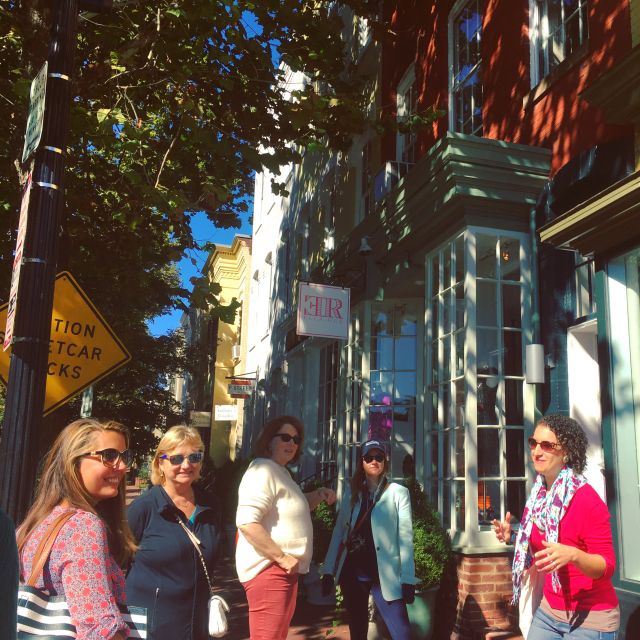
Meet your guide outside Baked & Wired in central Georgetown. Look for the DC Design Tours T-shirt, and arrive about five minutes early. The group leaves on time, so this is not the moment to arrive with coffee still in hand and a long pastry decision ahead of you.
The first major stop is the Chesapeake and Ohio Canal. This gives the tour a useful starting point because Georgetown was not simply a pretty residential district. The canal connected communities along the Potomac River with markets and goods, helping explain how the area earned its early importance.
I like beginning here because the canal puts the buildings into context. You are not looking at handsome facades as isolated objects. You are seeing a neighborhood shaped by trade, movement, money, and later change.
The guide’s job is especially useful at this point. A self-guided walk can show you the canal, but it may not explain how the working side of Georgetown relates to the homes and institutions you see later. The tour uses the route to tell a larger story, rather than treating each stop as a separate photo opportunity.
More architecture tours in Washington DC:
- Historic Georgetown: History, Gossip, & Architecture Walking Tour
★ 5.0 · 321 reviews - Dupont Circle and Embassy Row Architectural Walking Tour
★ 5.0 · 117 reviews - Historic Georgetown Architectural Walking Tour
★ 5.0 · 77 reviews
Historic houses and the Lydia English Seminary
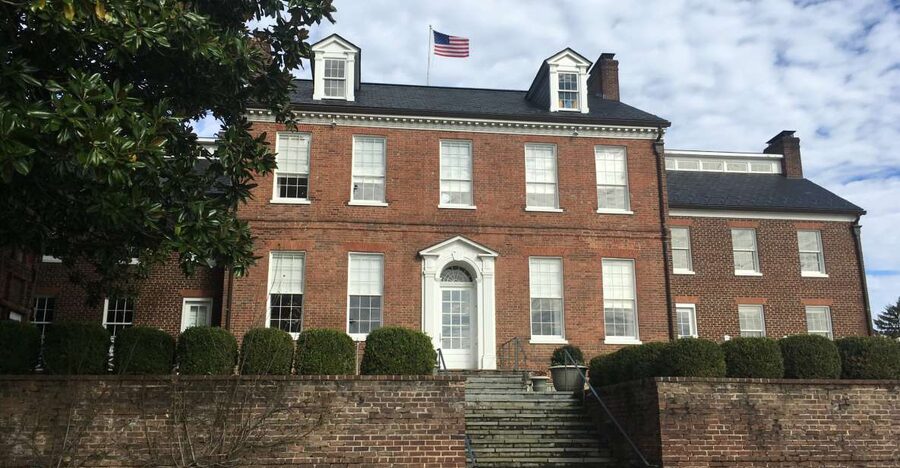
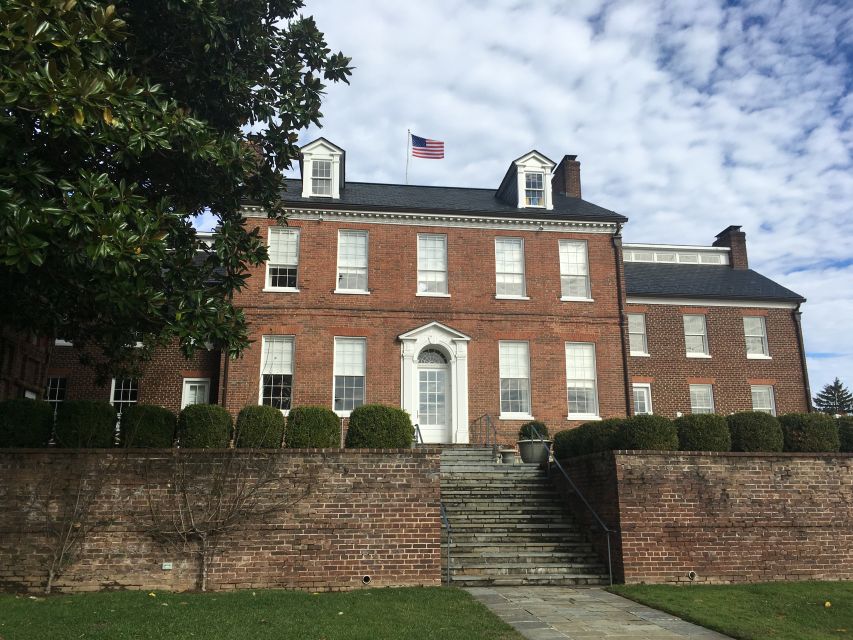
The route continues to the Laird-Dunlop House and the Newton D. Baker House. These stops focus attention on residential Georgetown and the people who shaped its social character.
You then see the Lydia English Seminary School for Girls, a boarding school that served upper-class families. This is one of the more unusual stops because it adds an educational and social layer to the neighborhood. Georgetown’s past was not only about merchants and grand homes. Schools also helped define who lived here, who studied here, and how the community presented itself.
The guide connects the buildings to the people and institutions behind them. That approach matters if you enjoy architecture but do not want a lecture filled only with dates and names. The tour is designed to make the structures useful clues to Georgetown’s past.
The pace is described as leisurely, which should give you time to look up at details and keep up with the group. Still, do not expect a long pause at every building. One earlier participant suggested allowing a few extra minutes for photographs, a fair point if you want carefully framed shots rather than quick snapshots while the group moves on.
The Grafton Tyler Double House and Christ Episcopal Church
Next comes the Grafton Tyler Double House, followed by Christ Episcopal Church. The double house is a good example of how a single building can raise questions about Georgetown’s residents, family arrangements, and urban design.
A double house is also a useful reminder that historic neighborhoods are not made only of grand mansions. Buildings designed for shared or divided use can tell you just as much about city life. Your guide supplies the story behind this particular property, helping you read the building as part of Georgetown’s development.
Christ Episcopal Church shifts the focus from private life to religious and civic life. Along with the Hyde-Addison School, it shows how the neighborhood’s institutions were woven into its streets. The tour does not only point out decorative details. It gives you a sense of how people lived, worshiped, studied, and gathered here.
This part of the walk may be most rewarding for anyone who likes the connection between architecture and daily life. If you want a tour focused only on famous people or major monuments, the smaller stops may feel less dramatic. I see that as part of the appeal: the route pays attention to places you could easily pass without understanding.
Yellow Tavern and the pastel houses of Pomander Walk
The historic Yellow Tavern, also called the White Horse Tavern, brings the route back to Georgetown’s social and commercial past. The two names alone suggest a building with a story, and the guide explains the background as you pass it.
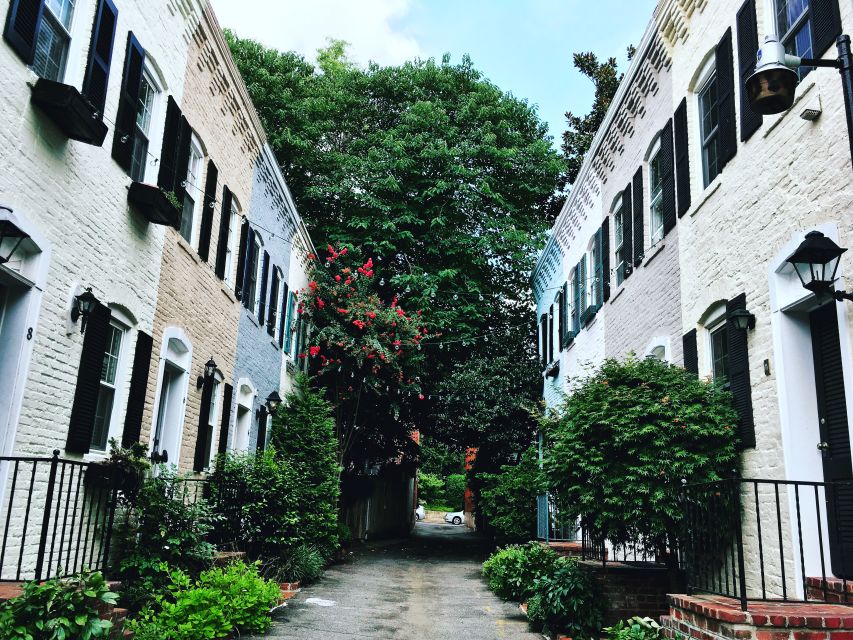
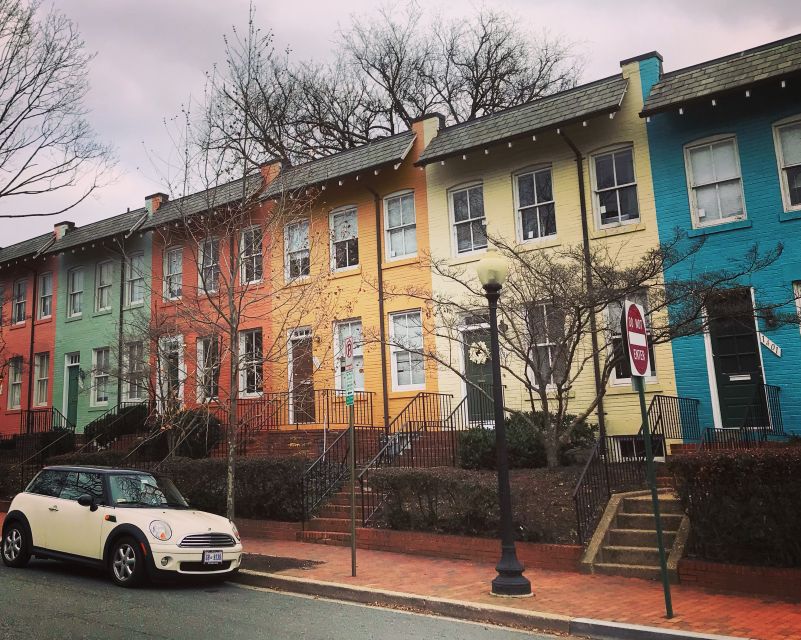
After that, you follow Pomander Walk, a group of tiny, pastel row houses. This is likely one of the most photogenic stretches of the walk, but its value is not only visual. The small scale and bright colors offer a sharp change from larger houses and institutional buildings elsewhere on the route.
Pomander Walk also keeps the tour from becoming a march between major landmarks. You get a look at the intimate side of Georgetown, where the character comes from a compact run of homes rather than a single famous structure.
Bring water, especially in warm weather, and wear shoes with good support. Two miles is not a major hike, but standing, stopping, and walking over two and a half hours can be tiring if you are wearing shoes chosen for style alone. The tour takes place in rain or shine unless conditions are dangerous, so check the forecast before you leave and dress for the day.
More Georgetown tours:
- Ghosts of Georgetown & The Exorcist Steps Walking Tour
★ 5.0 · 610 reviews - Georgetown Foodie Culinary Tour & Neighborhood Walk
★ 5.0 · 437 reviews - Gastronomic Georgetown Walking Food Tour
★ 4.5 · 373 reviews - Tastes of Georgetown Food & History Small Group Walking Tour
★ 4.5 · 203 reviews
Volta Laboratory and Georgetown’s academic side
The route later reaches the place where Alexander Graham Bell founded Volta Laboratory. This stop adds science and invention to the tour’s mix of commerce, homes, religion, and education.
It is a strong example of why a guided walk can be more useful than simply following a map. A building may look ordinary from the street, but its importance becomes clear once you know who worked there and what happened inside. The guide’s explanation gives the site a place in Georgetown’s wider story.
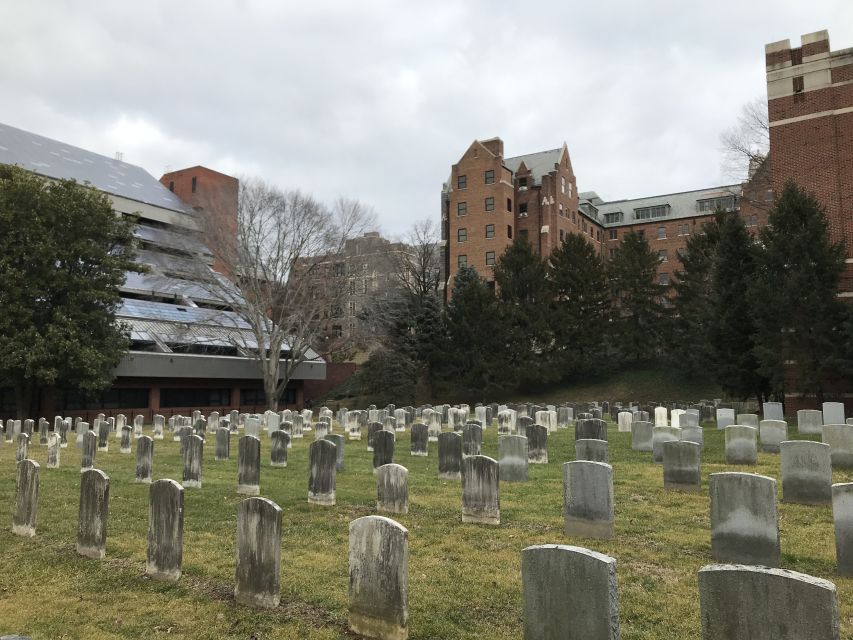
From there, the tour turns toward academic destinations, including Georgetown Preparatory School, Healy Hall, and the University Library. These buildings show another side of the neighborhood, one shaped by schools and long-running institutions.
Healy Hall is likely to attract the most attention, but the route does not treat it as the only worthwhile campus stop. The University Library and Georgetown Preparatory School help show the broader academic setting. You also hear about campus nightlife at The Tombs, giving the university section a more everyday feel.
This portion works well for first-time visitors who want more than a quick look at Georgetown University. It also suits anyone comparing architecture tours with standard city sightseeing. The focus here is on how buildings function and how institutions affect a neighborhood, not just on getting a few recognizable photographs.
The Car Barn and the final stretch to the waterfront
The Car Barn is a renovated streetcar depot. Its earlier transportation role makes it a fitting late stop after the canal and before the waterfront. You see how Georgetown’s buildings have been adapted over time, with an old transport facility given a new life.
That change is worth noting because historic preservation is not always about freezing a building in its original use. Georgetown’s character comes partly from the way older structures continue to serve new purposes. The guide helps you notice those changes as you move through the neighborhood.
The route then includes the Francis Scott Key Memorial and Cady’s Alley. These stops shift the mood again, bringing together a memorial and a more contemporary commercial setting before the final walk to the Georgetown Waterfront.
The waterfront is a sensible place to finish. After a route filled with houses, schools, churches, and campus buildings, the riverfront gives you room to pause and take stock of the neighborhood’s connection to the Potomac. The tour concludes here, so plan your onward route from the waterfront rather than from the original meeting point.
How the guides shape the experience
The guide is the key part of this tour. The route includes enough buildings and names that a flat recitation would quickly become tiring. The best moments come when the guide connects a structure to a person, an institution, or a change in Georgetown’s fortunes.
Sam is specifically praised for being informative and engaging, with fun facts mixed into the architecture. Ellyn is also singled out for bringing useful historical details to the walk. Guide assignments can change, so you should not assume either person will lead your departure, but both names give you a sense of the style to expect.
The strongest praise centers on the guides’ ability to make Georgetown’s architecture understandable. That is important because many details are easy to miss when walking alone. You may notice a doorway, a row of houses, or an old institutional building, but the guide explains why it matters.
A small practical point: keep your camera ready, but do not expect a long photography break at every stop. If you want photos of the most interesting houses and details, stay near the guide and be ready to pause quickly. The tour’s leisurely pace helps, but it is still a guided group walk with a fixed ending time.
Is $43 a fair price?
The cost is $43 per person. That is more than a casual self-guided stroll, but the comparison is not quite fair. You are paying for two and a half hours of route planning, local interpretation, and stories that connect the buildings.
The value is strongest if you are new to Georgetown or if architecture interests you but you do not have the time to research each address. The tour covers a wide range of sites, from the C&O Canal and historic homes to schools, a laboratory, a streetcar depot, and the waterfront. That variety gives you a useful first look at the neighborhood.
The price may feel less worthwhile if you already know Georgetown well and prefer to walk independently. It also does not include meals, drinks, transport, or entry to an attraction. This is an outdoor walking tour, and the main product is the guide’s explanation of what you see along the way.
I think the price makes sense for a first visit, especially if you value context over a quick landmark checklist. It can also help you choose where to return later for a slower look or more photographs.
Who should book this Georgetown tour?
I would choose this walk for anyone who wants Georgetown explained through its buildings. It suits adults, older children who can handle two miles, architecture fans, history-minded visitors, and anyone who prefers a calm neighborhood walk to a packed monument schedule.
It is also a good first activity in Georgetown because the route gives you a map in your head. Afterward, you know where the canal, university area, Cady’s Alley, and waterfront fit together.
You should think twice if you dislike walking, need a fully indoor activity, or want deep access inside every building. The information provided describes an exterior walking route with a professional English-speaking guide. The tour takes place outdoors and runs in most weather.
The schedule lasts 150 minutes, so it fits neatly into a morning or afternoon plan. Just avoid booking it too close to another fixed activity, since the group departs on time and ends at the waterfront rather than back at Baked & Wired.
My verdict: a smart first look at Georgetown
I recommend the tour if you want Georgetown’s architecture tied to real stories and local institutions. The C&O Canal, Grafton Tyler Double House, Yellow Tavern, Pomander Walk, Volta Laboratory, Healy Hall, Car Barn, and waterfront create a well-rounded route rather than a single-theme stroll.
The main reason to book is the guide. Sam and Ellyn are noted for clear explanations and fun facts, and the walk’s strongest feature is the human story behind the buildings. Book it when you have comfortable shoes, water, and two and a half hours to spare.
Skip it only if you would rather explore alone or if two miles outdoors sounds like too much. For most first-time visitors, $43 buys a useful introduction to Georgetown that a map alone cannot provide.
FAQ
How long does the Georgetown Architecture Walking Tour last?
The tour lasts 150 minutes, or two and a half hours.
How far do you walk?
The route covers about 2 miles.
Where is the meeting point?
Meet your guide outside Baked & Wired in Georgetown.
How do I identify the guide?
The guide will be wearing a DC Design Tour T-shirt.
What language is the tour conducted in?
The live guided tour is conducted in English.
What buildings and sites are included?
The route includes the C&O Canal, Laird-Dunlop House, Newton D. Baker House, Lydia English Seminary School for Girls, Grafton Tyler Double House, Christ Episcopal Church, Hyde-Addison School, Yellow Tavern, Pomander Walk, Volta Laboratory, Georgetown Preparatory School, Healy Hall, the University Library, The Tombs, the Car Barn, Francis Scott Key Memorial, Cady’s Alley, and the Georgetown Waterfront.
Does the tour operate in bad weather?
The tour takes place rain or shine unless weather conditions are dangerous.
What should I bring?
Bring comfortable shoes, water, and clothing suited to the weather.
Can I cancel for a full refund?
Yes. You can cancel up to 24 hours in advance for a full refund. You can also reserve now and pay later.
More walking tours in Washington DC
- Arlington National Cemetery Walking Tour & Changing of the Guards
★ 5.0 · 2,566 reviews - Ghosts of D.C. – Walking Tour
★ 4.5 · 344 reviews - Smithsonian Museums Walking Tour with Reserved Air & Space Entry
★ 5.0 · 297 reviews - DC’s Original Food and History Walking Tour
★ 5.0 · 255 reviews
Recently added around Washington DC
- Small Group Washington DC Night Tour★ 4.5 · 3 reviews
- Washington DC Neighborhoods Personalized Self-Guided App Tour★ 3.5 · 3 reviews
- America’s Main Street and White House Private Full-Day Tour★ 5.0 · 3 reviews
- Beyond the Closet Walking Tour★ 5.0 · 3 reviews
- Sushi Masterclass in Washington D.C. (Includes 4-Course Meal)★ 5.0 · 3 reviews
- Pirate Ship Treasure Hunt Cruise with Face Painting★ 4.5 · 3 reviews
- Private Washington DC Grand Tour with Changing of the Guard.★ 5.0 · 3 reviews
- 250th: National Archives & American History Museum Guided Tour★ 5.0 · 3 reviews
Georgetown, compared.
Ghosts of Georgetown & The Exorcist Steps Walking Tour
Read our review →
Georgetown Foodie Culinary Tour & Neighborhood Walk
Read our review →
Historic Georgetown: History, Gossip, & Architecture Walking Tour
Read our review →
Tastes of Georgetown Food & History Small Group Walking Tour
Read our review →
The Escape Game DC: 60-Minute Adventure in Georgetown
Read our review →
Browse the lists this tour appears in