
Reviewed · WASHINGTON DC
Gourmet Pasta Class in Washington D.C. (Includes 3-Course Meal)
The best part of this Washington, D.C. cooking class is that you do not simply watch pasta being made. You knead the dough, shape the noodles, and build the sauces before sitting down to eat what you prepared. I especially like the small eight-person format and the fact that the meal includes both unfilled and filled pasta.
I also like the menu’s range: a fresh salad, a choice of meat or vegetable sauce, and cheese-filled tortellini or agnolotti. Chef Jordan gets particular credit for keeping the class patient, fun, and well paced, with music that adds some personality. The main drawback is simple: alcohol is not allowed, and the class may feel less useful if you already make fresh pasta often.
In This Review
- Key points to know before booking
- Why this pasta class works as a Washington DC food experience
- Arriving at 1369 New York Ave NE
- The first course: seasonal vegetables and fresh herbs
- Kneading dough and shaping handmade pasta
- Garganelli with savory meat sauce
- Farfalle with vegetable ragù
- Filled pasta with artisanal cheeses and herbs
- What Chef Jordan adds to the experience
- Is $135 a fair price?
- Dietary needs and comfort considerations
- Who should book this class?
- Booking, timing, and cancellation
- Should you book this Washington DC pasta class?
- FAQ
- How long does the pasta class last?
- Where does the class begin and end?
- What food is included?
- Can I choose between meat and vegetarian pasta?
- Are drinks included?
- Can I cancel for a full refund?
Key points to know before booking
- You make three distinct courses: seasonal salad, hand-shaped pasta with sauce, and filled pasta with cheese and herbs.
- The class is limited to eight people, creating more room for direct instruction than a large demonstration.
- Chef Jordan is a notable choice when available, with a patient teaching style and an upbeat playlist.
- The meeting point is 1369 New York Ave NE, and the class ends at the same address.
- Dietary needs can be discussed in advance, and the chef will try to adjust the menu.
- The $135 price includes the cooking class and complete meal, but beverages are not included and alcohol is not permitted.
Why this pasta class works as a Washington DC food experience
This is a good pick if you want an activity that gives you something to do, not just something to see. For about three hours, you work with dough and sauces, then eat the results in the same cozy setting. That combination makes the class feel more substantial than a short tasting.
The group size matters. With a maximum of eight participants, you should have a better chance to see the chef’s technique and ask questions while working. Fresh pasta can look easy until the dough is too dry, the pieces are uneven, or the filling escapes. A small group gives the chef more room to correct those problems before they reach your plate.
The class is hosted through Cozymeal, which connects diners with local chefs in Washington, D.C. The specific host can matter a great deal in a hands-on class. Chef Jordan is the clearest name attached to this experience, and his style sounds suited to beginners: patient, clear, and relaxed rather than hurried or overly formal.
Other Washington DC tours people book alongside this one:
- DC Memorials Night Tour: Glass-Roof Convertible Upgrade Option
★ 4.5 · 6,933 reviews - National Mall Monuments Night Tour with 10+ Stops, Entry Tickets
★ 4.5 · 4,863 reviews - Washington DC Monuments by Moonlight Tour by Trolley
★ 4.5 · 3,956 reviews
Arriving at 1369 New York Ave NE
You meet at 1369 New York Ave NE, Washington, DC 20002, then return to that same location when the session ends. The fixed start and finish make planning easier, especially if you are fitting the class between sightseeing plans.
The address is not presented as a major landmark or a restaurant stop, so check the meeting details carefully before leaving. A mobile ticket is provided, and confirmation arrives when you book. Give yourself enough time to find the venue without rushing. Arriving calm is useful when the first task may be handling dough.
The setting is described as cozy rather than grand. That suits this kind of class. You are there to work at a counter or table, not admire a dining room. The smaller room should also make it easier to follow the chef’s movements and keep track of your own pasta shapes.
The first course: seasonal vegetables and fresh herbs
The meal begins with a seasonal vegetable salad dressed with fresh herbs and a tangy vinaigrette. It is a smart opening course for a pasta class because it brings freshness and acidity before the heavier dishes arrive.
You will not be making a complicated restaurant-style salad. That is part of its value. The course shows how a sharp dressing and fresh herbs can give vegetables a clear flavor without burying them under cheese or a heavy sauce. The exact vegetables change with the season, so you should expect the salad to vary.
This first course also gives the class a natural rhythm. Instead of spending three straight hours on dough, you get a prepared part of the meal to enjoy while the pasta work moves toward the table. If you prefer a large first course, the salad will probably feel modest. Its role is to begin the meal, not fill you up.
Kneading dough and shaping handmade pasta
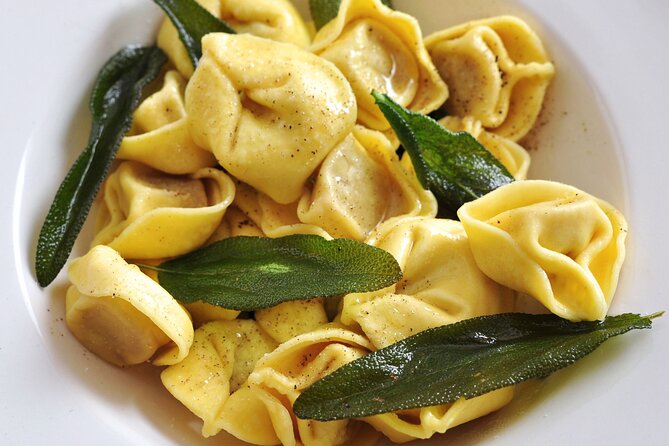
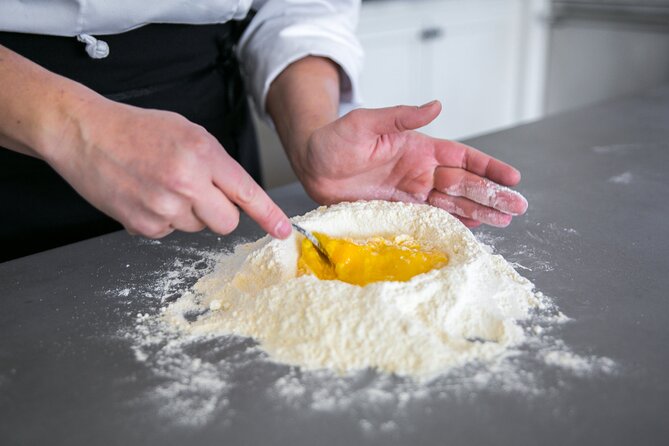
The heart of the session is the pasta work. Your chef guides you through kneading dough, shaping pasta, and balancing sauces so the finished dishes have the right texture and flavor.
Kneading is more than a theatrical step. You learn how dough changes as it is worked, and you get a better feel for the texture needed before rolling or shaping. The listing does not promise a take-home recipe or a pasta tool kit, so think of this primarily as a practical cooking lesson and meal rather than a formal certification course.
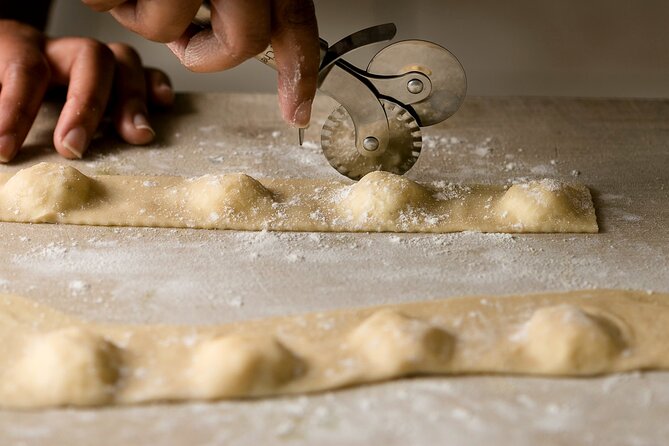
The shapes give you useful variety. Garganelli requires a different approach from farfalle, while tortellini and agnolotti bring folding and filling into the picture. That range is one of the strongest reasons to choose this class over a session focused on only one noodle.
Your results may not look perfectly uniform. That is normal with handmade pasta, especially when you are learning. The chef’s job is to help you get pieces that cook properly and hold their sauce. Chef Jordan’s patient approach should be helpful here, particularly if this is your first time working with fresh dough.
A few more Washington DC tours worth a look
- Mosaic Lamp Workshop
★ 5.0 · 5 reviews - Captivating DC Private Photography Workshop
★ 5.0 · 4 reviews
Garganelli with savory meat sauce
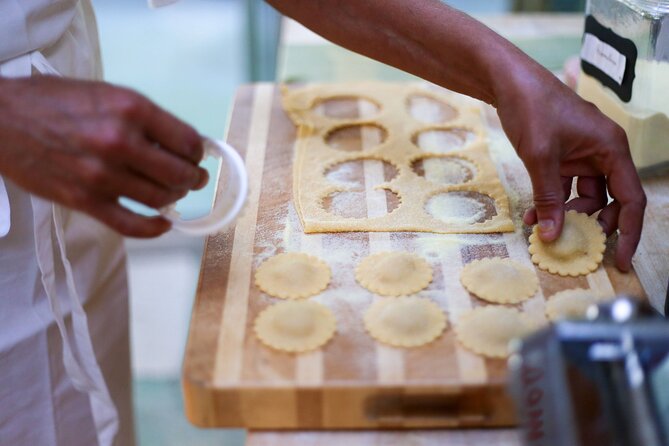
The unfilled pasta course offers a choice between garganelli with savory meat sauce and farfalle with vegetable ragù. Garganelli is a ridged, tube-like pasta shape, so it gives the sauce places to cling. The pairing is hearty and direct.
The meat sauce is described as robust and savory. It should appeal to diners who want a classic pasta plate with a full-bodied sauce rather than a delicate preparation. The benefit of making the garganelli yourself is that shape and sauce become connected. You are not just tasting the pasta. You are seeing why ridges and folds matter.
This choice may be less appealing if you do not eat meat. That is where the vegetable ragù becomes important. The menu allows for a substantial meat-free alternative, rather than replacing the main course with plain vegetables or a simple side dish.
Farfalle with vegetable ragù
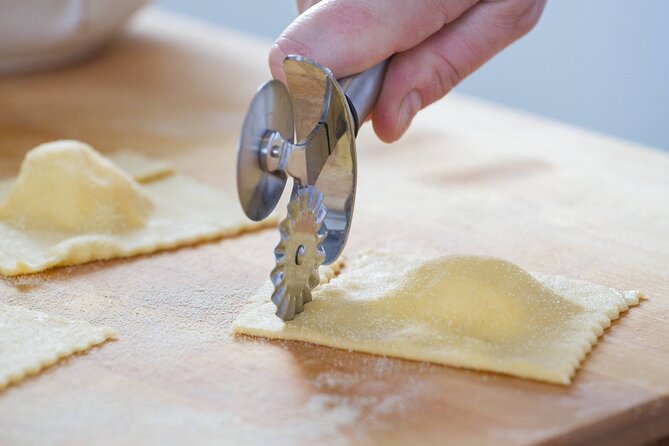
Farfalle, the bowtie-shaped pasta, is served with a hearty vegetable ragù. This version brings earthy flavors without meat and gives you a different shaping exercise from garganelli.
The vegetable ragù is not described as a light tomato sauce. It is intended to have enough body to match the pasta, which makes the meat-free option feel like a true main course. If you enjoy vegetables but want a filling meal, this is likely the better choice.
One practical point is that the menu language describes these as options. If you have a strong preference, tell the chef early in the session. That is especially important for dietary reasons, though the class also asks you to share restrictions in advance so the menu can be adjusted when possible.
Filled pasta with artisanal cheeses and herbs
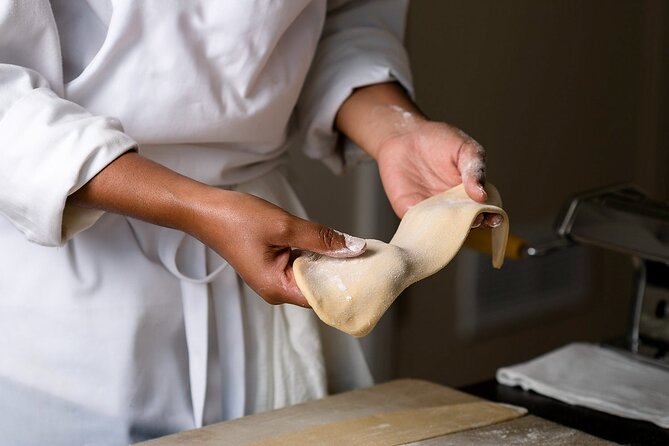
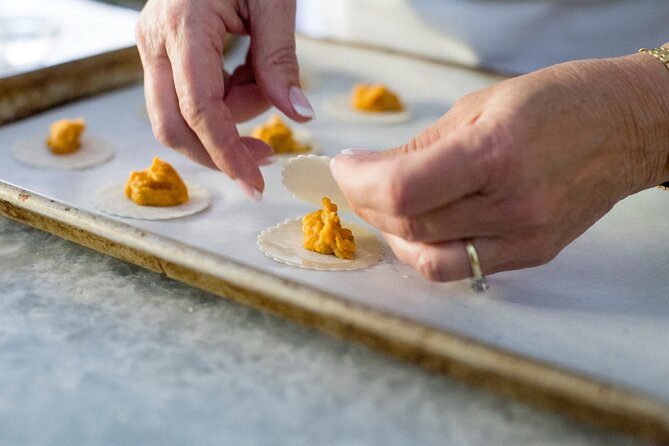
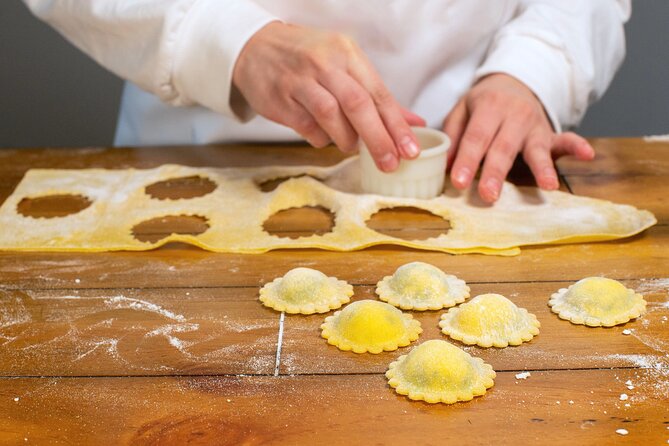
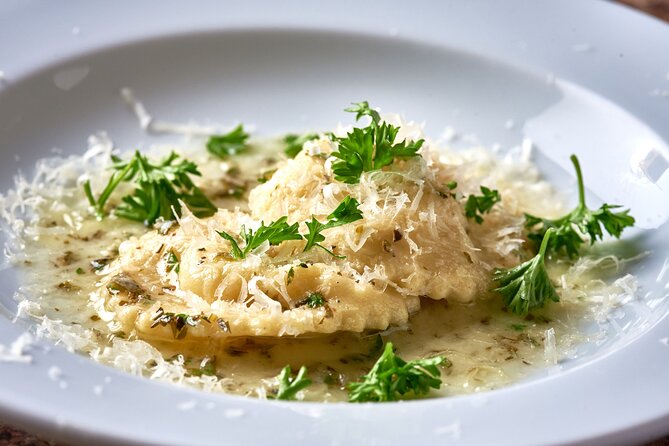
The final pasta preparation moves to filled pasta, with a choice between tortellini and agnolotti. Both are stuffed with artisanal cheeses and herbs, then served in a luxurious cream sauce.
This is the most technically demanding part of the class. Filling pasta involves portion control, sealing, and shaping. Too much filling can split the pasta. Too little can make the finished piece feel flat. The chef’s step-by-step guidance has real value here because small corrections make a difference.
Tortellini and agnolotti also give the class a more special finish than a second serving of plain noodles. You get to see how the same basic dough can become a different dish through folding and filling. The cheese and herbs provide the central flavor, while the cream sauce adds weight and smoothness.
The cream sauce may be the richest item on the menu. If you prefer bright, tomato-based pasta, this course could feel heavy. Still, it works as the final savory plate because the salad provides acidity at the start and the unfilled pasta offers a different texture and sauce style.
What Chef Jordan adds to the experience
A cooking class rises or falls on the person leading it. Chef Jordan is specifically associated with this experience, and the useful details are his patience, clear instruction, and sense of fun.
Those qualities matter more than flashy technique. A chef who moves too quickly can leave beginners staring at a lump of dough and guessing what went wrong. A patient teacher gives you time to repeat the motion, ask for help, and understand why a particular shape or sauce works.
The music also adds a personal touch. Chef Jordan’s playlist has been described as especially good, which suggests a relaxed room rather than a stiff culinary lecture. That may not matter to you if you want a quiet, formal lesson, but it can make a three-hour class feel more social.
The food selection is another strength. The dishes are simple enough to learn but still have several steps and textures. You are not being asked to prepare a showpiece that requires professional equipment. At the same time, you are doing more than assembling a basic pasta dinner.
Is $135 a fair price?
At $135 per person, this is not a cheap lunch. The price makes more sense when you count the full package: roughly three hours of instruction, a small group, the ingredients, the hands-on work, and a three-course meal.
A restaurant meal at this level might cost less if you choose carefully, but it would not teach you how to knead and shape pasta. A short cooking demonstration might also cost less, but you would not get the same amount of direct practice. The value here depends on how much you want the activity itself.
I would consider the price reasonable for a special occasion, a food-focused afternoon, or a couple who prefer cooking together to another museum visit. It is less compelling if your priority is simply finding the least expensive meal in Washington, D.C.
There are no alcoholic drinks included, and alcohol is not allowed on site. Non-alcoholic beverages are welcome. That rule can be a drawback for people who expect wine with pasta, but it also keeps the focus on the class and avoids confusion about drinking while using cooking tools.
Dietary needs and comfort considerations
The class is designed to accommodate a range of dietary needs, but you need to give notice in advance. Do not wait until you arrive and expect the chef to rebuild the menu on the spot.
The listed menu includes meat sauce, vegetable ragù, cheese fillings, herbs, and cream sauce. Those details matter if you avoid meat, dairy, or certain ingredients. The chef will do their best to tailor the experience, but the available information does not promise that every restriction can be met in every case.
Service animals are allowed. The activity has a maximum of nine travelers in the additional information, while the main description says the cooking group is limited to eight guests. In practical terms, you should expect a very small class, but confirm the final group size if that distinction matters to you.
Who should book this class?
I would recommend this for people who enjoy eating Italian food but want to understand the work behind it. Beginners should benefit most, since the chef provides step-by-step help and the menu includes several kinds of pasta rather than one repeated exercise.
It also suits couples, friends, and small groups looking for a shared activity. The meal gives the class a clear reward, and the relaxed style associated with Chef Jordan should help people who do not want a formal cooking-school atmosphere.
Vegetarians have a clear path through the menu with vegetable ragù, but you should still report your needs in advance. People who dislike cream sauces, avoid dairy, or want a strictly controlled kitchen should ask questions before booking.
I would be more cautious if you already make fresh pasta regularly. You may still enjoy the social setting and menu, but the basic kneading and shaping instruction could cover familiar ground. The class is built around learning by doing, not advanced professional technique.
Booking, timing, and cancellation
Plan for about three hours from start to finish. The class begins and ends at 1369 New York Ave NE, and confirmation is sent at booking. It is often reserved about 19 days ahead, so booking early is sensible if your Washington schedule is fixed.
Free cancellation is available when you cancel at least 24 hours before the start time. A cancellation inside that window is not refunded, and late changes are not accepted. The activity also requires a minimum number of participants. If that minimum is not reached and the class is canceled, you are offered another date or experience, or a full refund.
Should you book this Washington DC pasta class?
Book it if you want a hands-on food experience with a complete meal, a small group, and several pasta shapes in one session. The strongest reasons are the intimate format, the useful range of dishes, and Chef Jordan’s patient, playful teaching style when he leads the class.
Skip it if you mainly want a quick meal, expect wine, or already have strong fresh-pasta skills. At $135, you are paying for instruction and participation as much as for dinner. For beginners and pasta fans, that combination makes the class a worthwhile Washington, D.C. activity.
FAQ
How long does the pasta class last?
The class lasts approximately three hours.
Where does the class begin and end?
It begins at 1369 New York Ave NE, Washington, DC 20002, and ends back at the same meeting point.
What food is included?
The class includes a full three-course menu with a seasonal vegetable salad, unfilled pasta, and filled pasta.
Can I choose between meat and vegetarian pasta?
The menu offers garganelli with savory meat sauce or farfalle with vegetable ragù. Share dietary needs in advance so the chef can try to tailor the experience.
Are drinks included?
Non-alcoholic beverages are welcome, but beverages are not included. Alcohol is not permitted on site.
Can I cancel for a full refund?
Yes. You must cancel at least 24 hours before the experience start time for a full refund. Cancellations made less than 24 hours in advance are not refunded.
Recently added around Washington DC
- Small Group Washington DC Night Tour★ 4.5 · 3 reviews
- Washington DC Neighborhoods Personalized Self-Guided App Tour★ 3.5 · 3 reviews
- America’s Main Street and White House Private Full-Day Tour★ 5.0 · 3 reviews
- Beyond the Closet Walking Tour★ 5.0 · 3 reviews
- Pirate Ship Treasure Hunt Cruise with Face Painting★ 4.5 · 3 reviews
- Sushi Masterclass in Washington D.C. (Includes 4-Course Meal)★ 5.0 · 3 reviews
- Private Washington DC Grand Tour with Changing of the Guard.★ 5.0 · 3 reviews
- 250th: National Archives & American History Museum Guided Tour★ 5.0 · 3 reviews