
Reviewed · MONUMENTS & MEMORIALS
Washington DC Monuments and Memorials Night Tour
Washington DC looks different after sunset. The marble glows, the crowds thin out, and the memorials take on a quieter, more serious mood. This three-hour night tour covers a remarkable number of major sights in a small, air-conditioned van, with stops at nearly every important monument around the National Mall.
I like the small group, capped at 12 people, and I like the care shown by guides such as Ken, who drives, shares city stories, helps people in and out of the van, and adjusts when plans go awry. The warm vehicle matters on a cold night. The main drawback is that the guide stays with the van, so you hear the main commentary before entering each site and explore the memorials on your own.
- Nighttime access to nine major sights: See the Jefferson, Lincoln, Martin Luther King Jr., Vietnam, Korean War, and World War II memorials, plus Iwo Jima, the White House, and the U.S. Capitol.
- Small-group travel: The vehicle holds no more than 12 people, making loading, unloading, and conversation easier than on a large bus.
- Personal care from the guide: Ken has helped with mobility needs, difficult weather, late arrivals, and hotel drop-offs in some cases.
- Short audio links at each site: Scan the supplied link on your phone for two to three minutes of added narration while you walk around.
- Free cancellation: Cancel at least 24 hours before departure for a full refund, subject to the weather policy.
In This Review
- Why Washington Looks Best After Dark
- A Small Van Makes a Big Difference
- Jefferson Memorial and the Tidal Basin
- Ford’s Theatre and the White House
- World War II Memorial and Iwo Jima
- Martin Luther King Jr. Memorial
- Vietnam Veterans Memorial
- Lincoln Memorial and the Steps of the Mall
- Korean War Veterans Memorial
- The U.S. Capitol at the End of the Route
- What Guides Ken and John Add
- Cold Weather, Mobility, and Practical Comfort
- Who Gets the Most From This Tour
- Is $89 a Fair Price?
- Booking and Cancellation Details
- Should You Book the Washington DC Night Tour?
- FAQ
- How long is the Washington DC Monuments and Memorials Night Tour?
- What time and where does the tour begin?
- Where does the tour end?
- How many people can join the tour?
- Is transportation included?
- Are the memorial admission fees included?
- Are headphones or WiFi provided?
- Is bottled water included?
- What happens if bad weather cancels the tour?
Why Washington Looks Best After Dark
At $89 per person, this is not the cheapest way to see Washington. It is a fair price if you want transportation between far-flung memorials, a guide’s running commentary, bottled water, and a small vehicle rather than a large sightseeing coach.
The night setting is the real reason to choose it. The monuments are illuminated, the reflecting pools pick up the light, and evening crowds are often smaller. You also avoid spending the first day of your Washington visit figuring out how the National Mall fits together.
The tour leaves at 7 p.m. from One CityCenter, at 850 10th Street NW, and returns there after about three hours. You should be comfortable walking short distances and standing outside at each stop. The total physical demand is moderate, but winter nights can be very cold, and one review specifically notes that some memorial areas are not brightly lit. Bring a warm coat and use your phone flashlight carefully.
A Small Van Makes a Big Difference
The vehicle is air-conditioned and described as clean and comfortable, with clear viewing from inside. Bottled water is included. WiFi is not, and you need to bring your own earbuds or headphones if you want to use the audio links privately.
A group of up to 12 is small enough to keep stops moving. You are not waiting for dozens of people to climb down from a double-decker bus, and the van can get closer to several sites. That extra efficiency helps explain how the tour fits so much into three hours.
The arrangement also has limits. This is essentially a one-person operation. The guide cannot leave the van unattended, so he gives the main explanation while parked, then you walk through each memorial independently. For some people, that is ideal: you can take pictures, read inscriptions, and set your own pace. If you want a guide beside you at every statue and wall, this is not the right format.
More monument and memorial tours in Washington DC:
- DC Memorials Night Tour: Glass-Roof Convertible Upgrade Option
★ 4.5 · 6,933 reviews - National Mall Monuments Night Tour with 10+ Stops, Entry Tickets
★ 4.5 · 4,863 reviews - Washington DC Monuments by Moonlight Tour by Trolley
★ 4.5 · 3,956 reviews
Jefferson Memorial and the Tidal Basin
The first scheduled stop is the Thomas Jefferson Memorial, with about 20 minutes to look around. Its domed neoclassical design was inspired by Rome’s Pantheon, and the building feels especially calm beside the Tidal Basin.
Inside, a large statue of Jefferson looks across the circular chamber. Passages from his writings line the walls, including words about liberty and democracy. At night, the architecture becomes more dramatic, though the surrounding paths can feel dark, so watch your footing.
Spring visitors may see the Tidal Basin’s famous cherry blossoms, but the blossoms are not guaranteed and are not the focus of the tour. The main value here is the contrast between the memorial’s formal design and the quiet water around it.
Ford’s Theatre and the White House
Ford’s Theatre is included as a photo stop, though the supplied schedule does not give it a set length. You see the red brick exterior, columns, and theater marquee from outside. It is a quick reminder that Washington’s political story is tied to a city of streets, buildings, and working neighborhoods, not just monumental plazas.
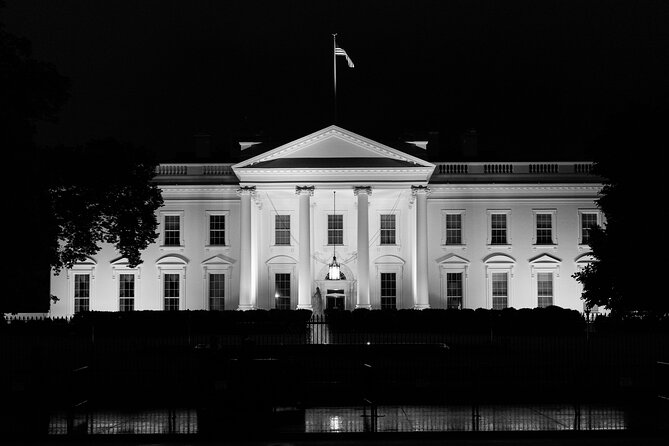
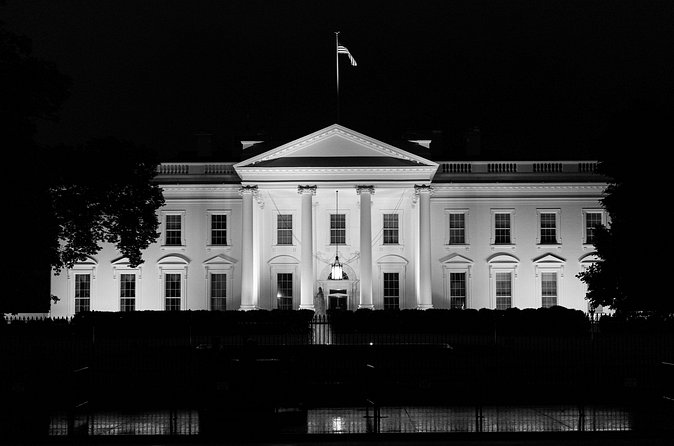
The White House follows, with about 15 minutes for exterior photographs. You do not enter, and admission is not included. The best use of the stop is to take in the building from different angles around the Ellipse and photograph its neoclassical façade, lawns, and gardens.
At night, the White House can be less about architectural detail and more about atmosphere. Your guide can add context while you get oriented, but remember that this is an outside view only.
World War II Memorial and Iwo Jima
The World War II Memorial gets about 15 minutes. Its 56 pillars represent the states and territories involved in the war, and the layout points toward the Reflecting Pool and Lincoln Memorial.
Water, stone, fountains, and inscriptions give the memorial a broad, ceremonial feel. At night, the lighting makes the columns and arches especially photogenic. The short stop is enough for an introduction and pictures, but not enough for a close reading of every inscription.
The U.S. Marine Corps War Memorial, commonly called the Iwo Jima Memorial, also receives about 15 minutes. The huge flag-raising sculpture honors Marines and is based on the famous World War II image from Iwo Jima.
This stop sits across the river in Virginia, which is one reason a van tour is useful. The memorial’s open setting gives you a clear view back toward Washington, and its nighttime lighting suits the solemn subject. The inscriptions and surrounding park add meaning, but the tour’s short stop favors a broad look rather than a detailed study.
More evening tours in Washington DC:
- National Mall Night Tour with 10+ Monuments (Public or Private)
★ 4.5 · 2,207 reviews - Small Group National Mall Night Tour with 10 Top Attractions
★ 5.0 · 1,658 reviews - Big Bus DC: Monuments & Memorials Night Tour by Open-top Bus
★ 4.5 · 1,174 reviews - Washington DC Sites at Night Guided Bicycle Tour
★ 4.5 · 536 reviews
Martin Luther King Jr. Memorial
The Martin Luther King Jr. Memorial gives you about 15 minutes beside the Tidal Basin. A 30-foot statue of King appears to emerge from a granite formation, an image tied to the idea of a leader moving from words into action.
Quotes about love, equality, and justice line the surrounding stone. This is one of the stops where the audio link can help, since a short explanation gives the quotations more context before you walk through the site.
The memorial is visually powerful at night, but you should allow yourself quiet time. It is easy to rush in, photograph the statue, and leave. Instead, read a few of the inscriptions and consider how the setting connects King’s work with the democratic ideals presented at the Jefferson and Lincoln memorials.
Vietnam Veterans Memorial
The Vietnam Veterans Memorial is scheduled for about 20 minutes, one of the longer stops. Its polished black granite wall carries the names of more than 58,000 people who died or remain missing from the conflict.
The wall’s design is direct and personal. You can walk along the names, see the reflections in the stone, and notice flowers, photographs, and other mementos left at the base. The Three Servicemen Statue and Vietnam Women’s Memorial are nearby, adding different views of military service and the war’s human cost.
This is not a site to rush through. Twenty minutes gives you enough time for a meaningful look, though anyone who wants to locate a particular name may need to return during the day. The guide’s pre-stop explanation and the short audio narration help you understand the layout without requiring a long lecture in the cold.
Lincoln Memorial and the Steps of the Mall
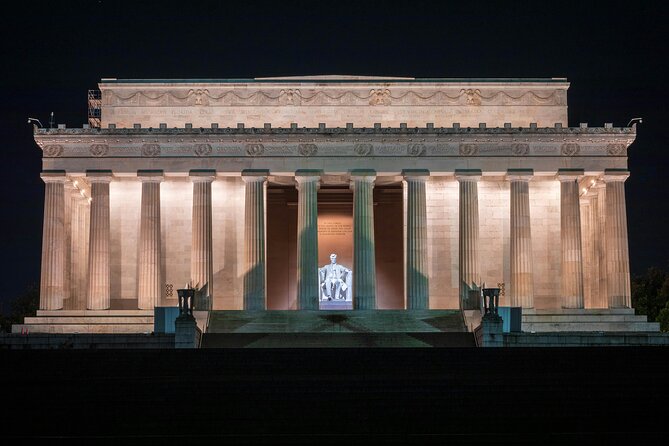
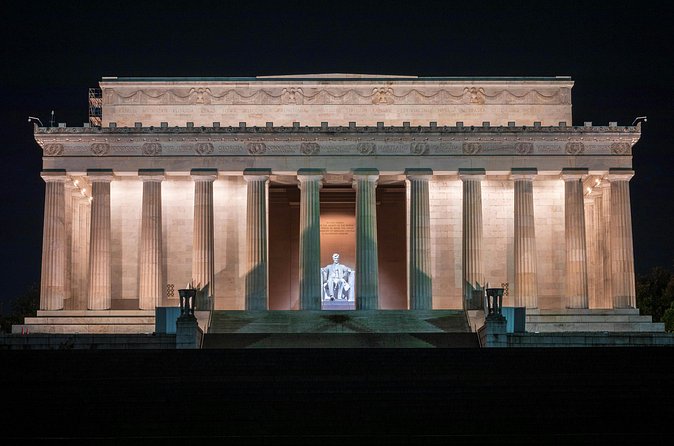
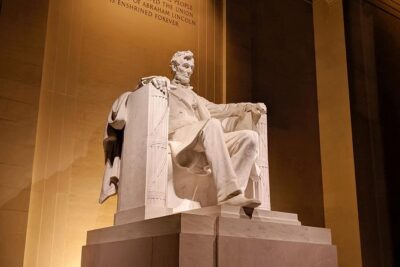
The Lincoln Memorial receives about 20 minutes and is one of the tour’s essential stops. Abraham Lincoln’s seated statue fills the chamber, framed by classical columns. The 36 columns represent the states in the Union at the time of Lincoln’s death.
The steps face the Reflecting Pool and the Washington Monument. They also mark the place where Martin Luther King Jr. delivered his I Have a Dream speech. At night, the view across the Mall can be striking, and the quieter atmosphere suits the memorial’s themes of unity, freedom, and national repair.
You may find that 20 minutes passes quickly here. The building, statue, inscriptions, steps, and view all deserve time, but the tour is built to give you an overview. If Lincoln becomes a priority, note the location and return for a longer visit.
Korean War Veterans Memorial
The Korean War Veterans Memorial allows about 15 minutes. Nineteen stainless steel soldiers move through a field of juniper, while a black granite wall reflects their figures and carries names connected with the conflict.
The design feels more immediate than a conventional row of statues. The soldiers’ expressions and equipment suggest exhaustion, uncertainty, and movement rather than a simple victory scene. More than 36,000 American lives were lost in the war, and the memorial asks you to remember a conflict that is sometimes overlooked beside World War II and Vietnam.
Night lighting makes the stainless steel figures particularly effective. The site is compact, so 15 minutes works well for a first visit. As with the other memorials, the audio link can fill in details while you walk.
The U.S. Capitol at the End of the Route
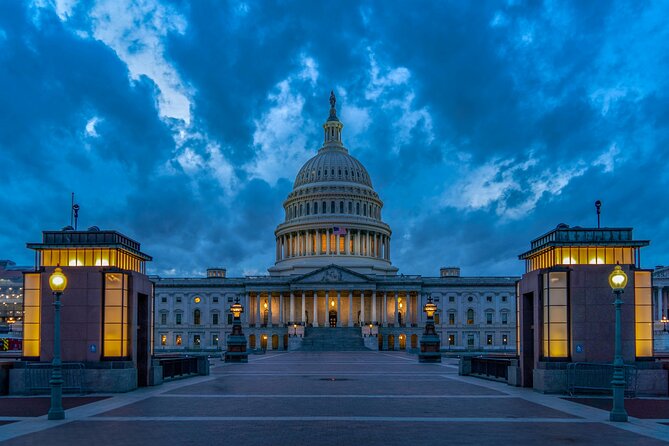
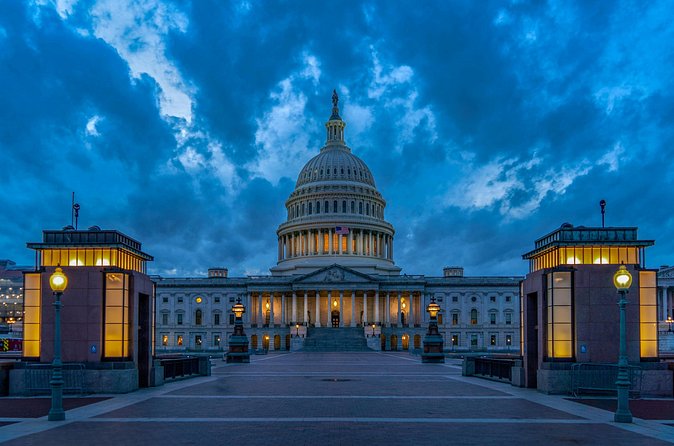
The final scheduled stop is the exterior west side of the U.S. Capitol, with about 10 minutes for photographs and orientation. The dome is the focal point, framed by formal grounds, gardens, and a reflecting pool.
Ten minutes is brief, but the Capitol works well as a closing image. After seeing memorials devoted to war, civil rights, and national leaders, you finish at the building most closely tied to the country’s lawmaking system.
This is an outside stop only, and admission is not included. Sunset can give the dome a warm glow, but on a 7 p.m. departure the exact light will depend on the season. At night, the emphasis shifts to the illuminated architecture rather than fine detail.
What Guides Ken and John Add
The guide makes or breaks a compact sightseeing tour. Ken receives especially strong praise for his city knowledge, calm manner, patience, and practical help. He has handled icy streets, assisted a person with a disability getting in and out of the van, and helped adjust arrangements after illness or a delayed flight.
That personal approach is useful in a small vehicle. Ken is also the owner of the small business, and the tone is more personal than a standard large-coach operation. John has also led the tour and is described as friendly and well informed.
You should understand the guide’s role clearly. He provides commentary between stops and explains each site before you get out, but he does not walk through the memorials with you. The supplied audio link for each location is meant to fill that gap. Scan it on your phone, use your own earbuds, and treat the stop as a self-guided walk with a guide waiting nearby.
Cold Weather, Mobility, and Practical Comfort
The air-conditioned van is more than a minor perk in Washington. Reviews describe it as especially helpful during freezing weather, snow, and icy streets. You can warm up between stops instead of spending the whole evening in an open vehicle.
The tour requires a moderate level of physical fitness. You need to enter and exit the van and walk around outdoor memorial grounds. The guide has been praised for patience with mobility needs, but the supplied information does not promise a wheelchair-accessible vehicle or a specific accessibility setup, so ask before booking if you need special arrangements.
Wear shoes suited to paved paths and steps. Bring a coat, gloves, and a phone light in winter. The memorials are free, but some areas are not brightly lit, and your own headphones are not included.
Who Gets the Most From This Tour
I would choose this tour for a first evening in Washington, especially if you want to see the major monuments before deciding where to return in daylight. It also fits solo visitors, couples, families, and older people who would find a long walking circuit tiring.
Families benefit from the variety. The White House and Capitol provide familiar landmarks, while the memorials give children a clear introduction to American politics, military service, and civil rights. The short stops keep the evening moving, though younger children may find the repeated loading and unloading tiring.
This tour suits you less if you want long, quiet visits at each site, detailed architectural study, or a guide walking beside you at every stop. In that case, use this as an orientation tour, then return independently to the memorials that catch your attention.
Is $89 a Fair Price?
The $89 fee covers the van, bottled water, guide commentary, and audio links. The memorials themselves are free, but you are paying for the route, driving, parking access, time management, and the chance to see sites on both sides of the Potomac without arranging the transport yourself.
A large bus tour may cost less, but it usually brings more people and less flexibility. A private vehicle would offer more room and control but would cost much more per person. This small-group option sits between those choices.
The value is strongest when you have limited time, dislike navigating at night, or want a warm vehicle in winter. It is weaker if you are comfortable using public transportation and prefer to spend an hour or more at each memorial.
Booking and Cancellation Details
You receive confirmation when you book, and the meeting point is near public transportation. The tour begins at 7 p.m. at One CityCenter and returns there.
Free cancellation is available up to 24 hours before the start time for a full refund. Changes or cancellations inside that window are not accepted and are not refunded. The experience requires suitable weather, so a weather cancellation brings the choice of another date or a full refund.
Because the tour is often booked about a month ahead, I would reserve early if your Washington dates are fixed. Check the forecast close to departure, but do not cancel too soon solely because the evening looks chilly. Cold is manageable in the van, while rain or unsafe conditions may affect the operation.
Should You Book the Washington DC Night Tour?
Book it if you want a well-planned introduction to Washington, a small group, and illuminated monuments without walking the full Mall on your own. The strongest reasons are the wide coverage, the warm van, and the attentive approach associated with Ken and the other guides.
Go in knowing that this is not a fully escorted walking tour. You will receive the explanation before each stop, use the audio link as you explore, and return to the van on your own. For most first-time visitors, that tradeoff is worthwhile. For detailed study, use the tour to find your favorites, then come back by day.
FAQ
How long is the Washington DC Monuments and Memorials Night Tour?
The tour lasts approximately three hours.
What time and where does the tour begin?
It begins at 7 p.m. at One CityCenter, 850 10th Street NW, Washington, DC 20001.
Where does the tour end?
The activity ends back at the meeting point at One CityCenter.
How many people can join the tour?
The maximum group size is 12 people.
Is transportation included?
Yes. Transportation is provided in an air-conditioned vehicle.
Are the memorial admission fees included?
The listed memorials are free to enter. The White House and U.S. Capitol stops are exterior visits, and admission is not included.
Are headphones or WiFi provided?
WiFi is not provided. Earbuds and headphones are also not included, so bring your own if you want to use the site audio links.
Is bottled water included?
Yes. Bottled water is included in the tour price.
What happens if bad weather cancels the tour?
You will be offered a different date or a full refund if the experience is canceled because of poor weather.
Recently added around Washington DC
- Small Group Washington DC Night Tour★ 4.5 · 3 reviews
- Washington DC Neighborhoods Personalized Self-Guided App Tour★ 3.5 · 3 reviews
- America’s Main Street and White House Private Full-Day Tour★ 5.0 · 3 reviews
- Beyond the Closet Walking Tour★ 5.0 · 3 reviews
- Pirate Ship Treasure Hunt Cruise with Face Painting★ 4.5 · 3 reviews
- Sushi Masterclass in Washington D.C. (Includes 4-Course Meal)★ 5.0 · 3 reviews
- Private Washington DC Grand Tour with Changing of the Guard.★ 5.0 · 3 reviews
- 250th: National Archives & American History Museum Guided Tour★ 5.0 · 3 reviews
Monuments & Memorials, compared.
DC Memorials Night Tour: Glass-Roof Convertible Upgrade Option
Read our review →
National Mall Monuments Night Tour with 10+ Stops, Entry Tickets
Read our review →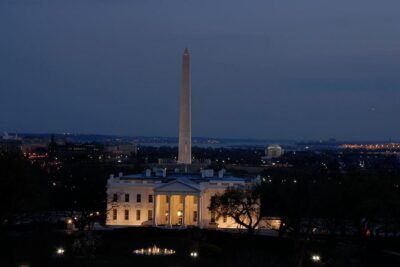
Washington DC Monuments by Moonlight Tour by Trolley
Read our review →
DC Monuments and Capitol Hill Tour by Electric Cart
Read our review →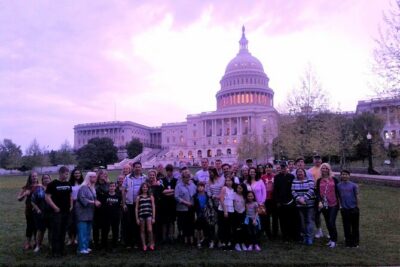
National Mall Night Tour with 10+ Monuments (Public or Private)
Read our review →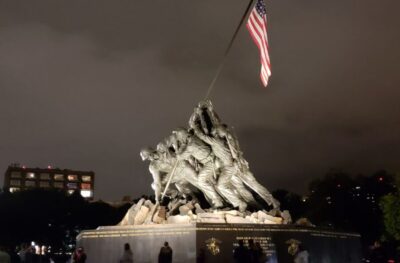
Monuments by Moonlight Nighttime Trolley Tour
Read our review →
Washington Monument Direct Entry with Guidebook
Read our review →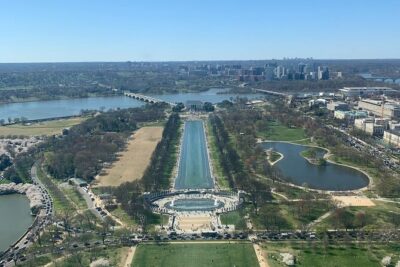
No-Wait Washington Monument Direct Entry Tickets & Guidebook
Read our review →Browse the lists this tour appears in