
Reviewed · GEORGETOWN
Socialites and Spies of Georgetown Walking Tour
Georgetown’s grand homes hide stories of political power, secret affairs, Cold War diplomacy, and murder. This two-hour walk follows women who worked behind the scenes, hosted decision-makers, broke codes, raised presidential money, and helped shape Washington from elegant houses rather than government offices.
I like the tight focus on women whose roles are often pushed to the edge of standard DC history. I also like the route’s personal scale: you stand outside real homes, pause at Martin’s Tavern, and walk the same quiet streets where JFK, Jackie Kennedy, diplomats, journalists, and intelligence officials lived and worked.
The main drawback is that this is an outdoor walking tour with no interior admissions included. You should also expect a moderate amount of walking, a weather-dependent schedule, and stories that sometimes involve murder, infidelity, and political intrigue.
In This Review
- Key points to know before you book
- Georgetown history away from the National Mall
- Starting at Thomas Sweet on P Street
- Polly and Frank Wisner’s Sunday night gatherings
- Mary Pinchot Meyer and Georgetown’s darker story
- Evangeline Bruce and the work of an ambassador’s wife
- Martin’s Tavern, JFK, and Georgetown’s famous meeting place
- The Kennedy homes and Georgetown’s presidential connection
- Pamela Harriman and the social route to political power
- Ann Caracristi and the quiet world of codebreaking
- What the $30 price really covers
- Practical details that affect your day
- Who will enjoy this Georgetown walk
- Should you book Socialites and Spies of Georgetown?
- FAQ
- How long is the Socialites and Spies of Georgetown Walking Tour?
- How much does the tour cost?
- Where does the tour begin?
- Where does the tour end?
- Is food included?
- Can I cancel for a full refund?
Key points to know before you book
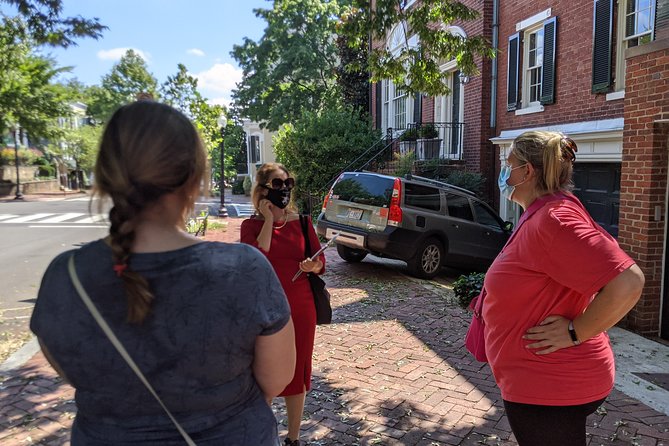
- Katie Kirkpatrick leads a story-driven route: Her presentation combines dates, photographs, political context, and personal details about the people who lived in Georgetown.
- The tour centers women with unusual influence: You’ll hear about social hosts, diplomats, a presidential mistress, a political fundraiser, a journalist’s source, and a Cold War codebreaker.
- You visit six main locations in about two hours: The route begins near Thomas Sweet on P Street and ends at 1222 28th Street NW.
- Martin’s Tavern adds a familiar Georgetown landmark: The pub connects JFK and Jackie, Bob Woodward, and former Secretary of State Madeleine Albright to the neighborhood.
- The $30 price buys interpretation, not admissions: The value is in the guide’s research and storytelling, since the houses are viewed from outside.
- The finish is useful for history fans: The tour ends across from Oak Hill Cemetery, where you may continue exploring on your own.
Georgetown history away from the National Mall
Washington sightseeing often points you toward monuments, museums, and federal buildings. This tour takes another route. It treats Georgetown as a neighborhood of private homes, social circles, restaurants, embassies, and quiet meetings where public decisions were shaped in less formal surroundings.
That change of setting matters. Instead of hearing only about presidents and official offices, you get a look at the people who helped connect them. The focus falls especially on women who hosted influential gatherings, managed diplomatic households, built political alliances, handled intelligence work, or moved through elite social circles.
Katie Kirkpatrick is the guide named in the tour information, and her approach is a major part of the experience. She brings an academic background in history, uses images of the people and houses, and places each story within the events of its time. She is also known for dressing to fit the period and subject of the tour, which adds a bit of theater without turning the walk into a costume show.
The small-group limit of 20 people should help. You are not being carried through Georgetown in a large crowd. A group of this size can gather outside a house, hear the explanation, and move on without losing the thread.
More Georgetown tours:
- Ghosts of Georgetown & The Exorcist Steps Walking Tour
★ 5.0 · 610 reviews - Georgetown Foodie Culinary Tour & Neighborhood Walk
★ 5.0 · 437 reviews - Gastronomic Georgetown Walking Food Tour
★ 4.5 · 373 reviews
Starting at Thomas Sweet on P Street
Meet at Thomas Sweet, 3214 P Street NW. The first stop is only a few blocks away at 3327 P Street NW, so the tour begins in a pleasant, walkable part of Georgetown rather than with a long transfer.
The starting area is practical for a walking tour because you can arrive by public transportation and use the nearby cafe before setting out. The tour includes a cafe stop for a bathroom break, with the option to buy water or another refreshment. Snacks are not included, so eat beforehand or plan to purchase something along the way.
You should wear comfortable walking shoes. The route covers several Georgetown streets and takes about two hours, with stops of roughly five to ten minutes each. The schedule is not an athletic march, but you will be on your feet for most of it.
Polly and Frank Wisner’s Sunday night gatherings
At 3327 P Street NW, you learn about Polly and Frank Wisner and the Sunday Night Supper Clubs held at their former home. These gatherings became a setting for policy discussions from the 1950s through the 1970s.
This is one of the route’s most useful ideas: Washington power does not always look official. A meal in a private house could bring together people with influence across politics, diplomacy, intelligence, and journalism. The home becomes a doorway into the informal networks that supported decision-making during the Cold War period.
The stop lasts about ten minutes, and admission is free because you are viewing the property from the street. You should not expect to enter the house. The interest comes from learning what happened there and understanding how social life could overlap with government business.
Polly Wisner’s role is especially important in a tour built around women’s influence. Her work as a host was not merely decorative. The setting she helped create gave important people a place to meet, exchange ideas, and build trust outside public view.
Mary Pinchot Meyer and Georgetown’s darker story
At 1523 34th Street NW, the subject changes sharply. This was the home of Mary Pinchot Meyer, an artist and bohemian figure who was also connected romantically to President John F. Kennedy.
Meyer was murdered beside the C&O Canal, and the case remains unresolved in the public imagination. The stop gives the tour a darker edge, but it also raises questions about the way women near political power are remembered. Meyer was not simply a footnote to JFK’s life. She had her own artistic world, social circle, and place in Washington’s unusual mix of privilege and secrecy.
This is a ten-minute exterior stop. The house gives you a physical point of reference, while the guide supplies the photographs, timeline, and context that the building alone cannot provide.
If you prefer light sightseeing with no disturbing subjects, this part may not suit you. If you enjoy political mysteries and the human side of history, it is likely to be one of the most memorable stops.
More walking tours in Washington DC:
- Arlington National Cemetery Walking Tour & Changing of the Guards
★ 5.0 · 2,566 reviews - Ghosts of D.C. – Walking Tour
★ 4.5 · 344 reviews - Historic Georgetown: History, Gossip, & Architecture Walking Tour
★ 5.0 · 321 reviews - Smithsonian Museums Walking Tour with Reserved Air & Space Entry
★ 5.0 · 297 reviews
Evangeline Bruce and the work of an ambassador’s wife
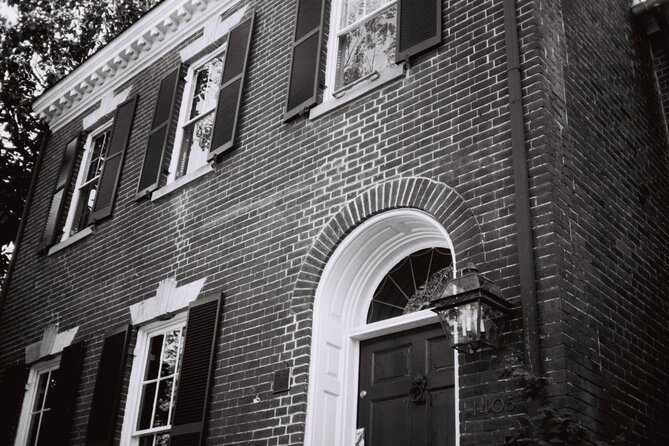
The former home of Evangeline and Ambassador David Bruce, at 1405 34th Street NW, shifts the story toward diplomacy. Evangeline, known as Vangie Bruce, served as the public face of American embassy life at important Cold War posts.
The phrase ambassador’s wife can sound like a social title. This tour asks you to see the work behind it. Diplomatic households had public duties, and the person managing receptions, relationships, and appearances could influence how American representatives were received.
This ten-minute stop is valuable because it broadens your view of diplomacy. You are not only hearing about ambassadors signing agreements. You are considering the social labor that helped make diplomatic relationships function.
Again, there is no house admission. Georgetown’s appeal here is visual and geographic. You see the street and property connected to the story, then use the guide’s account to imagine the world of embassy dinners, political introductions, and Cold War pressure.
Martin’s Tavern, JFK, and Georgetown’s famous meeting place
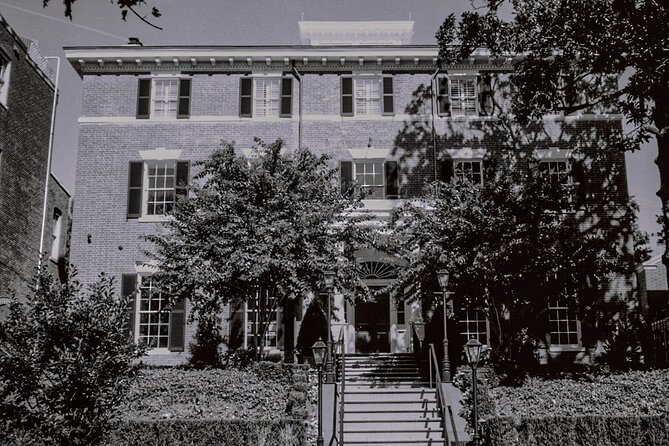
Martin’s Tavern is the shortest scheduled stop, at about five minutes, but it may be the easiest one to picture. This long-standing Georgetown watering hole is tied to several Washington stories.
The best-known connection is John F. Kennedy’s proposal to Jackie. The tavern also figures in the working life of journalist Bob Woodward, who used it as a place to look for the latest story. Madeleine Albright is another political figure associated with the restaurant and still appears there from time to time.
Martin’s is a useful pause because it shows how a public restaurant can serve different roles. For one person, it is a place for romance. For another, it is an informal newsroom. For another, it is part of the social life of senior American politics.
The tour does not include a meal, and the stop is brief. If you want to eat there, treat it as a separate plan rather than something built into the tour. The short visit works best as a story stop, not a restaurant experience.
The Kennedy homes and Georgetown’s presidential connection
The route also passes the house where John and Jackie Kennedy lived while JFK was a senator. This detail helps connect the private Georgetown neighborhood to the public career that followed.
Seeing a former home does not tell you everything about a person, but it gives political history a useful address. JFK was not always a figure on a campaign stage or in the White House. He was also a senator living in a residential neighborhood with his wife, moving through the same local streets as diplomats, writers, and social figures.
For me, this is one reason a walking tour works better than a bus tour for this subject. You can connect several homes within a small area and see how closely the lives of these people overlapped geographically.
Pamela Harriman and the social route to political power
At 3014 N Street NW, the tour visits the former residence of Pamela and Averell Harriman. Pamela Harriman is presented as a major political and social operator, remembered for her relationships with powerful men and for her fundraising work on behalf of Bill Clinton’s path to the presidency.
Her story is a good test of the tour’s central theme. Traditional political history often gives the most space to elected officials and officeholders. Harriman’s influence came through social access, personal networks, money, and political organizing.
The stop lasts about ten minutes. You see the house from outside, then learn how one Georgetown address could connect high society with national campaigns. The story may appeal most to readers interested in presidential politics, fundraising, and the ways influence operates beyond a formal job title.
The wording around Harriman’s personal life can feel sensational if handled poorly. A strong guide needs to give the romance and reputation enough context to explain her political importance. Katie Kirkpatrick’s broader focus on women’s agency helps keep this from becoming only a story about the men around Harriman.
Ann Caracristi and the quiet world of codebreaking
The final main stop is 1222 28th Street NW, the former home of Ann Caracristi, one of Washington’s best-known Cold War-era codebreakers.
Her inclusion gives the tour a needed change of pace. The earlier stops focus heavily on social connections, diplomacy, romance, and public presentation. Caracristi represents a more concealed form of service, one tied to intelligence and codebreaking rather than parties or political dinners.
The tour ends here after roughly two hours. The location is across from Oak Hill Cemetery, so you can continue with your own historical visit once the guide says goodbye. The cemetery contains graves of interest, though this walking tour does not include a cemetery visit as part of its formal route.
Ending near Oak Hill is a smart choice for anyone who wants to keep the afternoon focused on Georgetown history. You can enter after the tour, or simply stop there if you have enough energy left. The important point is that the final location gives you an optional next step rather than leaving you far from the main route.
What the $30 price really covers
At $30 per person, this is priced as an affordable guided walking experience rather than a full attraction package. You receive about two hours with a guide, a focused subject, and access to carefully researched stories. There are no admission fees included because the stops are homes, streets, and a tavern viewed from the outside.
The value depends on how much you want interpretation. If you already know Georgetown well and only want to stroll past handsome houses, you can do that for free. If you want to understand who lived there, how they connected, and why their lives mattered, the $30 pays for the research and storytelling.
The strongest value comes from the route’s focus. A general Georgetown walk might mention these figures briefly, if at all. This tour gives women the center of the story and links their lives to diplomacy, intelligence, presidential politics, journalism, and social power.
Practical details that affect your day
The tour is offered in English and uses a mobile ticket. Confirmation is provided at booking. Service animals are allowed, and the meeting point is near public transportation.
You need a moderate level of physical fitness. No special technical ability is required, but you should be comfortable walking outdoors for two hours and standing during the stops. Georgetown streets can be uneven in places, so sensible shoes matter more than stylish ones.
The experience depends on good weather. If poor weather causes a cancellation, you are offered another date or a full refund. The tour also requires a minimum number of participants, so an underfilled departure can be rescheduled or refunded.
You can cancel for a full refund up to 24 hours before the start time. Changes or cancellations inside that window are not accepted for a refund, so check the local start time before making last-minute plans.
Who will enjoy this Georgetown walk
I would recommend this tour to you if you like political history with personal stories rather than a list of dates. It suits people who want to see where important figures lived and learn how social networks shaped Washington.
It is also a good choice for locals. Georgetown residents may already know the streets, but the tour can reveal connections that are easy to miss. The guide’s use of photographs and period context helps turn familiar houses into meaningful places.
History students, readers of presidential biographies, and anyone curious about women’s roles in American public life should find plenty here. The subjects range from artists and diplomats to fundraisers and intelligence specialists, so the tour does not treat influence as one simple thing.
You may want to choose another activity if you need indoor shelter, food included, accessible seating, or extensive time inside historic buildings. This is a street-level experience, and its success depends on your interest in listening, walking, and looking closely.
Should you book Socialites and Spies of Georgetown?
Book it if you want to get beyond the National Mall and see Washington through its private networks. The route is short enough to fit into a day of sightseeing, focused enough to avoid general DC history, and affordable enough to make sense for curious first-time visitors and locals alike.
The best reason to go is Katie Kirkpatrick’s presentation. Her work connects houses, photographs, historical events, and personalities in a way that makes Georgetown easier to read. You should book with the expectation of exterior stops and strong storytelling, not museum access.
Bring walking shoes, water money, and an interest in complicated lives. If you do, this tour offers a thoughtful look at the women who helped shape Washington from behind the official record.
FAQ
How long is the Socialites and Spies of Georgetown Walking Tour?
The tour lasts approximately two hours.
How much does the tour cost?
The price is $30 per person.
Where does the tour begin?
The tour begins at Thomas Sweet, located at 3214 P Street NW, Washington, DC 20007.
Where does the tour end?
It ends at 1222 28th Street NW, across from Oak Hill Cemetery.
Is food included?
No. The tour stops at a local cafe for a bathroom break, where you may purchase water or other refreshments.
Can I cancel for a full refund?
Yes. You can cancel at least 24 hours before the experience start time for a full refund. Cancellations or changes made less than 24 hours before the start time are not refunded.
Recently added around Washington DC
- Small Group Washington DC Night Tour★ 4.5 · 3 reviews
- Washington DC Neighborhoods Personalized Self-Guided App Tour★ 3.5 · 3 reviews
- America’s Main Street and White House Private Full-Day Tour★ 5.0 · 3 reviews
- Beyond the Closet Walking Tour★ 5.0 · 3 reviews
- Pirate Ship Treasure Hunt Cruise with Face Painting★ 4.5 · 3 reviews
- Sushi Masterclass in Washington D.C. (Includes 4-Course Meal)★ 5.0 · 3 reviews
- Private Washington DC Grand Tour with Changing of the Guard.★ 5.0 · 3 reviews
- 250th: National Archives & American History Museum Guided Tour★ 5.0 · 3 reviews
Georgetown, compared.
Ghosts of Georgetown & The Exorcist Steps Walking Tour
Read our review →
Georgetown Foodie Culinary Tour & Neighborhood Walk
Read our review →
Historic Georgetown: History, Gossip, & Architecture Walking Tour
Read our review →
Tastes of Georgetown Food & History Small Group Walking Tour
Read our review →
The Escape Game DC: 60-Minute Adventure in Georgetown
Read our review →
Browse the lists this tour appears in