
Reviewed · WASHINGTON DC
District of Punk
Washington, DC’s punk story is easy to miss if you stick to monuments and museums. This 90-minute walking tour follows the old venues that gave the city’s punk, hardcore, and post-punk scenes a place to gather, then finishes at the DC Punk Archive inside the Martin Luther King Jr. Memorial Library.
I like the route for two clear reasons: it connects ordinary downtown addresses to a charged period in local music, and it ends with a real collection of punk material rather than stopping at a general story about old bands. Guide Katie leads the walk, and the route also gives you a useful look at how the scene changed from the 1970s through the 1990s.
The main consideration is that this is an outdoor walking tour with no private transportation. The stops are free, but your $30 ticket pays for the guide, the research, and the local context. Also check the start time carefully, since the supplied details list both 10:30 a.m. and a 1 p.m. start for the second Saturday of the month.
In This Review
- Key points to know before booking
- Why Washington’s punk story matters
- Starting at Gallery Place Chinatown Station
- 443 7th Street NW and the former DC Space
- The Lansburgh Center and 1980s show culture
- The first 9:30 Club on the route
- Ending at the MLK Memorial Library
- What the guide adds to the experience
- The $30 price and what it buys
- Who will enjoy this walk most
- Booking and cancellation details
- Should you book District of Punk?
- FAQ
- Where does the District of Punk tour start?
- Where does the tour end?
- How long does the tour last?
- What locations are included?
- How much does the tour cost?
- Is transportation included?
- When is the tour offered?
- What happens if I need to cancel?
Key points to know before booking
- The route starts at Gallery Place Chinatown Station and ends at the MLK Memorial Library, so you do not return to the starting point.
- DC Space is one of the most important stops, since the former club hosted the first Unheard Of Music Festival.
- The old Lansburgh Center and first 9:30 Club show how punk performances were tied to downtown venues that have since changed or disappeared.
- The tour covers several eras, from the 1970s punk scene to 1980s hardcore and 1990s post-punk.
- The final stop is the DC Punk Archive, described as the only collection documenting the city’s punk scene.
- The group is limited to 20 people, which should make it easier to hear the guide on city streets.
Why Washington’s punk story matters
Punk is often reduced to a few famous cities: London, New York, and Los Angeles. Washington had its own forceful scene, but its story is less visible in standard sightseeing.
This tour explains why. In the 1980s, the Reagan Administration was reinstating the Selective Service, and the country was moving from the counterculture of the 1960s toward the polished ambition of the yuppie era. The local punk scene reacted to what many musicians and fans saw as a soulless government and an increasingly commercial culture.
That context helps you understand why the venues matter. These were not simply places where bands played. They were meeting points for people building a local identity through music, politics, style, and community.
I like that the tour is not limited to one decade. The route connects the 1970s foundations, the 1980s hardcore period, and the 1990s post-punk scene. You get a sense of change instead of a frozen portrait of punk at its loudest.
The tour also asks what remains after a scene fades. Clubs close, buildings change use, and neighborhoods are rebuilt. The archive at the end gives the story a physical home.
Other Washington DC tours people book alongside this one:
- DC Memorials Night Tour: Glass-Roof Convertible Upgrade Option
★ 4.5 · 6,933 reviews - National Mall Monuments Night Tour with 10+ Stops, Entry Tickets
★ 4.5 · 4,863 reviews - Washington DC Monuments by Moonlight Tour by Trolley
★ 4.5 · 3,956 reviews
Starting at Gallery Place Chinatown Station
The meeting point is Gallery Place Chinatown Station in Washington, DC. That makes the tour easy to reach by public transportation and places you near the old downtown entertainment district from the outset.
You should arrive ready to walk outdoors. The route lasts about an hour and a half, and the stops are viewed from or near their former locations. There is no private vehicle included, so this is not a drive-by history tour.
The group size is capped at 20 people. That is a useful limit for a street-based experience. A much larger crowd would make it harder to keep together, hear the guide, or discuss details at each address.
The published information says the tour begins in March 2025 and runs on the second Saturday of the month at 1 p.m. The meeting information also gives a 10:30 a.m. start. Since those times conflict, confirm the exact departure time when you book and again in your confirmation.
443 7th Street NW and the former DC Space
The first major stop is 443 7th Street NW, the former location of DC Space. This address hosted the first Unheard Of Music Festival, giving it an important place in the city’s punk story.
The value of this stop is less about seeing a preserved club interior and more about learning how a specific building helped launch or gather a scene. The site puts the music into the city rather than treating it as an abstract story about performers.
You should expect about 15 minutes here. Admission is free because the tour visits a former venue rather than a ticketed attraction.
DC Space is also useful for understanding the tour’s larger time span. The scene did not appear fully formed in the 1980s. Its roots reached back into the 1970s, while later musicians and audiences carried its influence into the 1990s.
If you are hoping to enter a preserved punk club, adjust your expectations. This is a historical stop at a former location. The guide’s explanation is what brings the place back to life.
The Lansburgh Center and 1980s show culture
The next stop is the former Lansburgh Center, a popular venue for punk shows in the 1980s. The tour spends about 15 minutes here, giving you time to connect the location with the period when DC hardcore was taking shape.
This stop helps explain the practical side of a music scene. Punk needed rooms where bands could play and audiences could gather. The Lansburgh Center was one of those rooms, and its role makes clear how much local music depended on flexible, accessible venues.
The stop also gives the tour a stronger 1980s focus. The political setting described at the beginning becomes more concrete when you learn about the places where young people gathered during that period.
There is a natural limitation to any former-venue tour. The building may not look like a concert hall, and the atmosphere of a crowded show cannot be recreated on a sidewalk. Still, that contrast is part of the point. You see how much of a city’s music history can disappear from view.
Same city, a very different couple of hours:
- Hop-on Hop-off Sightseeing Tour by Open-top Bus with 18 Stops
★ 3.5 · 3,848 reviews - Washington DC in One Day: Guided Sightseeing Tour
★ 4.5 · 3,360 reviews - DC Monuments and Capitol Hill Tour by Electric Cart
★ 5.0 · 2,841 reviews - Washington DC Moonlight Tour by Electric Cart
★ 5.0 · 2,610 reviews
The first 9:30 Club on the route
The tour then visits the former location of the first 9:30 Club. Today, 9:30 Club is one of Washington’s best-known performance venues, but this walk focuses on its original location and its place in the city’s punk story.
For music fans, this is likely one of the most appealing stops. The name is familiar, but the tour shifts your attention from the current institution to its earlier setting. You learn how the club fit into the local scene before it became such an established part of Washington’s live music identity.
The visit lasts about 15 minutes. As with the other addresses, admission is free, and the experience depends on the guide’s narration rather than an indoor display.
I like this stop because it links Washington’s punk past with its continuing music life. The tour does not present punk as a sealed-off chapter. Instead, it shows how a venue associated with the city’s present-day concert culture also belongs to its earlier musical story.
You may want to allow extra time after the tour to explore Gallery Place and downtown on your own. The route finishes elsewhere, but the area around the starting point has plenty of transit connections and city sights.
Ending at the MLK Memorial Library
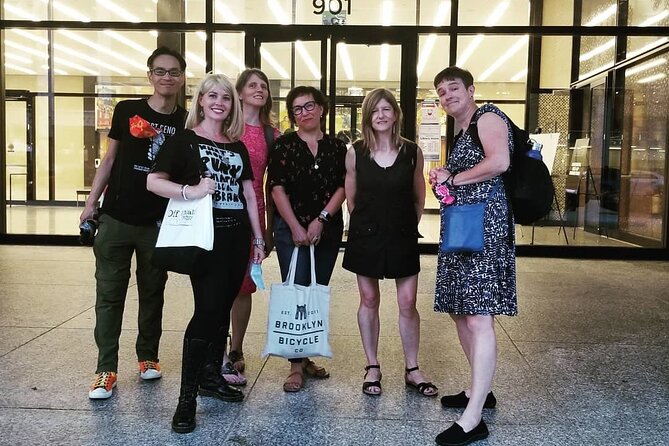
The final stop is the Martin Luther King Jr. Memorial Library at 901 G Street NW. The library holds the DC Punk Archive, described as the only collection of punk ephemera documenting the DC scene.
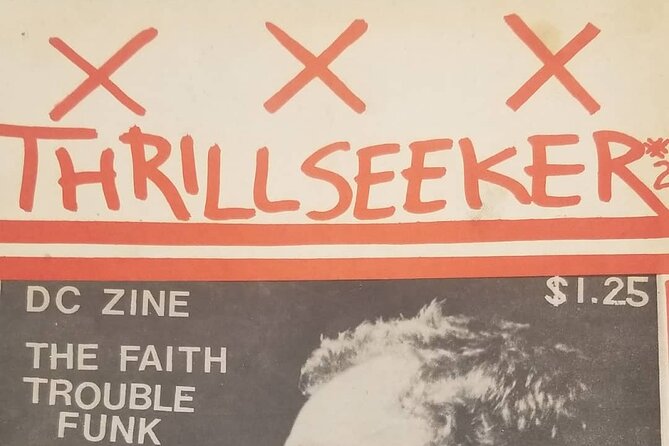
This is the strongest ending for the tour. After seeing former club sites, you arrive at a place where the scene has been saved in physical form. The archive gives weight to flyers, posters, photographs, documents, and other objects that might otherwise be lost.
The scheduled stop lasts about 10 minutes. That is not a long museum visit, so you should not expect hours of independent browsing. The archive serves as the closing point of the walk and helps explain why local music history deserves preservation.
The library itself is also a practical ending point. You finish at a major downtown address rather than in an isolated neighborhood. From there, you can continue sightseeing or use public transportation.
I especially like the contrast between the former venues and the archive. The first three stops show places that no longer function in the same way. The library shows an institution actively holding onto the evidence.
What the guide adds to the experience
The guide is central here. Katie is identified as the guide for this experience, and her job is to connect addresses, eras, and people into a clear local story.
The tour promises information about what made DC punk different from scenes in other cities, the major contributors, and the scene’s effect on local music today. Specific artist names are not provided in the supplied details, so you should not book this expecting a complete band-by-band catalog.
Instead, think of the walk as a city history experience told through music venues. It is best suited to you if you enjoy understanding how a scene forms, where it meets, and what happens to it over time.
The short format should help keep the story focused. Four stops in 90 minutes leaves enough time for explanation without turning the walk into an all-day music seminar. The group limit of 20 should also help, though city noise and outdoor conditions can affect how easily you hear every detail.
The $30 price and what it buys
The ticket costs $30 per person. No attraction admission or private transportation is included, and the stops themselves are free.
That means the price is mainly for the guided interpretation. You are paying for access to a specific local story, a planned route, and the research needed to connect former venues with the city’s punk culture.
I consider the price fair if you have a real interest in punk, Washington music, or urban history. A self-guided walk would cost nothing, but finding the four locations is only the easy part. The value comes from understanding why DC Space, the Lansburgh Center, the first 9:30 Club, and the MLK library belong in one story.
The price is less compelling if you only want to see famous Washington landmarks or hear a broad introduction to American punk. This is a narrow subject, and that is exactly what makes it useful for the right audience.
With a maximum of 20 people and a duration of about 90 minutes, the tour also fits neatly into a day of downtown sightseeing. You can pair it with other activities before or after, but remember that the published start time needs confirmation.
Who will enjoy this walk most
I would recommend District of Punk to:
- People who already listen to punk, hardcore, or post-punk
- Visitors interested in Washington beyond the National Mall
- Fans of local music history and former performance venues
- Visitors who enjoy walking tours built around social and cultural history
- Anyone curious about how a music scene affects a city long after its clubs close
You do not need to be an expert. The tour is designed to explain the scene and its local setting, not to test your knowledge.
It may be a weaker choice for you if you dislike outdoor walking, want a large museum collection, or expect a concert-style experience. Only the library archive is described as a collection, and the scheduled archive stop is brief.
Service animals are allowed, the route is near public transportation, and most people can participate. The tour requires good weather, so poor conditions can lead to a different date or a full refund.
Booking and cancellation details
You receive confirmation at booking, and free cancellation is available up to 24 hours before the start time for a full refund. Changes or cancellations made less than 24 hours before the scheduled start are not accepted for a refund.
The tour also requires a minimum number of participants. If it is canceled for that reason, you are offered another date or experience, or a full refund.
Because the published details contain two different start times, checking the confirmation is particularly important. Plan to meet at Gallery Place Chinatown Station and finish at the MLK Memorial Library, not back at the starting station.
Should you book District of Punk?
Book it if you want a focused, place-based look at Washington’s punk culture. The former DC Space site, the Lansburgh Center, and the first 9:30 Club give the story a strong physical route, while the MLK library’s DC Punk Archive provides a fitting final stop.
The tour is especially worthwhile for anyone who knows 9:30 Club as a current music institution but wants to understand its earlier role. It is also a good choice if you have already covered the major monuments and want a more local side of the city.
Skip it if you need indoor entertainment, a flexible departure time, or a broad survey of Washington history. For the right audience, though, $30 buys a compact and unusual look at a music culture that shaped the city without always receiving much public attention.
FAQ
Where does the District of Punk tour start?
The tour starts at Gallery Place Chinatown Station in Washington, DC.
Where does the tour end?
The tour ends at the Martin Luther King Jr. Memorial Library at 901 G Street NW. The library holds the DC Punk Archive.
How long does the tour last?
The experience lasts approximately one hour and 30 minutes.
What locations are included?
The route includes the former DC Space at 443 7th Street NW, the former Lansburgh Center, the former location of the first 9:30 Club, and the Martin Luther King Jr. Memorial Library.
How much does the tour cost?
The price is $30 per person.
Is transportation included?
No. Private transportation is not included. The experience is a walking tour near public transportation.
When is the tour offered?
Starting in March 2025, the tour is offered on the second Saturday of the month. The supplied information lists both a 1 p.m. start and a 10:30 a.m. start, so confirm the exact time when booking.
What happens if I need to cancel?
You can cancel at least 24 hours before the experience for a full refund. Cancellations or changes made less than 24 hours before the start time are not accepted for a refund.
Recently added around Washington DC
- Small Group Washington DC Night Tour★ 4.5 · 3 reviews
- Washington DC Neighborhoods Personalized Self-Guided App Tour★ 3.5 · 3 reviews
- America’s Main Street and White House Private Full-Day Tour★ 5.0 · 3 reviews
- Beyond the Closet Walking Tour★ 5.0 · 3 reviews
- Sushi Masterclass in Washington D.C. (Includes 4-Course Meal)★ 5.0 · 3 reviews
- Pirate Ship Treasure Hunt Cruise with Face Painting★ 4.5 · 3 reviews
- Private Washington DC Grand Tour with Changing of the Guard.★ 5.0 · 3 reviews
- 250th: National Archives & American History Museum Guided Tour★ 5.0 · 3 reviews