
Reviewed · ANNAPOLIS & THE NAVAL ACADEMY
Annapolis: Maryland State House Tour
The Maryland State House is not just an old building to admire from the sidewalk. It is the oldest continuously used legislative building in the country, and its rooms witnessed George Washington resign his military commission and the ratification of the Treaty of Paris. That puts major American history in a compact, walkable stop.
I like the period-attired guide, which gives the visit a human voice instead of leaving you to read plaques. I also like the short length and mostly indoor route, a useful choice on a hot or rainy afternoon. The main drawback is that the tour is offered in English, and the route or order of sights can change.
In This Review
- Key points to know before you go
- Why this Annapolis tour matters
- Meeting at 188 Main Street
- Entering one of the country’s oldest working legislatures
- George Washington’s resignation in Annapolis
- The Treaty of Paris and the end of the war
- Maryland’s larger story: Marshall, Douglass, and Tubman
- What the 75-minute route feels like
- Price, timing, and practical value
- Who will enjoy this State House visit
- Tips for getting more from the visit
- Should you book the Maryland State House tour?
- FAQ
- Where does the Maryland State House tour meet?
- How long does the tour last?
- What language is the tour in?
- Do I need identification?
- Is the tour wheelchair accessible?
- Can I take photos or record the tour?
- What happens if I need to cancel?
Key points to know before you go
- 1772 cornerstone: The building’s story begins before the United States became a nation.
- Washington’s resignation: Hear why the State House matters to the end of the Revolutionary War.
- Treaty of Paris: Learn about the agreement that formally ended the conflict with Britain.
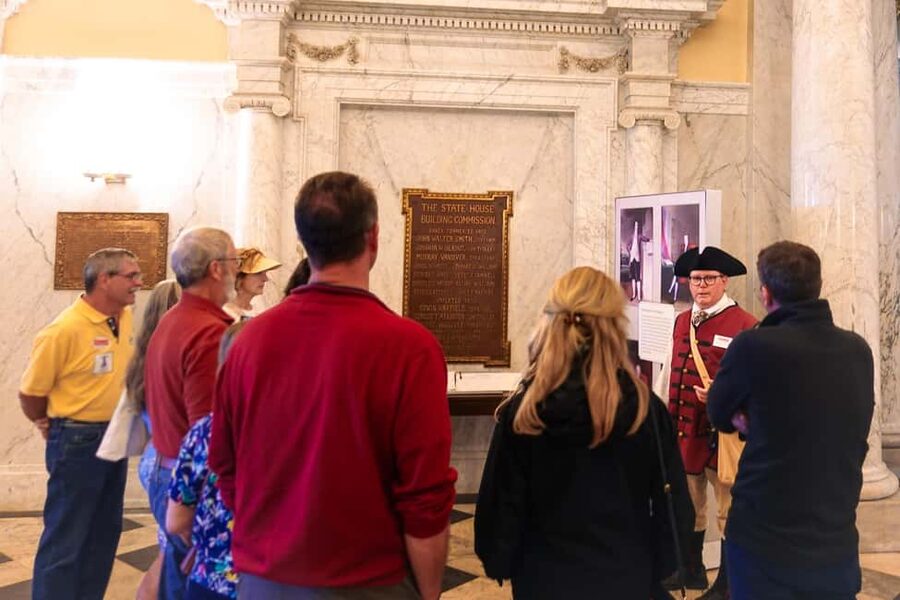
- Period clothing and storytelling: Your guide leads from 188 Main Street and brings the setting to life.
- Mostly indoors: The tour involves limited walking and works well in poor weather.
- Bring physical ID: Everyone age 18 and older needs a government-issued photo ID or original passport.
Why this Annapolis tour matters

Annapolis is easy to enjoy as a waterfront town with brick streets, sailboats, seafood, and colonial-looking buildings. The State House gives the city more weight. Here, local Maryland politics and the founding of the United States meet under one roof.
The building’s cornerstone was laid in 1772, just before the Revolutionary War. That date matters because the State House was already part of Maryland’s civic life when the colonies broke from Britain. It was not built later as a memorial to famous events. It was there while the events were unfolding.
I find that distinction useful. You are not simply seeing a reconstructed historic site or a room decorated to suggest the past. You are visiting a building that has continued to serve as Maryland’s legislative center from the 18th century into the present.
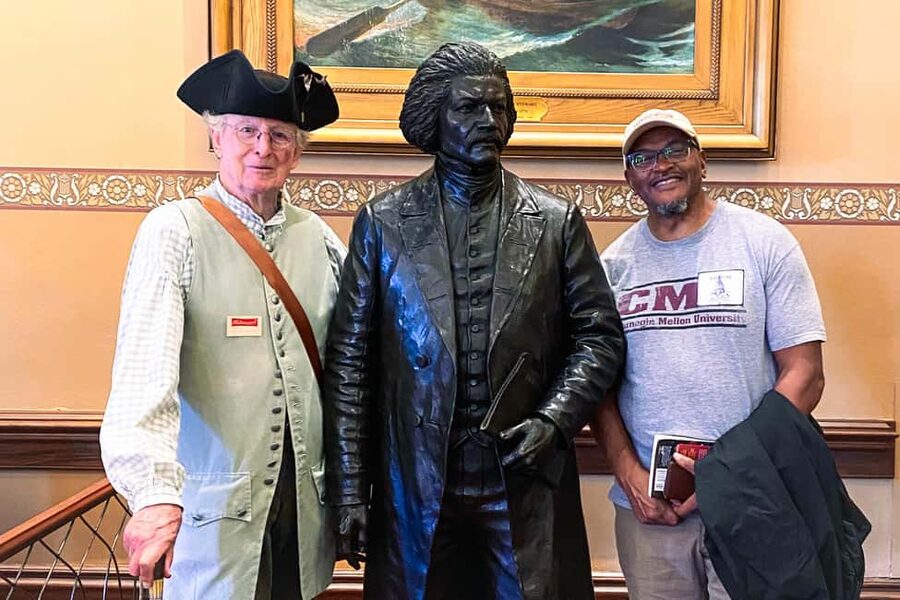
The tour also widens the story beyond a few familiar Founding Fathers. You hear about Maryland figures such as Thurgood Marshall, Frederick Douglass, and Harriet Tubman. Their stories help connect the building’s colonial and Revolutionary-era past with the long fight over civil rights, citizenship, and freedom.
More Annapolis and Naval Academy trips:
- Annapolis: Annapolis Harbor and U.S. Naval Academy Cruise
★ 4.7 · 126 reviews - Ashes and Apparitions of Annapolis Ghost Tour
★ 4.5 · 84 reviews - Historic Annapolis Food Tour
★ 4.5 · 44 reviews
Meeting at 188 Main Street
Your meeting point is 188 Main Street, next to Mason’s Lobster Rolls. Look for the guide in period attire. The tour begins with a guided walk from this spot to the Maryland State House, so you do not need to find the building alone.
That short walk is part of the orientation. It helps you shift from Annapolis’s modern restaurant and shopping street into the political center of the historic city. Since the meeting point is downtown, you can pair the tour with other Annapolis activities before or after it, though parking fees are not included.
Give yourself enough time to arrive without rushing. You will need a physical government-issued photo ID or an original passport if you are 18 or older. A scan, photocopy, or picture of your ID is not accepted.
The tour usually runs in the afternoon and lasts 75 minutes. That timing makes it a practical addition to a half-day in Annapolis. It is long enough to provide real context, but short enough to leave room for lunch, the waterfront, or another historic site.
Entering one of the country’s oldest working legislatures
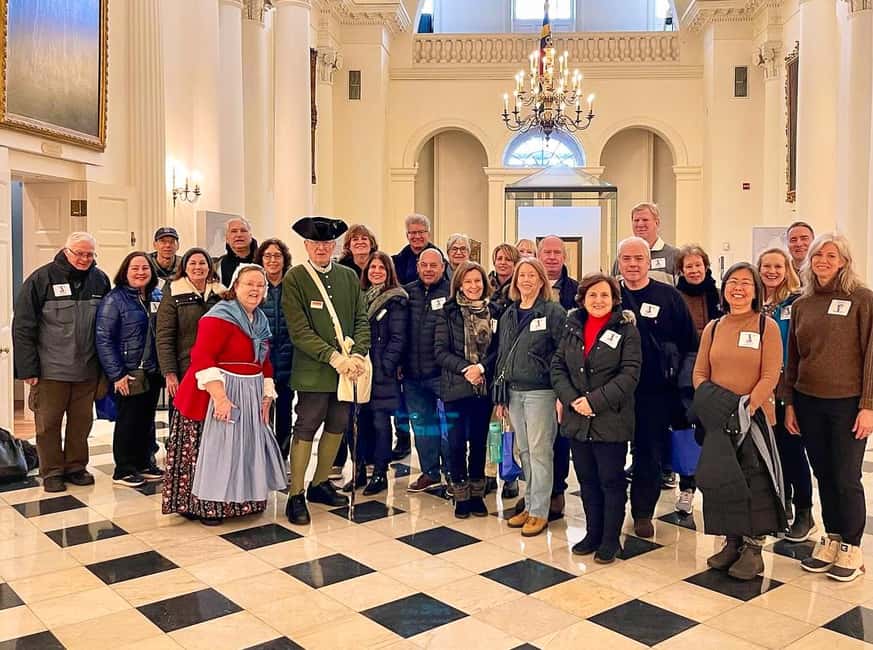
The central fact to keep in mind as you enter is simple: Maryland’s State House is the oldest continuously used legislative building in the country. It is both a historic site and a working government building.
That combination changes how you look at the architecture. The building is not frozen in one moment. Its rooms and grounds carry traces of several centuries of public life, while the General Assembly still meets there today.
Your guide explains the building’s architecture and grounds as part of the larger story. Do not expect a long architectural lecture filled with technical terms. The value is in understanding why the building looks and functions as it does, and how its spaces relate to Maryland’s government.
Because the majority of the tour takes place indoors, you get a more dependable experience during bad weather than you would on a tour focused entirely on streets and outdoor monuments. The route includes some walking, but the description notes that it is not too much. The activity is also wheelchair accessible.
The route can change, so the exact order of rooms and stops is not fixed. That is worth remembering if you arrive with a strict checklist. The guide’s job is to show you the State House as conditions allow, while explaining its place in Maryland’s political life.
George Washington’s resignation in Annapolis

One of the strongest reasons to book this tour is the chance to hear about George Washington’s resignation as Commander-in-Chief after the American Revolution. The event took place at the Maryland State House and marked a powerful moment in the young nation’s political culture.
Washington had led the Continental Army through the war. When the fighting ended, he gave up his military authority rather than hold onto power. The State House is tied to that decision, so the guide can discuss the event in the actual setting where it happened.
For you, this is more meaningful than hearing the same fact in a textbook. The building gives the story a physical location. You can connect the political idea of civilian government with a particular room and place in Annapolis.
The story also helps explain why Maryland mattered during the nation’s early years. Annapolis was not a distant provincial outpost. It was a center of government where major decisions and public ceremonies took place.
Same city, a very different couple of hours:
- The Original Walking Ghost Tour by Annapolis Ghost Tours
★ 4.5 · 41 reviews - Best of Annapolis Tour: Colonial, State House, Naval Academy
★ 4.8 · 41 reviews - Annapolis Historic Walking Tour at Harbor and Naval Academy
★ 5.0 · 38 reviews - The Original Haunted Pub Crawl by Annapolis Ghost Tours
★ 4.5 · 18 reviews
The Treaty of Paris and the end of the war
The Maryland State House is also linked to the Treaty of Paris, which was ratified there. The treaty formally ended the American Revolutionary War, making this another moment when local Maryland history became part of national history.
A good guide can make the difference here. The period clothing catches your eye, but the storytelling gives the details shape. Mark, one of the guides, was praised for being an engaging storyteller, while Beth was specifically noted for her strong grasp of the State House and Maryland history and her personable manner.
You may not have Beth or Mark on your particular departure, but the experience is built around a live guide rather than an audio device or self-guided route. That gives you the chance to ask questions and follow the story as it develops.
The Treaty of Paris stop is especially useful if you want more than a list of dates. The guide can place the agreement within the building’s broader role as a seat of government. You begin to see the State House as a working setting where the new country had to turn military victory into political order.
Maryland’s larger story: Marshall, Douglass, and Tubman

The tour does not stop with Washington and the Revolutionary era. It also introduces important Marylanders including Thurgood Marshall, Frederick Douglass, and Harriet Tubman.
That range is one of the activity’s best features. It prevents the State House from becoming a narrow story about white colonial leaders and military commanders. Maryland’s past includes slavery, abolition, civil rights, and the work of people who challenged the law and political system.
Thurgood Marshall’s connection brings the story into the 20th century and the struggle against racial segregation. Frederick Douglass links Maryland to abolition, public speaking, journalism, and the fight for Black freedom. Harriet Tubman points to the courage and organizing behind the Underground Railroad and emancipation.
The supplied information does not give a detailed script for each figure, so you should not expect a full biography of all three. Instead, these names signal the wider range of history covered during the 75 minutes. If one person’s story is especially important to you, ask your guide how it connects to the State House and Maryland.
What the 75-minute route feels like
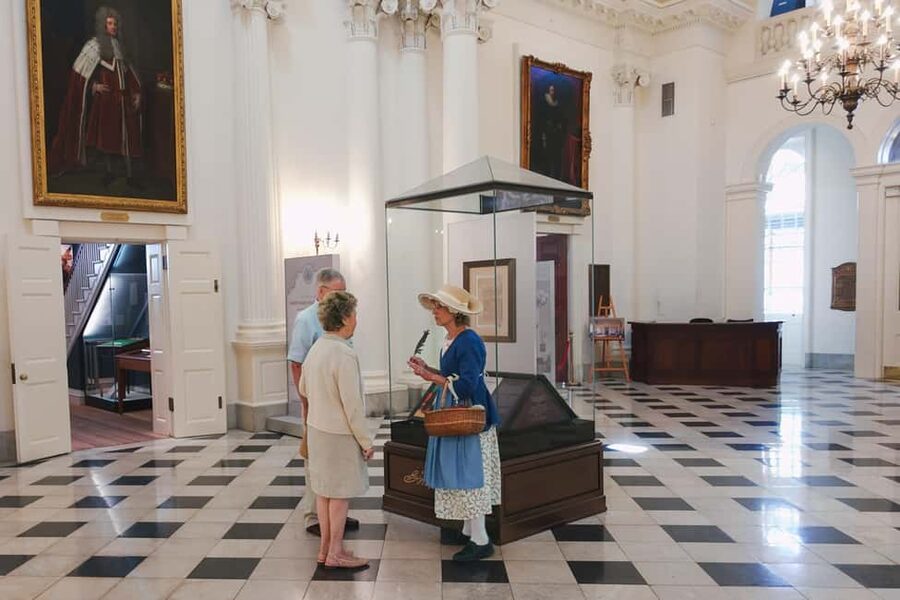
The tour starts with the short walk from Main Street, then spends most of its time inside the State House. You will learn about the building’s origins, architecture, grounds, political role, and major events connected to it.
The route is not designed as a long-distance walking tour. That makes it suitable if you want a focused history experience without spending several hours on your feet. It also makes the tour easier to fit between other plans.
I would treat the 75 minutes as a strong snapshot rather than a complete study of Maryland. Four centuries of state and national history cannot fit into one visit. The guide has to choose the main stories, and the exact route may change.
That limitation is not necessarily a problem. A good short tour gives you a framework for exploring the city on your own. Afterward, you will understand why the State House matters, rather than simply having seen another old building.
Video and audio recording are not allowed. Weapons, sharp objects, alcohol, and drugs are also prohibited, and pets cannot join the tour except for assistance dogs. Plan to listen and take in the setting without relying on your phone to document every room.
Price, timing, and practical value
At $24 per person, this is a reasonably priced guided history activity in a major American historic city. You are paying for a 75-minute live tour, the guide, and access to the Maryland State House. Food, drinks, parking, and gratuity are not included.
The value depends on what you want from Annapolis. If you only want to photograph the exterior, $24 may feel unnecessary. If you want to understand why the building is nationally important, a guide adds much more than a quick look from outside.
The period attire is a small but useful touch. It sets the tone without requiring you to read a wall of text before the tour begins. The strongest value comes from the guide’s narration, especially when the stories of Washington, the Treaty of Paris, and Maryland’s major Black leaders are connected to the rooms around you.
You can cancel up to 24 hours before the start time for a full refund, and the reserve-now, pay-later option lets you hold a place without paying immediately. Those policies are helpful if your Annapolis schedule is still shifting.
Who will enjoy this State House visit

I would recommend this tour to anyone who likes American history but does not want a full-day museum visit. It works particularly well for first-time visitors to Annapolis because it explains the city’s national importance in a short period.
Families with older children may also find the live storytelling easier to follow than a self-guided visit. The Washington resignation and Treaty of Paris provide clear story points, while the period clothing gives younger participants something visual to focus on.
The tour suits visitors who prefer indoor activities, people who want limited walking, and anyone planning an afternoon stop. Since it is wheelchair accessible, it may be a practical choice for visitors who need an accessible route, though the tour route can change.
You should think twice if you want a highly flexible visit where you can linger alone, photograph freely, or listen to an audio guide. The activity is guided, conducted in English, and does not allow audio or video recording.
Tips for getting more from the visit
Arrive at 188 Main Street early enough to locate the meeting point and have your physical ID ready. Since the guide will be in period attire, you should be able to identify the correct person near Mason’s Lobster Rolls.
Read a little about Washington’s resignation before you go if that event interests you. Even a basic understanding will help you notice why the setting matters. You can also choose one of the Maryland figures, such as Tubman or Marshall, and ask a follow-up question during the tour.
Wear comfortable shoes, but do not plan for a major hike. The route begins outdoors with a guided walk and then spends most of its time inside. The mostly indoor format is useful in rain or unpleasant heat.
Leave room in your schedule after the tour. The guide gives you a historical base, but the 75 minutes will not cover every part of Annapolis or every detail of Maryland’s past. Use what you learn to decide which streets, buildings, or museums deserve a closer look.
Should you book the Maryland State House tour?
Book it if you want a focused, affordable introduction to Annapolis’s role in American history. The combination of Washington’s resignation, the Treaty of Paris, the working legislative building, and stories of Marshall, Douglass, and Tubman gives the tour more range than a standard colonial architecture walk.
The biggest reason to choose it is the guide. Mark was praised for clear, engaging storytelling, and Beth for her strong command of the State House and Maryland history, along with a personable style. You may receive a different guide, but the live, period-attired format is central to the experience.
Skip it if you prefer exploring at your own pace or if you need a tour in a language other than English. For most visitors spending a day in Annapolis, though, $24 and 75 minutes is a fair exchange for context you will not get from a quick exterior visit.
FAQ
Where does the Maryland State House tour meet?
The tour meets at 188 Main Street, next to Mason’s Lobster Rolls. The guide will be wearing period attire.
How long does the tour last?
The guided experience lasts 75 minutes. It begins with a walk from the meeting point to the Maryland State House, where most of the tour takes place.
What language is the tour in?
The live guided tour is conducted in English.
Do I need identification?
Yes. All guests age 18 and older must bring a physical government-issued photo ID or an original passport. Scans and pictures of identification are not accepted.
Is the tour wheelchair accessible?
Yes, the activity is listed as wheelchair accessible. The route includes limited walking and is mostly indoors.
Can I take photos or record the tour?
Video recording and audio recording are not allowed. Weapons, sharp objects, alcohol, drugs, and pets are also prohibited, except for assistance dogs.
What happens if I need to cancel?
You can cancel up to 24 hours in advance for a full refund. You can also reserve now and pay later, which keeps your plans flexible.
Recently added around Annapolis
- Annapolis: Round Trip Cruise to St. Michaels★ 4.3 · 5 reviews
- Outdoor Painting Activity with a Local Artist in Annapolis★ 5.0 · 7 reviews
- Annapolis Ghosts: Spirits & Spirits Haunted Pub Crawl★ 4.3 · 7 reviews
- Annapolis Ghost Tours Boos & Booze Haunted Pub Crawl★ 4.5 · 9 reviews
- Annapolis: Ghosts of the Harbor & Old Town Tour★ 4.3 · 12 reviews
- The Original Haunted Pub Crawl by Annapolis Ghost Tours★ 4.5 · 18 reviews
- Amazing Annapolis Scavenger Hunt★ 4.5 · 7 reviews
- Awesome Scavenger Hunt: Annapolis Red Bricks & Blue Views★ 3.5 · 17 reviews
Annapolis & the Naval Academy, compared.



Best of Annapolis Tour: Colonial, State House, Naval Academy
Read our review →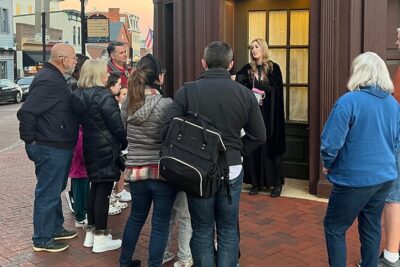
The Original Walking Ghost Tour by Annapolis Ghost Tours
Read our review →
Annapolis Historic Walking Tour at Harbor and Naval Academy
Read our review →
The Original Haunted Pub Crawl by Annapolis Ghost Tours
Read our review →
Awesome Scavenger Hunt: Annapolis Red Bricks & Blue Views
Read our review →Browse the lists this tour appears in