

Reviewed · OLD TOWN ALEXANDRIA
Alexandria: American Revolution Guided Walking Tour
Alexandria’s Old Town is more than handsome brick houses and cobbled streets. This 90-minute walk shows how local arguments over taxes, trade, worship, and political rights helped push Virginia toward the American Revolution. You’ll visit places tied to George Washington, early Patriots, the Declaration of Independence, and the Bill of Rights.
I like the tight Revolutionary focus and the way the tour uses actual homes, churches, shops, and meeting places rather than treating the war as a string of dates. I also like the personal touch brought by guides such as Tim, whose enthusiasm for Washington and skill at drawing each person into the conversation have made this a particularly well-regarded tour.
The main limitation is its narrow subject. If you want Alexandria’s Civil War story, African American history, or later development, you’ll need another tour or more time in town. A hot day can also make the walking feel harder, though the guide can pause in the shade.
In This Review
- Key points to know before you book
- Alexandria before the first shots were fired
- King Street is the right place to begin
- Washington’s Alexandria connections
- The church where Washington discussed taking up arms
- Alexandria’s own Revolutionary document
- Remembering the unknown soldier
- Lafayette returns to Alexandria
- What the guide does best
- Is $30 a fair price?
- Who should take this walk?
- Should you book the Alexandria American Revolution tour?
- FAQ
- How long is the Alexandria American Revolution Guided Walking Tour?
- How much does the tour cost?
- Where does the tour meet?
- Is the tour offered in English?
- Who leads the tour?
- What places are included?
- Is the tour wheelchair accessible?
- Can I cancel or pay later?
Key points to know before you book
- A Revolutionary Alexandria tour: This is the only Old Town walk here focused specifically on the city’s role in the American Revolution.
- George Washington at the center: You’ll connect Washington’s home city, church, friends, and military circle to the larger fight against British rule.
- More than famous names: The walk explains how local disputes over taxation and political authority grew over roughly two decades.
- Historic churches included: Several churches that pre-date the war appear on the route, including Washington’s church.
- A thoughtful final stop: The Tomb of the Unknown Soldier of the American Revolution adds a quiet note of remembrance.
- Good practical value: At $30, the tour costs less than many larger historical attractions while giving you a guided walk through much of Old Town.
Alexandria before the first shots were fired
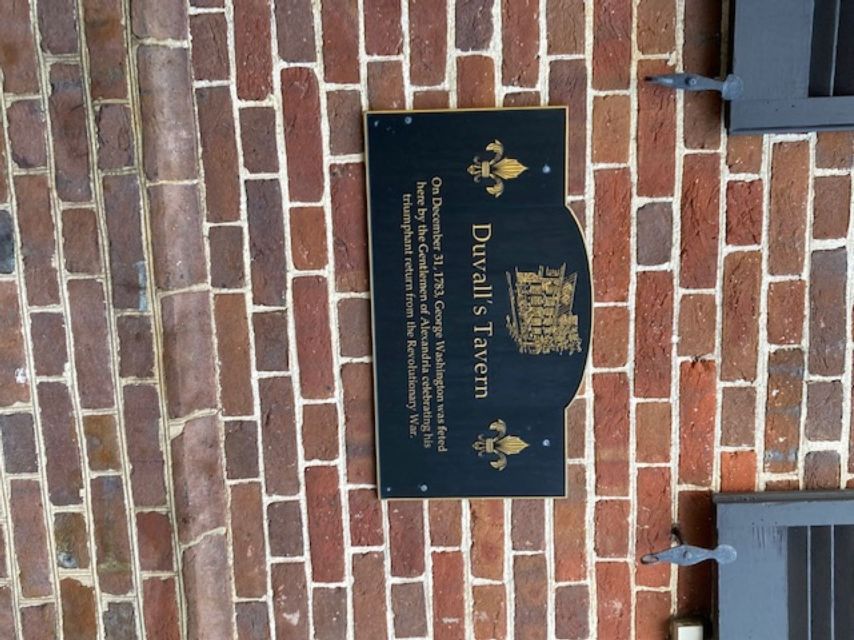
The tour’s best idea is that the American Revolution did not begin only when soldiers exchanged fire at Lexington and Concord. In Alexandria, pressure was building about 20 years earlier.
You’ll hear how local people responded to British taxation policies and how prominent citizens gradually took firmer positions against imperial control. That longer view helps you understand the Revolution as a process, not a single dramatic morning.
For me, this is where the experience earns its price. You are not simply memorizing that Alexandria supported independence. You are following the political mood of a working town as arguments became protests, and protests became a demand for self-government.
The walk also connects Alexandria to the Declaration of Independence and the United States Bill of Rights. Those links give the local story a wider frame, showing that Alexandria was not cut off from events in Philadelphia, Williamsburg, or the new national government.
The guide’s role matters here. Tim is especially strong at explaining how local people fit into the national story, and he brings a clear interest in Washington without making every subject feel like a monument to one man.
More Old Town Alexandria tours:
- Mount Vernon and Old Town Alexandria Day Trip from Washington DC
★ 4.0 · 874 reviews - Washington, DC: Hop-On Hop-Off Old Town Trolley City Tour
★ 4.3 · 647 reviews - From Washington DC: Old Town Alexandria & Mount Vernon Tour
★ 4.6 · 393 reviews
King Street is the right place to begin
Meet at the Alexandria Visitor Center at 221 King Street. It is a useful starting point because you can use the bathrooms on the lower floor, refill your water, and pick up tourist information before the walk begins.
You may meet inside or on the porch. I would arrive a little early, especially if you need water, directions, or a short break before setting out. The tour lasts 90 minutes, so the opening moments are used efficiently.
From the start, expect an English-language walking tour led by a local historian. The route moves through Old Town streets rather than placing you in a vehicle or keeping you inside a museum. That makes the setting part of the lesson: the buildings and street plan help you picture the town where these debates took place.
Bring hiking shoes. This is not a strenuous trek, but comfortable footwear will make the experience easier. On a warm day, also bring water and plan for direct sun. One guide adjusted the pace and found shade during a hot walk, which is exactly the kind of practical care you want on a history tour.
Washington’s Alexandria connections
George Washington appears throughout the walk, but the focus is not limited to a single statue or familiar portrait. You’ll visit places connected to Washington’s life in Alexandria and discuss where he lived, worked, worshipped, and built relationships.
That approach gives Washington a local setting. Instead of seeing him only as a general or president, you get a sense of the community around him and the people who formed his military family.
The tour also visits businesses and homes linked to members of that circle. These stops are useful because they broaden the story beyond the best-known founder. Military campaigns depended on aides, associates, merchants, household connections, and local institutions. Alexandria lets the guide show those relationships on the same streets where they once operated.
Tim’s particular interest in Washington is a major advantage if you enjoy founder-era history. His enthusiasm helps the subject feel personal and lively. At the same time, you should know what you are choosing: the tour gives Washington more attention than other subjects, so it may not satisfy someone looking for a broad survey of every period in Alexandria’s past.
The church where Washington discussed taking up arms
Historic churches provide some of the most memorable stops because they reveal how political ideas moved through everyday community life. Several churches on the route pre-date the Revolutionary War, giving you a chance to see religious buildings that were already part of Alexandria when the colonies began breaking with Britain.
One especially important stop is Washington’s church. Here, the guide discusses the occasion when Washington famously spoke about taking up arms on behalf of American independence.
This moment brings together faith, public duty, and political risk. It also shows why the tour includes worship spaces rather than only government buildings and private homes. In the 18th century, a church was a place where people gathered, heard ideas, formed relationships, and considered their obligations to one another.
The churches also add visual variety to the walk. After streets of shops and residences, these older sanctuaries offer a different scale and mood. The precise access details can vary, so I would treat the churches as guided exterior and historical stops unless your guide tells you otherwise.
One account of a separate Washington-focused tour with Alexandria History Tours included a helpful connection at St. Mary’s Catholic Church, where staff arranged a conversation with the church museum’s curator and archivist. That meeting was not listed as a guaranteed part of this Revolutionary tour, so do not book expecting it. Still, it shows the company’s interest in making local history personal when circumstances allow.
More walking tours in Washington DC:
- Arlington National Cemetery Walking Tour & Changing of the Guards
★ 5.0 · 2,566 reviews - Ghosts of Georgetown & The Exorcist Steps Walking Tour
★ 5.0 · 610 reviews - Georgetown Foodie Culinary Tour & Neighborhood Walk
★ 5.0 · 437 reviews - Gastronomic Georgetown Walking Food Tour
★ 4.5 · 373 reviews
Alexandria’s own Revolutionary document
One of the most distinctive parts of this experience is the stop where Alexandria passed its own Revolutionary document. That detail separates this walk from a standard George Washington tour.
The local document shows that Alexandria’s move toward independence was not just an abstract response to famous events elsewhere. The town made its own political statement, and the guide explains what that meant in the context of resistance to British taxation and authority.
You will get more from this stop if you pay attention to the language of local action. National history often focuses on the Declaration of Independence, but towns and colonies also had to decide how far they were willing to go. Alexandria’s document gives you a concrete example of that decision at the local level.
It is also a good reminder that Old Town’s ordinary-looking buildings can carry political weight. A modest street corner can mark a point where local government and public opinion changed direction.
Remembering the unknown soldier
The Tomb of the Unknown Soldier of the American Revolution adds a quieter section to the route. Rather than focusing on a named general or founder, this stop recognizes someone whose identity was lost.
The guide explains the tomb’s history and why it matters. After hearing about prominent Patriots and Washington’s circle, the memorial shifts attention toward the many people who served and suffered without becoming part of the standard schoolbook story.
I appreciate the balance here. A Revolutionary War tour can easily become a parade of famous men. This stop gives the walk a more human finish and asks you to remember the people whose names did not survive.
It is also a good place to slow down. The tour has plenty of information, and a brief pause at a memorial helps you absorb the larger cost of the conflict.
Lafayette returns to Alexandria
The walk also visits the place where the Marquis de Lafayette addressed Alexandria’s citizens in 1824. That date matters because it came decades after the Revolutionary War, when Lafayette returned to the United States and was welcomed as a living link to the founding generation.
This stop extends the story beyond the war itself. Alexandria’s Revolutionary identity continued to shape how the city remembered its past, honored its heroes, and presented itself to the next generation.
I like this kind of stop because it adds time depth without changing the tour’s main subject. You remain within the world of the Revolution, but you also see how memory works. A city does not simply finish with its founding story. It keeps retelling and reshaping it.
The Lafayette connection also gives the walk another prominent figure without pulling attention away from Alexandria. The emphasis remains on what happened locally and how local people received national history.
What the guide does best
The strongest part of this tour is the human guide. Tim has led the experience with a friendly, conversational manner, making an effort to involve each person rather than delivering a speech to the group.
That matters on a walking tour. Old Town offers plenty of visual distractions, and a guide needs to help you look at the right doorway, church, home, or street corner at the right moment. Tim’s passion for Washington and early American history gives the route energy, while his local recommendations can help you plan the rest of your time in Alexandria.
Other staff members include Eileen and Wayne, and the company’s Washington-focused tours have also been led by Eileen. If your booking confirmation names a different guide, expect the same general subject but not necessarily the same personality or emphasis.
The tour has received a perfect five-star rating from 13 reviews, with repeated praise for the guide’s command of the subject, friendly manner, ability to keep people engaged, and sensible pace. One person suggested extending the walk to two hours, which is useful feedback to keep in mind: the 90-minute format is manageable, but a lot of material is being covered.
Is $30 a fair price?
At $30 per person, this is a solid value if you want a focused introduction to Revolutionary Alexandria.
You are paying for a live local historian, a planned route, context at each stop, and access to a story that is easy to miss when you explore Old Town alone. You could walk King Street and admire the houses for free, but you would not automatically know which locations connect to taxation protests, Washington’s military circle, Alexandria’s own Revolutionary document, or Lafayette’s 1824 visit.
The value is strongest for first-time visitors to Old Town and for history-minded people who want more than general sightseeing. It is also a good choice if you have limited time and want a clear 90-minute orientation before exploring on your own.
The price is less compelling if you already know Alexandria’s Revolutionary sites well or want a broad city tour. Several people who enjoyed the walk still wanted a longer version or additional tours covering more recent history, African American history, or the Civil War. In that case, think of this as one focused piece of your Alexandria visit, not a complete answer to the city’s past.
Who should take this walk?
I would choose this tour for:
- First-time visitors to Old Town Alexandria
- Families with older children who enjoy stories about founders and independence
- American history enthusiasts
- Visitors interested in George Washington’s local connections
- People who prefer a small-scale walking experience to a large museum or bus tour
- Anyone who wants to understand how local politics fed into the Revolution
I would choose something else, or add a second tour, if your main interests are slavery and African American life, the Civil War, modern Alexandria, architecture alone, or the full story of the city from colonial times to today.
The tour is wheelchair accessible, but comfortable shoes still make sense for everyone. Check the available starting time when booking, since the walk lasts 90 minutes and is offered at scheduled times rather than as an open-ended drop-in activity.
You can cancel up to 24 hours ahead for a full refund, and the reserve-now, pay-later option makes it easier to hold a place while your plans are still changing. Food and drinks are not included, so use the Visitor Center facilities and carry water before you start.
Should you book the Alexandria American Revolution tour?
Book it if you want a focused, guide-led look at Alexandria’s role in independence, especially with Washington, local resistance, historic churches, and Revolutionary memory at the center.
I would be particularly happy to recommend it to a first-time Old Town visitor who wants the streets to make sense rather than simply passing attractive buildings. Tim’s strong subject knowledge, warmth, and ability to keep people involved add real value to the $30 price.
Skip it if you want a general Alexandria overview or a tour centered on later history. For the best experience, treat this as your Revolutionary foundation, then add the George Washington Masonic National Memorial or a separate Civil War or African American history tour if those subjects matter to you.
FAQ
How long is the Alexandria American Revolution Guided Walking Tour?
The tour lasts 90 minutes.
How much does the tour cost?
The price is $30 per person.
Where does the tour meet?
Meet at the Visitor Center at 221 King Street, Alexandria, Virginia 22314. The meeting point is either inside the building or on the porch.
Is the tour offered in English?
Yes. The live tour guide conducts the experience in English.
Who leads the tour?
Alexandria History Tours provides a local historian and guide. Tim is a featured guide, and the company team also includes Eileen and Wayne.
What places are included?
The walk includes George Washington-related locations, homes and businesses connected to his military circle, historic churches that pre-date the Revolution, Washington’s church, the Tomb of the Unknown Soldier of the American Revolution, and the place where Lafayette addressed Alexandria’s citizens in 1824.
Is the tour wheelchair accessible?
Yes, the activity is wheelchair accessible.
Can I cancel or pay later?
You can cancel up to 24 hours in advance for a full refund. You can also reserve now and pay later, so no payment is needed at the time of booking.
Recently added around Washington DC
- Small Group Washington DC Night Tour★ 4.5 · 3 reviews
- Washington DC Neighborhoods Personalized Self-Guided App Tour★ 3.5 · 3 reviews
- America’s Main Street and White House Private Full-Day Tour★ 5.0 · 3 reviews
- Beyond the Closet Walking Tour★ 5.0 · 3 reviews
- Pirate Ship Treasure Hunt Cruise with Face Painting★ 4.5 · 3 reviews
- Sushi Masterclass in Washington D.C. (Includes 4-Course Meal)★ 5.0 · 3 reviews
- Private Washington DC Grand Tour with Changing of the Guard.★ 5.0 · 3 reviews
- 250th: National Archives & American History Museum Guided Tour★ 5.0 · 3 reviews
Old Town Alexandria, compared.

Mount Vernon and Old Town Alexandria Day Trip from Washington DC
Read our review →

Mount Vernon Guided Estate Tour plus Old Town Alexandria from DC
Read our review →
George Washington’s Mount Vernon & Old Alexandria Half-Day Guided Tour from DC
Read our review →
Full-Day Tour of Washington DC with Mount Vernon & Old Alexandria
Read our review →
Admission and Guided Tour of Mount Vernon and Old Town Alexandria
Read our review →
Browse the lists this tour appears in